
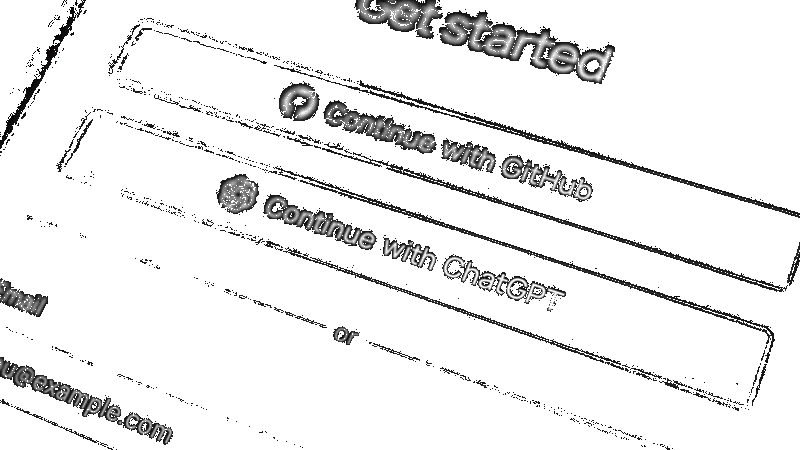

OpenAI has officially announced a significant expansion of its "Sign in with ChatGPT" initiative, enabling ChatGPT Plus and Pro subscribers to utilize their existing plan allowances directly within third-party coding, AI, and developer productivity platforms. Unveiled by CEO Sam Altman during the annual OpenAI DevDay conference, this strategic move bridges the historically separate ecosystems of consumer AI subscriptions and developer API infrastructure. By allowing users to bring their active token and compute limits into third-party applications, OpenAI aims to lower user adoption barriers, reduce friction for developers, and streamline how professionals interact with emerging AI tooling.
The announcement was a headline feature of OpenAI DevDay, the organization’s fourth annual developer conference. Alongside the expansion of subscription utility, the event served as a showcase for several other high-profile technological rollouts, including the introduction of "Dots"—a novel class of autonomous, always-on software agents—and the debut of GPT-6.1 Sol, OpenAI’s latest flagship model engineered specifically for advanced coding, computer use, and enterprise-grade professional workflows. Addressing the developer community from the main stage, Altman emphasized that removing the requirement for third-party platforms to absorb underlying token costs represents a fundamental shift in software economics. Because millions of professionals are already paying for high-tier AI subscriptions, this integration allows software vendors to onboard users seamlessly without forcing them to charge separate API fees or build complex credit systems from scratch.
The foundational architecture for this capability began to take shape earlier in the year. In July, OpenAI initially rolled out "Sign in with ChatGPT" as a closed beta feature in strategic partnerships with prominent enterprise tools such as Airtable, GitLab, HubSpot, Notion, Supabase, and Vercel. At its inception, the utility of the feature was primarily centered around user identity and access management. It functioned similarly to social single-sign-on (SSO) protocols like "Sign in with Google" or "Apple," allowing individuals to authenticate their identity and link user profiles across disparate web platforms using their verified ChatGPT credentials. During this initial phase, the data exchange was strictly limited to foundational profile details—such as names, email addresses, and profile pictures—while any deeper permissions required explicit, granular user consent.

However, the latest evolution moves decisively past mere identity federation into resource portability. Under the newly expanded framework, participating third-party platforms can draw directly from a user’s existing ChatGPT plan limits—specifically tapping into the Work and Codex usage allocations bundled into Plus and Pro subscriptions. To ensure balanced resource consumption, OpenAI has implemented centralized settings within the ChatGPT interface, giving users full visibility and granular control over how much of their weekly quota individual partner applications are allowed to consume. Furthermore, safety mechanisms have been designed to halt usage gracefully once a limit is reached, rather than automatically triggering surprise overage charges or forcing a rollover to third-party billing systems.
The commercial rollout features 16 initial launch partners spanning a diverse mix of commercial software and open-source ecosystems. The current lineup includes OpenCode, OpenClaw, Pi, T3, Hyperagent, Hermes Agent, Vorflux, Amp, Dactyl, Kilo Code, Warp, Conductor, Devin, Notion, and Vercel, with agile app development platform Lovable slated to join the roster in the near future. According to company representatives, this initial group represents just the beginning of a rapid scaling phase, with additional software partners expected to be integrated into the program over the coming months.
While the formal announcement marks a centralized standardization by OpenAI, the concept of subscription-backed authentication has been organically bubbling up within the developer community for several months. In late August, software engineer Ryan Dahl—widely recognized as the creator of Node.js—took to social media to debut Dactyl, a novel "vibe-coding" platform designed for building native iOS and Android applications entirely through natural language prompts. A central pillar of Dactyl’s architecture from day one was its integration with ChatGPT subscriptions. Dactyl’s Builder plan was explicitly marketed around the premise that its underlying coding agents run directly on the user’s personal ChatGPT subscription, explicitly sparing the developer from incurring external token bills.
Dactyl’s implementation provided an early blueprint for how these hybrid economic models could function. While the orchestration agent interpreting user intent and drafting native Swift or Kotlin code drew directly from the user’s external ChatGPT allowance, resource-intensive auxiliary tasks—such as compiling native binaries, generating app icons, rendering 3D assets, and final publishing—continued to consume internal platform credits. Crucially, users were not required to provision, manage, or pay for separate OpenAI API keys; authentication was handled securely through their standard ChatGPT account credentials.

Other early pioneers, such as the open-source automation platform OpenClaw, similarly experimented with subscription-backed authentication routes as early as May. OpenClaw previously enabled users to execute agent turns by logging into their ChatGPT and Codex accounts via the command line, generating what the platform termed a "subscription-backed Codex auth profile." The formal program announced at DevDay effectively bridges these disparate, custom-built integrations into a unified, officially supported program equipped with centralized dashboard management and transparent safety controls.
The broader implications of portable AI subscriptions point toward a structural transformation in how software is monetized and consumed. Historically, software developers and enterprise tools operated under a strict dichotomy: applications either required consumers to bring their own raw API keys—shifting the burden of cost, rate-limiting, and key management directly onto the end-user—or baked proprietary model expenses into expensive tiered SaaS pricing structures. By decoupling model access from proprietary app billing, OpenAI’s new program creates a middle ground that benefits both application creators and software consumers.
For independent developers and early-stage startups building niche productivity and coding tools, the ability to leverage pre-existing user subscriptions drastically reduces customer acquisition friction. Developers no longer need to price their software to heavily subsidize unpredictable AI token consumption, nor do they need to navigate the administrative overhead of managing high-volume enterprise API accounts for users who may only interact with the tool casually. Instead, the consumer brings their own compute, transforming the software application into a pure productivity wrapper that competes solely on the quality of its user experience and specialized workflows.
Conversely, for the end-user, this model enhances the aggregate value proposition of holding an active ChatGPT Plus or Pro subscription. Rather than paying isolated monthly subscriptions for a dozen different AI-powered coding environments, writing assistants, and automation utilities, subscribers can pool their centralized token allowance across a growing ecosystem of specialized tools. As OpenAI continues to expand its network of launch partners and refine the telemetry controls available within user dashboards, the boundary between foundational model providers and application-layer software developers will likely continue to blur, ushering in an era of fluid, modular, and deeply integrated AI workflows.
