
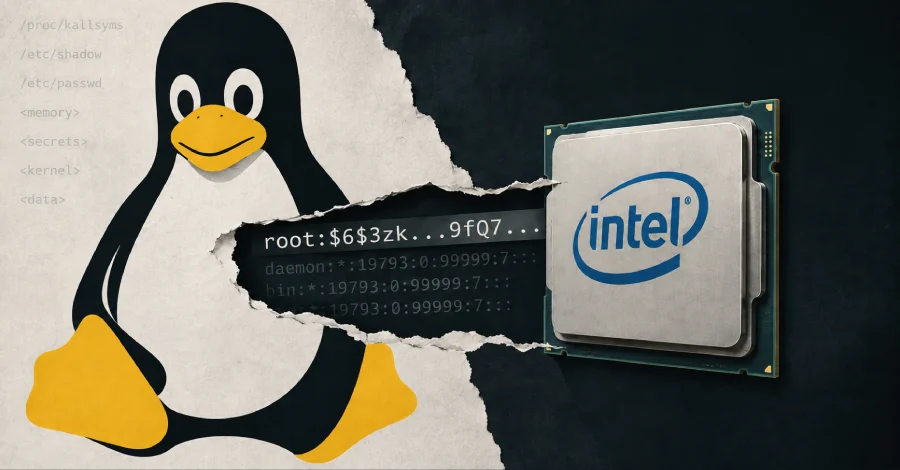

A team of researchers from the VUSec lab and Scuola Superiore Sant’Anna has unveiled a significant security flaw impacting the fundamental design of modern processors. The vulnerability, formally identified as Branch Target Reuse (BTR), represents a sophisticated evolution of the Spectre-v2 class of attacks. By targeting Just-In-Time (JIT) compilation engines—the critical components responsible for translating high-level code into machine instructions in web browsers, language runtimes, and operating system kernels—BTR exploits the way CPUs manage speculative execution and branch prediction. This discovery highlights the ongoing challenge of balancing high-performance computing with hardware-level security, as the flaw appears to transcend individual CPU vendors, affecting a wide range of modern hardware.
Understanding the Mechanics of Branch Target Reuse
The core of the BTR vulnerability lies in a mismatch between how software manages code and how hardware predicts execution paths. Modern CPUs utilize branch predictors to guess the outcome of conditional instructions, allowing the processor to begin executing instructions before it knows for certain if they will be needed. This process, known as speculative execution, provides substantial performance gains but creates side-channel risks.
In the case of BTR, the issue arises when a JIT engine modifies or removes code. While the CPU is generally adept at maintaining coherence for the code itself, it often fails to invalidate the stale entries within the Branch Target Buffer (BTB). The BTB is a cache used by the CPU to store the predicted destination of indirect branches. When a JIT engine reuses a memory region previously occupied by older code, the stale prediction entry can still exist in the BTB. An attacker can manipulate the CPU into using this obsolete target, effectively hijacking the speculative control flow to execute "gadgets"—small snippets of code that can be chained together to leak sensitive information.
Chronology and Research Timeline
The discovery of BTR is the culmination of rigorous academic inquiry into the limits of speculative execution. Following the initial disclosure of Spectre and Meltdown in 2017, the security research community has remained vigilant regarding "transient execution" attacks.
The researchers—Sander Wiebing, Yuhui Zhu, Alessandro Biondi, and Cristiano Giuffrida—spent months analyzing the interplay between Self-Modifying Code (SMC) and hardware branch predictors. Their research determined that JIT engines provide a unique, previously under-explored environment for these attacks. The researchers successfully demonstrated the exploitability of BTR against several major platforms, including Mozilla Firefox’s SpiderMonkey engine, GraalVM, and the Linux kernel’s cBPF JIT.

As a proof-of-concept, the team developed two end-to-end exploits targeting the Linux kernel. These exploits proved capable of recovering root-level password hashes from fully patched Intel systems running with default security mitigations enabled. This achievement underscores the severity of the flaw, as it demonstrates that existing Spectre-v2 defenses were insufficient to prevent the BTR attack vector.
Technical Implications and Data Leakage
The impact of BTR varies depending on the architecture and the specific JIT implementation. Because BTR allows an attacker to direct the processor to an architecturally invalid entry point, it effectively bypasses traditional software hardening measures. By forcing the CPU to speculatively execute misaligned instructions or code that should be inaccessible, an attacker can access sensitive memory locations.
The process of data extraction relies on measuring cache timing. Even though the CPU eventually realizes the speculative execution was based on a faulty prediction and discards the results, the physical changes made to the CPU cache remain. By monitoring these cache changes, the attacker can infer the values of the data that were speculatively accessed. In the context of the Linux kernel, this could lead to the exposure of cryptographic keys, user credentials, or other system secrets, all within a matter of minutes.
Industry Response and Mitigation Strategies
The responsible disclosure process has already prompted swift action from major stakeholders. Following the private notification of the vulnerability, developers have begun integrating mitigations to neutralize the threat.
For the Linux kernel, patches associated with CVE-2026-64507 and CVE-2026-64508 have been merged. These updates aim to clear branch prediction state more aggressively when dealing with JIT-compiled code. Meanwhile, other ecosystems have taken varied approaches:
- GraalVM: The development team has implemented a defense strategy centered on randomizing the locations of JIT code caches, making it significantly harder for an attacker to reliably predict or exploit stale branch entries.
- Mozilla Firefox: Mozilla is currently evaluating the feasibility of implementing Indirect Branch Predictor Barrier (IBPB) mechanisms. However, the organization is prioritizing the broader deployment of site isolation architectures, which offer a more robust defense against a wide array of speculative execution attacks by separating web content into distinct processes.
These responses reflect the difficulty of remediating hardware-level vulnerabilities via software. Because the issue is deeply embedded in the CPU’s microarchitecture, patching often involves a performance trade-off, as clearing the branch predictor or adding barriers can slow down the very processes the JIT engine is intended to accelerate.

The Broader Landscape of Hardware Security
The emergence of BTR follows closely on the heels of other speculative execution vulnerabilities, such as the "Interrupt Injection" attack reported by researchers at MIT CSAIL in August 2026. That attack also targeted Intel and AMD processors, proving that the frontier of hardware security is constantly shifting.
Security analysts note that BTR and similar flaws represent a "new normal" in processor security. As CPUs become more complex in their pursuit of higher clock speeds and greater efficiency, the surface area for side-channel attacks inevitably grows. The "transient execute-after-free" primitive introduced by BTR serves as a reminder that security must be integrated into the silicon design process rather than being treated as an afterthought or an add-on via software updates.
Future Outlook and Recommendations
For system administrators and security professionals, the discovery of BTR highlights the necessity of keeping kernels and browser engines up to date. While the specific BTR exploit requires a high degree of technical sophistication, the potential for its automation into broader malware toolkits is a legitimate concern.
The academic community continues to call for more transparency from CPU manufacturers regarding the internal workings of branch prediction mechanisms. Current research suggests that until hardware designers provide better control over the branch predictor state—or implement more secure ways to clear it—JIT engines will remain a high-value target for attackers.
In the long term, the industry may need to reconsider the reliance on complex speculative execution in environments where security is paramount. While performance remains a primary driver for the tech sector, the persistent discovery of Spectre-like vulnerabilities suggests that the cost of these optimizations may eventually outweigh their benefits in high-security environments, such as cloud infrastructure and multi-tenant servers. For now, the implementation of software-level patches remains the most immediate and effective defense against the BTR threat, though researchers warn that this is likely not the final iteration of Spectre-style vulnerabilities. As long as processors continue to prioritize speed through speculation, the race between hardware researchers and attackers will remain a defining feature of the digital landscape.
