

Amazon Web Services (AWS) today announced the general availability of OpenClaw on Amazon Lightsail, marking a significant advancement in making self-hosted, autonomous AI agents more accessible and secure for individuals and small businesses. This new offering allows users to effortlessly launch pre-configured OpenClaw instances, seamlessly integrating a personal AI assistant with their web browsers and, optionally, popular messaging platforms like WhatsApp, Discord, and Telegram. Crucially, each Lightsail OpenClaw instance comes pre-configured with Amazon Bedrock as the default AI model provider, ensuring powerful AI capabilities are available immediately without requiring complex additional setup.
The Rise of Autonomous AI Agents and the Challenge of Self-Hosting
In an increasingly digitized world, the demand for intelligent personal assistants capable of performing complex tasks beyond simple question-answering has surged. OpenClaw emerges as a compelling solution in this landscape: an open-source, self-hosted, and autonomous private AI agent designed to run directly on a user’s computer. Unlike cloud-based assistants that might raise privacy concerns due to data processing on third-party servers, OpenClaw’s self-hosted nature provides users with unparalleled control over their data and AI operations. Its capabilities extend far beyond typical conversational AI, empowering users to automate tasks such as managing emails, intelligently browsing the web for information, and organizing digital files – essentially acting as a comprehensive digital personal assistant.
However, the promise of self-hosted AI has historically been tempered by significant technical hurdles. Deploying and maintaining sophisticated AI agents like OpenClaw on a personal device or even a raw virtual machine (VM) typically involves a steep learning curve. Users often encounter challenges ranging from intricate software installations and dependency management to configuring robust security protocols and ensuring continuous uptime. Many AWS customers, recognizing the potential of OpenClaw, had previously attempted to run it on Amazon EC2 instances, often documenting their experiences on blogs. While technically feasible, these deployments frequently highlighted the complexity and numerous security considerations involved in manually setting up such an environment. These challenges underscore a broader dilemma for the average user: how to leverage powerful, private AI without becoming an IT expert. The general availability of OpenClaw on Amazon Lightsail directly addresses this gap, transforming a complex technical undertaking into a streamlined, accessible process.
Amazon Lightsail: A Tailored Solution for Simplified AI Deployment
Amazon Lightsail stands out in the AWS ecosystem as a service designed for simplicity and ease of use, making it an ideal platform for democratizing access to applications like OpenClaw. Positioned as a simplified cloud computing solution, Lightsail offers virtual private servers (VPS), managed databases, content delivery networks (CDNs), and load balancers, all with predictable, low monthly pricing. Its core appeal lies in abstracting away much of the underlying AWS infrastructure complexity, presenting users with a straightforward interface to launch and manage resources. This approach contrasts sharply with the more granular control and intricate configuration options available in services like Amazon EC2, which, while powerful, can be overwhelming for users primarily focused on application deployment rather than infrastructure management.
For OpenClaw, Lightsail provides a perfect marriage of convenience and capability. The new offering leverages Lightsail’s blueprint functionality, allowing users to select a pre-configured OpenClaw image with just a few clicks. This eliminates the arduous manual installation process, which often involves navigating command-line interfaces, resolving software conflicts, and configuring intricate network settings. By providing a ready-to-launch instance, Lightsail significantly reduces the barrier to entry for users eager to deploy their private AI agents. Furthermore, the inherent security advantages of running OpenClaw within the AWS cloud environment cannot be overstated. Unlike hosting on a home device, which might be vulnerable to local network threats or lack professional-grade security updates, Lightsail instances benefit from AWS’s robust global infrastructure security measures, including network isolation, managed firewalls, and continuous security patching. This provides a more secure and reliable operating environment for a personal AI agent that handles sensitive tasks like email management and file organization.

The strategic choice of Lightsail also speaks to its cost-effectiveness. With plans starting at just a few dollars a month, Lightsail makes advanced AI capabilities economically viable for individual users, freelancers, and small businesses who might otherwise find the costs associated with more comprehensive cloud services prohibitive. The recommended 4 GB memory plan for optimal OpenClaw performance remains within an accessible price bracket, further solidifying its position as an attractive option for personal AI deployment.
Seamless Integration with Amazon Bedrock: Powering OpenClaw’s Intelligence
A cornerstone of the OpenClaw on Lightsail offering is its default integration with Amazon Bedrock. Amazon Bedrock is a fully managed service that makes foundational models (FMs) from Amazon and leading AI startups accessible via an API. It simplifies the development of generative AI applications by providing a secure and scalable way to interact with powerful large language models (LLMs) and other FMs without managing the underlying infrastructure. For OpenClaw users, this integration is a game-changer. It means that from the moment their Lightsail instance is operational, their private AI agent is powered by state-of-the-art AI capabilities, ready to perform complex tasks and engage in sophisticated interactions.
The benefits of using Amazon Bedrock as the default AI model provider are multi-faceted. Firstly, it ensures high performance and reliability, as Bedrock handles the complexities of model inference, scaling, and maintenance. Users don’t need to worry about provisioning GPUs, managing model versions, or optimizing inference speeds. Secondly, Bedrock offers a choice of powerful foundational models, which means OpenClaw can leverage diverse AI capabilities for tasks ranging from natural language understanding and generation to advanced reasoning. This broadens the scope and effectiveness of the personal AI agent significantly. Thirdly, the integration is designed for immediate use. Once the simple Bedrock API access script is run via AWS CloudShell – a browser-based shell that simplifies AWS CLI commands – the AI assistant is fully operational, capable of engaging in chat and executing tasks without further model configuration. This "out-of-the-box" intelligence is a critical factor in the ease-of-use proposition, eliminating a common bottleneck in AI application deployment. This strategic pairing not only simplifies the technical backend but also ensures that OpenClaw users benefit from AWS’s continuous advancements in AI research and development, providing a future-proof foundation for their personal AI agents.
A Step-by-Step Pathway to Your Private AI Assistant
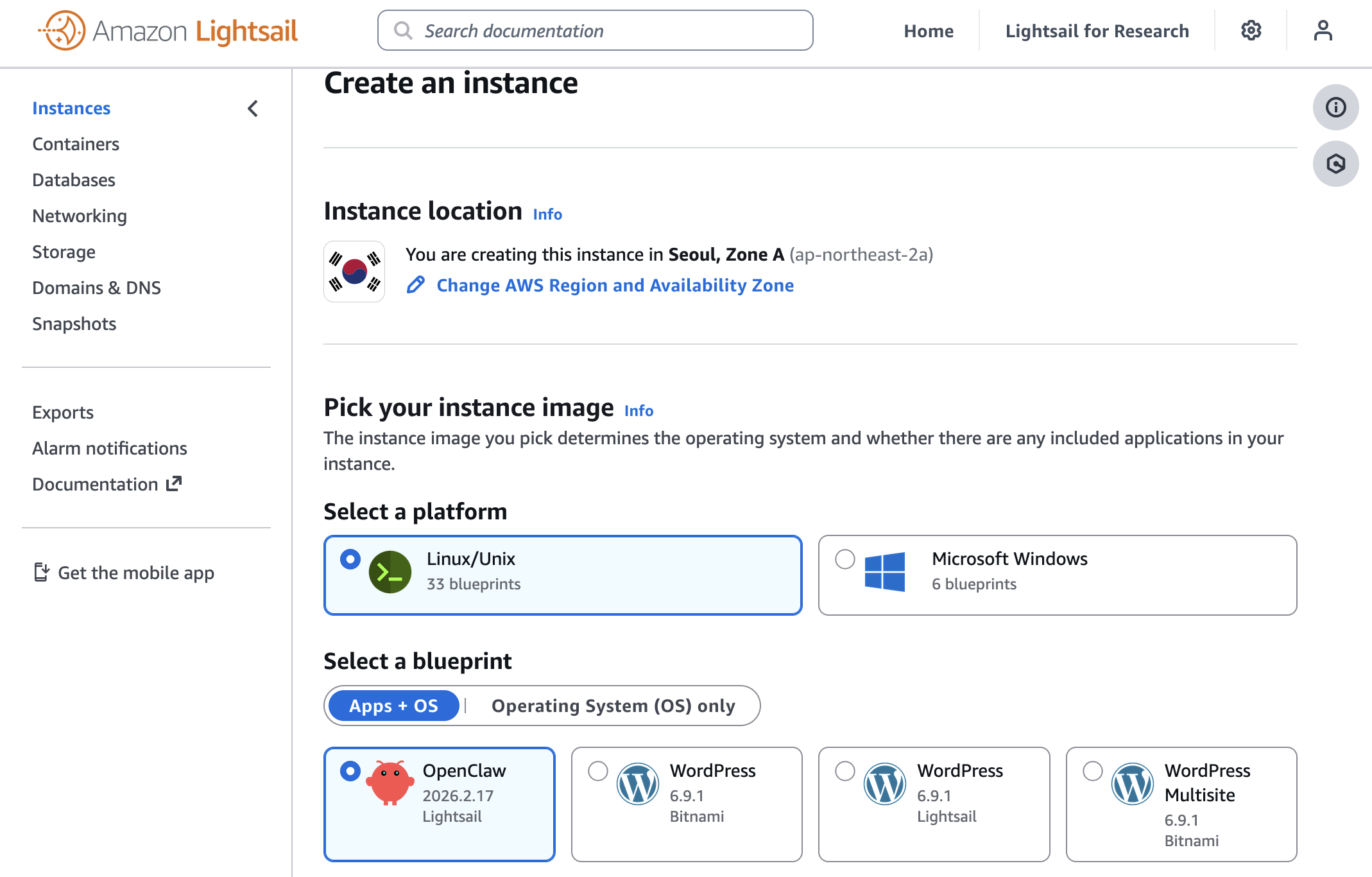
The deployment process for OpenClaw on Amazon Lightsail is meticulously designed for simplicity, reflecting Lightsail’s core philosophy. The journey begins in the intuitive Amazon Lightsail console, where users initiate the instance creation process. After selecting their preferred AWS Region and Availability Zone – choices that optimize for latency and resilience – and specifying a Linux/Unix platform, the critical step involves choosing "OpenClaw" under the "Select a blueprint" option. This blueprint encapsulates all the necessary software, configurations, and dependencies, transforming what would otherwise be a multi-hour manual setup into a single selection.
Following this, users select an instance plan, with a 4 GB memory plan recommended to ensure optimal performance for OpenClaw’s autonomous operations, especially when handling multiple tasks or complex AI queries. A user-defined instance name completes this initial phase, culminating in the click of the "Create instance" button. Within minutes, the OpenClaw instance transitions to a "Running" state, signifying that the foundational infrastructure is ready.
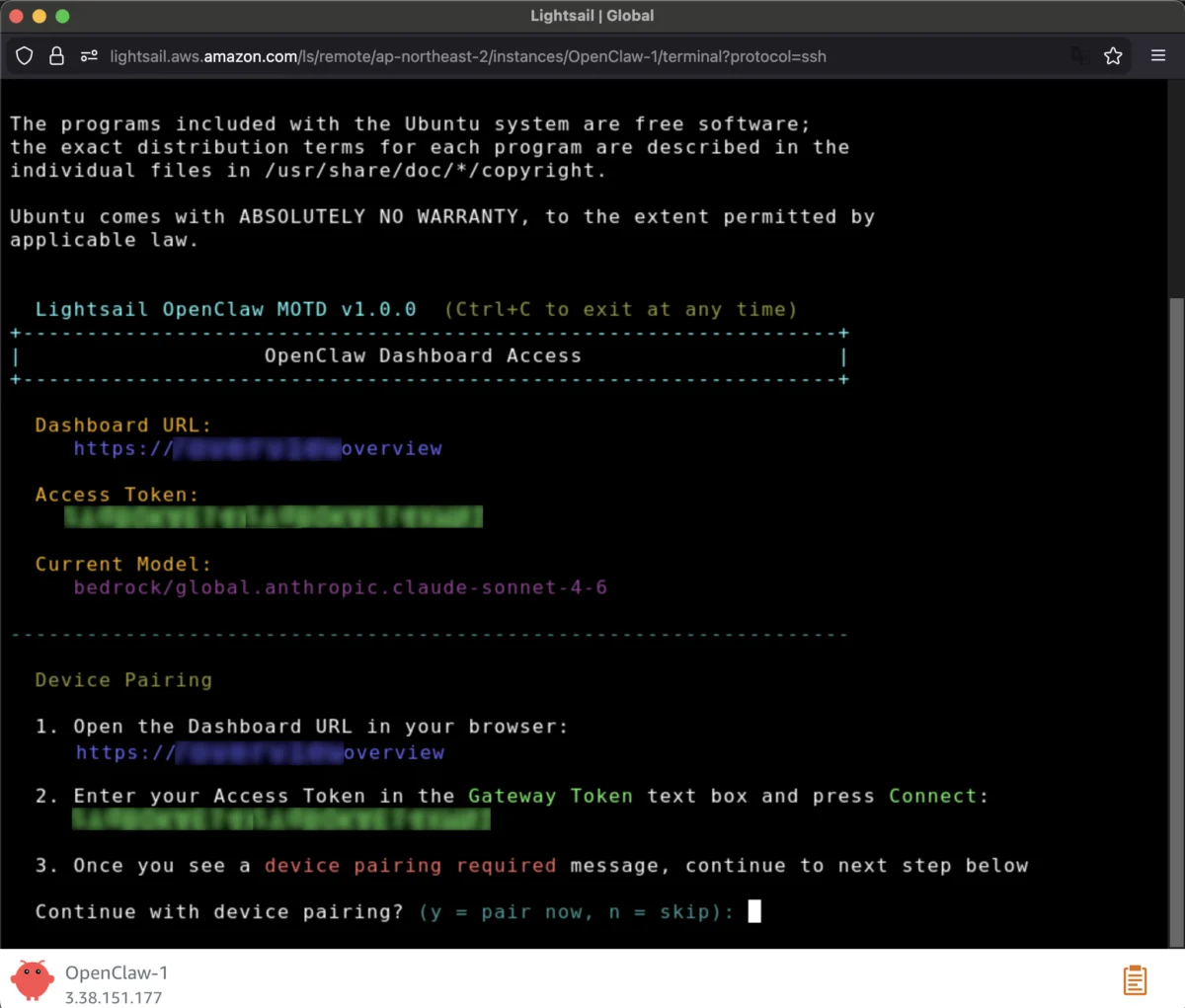
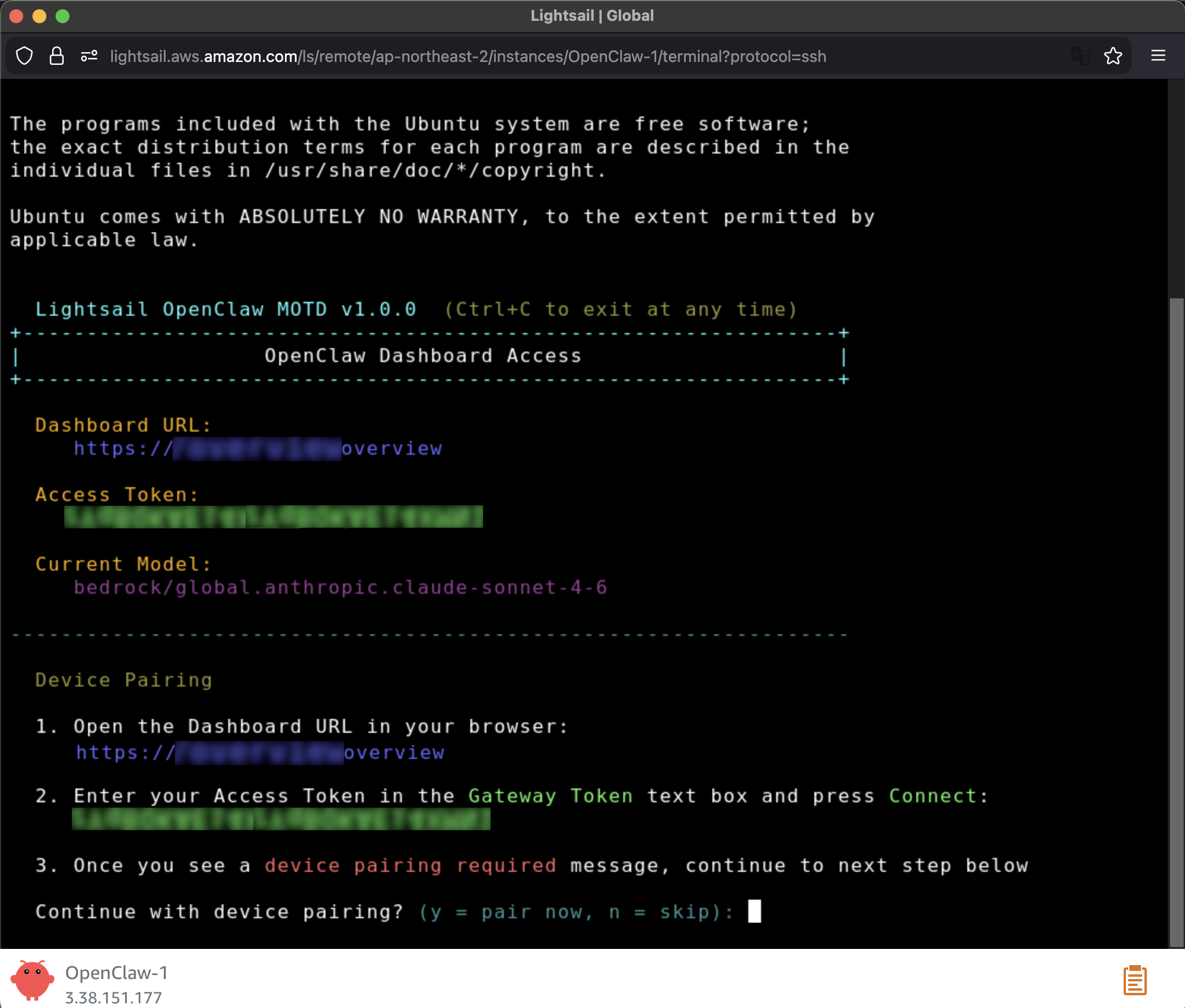
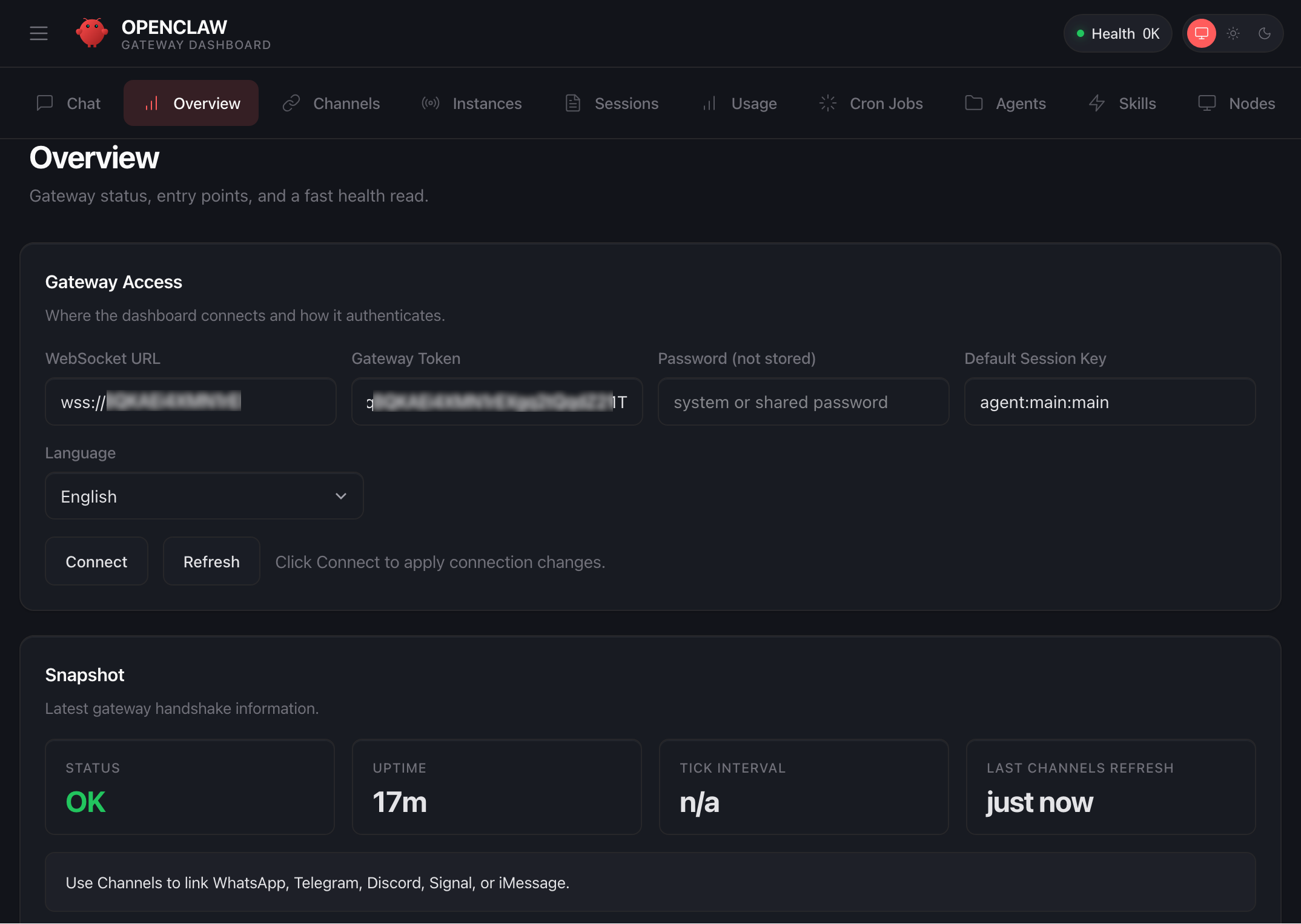
The next crucial step involves establishing a secure connection between the user’s browser and the newly provisioned OpenClaw instance. This is achieved by connecting via SSH through the Lightsail console’s "Getting started" tab. Upon opening the browser-based SSH terminal, users are presented with a welcome message containing the OpenClaw dashboard URL and essential security credentials, including a Gateway Token. Copying these details and pasting the access token into the designated field on the OpenClaw dashboard initiates the pairing process. A simple "y" to continue and "a" to approve in the SSH terminal completes the device pairing, establishing a secure, authenticated link.
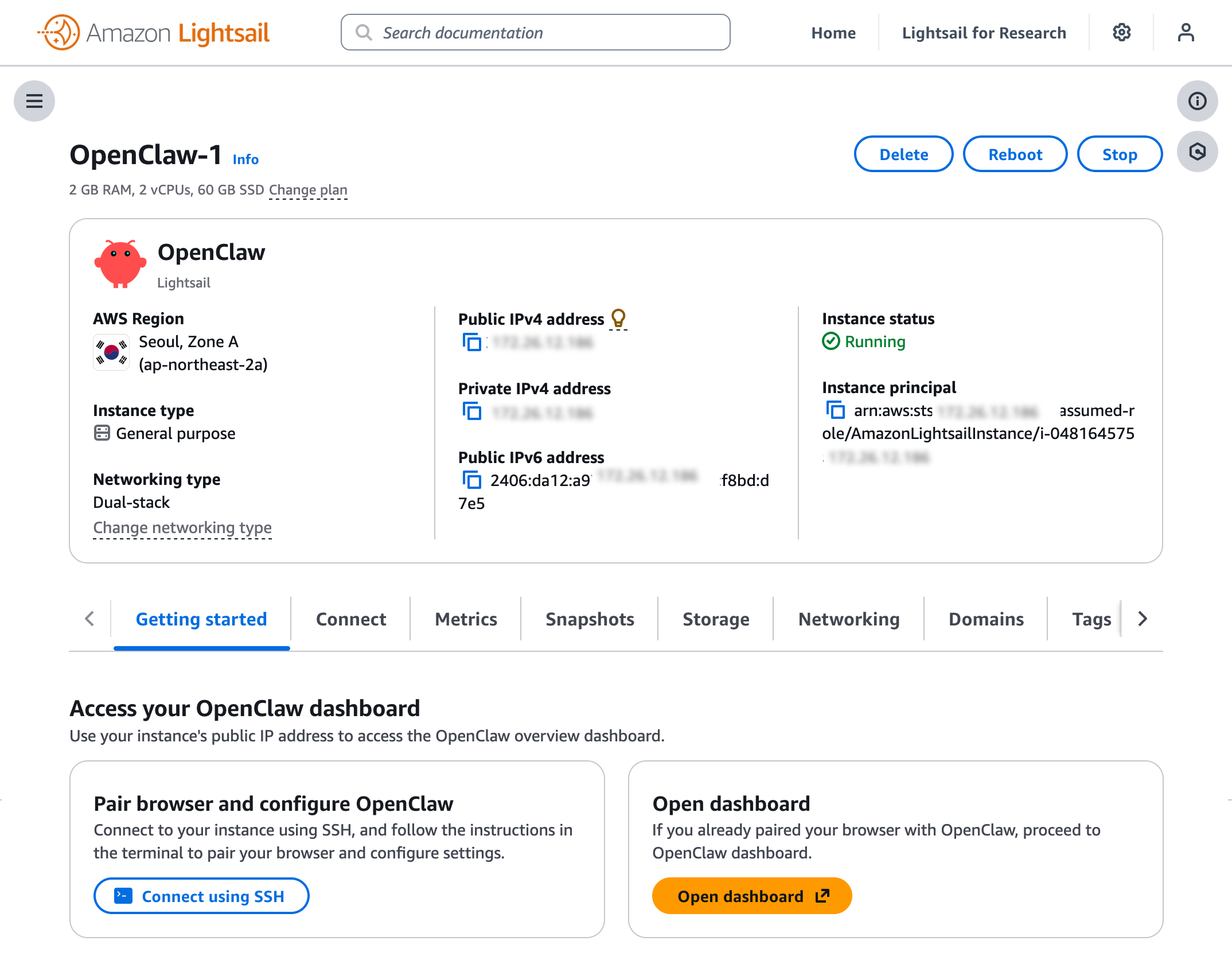
Finally, to activate the AI capabilities, users must enable Amazon Bedrock API access. This is facilitated by copying a provided script from the "Getting started" tab and executing it within the AWS CloudShell terminal. This script configures the necessary permissions for OpenClaw to interact with Bedrock, effectively powering its AI assistant. Once this script completes, the OpenClaw dashboard’s "Chat" section becomes fully functional, allowing users to immediately begin interacting with their private AI agent. For enhanced utility, OpenClaw also supports integration with popular messaging applications such as Telegram and WhatsApp, enabling users to interact with their AI assistant directly from their mobile devices or preferred messaging clients. Detailed instructions for connecting these messaging channels are available in the Amazon Lightsail User Guide, further extending the reach and convenience of the OpenClaw agent.
Industry Reactions and Strategic Implications
The general availability of OpenClaw on Amazon Lightsail is poised to generate positive reactions from various stakeholders. From AWS’s perspective, this offering underscores its ongoing commitment to democratizing access to advanced AI capabilities and supporting the broader open-source community. A hypothetical statement from an AWS spokesperson might emphasize: "This offering significantly lowers the barrier to entry for individuals and small businesses seeking to deploy powerful, private AI agents. By integrating OpenClaw with Amazon Lightsail and Amazon Bedrock, we are providing a secure, simplified, and scalable pathway for users to harness autonomous AI, reinforcing AWS’s dedication to empowering innovation across all user segments."
The OpenClaw developer community is also likely to welcome this official integration. For an open-source project, official cloud support from a major provider like AWS provides legitimacy, drives adoption, and ensures a more stable and secure deployment experience for its users. An inferred statement from an OpenClaw project lead could highlight: "The collaboration with AWS to bring OpenClaw to Lightsail is a pivotal moment for our project. It not only validates the demand for private, autonomous AI but also provides our community with a robust, secure, and user-friendly platform that aligns with our vision of empowering users with true control over their digital assistants."
For end-users, particularly those who have struggled with the complexities of self-hosting, this development is a significant relief. A hypothetical user reaction might be: "I’ve always been intrigued by the concept of a personal AI that truly works for me and protects my privacy, but the technical setup was daunting. OpenClaw on Lightsail is exactly what I needed – simple to deploy, secure, and instantly powerful. It’s a game-changer for my digital productivity."
Beyond immediate reactions, this announcement carries broader strategic implications. It signals a growing trend towards greater user control and privacy in the AI space, offering an alternative to purely cloud-centric AI services. By enabling self-hosted AI on a managed cloud platform, AWS bridges the gap between the power of cloud computing and the desire for personal data sovereignty. This move could accelerate the development and adoption of more specialized personal AI agents, fostering an ecosystem where users can tailor their digital assistants to their precise needs, confident in the security and privacy of their operations. Furthermore, it reinforces AWS’s diverse service portfolio, demonstrating its ability to cater to both enterprise-level, highly complex deployments and simplified, user-friendly solutions for a broader audience. The intersection of open-source innovation (OpenClaw), managed cloud simplicity (Lightsail), and cutting-edge AI (Bedrock) creates a powerful synergy that is likely to influence the future trajectory of personal AI.
Availability and Future Outlook
OpenClaw on Amazon Lightsail is now generally available across all AWS commercial Regions where Amazon Lightsail itself is supported. This widespread availability ensures that users globally can access and deploy their private AI agents with minimal latency and adherence to regional data residency preferences where applicable. For specific regional availability and to stay informed about potential future enhancements or a broader roadmap, users are encouraged to consult the AWS Capabilities by Region documentation.
AWS actively encourages users to experiment with OpenClaw on Lightsail through the Lightsail console and provide feedback. Channels for feedback include AWS re:Post for Amazon Lightsail, a community-driven forum where users can ask questions, share insights, and provide suggestions, or through their usual AWS support contacts for more direct communication. This commitment to user feedback is crucial for iterative improvements and for guiding the future development of the offering, ensuring it continues to meet the evolving needs of the community.
The launch of OpenClaw on Amazon Lightsail represents more than just a new feature; it symbolizes a pivotal moment in the accessibility of advanced AI. By simplifying deployment and integrating with powerful foundational models via Amazon Bedrock, AWS has effectively placed the capabilities of a sophisticated, autonomous, and private AI assistant within reach of a much wider audience. This move is poised to empower individuals and small businesses to enhance their productivity, manage their digital lives with greater autonomy, and maintain control over their data in an increasingly AI-driven world. The journey of personal AI is just beginning, and OpenClaw on Lightsail is set to be a significant catalyst in its evolution.
