
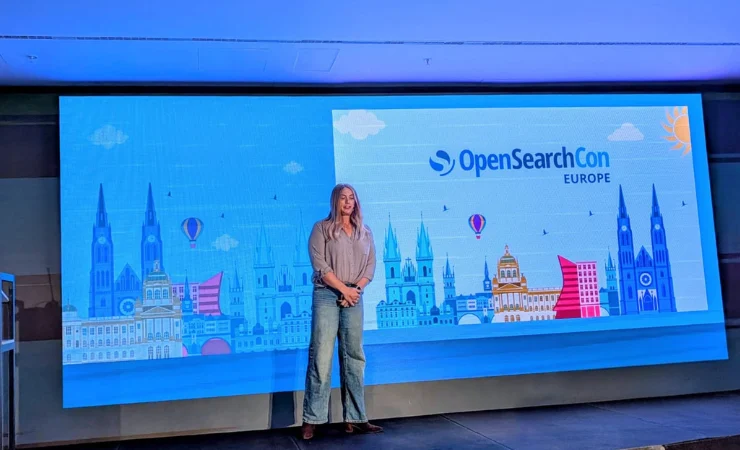

The opening of OpenSearchCon Europe in Prague marked a significant pivot in the ongoing discourse surrounding artificial intelligence and enterprise search technology. While much of the global tech conversation over the past two years has been preoccupied with the sheer scale of Large Language Models (LLMs), parameter counts, and the aggressive procurement of Graphics Processing Units (GPUs) by cloud providers, the keynote addresses at this year’s conference signaled a shift in industry priorities. The OpenSearch Software Foundation, a project under the Linux Foundation, utilized its opening session to argue that the primary bottleneck for AI implementation has transitioned from the model layer to the data layer. This transition emphasizes the critical importance of query intent, data accessibility, and the architectural gap between user requirements and retrieval capabilities.
The Shifting Bottleneck of Enterprise Intelligence
The conference commenced with a collaborative session featuring Bianca Lewis, Executive Director of the OpenSearch Software Foundation, and Jim Curtis, Director of Data AI and Analytics at S&P Global. The discussion centered on recent findings from the 451 Research Vector Report 2026, which underscored the logistical hurdles facing modern enterprises. According to the data presented, approximately 35% of enterprises identify insufficient data access as a primary barrier to AI adoption. An additional 40% of organizations describe the current state of their data infrastructure as "disruptive," requiring substantial manual intervention and restructuring before AI applications can become functional.
This statistical reality challenges the previous industry assumption that the primary challenge was infrastructure capacity or application logic. Instead, the consensus among leaders in Prague was that the "bottleneck" is now firmly rooted in data structure and organizational silos. While vector databases have reached a point of near-universal availability—with almost every major database vendor now supporting vector data types—the challenge remains one of integration. Enterprise data remains fragmented across diverse platforms, including communication tools like Slack, Customer Relationship Management (CRM) systems, personal devices, and specialized financial databases.
Lewis noted that the ultimate objective for the enterprise is not search in the traditional sense, but rather "insight." The goal is for users to communicate needs via natural language and receive high-accuracy, context-aware results. However, achieving this requires a level of data readiness that many organizations have yet to achieve, as highlighted by recent independent research into enterprise data health.
Chronology of Technical Evolution: From Experts to Agents
Carl Meadows, Chair of the Governing Board at the OpenSearch Software Foundation and Director of Product Management for OpenSearch at Amazon Web Services (AWS), provided a chronological perspective on the evolution of the platform. Historically, OpenSearch and its predecessors were tools designed for specialized technical roles, including search engineers, Site Reliability Engineers (SREs), and DevOps professionals. However, the current era is characterized by the emergence of "search generalists" and "agent builders."
A pivotal moment in the keynote was the demonstration of Claude Code, an AI-powered coding assistant, utilized in conjunction with OpenSearch Launchpad. Launchpad is a newly introduced tool designed to streamline the transition from raw requirements to a functional search application. During the live demonstration, Meadows showcased the ability of an AI agent to analyze a movie dataset, propose a structural plan, establish an ingestion pipeline, and download embedding models from repositories like Hugging Face.
Within minutes, the system indexed the data and deployed a working user interface—a task that historically demanded days of expert labor and complex configuration. This transition marks the "agentic era" of search, where the primary consumer of the search index is no longer a human user performing a manual query, but an autonomous or semi-autonomous AI agent performing retrieval-augmented generation (RAG).
Expanding the Ecosystem: CERN and Global Infrastructure Scale
The conference served as a platform for significant organizational announcements, most notably the addition of CERN (the European Organization for Nuclear Research) as an associate member of the OpenSearch Software Foundation. Socrates Trifonas, who leads the OpenSearch service at CERN, detailed the scale of their operations via a video address. CERN currently maintains 130 OpenSearch clusters in production, indexing over 1.3 petabytes of data.
While CERN is globally recognized for operating the world’s largest particle accelerator, its use of OpenSearch is multifaceted. The organization utilizes the platform for extensive log analytics, authority database management, and the testing of AI applications. The participation of an institution operating at the absolute limits of data volume provides a powerful validation of OpenSearch’s scalability. Alongside CERN, the foundation welcomed BigData Boutique, OpenSource Connections, and Resolve Technology as new members, further diversifying the governance and contributor base of the open-source project.
Observability, Sovereignty, and the Agent Hub
Beyond search and retrieval, the keynote addressed the critical need for observability in complex AI stacks. The foundation announced the OpenSearch Observability Stack, a comprehensive bundle that integrates the OpenTelemetry Collector, Data Prepper, Prometheus, and OpenSearch Dashboards into a single, command-line deployable package. This integration allows for the native correlation of logs, traces, and metrics, a functionality that was previously the exclusive domain of high-cost commercial vendors.
A particularly notable innovation discussed was the OpenSearch Agent Hub. This "headless" local operation, installed via npx, is designed to capture agent traces for monitoring and testing. Meadows argued that agent trace data represents some of the most sensitive information within a modern corporation. Because these traces document exactly how AI agents interact with private internal data and customer inquiries, there is a growing movement toward architectural sovereignty. By keeping this data local or within controlled environments rather than trusting it to external cloud-based logging services, enterprises can maintain a higher degree of security and compliance.
The Semantic Reality Check: Decisions Over Information
The final keynote of the morning, delivered by Dom Couldwell, Product Management Leader for OpenSearch at IBM, provided a critical counter-narrative to the prevailing industry focus on semantic search. Couldwell argued that the industry has over-indexed on vector search as a "silver bullet" for all enterprise problems. He posited that similarity does not always equate to relevance, describing relevance as a "messy" and context-dependent metric.
To illustrate this, Couldwell cited a case study involving a major German industrial parts manufacturer. The company’s warehouse staff, using handheld devices, required a way to look up specialized components. While multiple vendors proposed advanced semantic search solutions, an analysis of the user behavior revealed that the staff were experts who used specific technical jargon and product IDs. Consequently, a traditional lexical search approach solved 80% of the operational challenges at roughly 10% of the cost of a semantic implementation.
This "reality check" led to the introduction of a new industry metric: "reduce time to why." Couldwell argued that enterprises do not suffer from a lack of information; they suffer from a lack of understanding regarding the utility of that information. The goal of a modern search system should be to provide the user with enough context to understand why a specific answer was provided, allowing them to act with confidence.
Implications for the Future of Open Source Search
The proceedings at OpenSearchCon Europe suggest a maturing market that is moving past the initial "hype" phase of generative AI. The focus has shifted toward the pragmatic, often difficult work of data engineering, governance, and relevance tuning. The humility shown regarding the limitations of vector search—and the resurgence of interest in lexical and hybrid models—indicates that enterprise buyers are becoming more sophisticated in their requirements.
The transition toward an agent-centric architecture also has profound implications for how data is indexed. If the primary "user" is an AI agent, the search system must prioritize transparency and traceability so that the agent’s reasoning can be audited. This is particularly vital in regulated industries such as finance, healthcare, and heavy manufacturing, where the cost of an incorrect AI-generated decision is high.
As the conference continues, the emphasis remains on the "un-glamorous" aspects of the AI stack. By addressing the data bottleneck, enhancing observability, and prioritizing architectural sovereignty, the OpenSearch community is positioning itself as a foundational layer for the next decade of enterprise computing. The move from providing information to enabling decisions marks a significant milestone in the evolution of search technology, moving it from a utility to a core component of corporate intelligence.
