

The telecommunications landscape in the Lao People’s Democratic Republic (PDR) has undergone a profound transformation over the last decade, evolving from a nascent market into a competitive digital ecosystem. As of 2021, the nation surpassed a significant milestone with more than 10 million mobile subscribers, a figure that reflects the rapid adoption of mobile technology across a population of approximately 7.5 million people. This high penetration rate, exceeding 100% due to the common practice of multi-SIM usage, highlights the central role mobile connectivity plays in the country’s socio-economic development. Currently, the market is defined by four primary mobile service providers: Unitel, Lao Telecom (LaoTel), TPlus Laos, and ETL Laos. These entities operate under the regulatory oversight of the Ministry of Technology and Communications (formerly the Ministry of Post and Telecommunications), navigating a complex terrain of infrastructure challenges, regulatory shifts, and the accelerating demand for high-speed data.
Historical Chronology of the Lao Telecom Sector
The evolution of mobile services in Laos began in the mid-1990s, following the government’s decision to modernize the country’s communication infrastructure. In 1996, Lao Telecom was established as a joint venture between the Lao government and Shinawatra International (now Thaicom), marking the beginning of the digital era in the country. For over a decade, LaoTel enjoyed a dominant position as the primary provider of both fixed-line and mobile services.
The market dynamics shifted dramatically in 2008 with the entry of Unitel, a joint venture between the Lao Asia Telecom and Vietnam’s military-run telecommunications giant, Viettel. Unitel’s entry introduced aggressive infrastructure expansion strategies, particularly in rural and mountainous regions that had previously been underserved. This competition spurred a period of rapid growth and network modernization across the industry.
In 2009, VimpelCom (now VEON) entered the market through the acquisition of Millicom’s operations, launching the Beeline brand. This brought international branding and diverse value-added services to the Lao consumer. However, the brand eventually transitioned to TPlus Laos after local restructuring. Meanwhile, ETL Laos, which originated as a state-owned enterprise, underwent various corporate reorganizations to remain competitive. By 2015, ETL had repositioned itself as a key player, focusing on digital solutions and internet-centric services.
Market Share and Operator Profiles
As of the latest comprehensive reports issued at the end of 2020 and updated through 2021, the market share remains concentrated among two major players, though the smaller operators maintain significant influence in specific niches.
Unitel (Star Telecom)
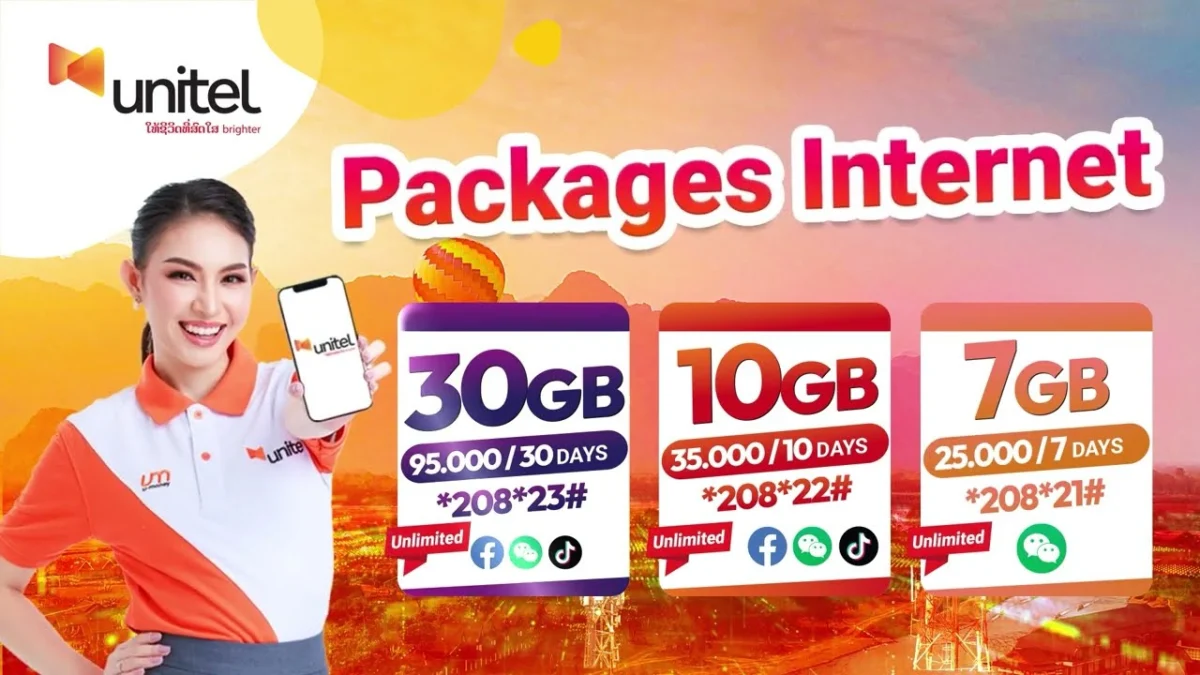
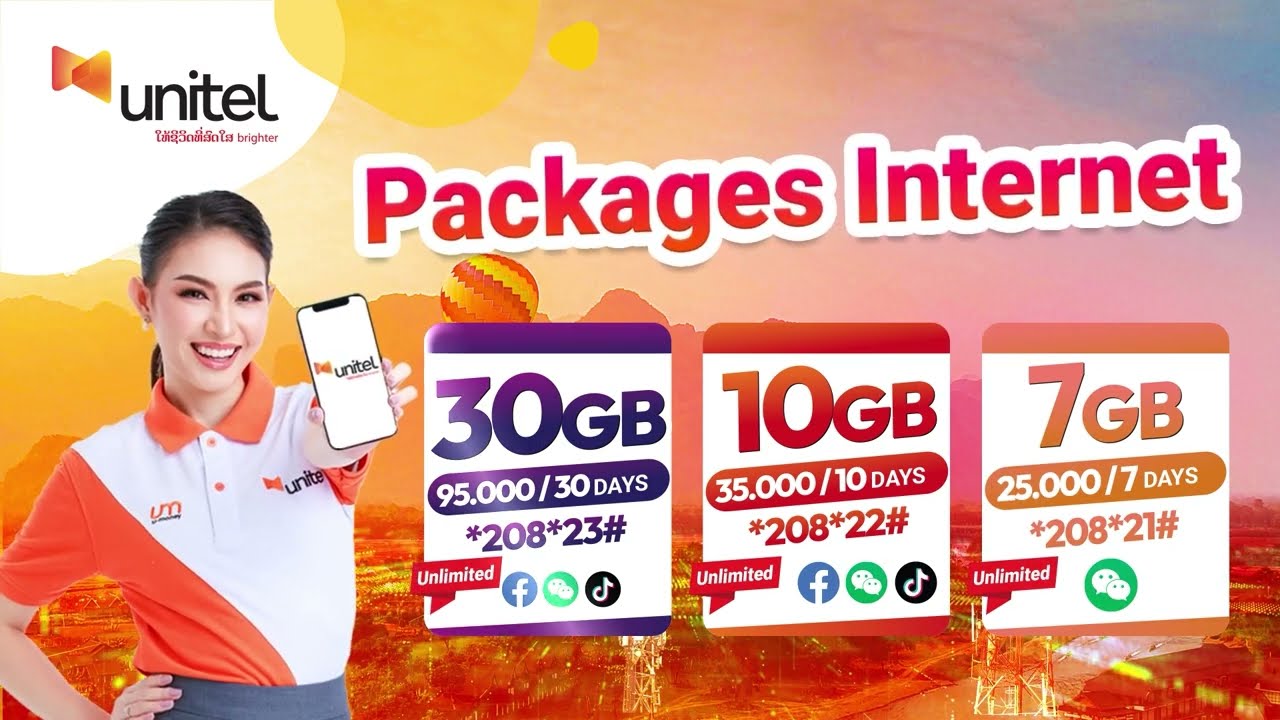
Holding a commanding 51% market share, Unitel is the undisputed leader in the Lao telecommunications sector. With a subscriber base exceeding 5 million, its success is largely attributed to its "infrastructure-first" philosophy. By leveraging the technical expertise and capital of its parent company, Viettel, Unitel has built the most extensive fiber-optic and base station network in the country. Its service portfolio includes traditional voice and SMS, high-speed 4G data, and an array of value-added services (VAS) such as music streaming, gaming platforms, and the "U-Money" mobile wallet, which has been instrumental in promoting financial inclusion in rural areas.
Lao Telecom (LaoTel)
Lao Telecom maintains the second-largest market share at approximately 34%. As the legacy operator, LaoTel benefits from strong brand loyalty and deep-rooted institutional partnerships. With over 3 million subscribers, the company has focused on urban centers and business clients, offering robust broadband internet and enterprise solutions. In recent years, LaoTel has been a pioneer in testing new technologies, becoming the first operator to launch a 5G trial in Vientiane in 2020, signaling its intent to lead the next generation of connectivity.
TPlus Laos (formerly Beeline)
Capturing roughly 10% of the market, TPlus Laos serves approximately 1 million subscribers. Following its rebranding from Beeline, the company has focused on the youth demographic and urban professionals. Its offerings are characterized by flexible data packages and international roaming services. TPlus has also made strides in the digital payment space, integrating mobile services with local banking apps to streamline consumer transactions.
ETL Laos (Enterprise of Telecommunications Lao)
ETL Laos holds a 5% market share. Despite its smaller footprint, ETL is vital to the country’s telecommunications diversity. Following a major investment from a Chinese consortium in 2017, ETL upgraded its network to provide competitive 4G services. The operator focuses on providing cost-effective data solutions and has targeted the growing segment of internet-only users who prioritize connectivity over traditional voice services.
Service Innovations and the Tourist Economy
The services offered by Lao mobile operators have expanded beyond basic connectivity to include sophisticated digital products. A notable innovation is the introduction of eSIM technology specifically tailored for the tourism sector. As Laos continues to be a popular destination for international travelers, operators have streamlined the process of staying connected.
Tourists can now bypass the physical logistics of purchasing a SIM card by opting for an eSIM, which can be activated digitally via platforms such as laosesim.com or at authorized retail outlets in major airports. This technology allows travelers to maintain their primary number while accessing local data rates, a move that has significantly improved the "tourist experience" and contributed to the positive feedback recorded by the Lao National Institute of Tourism and Hospitality.
Furthermore, the integration of mobile money services has transformed the retail landscape. With a large portion of the population remaining unbanked, mobile operators have stepped in to provide digital payment gateways, allowing users to pay utility bills, transfer funds, and purchase goods using their mobile credit or linked digital wallets.
Pricing Structures and Economic Analysis
Pricing for mobile services in Laos is highly competitive within the Southeast Asian context. The average cost of mobile data ranges between $2 and $5 per gigabyte, depending on the volume and duration of the plan. This affordability has been a primary driver of data consumption growth.
Industry analysts note that while the Average Revenue Per User (ARPU) remains lower than in neighboring markets like Thailand or Vietnam, the high volume of data usage compensates for the lower price points. The government’s policy of encouraging competition has prevented monopolistic pricing, ensuring that even low-income earners in rural provinces can afford basic mobile connectivity. However, the reliance on imported technology and hardware, often priced in US dollars or Thai Baht, poses a challenge to operators during periods of local currency volatility.

Infrastructure and Technology Standards
The backbone of the Lao mobile network is the Global System for Mobile Communications (GSM) standard, which provides the foundation for voice services. However, the industry has rapidly pivoted toward data-centric technologies. 4G LTE is now the standard in all provincial capitals and major transit corridors, including the areas surrounding the recently completed Laos-China Railway.
Despite these advancements, a significant digital divide persists. While urban coverage is nearly 100%, rural and mountainous regions—which comprise a large portion of the country’s geography—face inconsistent signal quality. The cost of laying fiber-optic cables and installing base stations in rugged terrain is prohibitively high, often requiring government subsidies or public-private partnerships to bridge the gap.
Regulatory Framework and Government Policy
The Ministry of Technology and Communications is the primary regulatory body, tasked with ensuring that telecommunications development aligns with the national "Digital Economy Development Plan." This plan outlines the roadmap for "Digital Laos 2030," aiming to leverage ICT for economic diversification.
Key regulatory focus areas include:
- Spectrum Management: The fair allocation of frequency bands for 4G and 5G services.
- Consumer Protection: Ensuring transparency in billing and data privacy.
- Fair Competition: Preventing predatory pricing that could drive smaller operators out of the market.
- SIM Registration: Implementing strict "Know Your Customer" (KYC) rules to enhance national security and prevent mobile-based fraud.
Challenges and Future Outlook
The Lao mobile market faces several structural hurdles. First, the lack of a highly skilled local technical workforce necessitates a reliance on foreign experts, primarily from Vietnam, China, and Thailand. Second, the landlocked nature of the country means that international internet bandwidth must be purchased from neighboring countries, increasing the cost of wholesale data.

However, the future outlook remains optimistic. The government’s commitment to increasing internet connectivity in rural areas is expected to open new markets for operators. The anticipated commercial rollout of 5G will not only provide faster mobile internet but also enable Internet of Things (IoT) applications in agriculture and mining—two pillars of the Lao economy.
Industry experts predict that the next five years will see a consolidation of services, where mobile operators transition into "tech-cos" (technology companies), providing a seamless blend of telecommunications, financial services, and digital content. As Laos continues its journey toward digital maturity, the mobile sector will remain the primary engine of connectivity, driving the nation toward a more integrated and prosperous future within the ASEAN community.
