

As the smart home industry approaches a full decade since the mainstream introduction of voice-activated assistants and connected hubs, the ecosystem finds itself at a critical crossroads marked by executive departures, shifting hardware landscapes, and evolving regulatory scrutiny. Next year marks the tenth anniversary of Amazon’s Alexa and the Echo ecosystem, prompting a comprehensive re-evaluation of how far connected home technology has come, what structural challenges remain unresolved, and whether the smart home can truly stand on its own feet commercially and functionally without relying on perpetual tech-giant subsidies.
Simultaneously, Amazon is bracing for a monumental leadership transition. David Limp, Amazon’s long-serving head of devices and services, has announced his retirement. Limp’s departure follows a broader wave of high-profile executive exits across Amazon over the past year, signaling a changing of the guard during a period when the profitability and strategic direction of consumer hardware divisions are facing intense internal and external examination.
The State of Smart Home Hardware: Innovation Versus Practicality
To understand the current friction points in the connected home market, industry analysts often point to the dichotomy between high-end novelty and everyday utility. A prime example is the Mill kitchen composting system, a high-profile waste management device developed by Nest co-founder Matt Rodgers. While hailed for its engineering and design ingenuity, reviews highlight the ongoing struggle of consumer smart devices to justify high price points and specialized utility to mainstream buyers.
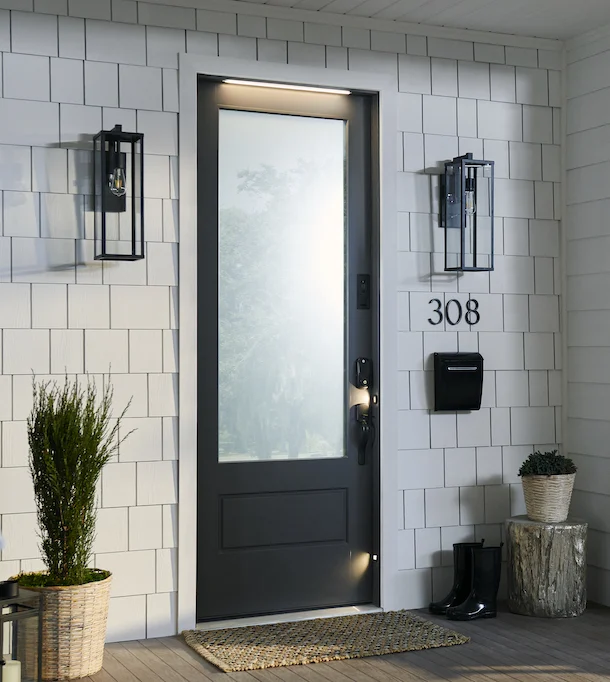
A similar dynamic surrounds the retail debut of the Masonite M-Pwr smart door, which has officially hit shelves at Home Depot. Marketed as the world’s first fully integrated smart door—featuring built-in power, lighting, and smart lock integration—it represents a leap forward in architectural technology. However, its premium pricing places it squarely out of reach for the average homeowner, illustrating a persistent industry trend where advanced connected features remain luxury items rather than accessible household standards.
Amid these consumer-facing dilemmas, regulatory bodies are stepping in to establish baseline protections for an increasingly interconnected world. The Federal Communications Commission (FCC) has officially released its Notice of Proposed Rule Making regarding an Internet of Things (IoT) cybersecurity labeling program. This initiative aims to create a standardized "U.S. Cyber Trust Mark" to help consumers identify smart devices that meet rigorous cybersecurity standards. With a 30-minute or standard 30-day public comment window established for industry stakeholders and consumers alike, the regulatory push underscores growing governmental concern over vulnerabilities in consumer-grade smart devices.
Industrial Vulnerabilities and Infrastructure Security
While consumer smart home gadgets command public attention, enterprise and industrial IoT security present even higher stakes. Recent findings from Microsoft security researchers have exposed a concerning set of vulnerabilities within industrial control systems and operational technology. These newly identified flaws carry the theoretical potential to be exploited to disrupt or entirely shut down critical infrastructure, including power plants.
The discovery highlights the expanding attack surface as utility providers and industrial facilities increasingly digitize their operations. Security experts emphasize that the convergence of IT and operational technology requires far more stringent patching protocols and cross-sector collaboration to prevent catastrophic cyber incidents. As industrial IoT scales, safeguarding the backbone of public utilities remains an urgent priority for both private tech firms and federal regulators.

Protocols, Standards, and the Evolution of Z-Wave
Beneath the software and hardware layers, the underlying communication protocols driving the smart home are undergoing a profound evolution. For years, the Z-Wave ecosystem relied heavily on a single primary semiconductor provider, creating potential supply chain bottlenecks. However, the ecosystem has received a major boost with the emergence of a new chip provider, Trident IoT, founded by industry veteran and Chief Technology Officer Mariusz Malkowski.
In a recent industry discussion, Malkowski shed light on Trident IoT’s origin and its strategic significance for the Z-Wave community. By establishing a secondary source for Z-Wave silicon, the company aims to stabilize the supply chain, lower barriers to entry for hardware manufacturers, and accelerate device development. Furthermore, Trident IoT is positioning itself not just as a silicon provider, but also as a dedicated Z-Wave certification house, streamlining the testing and deployment process for new products.
A critical component of this protocol evolution is interoperability, particularly concerning the relationship between legacy mesh networks like Z-Wave and newer universal standards like Matter. Malkowski explains that effective bridging mechanisms will be essential to ensure that millions of existing Z-Wave devices can coexist and communicate seamlessly within a Matter-dominated ecosystem. The future of Z-Wave will also heavily lean on advancements such as Z-Wave Long Range (Z-Wave LR), which extends communication ranges and supports significantly larger device densities per network, alongside upcoming enterprise-grade security upgrades.
Local Control and the Consumer Hub Market
As cloud-dependent smart home platforms face occasional outages, privacy concerns, and subscription fatigue, consumer demand for local control has surged. This trend is vividly reflected in the market reception of advanced routing hardware, such as the Homey Pro smart home hub.
Recent hands-on evaluations of the Homey Pro reveal a powerful device with immense potential, though it occupies a luxury pricing tier. Unlike traditional cloud-tethered gateways, the Homey Pro allows users to manage and automate their smart home devices entirely locally. This capability ensures faster response times, enhanced data privacy, and uninterrupted functionality even during internet service interruptions. However, prospective buyers are advised to carefully verify device compatibility matrices, as bridging a vast array of disparate wireless protocols requires robust and continuously updated software support.
Addressing Practical Integration: From Hubs to Handcrafted Lighting
The complexity of modern smart lighting continues to challenge DIY enthusiasts and professionals alike. A common real-world dilemma involves integrating smart illumination into custom, handcrafted woodworking projects—such as a custom lamp built by a woodworker seeking functional brilliance without compromising aesthetic design. Selecting the correct bulb requires balancing color temperature, lumen output, physical dimensions, and protocol compatibility (such as Zigbee, Z-Wave, or Wi-Fi) to ensure the finished piece functions reliably within a broader smart home automation routine.
Broader Implications and Outlook
As the smart home enters its second decade, the convergence of regulatory mandates like the FCC’s cybersecurity label, the maturation of cross-protocol standards like Matter, and hardware innovations from companies like Trident IoT point toward a more mature, secure, and resilient ecosystem.
Yet, challenges remain. The industry must navigate the delicate balance between premium innovation and mass-market affordability, ensure robust security from consumer plugs to industrial power grids, and address the leadership vacuums left by retiring pioneers. Whether platforms like Alexa can truly stand on their own as profitable, indispensable household infrastructure will depend heavily on how successfully manufacturers resolve these foundational hurdles in the years ahead.
