

As the smart home ecosystem prepares to mark a significant milestone with Alexa and the Amazon Echo approaching their tenth anniversary next year, the industry finds itself at a critical juncture characterized by high-profile departures, evolving hardware standards, and heightened security scrutiny. This transitional phase was underscored by the recent announcement that Amazon’s head of devices, David Limp, plans to retire. Limp’s departure represents the latest in a wave of executive exits that have reshaped Amazon’s corporate leadership over the past year, prompting analysts and consumers alike to question the long-term trajectory of the company’s hardware division and the broader automated living sector.
The Evolution and Stagnation of the Smart Home Ecosystem
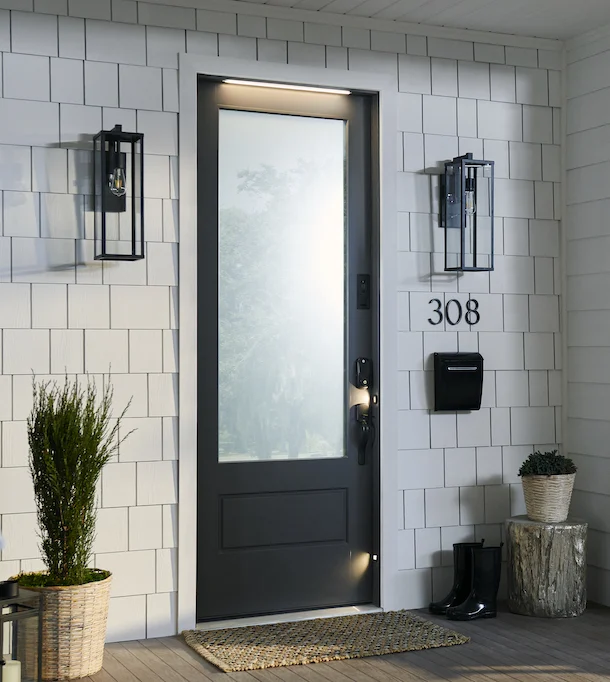
Over the past decade, voice assistants and connected hubs have transitioned from novel consumer gadgets to deeply embedded household fixtures. However, the maturation of the smart home market has also exposed persistent structural challenges. The dichotomy of the current market is perfectly illustrated by recent product rollouts and consumer reviews. On one hand, innovative devices continue to emerge, such as the Mill composting system—a kitchen waste management solution created by Nest co-founder Matt Rodgers. On the other hand, the commercialization of high-end infrastructure, highlighted by Masonite launching its ultra-expensive smart door directly at Home Depot, demonstrates that advanced automated amenities remain largely inaccessible to the average consumer.
These developments raise fundamental questions regarding whether the smart home can stand on its own as a self-sustaining, interoperable ecosystem, or if it will remain a fragmented collection of luxury novelties. While consumers increasingly demand seamless integration across appliances, lighting, and security systems, compatibility issues and high price points continue to hinder mass-market adoption.
Regulatory Intervention and Cybersecurity Standards
Amid these market complexities, government oversight is tightening. The Federal Communications Commission (FCC) has officially released its Notice of Proposed Rule Making regarding an Internet of Things (IoT) cybersecurity labeling program. This regulatory initiative aims to establish a standardized trust mark for smart devices, helping consumers easily identify products that meet rigorous federal cybersecurity benchmarks.
Industry stakeholders and cybersecurity experts have been granted a 30-day window to submit public comments on the proposed framework. The implementation of a mandatory or universally recognized labeling program is expected to fundamentally alter how manufacturers design and market connected hardware, shifting consumer priorities toward verifiable security and data privacy.
Industrial Vulnerabilities and Infrastructure Security
While consumer-grade IoT garners significant media attention, the security implications of connected infrastructure extend far beyond residential dwellings. Recently, Microsoft security researchers uncovered a novel set of vulnerabilities affecting critical industrial equipment. According to technical reports, these flaws could theoretically be exploited by malicious actors to disrupt operations or even shut down power plants.

The discovery underscores the precarious nature of operational technology (OT) as it becomes increasingly digitized and connected to broader networks. Cybersecurity agencies globally have repeatedly warned that legacy industrial control systems lack the native defenses required to withstand sophisticated cyberattacks, making proactive patch management and architectural isolation imperative for national security.
Hardware Advancements and Local Control Solutions
In the realm of residential and commercial automation standards, the connectivity landscape is undergoing notable shifts. Z-Wave, one of the foundational radio protocols for smart home automation, has received a strategic boost with the emergence of a secondary chip provider, Trident IoT.
Complementing this hardware expansion, recent hardware evaluations—such as reviews of the high-end Homey Pro smart home hub—highlight a growing consumer preference for local device control. Unlike cloud-dependent ecosystems that leave users vulnerable to internet outages and corporate policy shifts, local-control hubs allow users to manage their networks entirely on-premise, ensuring greater reliability, speed, and privacy.
The Future of Z-Wave and Cross-Protocol Bridging
To gain deeper insights into the changing semiconductor and protocol landscape, industry experts sat down with Mariusz Malkowski, founder and CTO of Trident IoT. During the discussion, Malkowski detailed the foundational origins of Trident IoT and outlined what the entry of a secondary chip provider means for the broader Z-Wave community.
A central focus of the discussion involved the integration of emerging protocols, specifically examining how Matter—the universal smart home standard backed by major tech giants—will coexist and interoperate with Z-Wave. Malkowski emphasized the critical importance of effective bridging technologies to ensure that legacy Z-Wave devices remain functional within modern Matter-compliant ecosystems.
Furthermore, the conversation explored the future roadmap for Z-Wave, including the rollout of Z-Wave Long Range (Z-Wave LR) and upcoming security enhancements designed to meet modern enterprise and residential demands. Beyond manufacturing Z-Wave silicon, Malkowski explained that Trident IoT plans to diversify by developing and integrating alternative smart home radio protocols into its product offerings, while simultaneously operating as an official Z-Wave certification facility to streamline compliance testing for manufacturers.
Broader Industry Implications and Outlook
As the smart home industry approaches its second decade, the convergence of regulatory mandates, executive leadership changes, and protocol unification efforts will dictate the sector’s viability. The success of initiatives like the FCC’s cybersecurity labeling, combined with robust hardware support from new semiconductor entrants like Trident IoT, suggests an industry striving for maturity, security, and standardization. However, bridging the gap between high-end luxury automation and accessible, secure consumer technology remains the ultimate challenge for manufacturers in the years ahead.
