

The intersection of artificial intelligence and industrial automation has reached a pivotal juncture, marked by significant structural changes in smart home ecosystems, semiconductor alliances, and edge-computing deployments. In a recent industry briefing and podcast discussion, leading technology analysts and enterprise leaders unpacked the friction points currently challenging the Internet of Things (IoT). Central to this week’s discourse is an in-depth exploration of TinyML—machine learning algorithms optimized to run on low-power, resource-constrained hardware—featuring insights from Muthu Sabarethinam, Vice President of AI/ML Products and Services at Honeywell.
As industrial giants and smart home ecosystems grapple with scalability, interoperability, and security hurdles, the demand for decentralized intelligence has never been more urgent. This report examines the critical developments shaping the connected hardware landscape, ranging from consumer smart home interoperability crises to advanced industrial edge AI implementations.
Smart Home Standards Face Severe Interoperability and Credentialing Roadblocks
The promise of a unified smart home experience, long championed by the Matter connectivity standard, continues to encounter significant friction in the consumer market. Industry analysts and major technology publications, including The Verge, have recently highlighted systemic flaws within the Matter ecosystem, specifically concerning border router interoperability and Thread credentialing.
Designed to simplify device onboarding and cross-platform communication among giants like Apple, Google, and Amazon, Matter has instead exposed deep divisions regarding vendor implementation. Rather than pointing to the core protocol as the primary failure point, hardware experts emphasize that vendor-specific execution is the root of the problem. Inconsistent device support, complicated setup procedures, and fragmented app ecosystems have left early adopters navigating a complex maze of technical troubleshooting.
Thread credentialing—the process by which security keys and network credentials are shared securely among border routers—has emerged as a major bottleneck. When devices from different manufacturers attempt to form a cohesive mesh network, mismatched firmware versions and proprietary security overlays frequently disrupt communication. Industry observers note that until manufacturers commit to standardized, frictionless software updates and transparent interoperability testing, consumer adoption of unified smart home ecosystems will likely face prolonged resistance.
Semiconductor Industry Shifts: RISC-V Alliances and IoT Consolidation
Beyond the consumer sphere, the semiconductor landscape is undergoing rapid consolidation and strategic realignment. In a major development for open-source hardware, industry heavyweights Qualcomm, NXP Semiconductors, and Infineon Technologies have joined forces to back a new enterprise centered on advancing the RISC-V architecture.
The initiative aims to accelerate the commercialization of RISC-V-based multi-core silicon, offering device manufacturers an open, royalty-free alternative to proprietary instruction set architectures like ARM. By pooling resources, these semiconductor leaders seek to drive software standardization and hardware design modularity across automotive, industrial, and consumer IoT sectors.
Concurrently, corporate restructuring continues to reshape the connected device supply chain. Renesas Electronics recently announced a definitive agreement to acquire Sequans Communications, a prominent specialist in cellular IoT connectivity modules. This acquisition underscores a broader industry trend toward vertical integration, as major chipmakers race to offer turnkey solutions that combine processing power, power management, and cellular connectivity directly out of the box.
Industrial Cybersecurity and Emerging Infrastructure Frontiers
As the density of connected devices increases globally, security vulnerabilities and infrastructure demands have escalated. Recent investigative reporting by cybersecurity journalist Kim Zetter shed light on alarming anomalies and potential remote interference targeting radiation sensors near the Chernobyl exclusion zone. The incident has reignited debates over the cyber-physical security of critical infrastructure, highlighting the susceptibility of remote telemetry units to malicious tampering and spoofing.
In response to infrastructure protection needs, commercial drone startups are innovating beyond traditional visual line-of-sight (BVLOS) limitations. California-based Birdstop recently secured new funding to expand its nationwide network of automated, on-demand drone infrastructure. Designed to mimic the architecture of a satellite constellation, these persistent aerial networks provide real-time monitoring and security surveillance for critical infrastructure assets, including pipelines, electrical substations, and data centers.
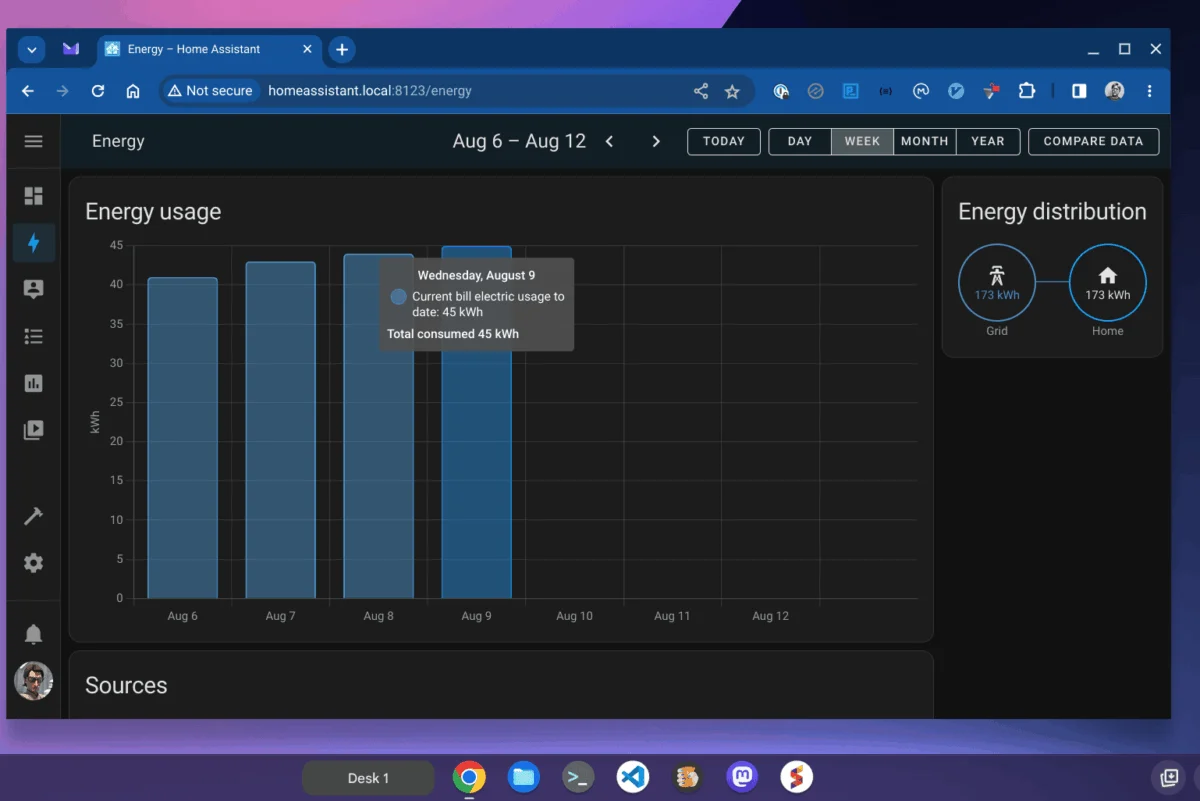
Meanwhile, consumer home automation enthusiasts are witnessing notable shifts in platform preferences. Industry discussions highlighted the growing migration of power users away from closed, cloud-dependent ecosystems toward open-source automation platforms like Home Assistant. This trend reflects a broader consumer desire for local control, enhanced data privacy, and immunity against cloud service deprecations. Additionally, utility providers are ramping up smart energy management programs, prompting analysts to publish comprehensive preparation guides to help homeowners optimize energy consumption ahead of dynamic pricing mandates.

Honeywell and the Strategic Deployment of TinyML
Amid these macroeconomic and technological shifts, industrial enterprises are redefining how data is captured, processed, and monetized. Muthu Sabarethinam, VP of AI/ML Product and Services at Honeywell, joined the industry broadcast to discuss how the multinational conglomerate is approaching the implementation of TinyML across its vast industrial footprint.
Honeywell’s operational scope encompasses more than one million connected sensors deployed globally in commercial buildings, aerospace systems, and manufacturing plants. Historically, industrial telemetry required raw sensor data to be transmitted over networks to centralized cloud servers or local on-premise servers for complex analysis. However, this traditional model introduces critical operational limitations, including high bandwidth consumption, network vulnerability, latency in critical safety loops, and significant power drain.
Sabarethinam detailed why Honeywell is aggressively shifting toward algorithms capable of executing directly on edge sensors. By embedding machine learning models onto resource-constrained microcontrollers, Honeywell can achieve local anomaly detection without relying on continuous cloud connectivity.
"Running machine learning at the extreme edge fundamentally transforms how we maintain and secure industrial equipment," Sabarethinam explained during the briefing. "When an algorithm processes vibration, thermal, or acoustic data directly on the sensor, the latency drops to milliseconds. This immediate processing is vital for predictive maintenance, allowing systems to autonomously detect micro-fractures, bearing wear, or thermal runaways before catastrophic failures occur."
Key Benefits of TinyML in Industrial Environments
The integration of machine learning at the sensor layer yields multiple quantifiable advantages for large-scale industrial operations:
- Enhanced Security: By processing sensitive telemetry data locally rather than transmitting raw data streams across external networks, the attack surface for malicious interception or cyber espionage is substantially reduced.
- Power Efficiency: Modern TinyML frameworks are optimized to consume micro-watts of power, enabling battery-operated or energy-harvesting sensors to run complex inferencing models for years without manual battery replacements.
- Latency Reduction: Instantaneous local decision-making eliminates the round-trip delay associated with cloud communications, which is critical for real-time safety shut-offs and high-speed manufacturing automation.
- Bandwidth Preservation: Instead of streaming continuous, high-volume raw data feeds, edge sensors transmit only actionable insights and condensed metadata, drastically lowering network infrastructure costs.
Packaging Algorithms for Industrial Scale
Deploying artificial intelligence across a heterogeneous fleet of over a million legacy and modern sensors presents unique software engineering challenges. Sabarethinam emphasized that the success of enterprise TinyML relies heavily on modular software packaging and standardized deployment pipelines.
To scale effectively, industrial AI providers must abstract the underlying hardware complexities, allowing algorithms to be seamlessly pushed across different microcontroller architectures. Honeywell’s strategy involves containerizing models and utilizing standardized over-the-air (OTA) update protocols to ensure that field-deployed sensors can receive continuous model enhancements and security patches without operational downtime.
Business Models and the Evolving Data Economy
The conversation concluded with an examination of shifting business models in the industrial IoT sector. As hardware becomes increasingly commoditized, enterprise customers are no longer simply purchasing static sensors or machinery. Instead, end-users demand flexible, data-driven service models—often structured as Equipment-as-a-Service (EaaS) or Software-as-a-Service (SaaS).
Customers increasingly expect real-time visibility into equipment health, energy consumption optimization, and predictive maintenance schedules bundled directly into their hardware contracts. By leveraging TinyML to generate actionable intelligence at the edge, companies like Honeywell can package advanced diagnostic capabilities as value-added subscription services. This transition not only deepens customer engagement but also establishes recurring revenue streams built upon proprietary machine learning insights.
Broader Implications for the Connected Future
The convergence of fragmented consumer standards, open-source semiconductor collaborations, and advanced industrial edge AI signals a mature phase in the evolution of connected technology. While consumer ecosystems like Matter continue to navigate growing pains related to interoperability and credentialing, the industrial sector is rapidly establishing rigorous paradigms for secure, autonomous edge computing.
As demonstrated by Honeywell’s integration of TinyML, the future of artificial intelligence lies not exclusively in massive, centralized cloud data centers, but distributed intelligently across billions of interconnected edge devices. By prioritizing local data processing, energy efficiency, and modular software design, the technology sector is laying the groundwork for a more resilient, responsive, and secure digital infrastructure.
