
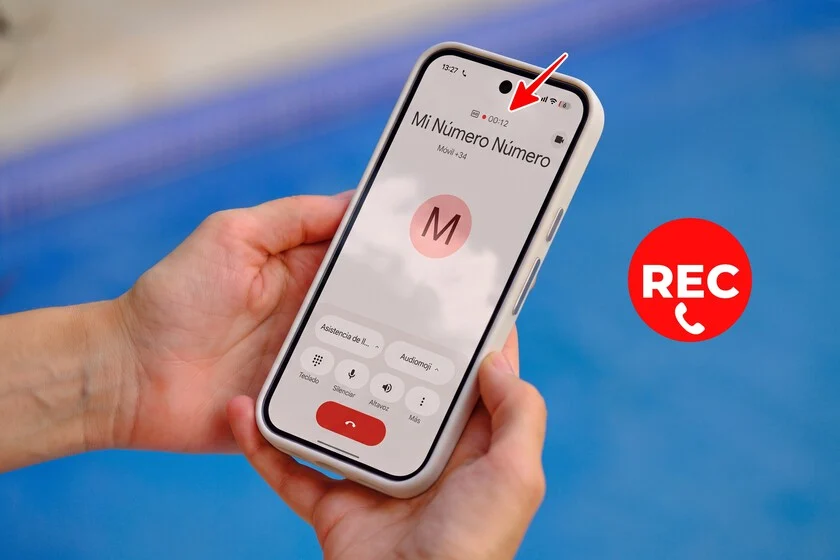

The necessity of recording a phone call has become increasingly common, serving vital purposes ranging from securing verbal proof of a contract, documenting issues with technical support, to effectively combating and reporting abusive spam call practices, as highlighted by the Spanish Data Protection Agency (AEPD). However, what was once a simple tap of a button on a smartphone a few years ago has, by 2026, evolved into a significant technical challenge, primarily due to stringent privacy controls enforced by operating system developers. This creates a striking dichotomy: while the legal framework in Spain broadly permits such recordings, the technological giants Apple and Google have erected substantial barriers, making the practical execution difficult for the average user. This comprehensive guide delves into the pertinent legal landscape in Spain and explores the remaining viable alternatives for recording calls, particularly those that do not necessitate installing third-party applications.
The Legal Framework in Spain: A Nuanced Right to Record
The legality of recording a conversation in Spain hinges on a single, critical detail: your active participation in it. Spain operates under the principle of "one-party consent," meaning that it is entirely legal to record any telephone conversation in which you are an active participant, even without informing the other party or seeking their explicit permission. This principle is firmly rooted in Article 18 of the Spanish Constitution, which protects the right to honor, personal and family privacy, and self-image, and has been consistently reaffirmed by the repeated jurisprudence of the Supreme Court. These recordings are admissible as evidence in legal proceedings, provided they were not obtained through coercion, deceit, or any other unlawful means. The rationale is that an individual participating in a conversation is a direct party to it and therefore has the right to record their own communication, as it pertains to their own privacy and record-keeping.
Conversely, the act of recording or intercepting a conversation between two or more parties where you are not a participant constitutes a serious criminal offense. This is categorized as a crime of discovery and revelation of secrets, explicitly defined in Article 197.1 of the Spanish Penal Code. This article states: "He who, in order to discover the secrets or violate the privacy of another, without their consent, seizes their papers, letters, email messages or any other documents or personal effects, intercepts their telecommunications or uses technical devices for listening, transmission, recording or reproduction of sound or image, or any other communication signal, shall be punished with penalties of imprisonment of one to four years and a fine of twelve to twenty-four months." The severity of these penalties underscores the robust legal protection afforded to privacy and the sanctity of communications in which one is not a direct participant. This clear distinction is paramount: recording your own conversation is a right, while eavesdropping on others is a crime.
Furthermore, it is crucial to differentiate between the right to record and store an audio file for personal use and the right to disseminate it. While the law permits recording a conversation for one’s personal records or as potential evidence, this does not automatically grant the right to publish it on social media platforms, transmit it to third parties, or make it public in any form without the explicit consent of all parties involved. Unauthorised dissemination of such recordings can violate the General Data Protection Regulation (GDPR) and infringe upon the right to honor and privacy of the other party, potentially leading to significant legal liabilities, including civil lawsuits for damages and further criminal charges depending on the content and context of the disclosure. This legal nuance emphasizes that while individuals have the right to self-protection through recording, they must exercise extreme caution regarding how that information is subsequently handled and shared.

The Digital Divide: How Android OEMs Handle Call Recording
The landscape for call recording on Android devices has undergone a dramatic transformation over the past few years, largely driven by Google’s increasing emphasis on user privacy and compliance with diverse global regulations. Starting with Android 10, Google began to restrict access to the call audio channel through its Application Programming Interfaces (APIs), progressively making it harder for third-party applications to record calls. This culminated in a definitive ban in 2022, prohibiting any app on the Google Play Store from accessing the accessibility API for the purpose of call recording. This move, while aimed at bolstering user privacy and preventing misuse, inadvertently created a significant technical hurdle for users with legitimate reasons to record conversations. Consequently, in 2026, the availability of a native, integrated call recording function on an Android smartphone is entirely dependent on the specific device manufacturer and its regional policies. The options are, regrettably, not numerous.
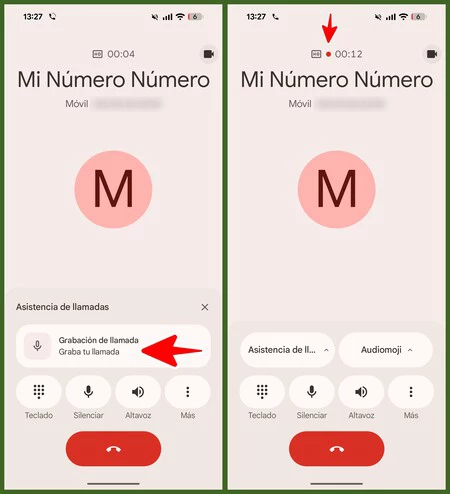
Among the major Android manufacturers, Google’s own Pixel line stands out for its advanced integration of call recording. From the Pixel 6 onwards, and specifically on devices running Android 16, users benefit from a dedicated "Record" button directly within the Google Phone app. Critically, this feature functions in Spain. Upon activation, the system automatically plays an audible announcement, informing both interlocutors that the call is being recorded. This adherence to transparency aligns with best practices for consent and legal compliance. Furthermore, Pixel devices not only save the recorded audio file within the native "Recorder" app but also provide an automatic transcription service in Spanish, significantly enhancing the utility of the feature for documentation and review. This robust implementation makes Pixel phones a unique exception in a restrictive environment.

However, the situation is markedly different for most other leading Android manufacturers, particularly within the European Union. These companies, opting for a highly cautious approach to navigate the complex and varying privacy laws across different EU member states, generally block the native call recording function in their devices sold in the region. Our checks confirm that the recording option is conspicuously absent in Nothing OS on Nothing Phones, in ColorOS 16 for Oppo devices, and regrettably, in devices from Xiaomi and POCO running HyperOS within the EU. This widespread blocking, often explained by manufacturers as a measure to "play it safe" and avoid potential legal entanglements, leaves a significant portion of the Android user base without a convenient, built-in solution.
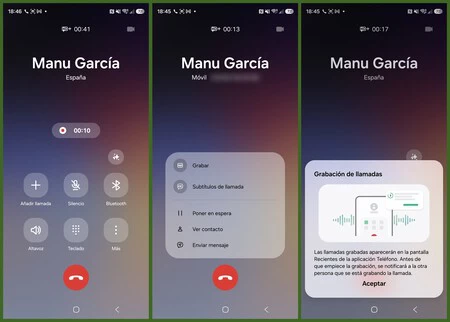
Samsung, a dominant player in the Android market, presents a more nuanced scenario. The availability of call recording on Samsung devices is model-dependent. For instance, a mid-range Galaxy A54, even if fully updated, typically does not feature the recording function in the Samsung phone app. In stark contrast, premium models like the Galaxy S26 Ultra do offer this capability. This distinction is tied directly to Samsung’s advanced AI suite, Galaxy AI. Devices compatible with Galaxy AI integrate the recording feature directly into the Samsung Phone app. For compatible Samsung phone users, initiating a recording during a call involves tapping "More" and then "Record." Similar to Google’s implementation, the person on the other end of the line will also hear an automated message announcing that the call is being recorded, ensuring transparency and legal adherence where the feature is available. This strategic integration with AI features indicates a trend towards bundling advanced functionalities with premium device tiers, further fragmenting the user experience regarding call recording.
Apple’s Approach: iOS Innovations Meet European Restrictions
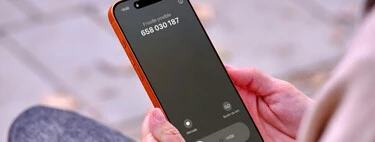
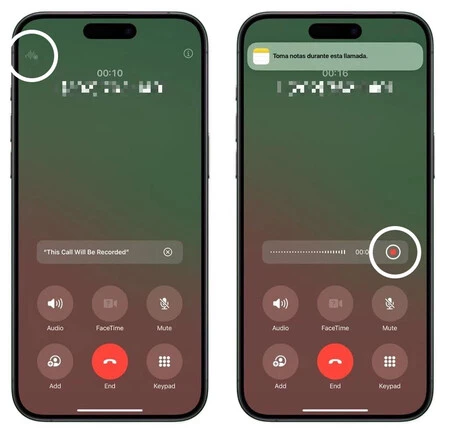
The Apple iPhone ecosystem has also witnessed significant changes concerning call recording, particularly with the advent of recent operating system versions. In iOS 18, and subsequently refined in iOS 26, Apple introduced, for the first time in its history, a dedicated button to record and transcribe calls directly within its native Phone app. This marked a notable shift for a company renowned for its stringent privacy policies, reflecting a recognition of the growing user demand for such functionality. True to its privacy-first philosophy, in territories where this feature is deployed, the iPhone automatically plays an audible notification to warn the other party as soon as the recording begins, ensuring full transparency and compliance with "two-party consent" laws prevalent in many regions globally.
However, for users in Spain and across the European Union, the introduction of this feature has been met with significant regional limitations. The primary challenge lies in the deployment strategy of this functionality. Apple’s native call recording tool is intricately linked with its comprehensive artificial intelligence suite, Apple Intelligence. Due to ongoing regulatory discussions, data privacy concerns, and the complexities of navigating diverse legal frameworks within the European Union, Apple has chosen not to offer Apple Intelligence, and by extension, its integrated call recording feature, within the EU territory. This decision, likely influenced by the EU’s proactive stance on digital regulation, including the Digital Markets Act (DMA) and the General Data Protection Regulation (GDPR), means that European users, including those in Spain, are currently unable to utilize this native call recording button on their iPhones. This creates a situation where a globally available, highly anticipated feature is withheld from a major market, leaving a significant segment of users without a native, officially supported method for recording calls. The absence of this feature underscores the ongoing tension between technological innovation, user demand, and the complexities of international legal and regulatory compliance.
The Unofficial Solution: A Return to Basics
Given the widespread blocking of third-party call recording applications on Google’s Play Store, the absence of the native function on iPhones in Europe, and its general unavailability across the vast majority of Android devices sold in Spain, the only universally accessible and free alternative – without resorting to potentially risky APK installations from unofficial sources – is the most traditional and rudimentary method: leveraging the speakerphone function with a secondary recording device.
This method, while simple and straightforward, requires two devices and accepts a compromise on audio quality. The steps are as follows:
- Initiate the phone call on your primary mobile device.
- Activate the speakerphone function on your primary device, ensuring the conversation is audible in the immediate vicinity.
- Take a second device – this could be another smartphone, a dedicated voice recorder, a tablet, or even a laptop with recording capabilities – and place it near the speaker of your primary phone.
- Start recording on the second device, capturing the audio of the conversation as it plays through the speaker.
- Once the call concludes, stop the recording on the second device and save the audio file.
While this approach is undeniably rudimentary and the audio quality will inherently be inferior compared to an internal audio capture (often picking up ambient noise, echoes, or being distorted by distance), it offers several crucial advantages. Firstly, it guarantees a recording solution that is 100% compatible with any phone brand or operating system, bypassing all software restrictions imposed by Google, Apple, or individual manufacturers. Secondly, it is entirely offline, meaning no data is transmitted to third-party servers, and it avoids the need to grant potentially risky accessibility permissions or surrender personal data to unknown developers. For many users seeking a reliable, private, and legally sound way to document their conversations, this "analog" workaround remains the most dependable option in 2026, despite its technological simplicity and compromised audio fidelity. It serves as a stark reminder of how technological advancement, when coupled with regulatory caution, can sometimes force users back to more basic, albeit effective, solutions.
Implications and the Road Ahead
The current state of call recording in Spain in 2026 presents a significant paradox. While Spanish law unequivocally grants individuals the right to record their own conversations for legitimate purposes, the technological infrastructure provided by the dominant mobile operating systems and device manufacturers actively obstructs this right. This disconnect has profound implications for consumer protection, legal recourse, and personal record-keeping. Consumers facing abusive telemarketing practices, needing proof of verbal agreements, or documenting faulty service interactions find themselves disempowered, forced to rely on rudimentary methods that yield suboptimal results or navigate a fragmented and often unavailable native software landscape.
The cautious approach adopted by Apple and many Android manufacturers in the EU, while ostensibly driven by privacy concerns and the complexities of cross-border legal compliance, inadvertently creates a barrier for users seeking to exercise their legal rights. The integration of recording features with advanced AI suites like Galaxy AI and Apple Intelligence, while innovative, further complicates accessibility by tying a basic utility to premium hardware or regional AI availability restrictions. This trend suggests a future where fundamental functionalities might become exclusive to higher-end devices or subject to the geographical rollout of complex AI services, exacerbating the digital divide.
Looking ahead, the tension between user demand for practical tools, corporate privacy mandates, and national legal frameworks is likely to persist. There may be increasing pressure on regulators and tech companies to find a balanced solution that respects individual rights without compromising privacy. This could involve standardized, transparent recording mechanisms with mandatory disclosures, or clearer guidelines from regulatory bodies that allow manufacturers to implement these features uniformly without fear of legal repercussions. Until such a consensus is reached, the landscape of call recording in Spain will remain a challenging terrain, where a clear legal right is continuously undermined by technical obstacles, leaving users to adapt with the simplest, albeit least sophisticated, tools at their disposal. The year 2026, therefore, marks a period of significant frustration for Spanish smartphone users seeking to record their calls, highlighting an ongoing battle between the letter of the law and the reality of modern mobile technology.
