
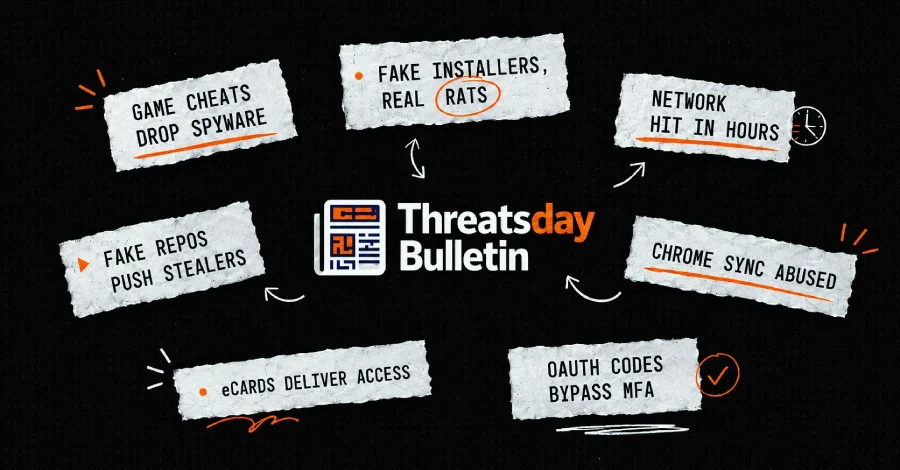

The contemporary cybersecurity landscape is increasingly defined by the exploitation of established trust mechanisms, where seemingly innocuous digital elements—a familiar code repository, a widely-used software installer, or a routine synchronization setting—become the initial points of compromise. This insidious trend highlights a critical vulnerability in the digital ecosystem: the pervasive granting of implicit trust, which, once betrayed, allows malicious actors to rapidly escalate privileges, establish command-and-control, and execute devastating attacks before their presence is even fully understood. Old, well-documented vulnerabilities are resurfacing with renewed efficacy, weak default configurations continue to serve as convenient backdoors, and some attack methodologies are so fundamentally simple they challenge the very definition of advanced persistent threats. The cumulative effect is a complex web of vulnerabilities, a digital "mess" where the speed of damage far outpaces the velocity of explanation.
The Insidious Nature of Compromised Trust
At the heart of many recent cyber incidents lies a fundamental miscalculation regarding trust. Organizations and individuals alike operate under an assumption of benign intent when interacting with established digital components. A developer pulls code from a seemingly legitimate repository, an IT administrator deploys software via a trusted installer, or an employee configures cloud synchronization with standard settings. These actions, routine and seemingly harmless, represent potential handoff points where control can subtly shift from legitimate custodians to malicious third parties. When "the handoff goes bad," the compromised system begins communicating with an unauthorized entity, transforming a trusted asset into a covert operational base for an attacker. This shift often goes undetected in its nascent stages, allowing adversaries to embed themselves deeply within networks, mapping architectures, exfiltrating data, and preparing for more disruptive actions. The speed with which these initial footholds can be leveraged for broader compromise is a defining characteristic of modern cyber warfare, often making it challenging for security teams to contain the damage effectively.
Understanding the Anatomy of a Modern Cyber Attack: A Conceptual Chronology
The progression of an attack leveraging compromised trust often follows a predictable, albeit rapid, trajectory, underscoring the urgency of early detection and intervention.
Phase 1: Initial Infiltration via Trusted Vectors
The attack commences with the exploitation of a seemingly trusted digital asset. This could involve a supply chain attack where malicious code is injected into a legitimate software update, an installer is tampered with before distribution, or a public code repository is poisoned with backdoored packages. Alternatively, it might involve social engineering tactics that trick users into granting excessive permissions or downloading malicious executables disguised as legitimate tools. The key here is the subversion of an existing trust relationship.

Phase 2: Establishing Foothold and Command-and-Control
Once the initial compromise is achieved, the malicious payload executes, establishing a persistent foothold within the target environment. This often involves creating scheduled tasks, modifying system configurations, or installing remote access Trojans (RATs). Crucially, the compromised "box starts talking to someone else"—establishing a covert communication channel with the attacker’s command-and-control (C2) infrastructure. These C2 channels are frequently designed to mimic legitimate network traffic, making them difficult to detect with traditional monitoring tools.
Phase 3: Lateral Movement and Privilege Escalation
With a foothold established, attackers embark on reconnaissance, mapping the internal network, identifying critical assets, and searching for opportunities to elevate their privileges. This phase involves exploiting misconfigurations, unpatched vulnerabilities on other systems, or weak credentials to move laterally across the network. The goal is to gain access to sensitive systems and data, often targeting domain controllers, critical databases, or intellectual property repositories.
Phase 4: Data Exfiltration or System Disruption
Upon achieving their objectives, whether it’s stealing sensitive data, encrypting systems for ransomware, or sabotaging critical infrastructure, attackers execute the final stages of their plan. Data exfiltration often involves compressing and encrypting data before sending it out of the network in small, fragmented packets to evade detection. For disruptive attacks, malware might be deployed across the network to cripple operations.
Phase 5: Discovery, Containment, and Remediation
This phase, unfortunately, often occurs long after the initial compromise. Detection can come from internal security tools, external threat intelligence, or even public disclosure of stolen data. Once discovered, organizations initiate incident response procedures to contain the breach, eradicate the threat, recover compromised systems, and remediate underlying vulnerabilities. The average time to identify and contain a data breach can extend for months, providing attackers ample opportunity to achieve their objectives.
The Resurgence of Legacy Vulnerabilities and Weak Defaults
A significant contributing factor to the current "mess" is the persistent threat posed by "old bugs" and "weak defaults." Despite decades of cybersecurity advancements, fundamental vulnerabilities continue to plague systems. These are not necessarily zero-day exploits but rather well-known weaknesses that have patches available, yet remain unaddressed in numerous environments. The phenomenon of "technical debt" often means organizations defer patching or updating legacy systems, creating fertile ground for exploitation. A vulnerability in an older version of a commonly used library, for example, might be exploited years after its public disclosure simply because an organization failed to update.

Similarly, "weak defaults are earning their keep" as easy entry points for attackers. Software and hardware often ship with default usernames, passwords, open ports, or overly permissive configurations designed for ease of use rather than security. While vendors increasingly encourage users to change these defaults, the reality is that many systems in production environments still rely on them. According to various cybersecurity reports, misconfigurations, including reliance on weak defaults, consistently rank among the top causes of data breaches. The sheer volume of internet-connected devices, from IoT sensors to enterprise servers, makes the collective impact of unaddressed defaults a systemic risk. Attack paths that exploit these foundational weaknesses are often "so plain they barely feel like research" to seasoned threat actors, yet they remain highly effective.
The Supply Chain: A Vector of Undue Trust
The digital supply chain has emerged as a particularly potent vector for these types of attacks. Modern software development relies heavily on third-party components, open-source libraries, and interconnected services. A "familiar repo" might host a malicious package that is then incorporated into countless applications. A "useful installer" might be trojanized at its source, infecting every user who downloads it. The SolarWinds incident in 2020 served as a stark reminder of how a single compromise within a trusted software vendor could ripple through thousands of organizations globally, impacting government agencies and Fortune 500 companies alike. This demonstrates the profound challenge of vetting every component within an increasingly complex and interdependent software ecosystem. Organizations are often forced to grant bulk trust to their vendors and their vendors’ vendors, creating a cascade of potential vulnerabilities that are difficult to track and secure.
The Economic and Operational Toll of Cyber Breaches
The implications of these breaches extend far beyond immediate technical disruptions. The economic toll is substantial. The average cost of a data breach globally reached an estimated $4.45 million in 2023, representing a 15% increase over three years. This figure encompasses detection and escalation costs, notification expenses, lost business, and post-breach response. For critical infrastructure or highly regulated industries, these costs can skyrocket due to regulatory fines, legal fees, and prolonged operational downtime.
Beyond the direct financial impact, organizations face severe reputational damage. A breach erodes customer trust, damages brand image, and can lead to a significant loss of market share. The operational disruption caused by a major cyber incident can halt business processes for days or weeks, impacting productivity, revenue generation, and supply chain stability. For publicly traded companies, a breach can trigger a significant drop in stock value. Regulatory bodies, increasingly stringent in their enforcement of data privacy laws like GDPR, CCPA, and HIPAA, impose hefty fines for inadequate security measures that lead to breaches, adding another layer of financial and legal burden.
Expert Perspectives and the Call for Granular Trust
Cybersecurity experts universally echo a consistent message: the prevailing model of implicit, bulk trust is untenable. Instead, the imperative is to adopt a philosophy of granular trust, often encapsulated within the principles of a "Zero Trust" architecture. This paradigm shift mandates that no user, device, or application should be trusted by default, regardless of its location relative to the network perimeter. Every access request must be authenticated, authorized, and continuously validated.

"The lesson is not ‘trust nothing’," asserts one prominent cybersecurity analyst, "It is to stop granting trust in bulk. We’ve built our digital world on assumptions of safety that no longer hold true. Every interaction, every data transfer, every code commit needs explicit verification." This requires a diligent, almost forensic, approach to digital interactions. Organizations must "check the repo, the installer, the account, the exposed service" with scrutiny. This involves implementing robust software supply chain security practices, including code signing verification, software bill of materials (SBOM) generation, and continuous vulnerability scanning of third-party components. For installers, this means validating digital signatures and sourcing from official, verified channels only. Account management demands multi-factor authentication (MFA) and least privilege access principles. Exposed services require rigorous configuration audits, vulnerability assessments, and strict access controls.
Implementing a Proactive Security Posture
Moving forward, organizations must prioritize proactive security measures. This includes:
- Vulnerability Management: A robust patching regimen is non-negotiable. "When a bug looks old, awkward, or too simple to matter, assume someone has already found a use for it. Patch the boring stuff," advises security professionals. This means establishing clear policies for patching critical vulnerabilities within specific timeframes and regularly auditing systems for compliance.
- Secure Defaults: Reviewing and hardening default configurations across all deployed software and hardware is crucial. This involves custom configurations that minimize attack surface and enforce strong security policies from the outset.
- Supply Chain Security: Implementing stringent vendor risk management programs, requiring security attestations, conducting third-party security audits, and utilizing tools to analyze dependencies for known vulnerabilities.
- Zero Trust Architecture: Shifting away from perimeter-based security to a model where every access request is authenticated and authorized based on context, identity, and device posture.
- Continuous Monitoring and Incident Response: Investing in advanced threat detection tools (e.g., EDR, XDR, SIEM), security analytics, and a well-rehearsed incident response plan to quickly identify, contain, and remediate breaches.
- Security Awareness Training: Educating employees about social engineering tactics, the importance of strong passwords, and safe digital practices remains a critical defense layer, as the human element is often the weakest link.
- Secure Development Lifecycles (SDLC): Integrating security practices throughout the entire software development process, from design to deployment, to minimize the introduction of vulnerabilities.
Beyond the Immediate Threat: Long-Term Implications
The continuous exploitation of trust, old bugs, and weak defaults paints a sobering picture for the future of digital security. It underscores a fundamental re-evaluation of how we build, deploy, and interact with technology. The long-term implications include a potential erosion of public trust in digital services, increased regulatory oversight leading to more prescriptive security mandates, and a sustained rise in the cost of doing business in a connected world. The era of "small shortcuts" inadvertently turning into "full attack paths" demands a collective, systemic shift towards a more vigilant, verifiable, and inherently skeptical approach to digital trust. It is a call to action for organizations to "tighten the defaults" and "watch the handoffs" with unprecedented diligence, transforming security from an afterthought into an intrinsic property of every digital interaction.
For continuous insights into evolving cyber threats and defensive strategies, follow our updates on Google News, Twitter, and LinkedIn.
