

Rocket Lab USA, Inc. has announced record-breaking financial results for the first quarter of 2026, marking a pivotal moment in the company’s transition from a dedicated small-satellite launcher to a major end-to-end space systems and medium-lift launch provider. During an investor call on May 7, the company reported quarterly revenue of $200.3 million, a significant 63.5% increase compared to the same period in 2025. This financial milestone was bolstered by the announcement of the largest launch services agreement in the company’s history—a multi-launch deal with a confidential customer that includes the first commercial bookings for the highly anticipated Neutron launch vehicle.
The record quarterly performance was driven by a high cadence of six successful Electron missions and substantial growth within the Space Systems division. The company’s strategic pivot toward vertical integration continues to yield results, with Space Systems revenue reaching $136.7 million, representing a 57% year-over-year increase. Launch revenue also saw a dramatic surge, climbing 79% to $63.7 million. While the company still reported a net loss of $45 million, this reflects a notable improvement from the $60.6 million loss reported in the first quarter of the previous year, signaling a narrowing gap toward profitability as the company scales its operations.
A Landmark Contract for the Neutron Manifest
The highlight of the quarterly update was the confirmation of a massive launch services agreement with an undisclosed commercial satellite operator. This contract is a watershed moment for Rocket Lab, as it includes five dedicated launches on the upcoming Neutron vehicle and three dedicated launches on the workhorse Electron rocket. The missions are scheduled to take place between 2026 and 2029, providing a solid foundation for Neutron’s early commercial manifest.
CEO Peter Beck emphasized the significance of this deal, noting that the company has sold more launches in the first three months of 2026 than it did throughout the entirety of 2025. Although Neutron has yet to perform its maiden flight, the market’s appetite for a medium-lift alternative to SpaceX’s Falcon 9 is clearly visible. Rocket Lab confirmed that the Neutron manifest is filling rapidly through the end of the decade, with interest coming from both commercial constellation operators and government agencies seeking redundant access to orbit.
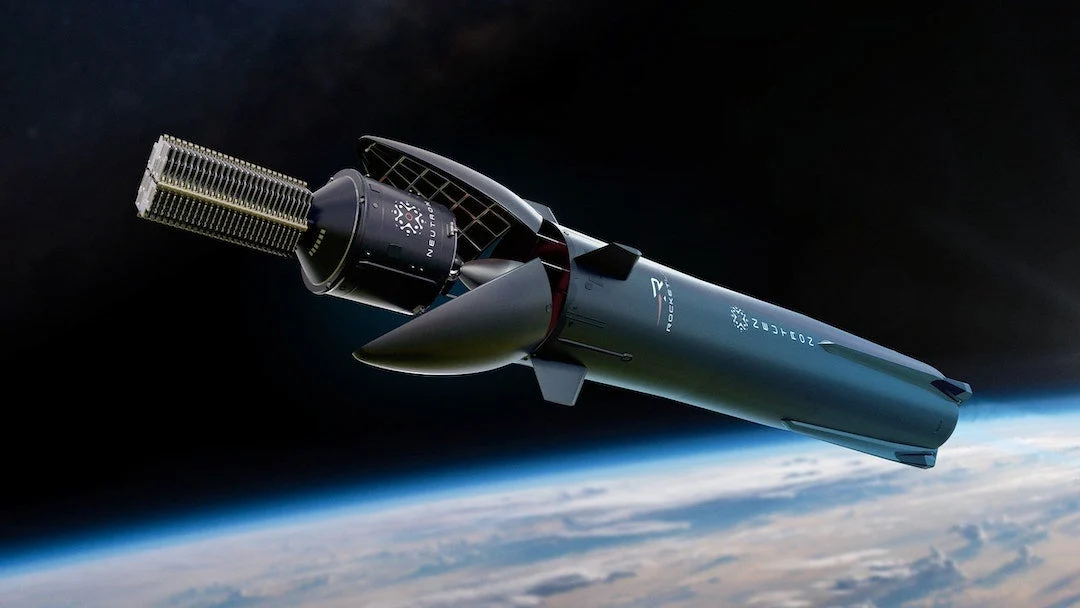
Beck reaffirmed that the company remains on track for the first Neutron launch later this year. Development has reached critical milestones, including the continued testing of the Archimedes engines and the final assembly of the first flight structures at the company’s production facility in Virginia. Neutron is designed as a reusable, carbon-composite rocket capable of delivering 13,000 kilograms to Low Earth Orbit (LEO) in its return-to-base configuration. Its unique "Hungry Hippo" fairing design—where the fairing remains attached to the first stage and opens to deploy the second stage—is intended to streamline the refurbishment process and lower operational costs.
Strategic Acquisition of Motiv Space Systems
In a move to further solidify its position as a dominant force in orbital infrastructure, Rocket Lab announced a definitive agreement to acquire Motiv Space Systems, a California-based leader in space robotics. Motiv has a storied history of providing mission-critical hardware for high-profile planetary exploration, including the robotic arms and actuators used on NASA’s Mars Perseverance rover and the CADRE (Cooperative Autonomous Distributed Robotic Exploration) lunar rovers.
Upon completion of the acquisition, the company will be rebranded as Rocket Lab Robotics. This addition fills a crucial gap in Rocket Lab’s vertical integration strategy. By bringing high-precision actuation and robotic capabilities in-house, Rocket Lab can now offer more complex satellite buses (Photon) capable of on-orbit servicing, assembly, and manufacturing (OSAM).
"Motiv is world-class in actuation and high-precision needs," Peter Beck told investors. "As we look toward the future of space infrastructure, the ability to manipulate objects in orbit and perform complex robotic tasks becomes a fundamental requirement. Integrating Motiv’s expertise allows us to provide a more comprehensive suite of solutions to our customers, from the launch pad to the most sophisticated robotic interactions in deep space."
Expansion into Defense and Space-Based Interceptors
Rocket Lab is also making aggressive moves into the national security sector. Following the U.S. Space Force’s decision to name 12 companies to Other Transaction Agreement (OTA) contracts for space-based interceptor prototypes, Rocket Lab announced a partnership with Raytheon. Under this collaboration, Rocket Lab will provide the spacecraft platforms and integration capabilities necessary to demonstrate the prototypes for the program.
The space-based interceptor program represents a shift in U.S. missile defense strategy, moving toward a distributed architecture in LEO to track and neutralize hypersonic and ballistic threats. While CFO Adam Spice remained tight-lipped regarding the specific technical contributions of the partnership, he described the program as a "very large opportunity" for the company.
Spice noted that Rocket Lab’s ability to provide cost-advantaged, vertically integrated solutions gives them a competitive edge in government procurement. "We will be able to do things in timeframes and at cost points that we think few, if any, will be able to compete with," Spice added. The company’s success with the Space Development Agency (SDA)—where it is already producing satellite buses for the Proliferated Warfighter Space Architecture—serves as a blueprint for its burgeoning relationship with the Space Force and other defense entities.
Financial Outlook and the Path to Scale
The financial data for Q1 2026 suggests a company in the midst of a massive scaling phase. The 63.5% revenue jump is largely attributed to the Space Systems business, which now accounts for the majority of Rocket Lab’s income. This segment includes the production of solar panels, reaction wheels, star trackers, and the Photon satellite bus. The growth in this area is a direct result of Rocket Lab’s strategic acquisitions over the past four years, including SolAero, Sinclair Interplanetary, and Planetary Systems Corporation.
For the second quarter of 2026, Rocket Lab provided optimistic guidance, expecting revenue to range between $225 million and $240 million. This projection assumes a continued high launch frequency for the Electron rocket and the steady fulfillment of component orders for major satellite constellations.
The company’s ability to narrow its net loss while simultaneously investing heavily in the Neutron R&D program is a point of focus for Wall Street analysts. Historically, the development of a new medium-lift rocket is a capital-intensive endeavor that can drain a company’s cash reserves. However, Rocket Lab’s diversified revenue stream from Space Systems appears to be subsidizing the development of Neutron, a luxury that many of its pure-play launch competitors do not have.
Chronology of Recent Milestones
The current success of Rocket Lab is the result of a multi-year execution strategy. A brief timeline of the company’s trajectory leading into 2026 provides context for its current market position:
- 2023-2024: Rocket Lab solidifies its position as the second most active U.S. launcher, trailing only SpaceX. The Electron rocket achieves a milestone of 50 launches.
- Late 2024: The company breaks ground on the Neutron Production Complex in Wallops Island, Virginia, and begins full-scale testing of the Archimedes engine.
- 2025: Rocket Lab secures several key contracts with the Space Development Agency for Tranche 2 of the Proliferated Warfighter Space Architecture, cementing its role as a prime contractor for the Department of Defense.
- Early 2026: The company achieves record Q1 revenue and signs its largest-ever launch deal, signaling market confidence in the unproven Neutron vehicle.
Broader Industry Implications and Analysis
Rocket Lab’s recent performance highlights a maturing "New Space" economy where vertical integration is becoming the standard for survival. By controlling the manufacturing of components, the assembly of the spacecraft, and the launch vehicle itself, Rocket Lab is insulating itself from the supply chain volatility that has plagued other aerospace firms.
The acquisition of Motiv Space Systems is particularly telling of the industry’s direction. As the number of satellites in orbit grows, the need for orbital debris removal, satellite refueling, and the construction of large-scale structures (like commercial space stations) increases. Robotics is the enabling technology for these activities. By positioning itself as "Rocket Lab Robotics," the company is preparing for a post-launch economy where value is generated not just by getting to space, but by what is done once there.
Furthermore, the "Neutron effect" is beginning to reshape the competitive landscape of the medium-lift market. For years, SpaceX’s Falcon 9 has enjoyed a near-monopoly on commercial medium-lift launches in the Western world. The rapid filling of Neutron’s manifest suggests that satellite operators are eager for a "second source" to mitigate schedule risks and foster price competition. If Rocket Lab can successfully execute the first Neutron launch later this year, it will become the only company besides SpaceX to operate a commercially viable, reusable orbital rocket in the medium-to-heavy class.
As Rocket Lab enters the second quarter of 2026, the focus remains squarely on execution. With a record backlog and a diversifying portfolio that spans from robotic arms to missile defense interceptors, the company is no longer just a "small-sat" story. It has emerged as a full-spectrum aerospace prime, challenging the established order of the global space industry.
