
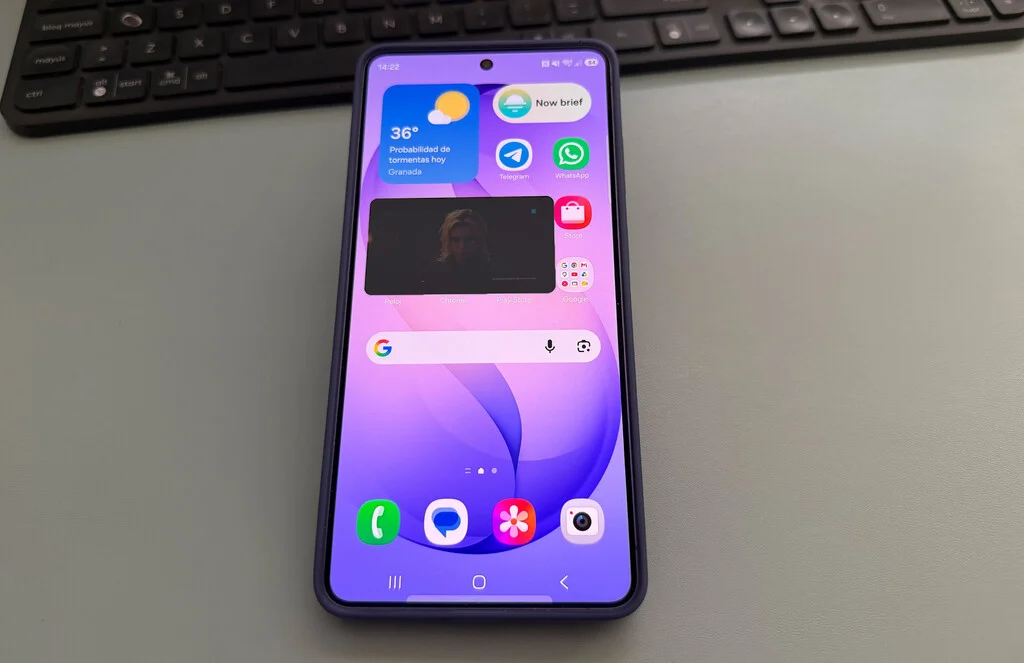

Samsung has significantly advanced its commitment to user privacy with the introduction of a refined "Privacy Screen" feature, now capable of selectively obscuring Picture-in-Picture (PiP) video windows, as revealed in the fourth beta of One UI 9. This innovative update, currently available for testing on the flagship Galaxy S26 Ultra, addresses a critical user need for enhanced control over visual privacy, particularly in public or shared environments. The announcement, disseminated through the Samsung Members app to participants in the open beta program, marks a notable evolution in how Samsung approaches personal data security and user experience on its premium devices.
The Evolution of One UI 9: A Glimpse into Samsung’s Software Future
One UI 9 represents the next major iteration of Samsung’s custom Android overlay, building upon years of refinements aimed at delivering an intuitive, feature-rich, and aesthetically pleasing mobile experience. For months, Samsung has been diligently testing this new software, making it available to a select group of users on its latest flagship devices: the Galaxy S26, S26+, and the advanced S26 Ultra. The beta program serves as a crucial feedback loop, allowing Samsung to identify and rectify bugs, optimize performance, and gauge user reception to new features before a wider public rollout. Typically, these beta cycles span several months, progressing through multiple versions, each bringing incremental improvements and sometimes entirely new functionalities, much like the one currently under discussion. The release of the fourth beta underscores the advanced stage of development, indicating that the final stable version is drawing nearer, likely incorporating many of these tested enhancements.
The Genesis of Privacy: Samsung’s "Privacy Screen" Feature
The "Privacy Screen," or "Pantalla de Privacidad" as it’s known in Spanish-speaking markets, emerged as a standout feature for the Galaxy S26 Ultra earlier this year, garnering considerable attention and headlines upon its initial reveal. This feature was conceived as a sophisticated software-based solution to a common modern dilemma: how to prevent "shoulder surfing" – the act of someone looking over your shoulder to view your screen content – without resorting to physical screen protectors that can degrade screen quality or user experience. Unlike traditional privacy filters that often make the screen darker or introduce a visible pattern from certain angles, Samsung’s Privacy Screen leverages advanced display technology and software algorithms to obscure content from peripheral views while maintaining clarity for the direct user.
Initially, the Privacy Screen offered a more generalized approach, allowing users to configure its activation for specific applications. This was particularly useful for sensitive apps such such as banking platforms, messaging services, or email clients, where the content displayed could contain personal or confidential information. However, a significant limitation was its inability to target specific zones of the screen. Users had to apply the privacy effect to the entire app interface, which, while effective, could sometimes be overkill if only a small portion of the screen contained sensitive data. This partiality of application was a key area identified for improvement, paving the way for the granular control now seen in One UI 9 Beta 4. The S26 Ultra’s exclusive access to this feature is largely attributed to its advanced display hardware and integrated security architecture, which are meticulously optimized to support such sophisticated privacy functions without compromising performance or battery life.
Understanding Picture-in-Picture (PiP): Convenience Meets Privacy Challenge
To fully appreciate the significance of this new development, one must first understand the Picture-in-Picture (PiP) functionality. PiP is a standard Android feature that allows users to watch videos or conduct video calls in a small, resizable, floating window while simultaneously navigating other applications on their device. Introduced in Android 8.0 Oreo, PiP has become an indispensable tool for multitasking, offering unparalleled convenience for users who wish to keep an eye on a sports match, a cooking tutorial, a news broadcast, or a video conference without interrupting their other digital activities, such as browsing social media, checking emails, or replying to messages.
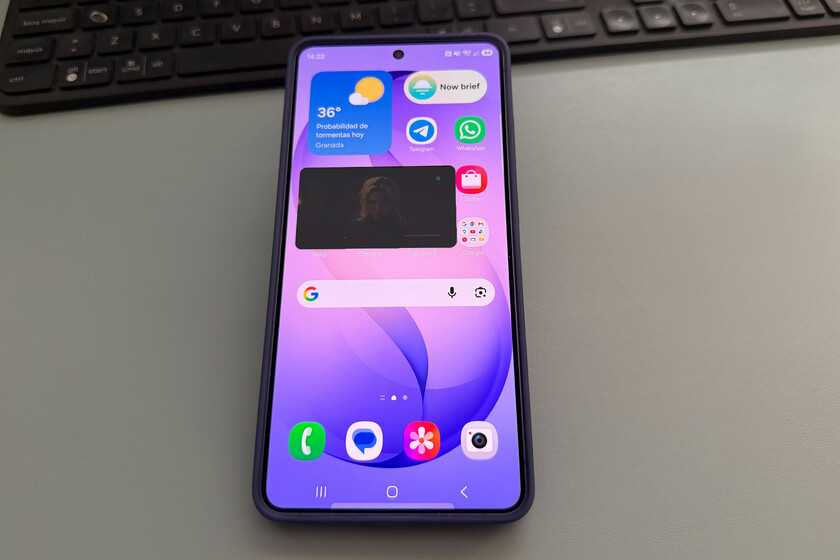
The utility of PiP is undeniable, transforming smartphones and tablets into even more powerful productivity and entertainment hubs. Users can watch a YouTube video while scrolling through Instagram, or keep a video call active while consulting documents in another app. However, this very convenience presents a distinct privacy challenge. When a video is displayed in a floating window, its content remains visible regardless of the main application in use. In public spaces – such as on a bus, train, coffee shop, or even in an open-plan office – this means that anyone within viewing distance can potentially see what’s playing in that PiP window. While much of the content might be innocuous, there are countless scenarios where the video content could be private, sensitive, or simply something the user prefers not to share with strangers. This inherent vulnerability in a highly convenient feature has long been a subtle but persistent concern for privacy-conscious users.
Introducing Targeted Privacy: PiP Integration in One UI 9 Beta 4
Samsung’s latest innovation directly addresses this privacy conundrum. With One UI 9 Beta 4, the Privacy Screen feature can now be applied specifically to the PiP video window, leaving the rest of the screen content fully visible and unobscured. This intelligent targeting represents a significant leap from the previous all-or-nothing approach. Imagine commuting on a crowded subway, engrossed in a personal video call or watching a documentary that you’d rather not share with your seatmate. Previously, activating the Privacy Screen would dim or obscure the entire display, making it difficult to interact with other apps. Now, with the new PiP Privacy Screen, only the small video window becomes opaque or blurred from angled views, while your main application – perhaps your email, a news article, or a game – remains perfectly clear and usable for you.
This functionality is designed to be universally compatible with any application that supports the standard Android PiP mode. Whether you’re watching a video on YouTube, streaming content from Netflix or Disney+, engaging in a video conference via Google Meet or Zoom, or even viewing a shared screen in a collaborative app, the Privacy Screen can selectively cloak the video portion. This broad compatibility ensures that users can maintain their privacy across a wide spectrum of digital activities, making the feature incredibly versatile and practical for daily use.
Technical Implementation and User Experience
The implementation of the PiP Privacy Screen is expected to be seamless and intuitive for the user. While specific activation methods might evolve, the current beta suggests an easy toggle within the Quick Settings panel or through an accessible option directly tied to the PiP window itself. When activated, the software intelligently identifies the boundaries of the PiP window and applies the privacy-enhancing algorithms exclusively to that area. This process likely involves real-time rendering adjustments and sophisticated pixel manipulation to achieve the desired obscuring effect from oblique angles, without impacting the clarity for the user looking directly at the screen.
From a user experience perspective, this means an unprecedented level of control. Instead of a blanket privacy measure, users can now make a nuanced decision: protect the sensitive video stream while keeping other information on their screen readily available. This micro-level control over visual privacy is a testament to Samsung’s focus on refining the user experience, acknowledging that privacy needs are not always uniform across an entire display. The ability to toggle this feature on and off quickly, perhaps with a simple tap on the PiP window or a dedicated icon, will be crucial for its adoption and utility, allowing users to adapt to changing environments and content sensitivity on the fly.
The Beta Program: Testing Ground for Innovation
The rollout of this feature through an open beta program is standard practice for major software updates. The current One UI 9 beta is exclusively available for users of the Galaxy S26 family – the S26, S26+, and S26 Ultra – underscoring Samsung’s strategy to introduce groundbreaking features on its latest and most capable hardware first. Geographically, the beta program is limited to specific key markets: South Korea, India, the United States, Germany, the United Kingdom, and Poland. These regions are typically chosen for beta testing due to their diverse user bases, significant market share, and robust infrastructure for collecting and processing user feedback.
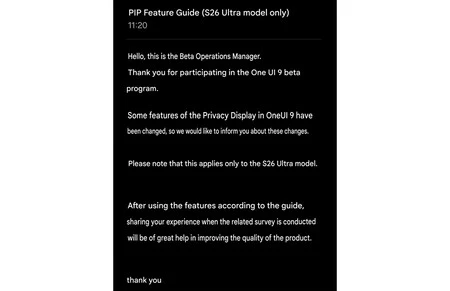
Participants in the beta program gain early access to new features and contribute directly to the refinement process by reporting bugs and offering suggestions. Communication regarding updates and new functionalities, such as the PiP Privacy Screen, is primarily channeled through the Samsung Members application. This dedicated platform serves as a hub for beta enrollment, feedback submission, and official announcements, fostering a direct line of communication between Samsung’s development teams and its most engaged users. The feedback gathered from thousands of real-world usage scenarios is invaluable, helping Samsung to fine-tune the feature for stability, performance, and user satisfaction before its general release.
Strategic Implications: Samsung’s Commitment to User Privacy
The introduction of the PiP Privacy Screen is more than just a minor software tweak; it represents a significant strategic move by Samsung. In an era where digital privacy is a paramount concern for consumers, companies that prioritize and innovate in this domain gain a substantial competitive edge. This feature positions Samsung, and particularly the Galaxy S26 Ultra, as a leader in offering granular, practical privacy solutions that directly address real-world user anxieties.
This development aligns with a broader industry trend where device manufacturers are increasingly integrating advanced security and privacy features directly into hardware and software. By offering a sophisticated, software-driven privacy solution that goes beyond basic screen dimming or physical filters, Samsung differentiates its flagship offering. It signals a deep understanding of user needs and a proactive approach to enhancing digital security in everyday scenarios. This innovation can bolster brand loyalty, attract privacy-conscious consumers, and reinforce Samsung’s reputation as a company that not only pushes technological boundaries but also respects and protects its users’ personal space. It suggests that privacy, much like camera quality or processing power, is becoming a critical battleground for smartphone differentiation.
Broader Industry Context and Future Outlook
The PiP Privacy Screen in One UI 9 Beta 4 is a compelling example of how software innovation can elevate the utility of existing hardware capabilities. While currently exclusive to the S26 Ultra due to its advanced display and processing power, it’s plausible that similar or adapted versions of this feature could eventually trickle down to other high-end Samsung devices in future software updates, as hardware capabilities across the lineup continue to advance. The modular nature of this privacy enhancement – targeting specific screen elements rather than the whole display – also opens up possibilities for future iterations. Could we see privacy screens applied to specific widgets, notification pop-ups, or even user-defined screen zones in the future? Such advancements would offer even greater control and customization, empowering users to tailor their visual privacy to an unprecedented degree.
This move by Samsung also reflects a growing awareness across the tech industry about the importance of visual privacy in the age of omnipresent screens. While some manufacturers focus on biometric security or data encryption, Samsung is tackling the often-overlooked aspect of visual data exposure in public. This focus on contextual privacy could inspire other smartphone makers to explore similar innovations, pushing the entire industry towards more user-centric and privacy-respecting design philosophies.
In conclusion, Samsung’s integration of targeted Privacy Screen functionality for Picture-in-Picture windows in One UI 9 Beta 4 is a highly significant and welcome advancement. It addresses a real-world privacy challenge with an elegant and practical software solution, reinforcing the Galaxy S26 Ultra’s position as a cutting-edge device committed to user security and experience. This feature not only enhances user control but also sets a new benchmark for intelligent privacy solutions in the competitive smartphone market, proving that innovation can truly make a difference in everyday digital life.
