
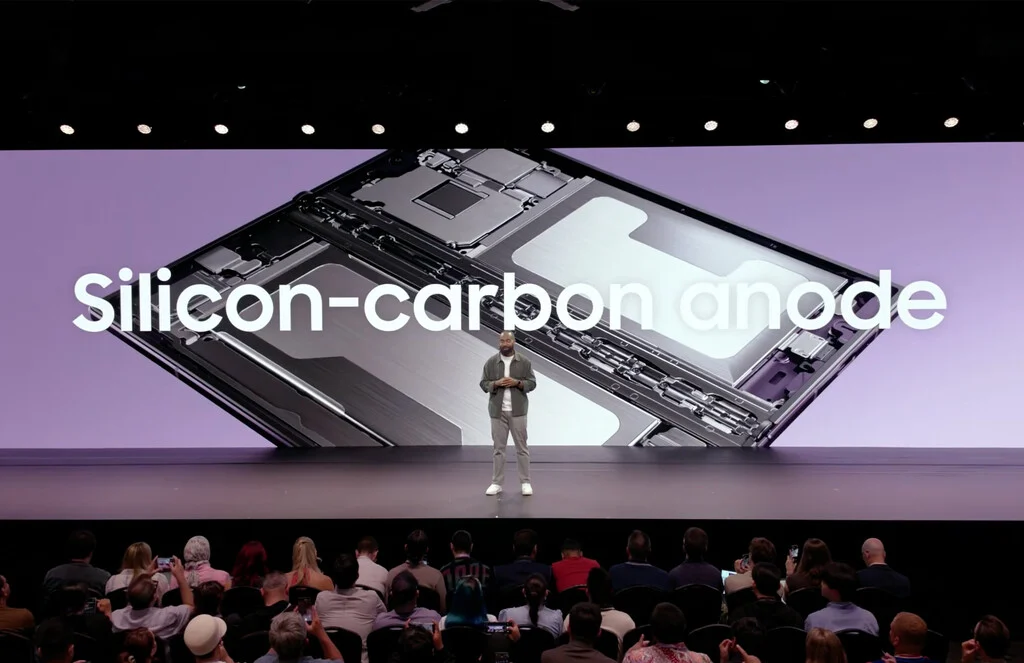

The recent Samsung Unpacked event, a global showcase for the South Korean tech giant’s latest innovations, delivered a wealth of specifications and data points, yet one particular announcement stands out for its profound, long-term implications for the user experience: the integration of silicon-carbon battery technology into its new lineup of foldable smartphones. Beyond merely increasing the milliampere-hour (mAh) capacities of the Galaxy Z Fold8, Galaxy Z Fold8 Ultra, and Galaxy Z Flip8, this strategic shift represents a significant technological leap, addressing a persistent consumer demand for enhanced autonomy without compromising device aesthetics.
The Unpacked Event: A New Era for Foldables
Held amidst considerable anticipation, the Unpacked event served as the platform for Samsung to reaffirm its leadership in the nascent but rapidly expanding foldable smartphone market. While new camera systems, processor upgrades, and refinements to the hinge mechanisms were expected, the quiet revolution unfolding within the power cells of these devices emerged as a highlight. Samsung’s commitment to pushing the boundaries of smartphone design has been evident since the debut of its first foldable, but the Achilles’ heel for many cutting-edge devices has consistently been battery life—a challenge exacerbated by the unique demands of foldable form factors, which necessitate compact, high-density power solutions. This year, Samsung has seemingly found a potent answer.
The Persistent Challenge of Smartphone Batteries
For years, smartphone manufacturers have grappled with the fundamental dilemma of battery technology. Consumers demand increasingly powerful processors, larger and brighter displays, and sophisticated camera arrays, all of which are significant power drains. Simultaneously, there’s an insatiable desire for thinner, lighter devices. Traditional lithium-ion (Li-ion) batteries, while revolutionary in their time, have reached a plateau in terms of energy density improvements. The inherent limitations of their graphite anodes restrict how much lithium can be stored and released, making substantial leaps in capacity difficult without increasing physical size. This bottleneck has led to a stagnant user experience where many premium smartphones struggle to last a full day on a single charge, forcing users to remain tethered to power outlets or carry portable chargers.
Samsung, having experienced its own well-documented challenges with battery safety in the past, adopted a notably conservative approach to battery innovation, prioritizing stability and reliability above all else. This cautious stance, while understandable, meant that the company often lagged behind certain competitors, particularly those from China, in adopting newer, higher-density battery chemistries. However, the market has matured, and the imperative for innovation has become undeniable.
From Lithium-Ion to Silicon-Carbon: A Technological Leap Explained
The core of Samsung’s latest advancement lies in its transition from conventional lithium-ion cells to those incorporating silicon-carbon anodes. This is not an entirely novel concept; silicon has long been recognized as a promising anode material due to its theoretical capacity being ten times higher than that of graphite. However, pure silicon anodes face significant challenges, primarily immense volume expansion (up to 300%) during charging, which leads to mechanical degradation, rapid capacity fade, and safety concerns.
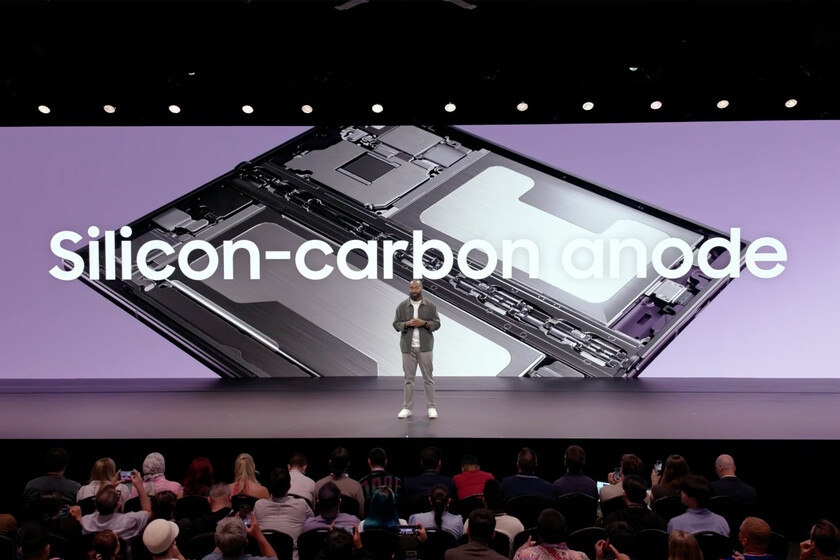
The breakthrough of silicon-carbon battery technology involves integrating silicon nanoparticles or nanowires into a carbon matrix. This composite material mitigates the volume expansion issues of silicon while still harnessing its superior energy storage capabilities. The carbon acts as a buffer, accommodating the silicon’s expansion and contraction, thereby enhancing structural integrity, improving cycling stability, and extending the battery’s lifespan. The result is a battery that can store significantly more energy in the same physical volume compared to traditional graphite-based lithium-ion cells. This translates directly into higher energy density, meaning more power for the same footprint, or the same power in a smaller footprint.
This technological evolution has been quietly underway in the battery research community for over a decade, with gradual improvements in material science and manufacturing processes making it viable for mass production. While initial applications were often in niche high-performance sectors, its readiness for mainstream consumer electronics, particularly in demanding form factors like foldables, marks a critical inflection point.
Samsung’s Strategic Shift and Historical Context
Samsung’s decision to finally embrace silicon-carbon batteries is a calculated move, signaling a renewed commitment to innovation in power management. The company’s prior reluctance stemmed from a bitter lesson learned from the Galaxy Note 7 debacle in 2016, where aggressive design choices and manufacturing pressures led to catastrophic battery failures. This incident instilled a deep-seated caution within the company, prompting extensive internal review processes and a more conservative approach to adopting nascent battery technologies.
However, the smartphone landscape has evolved dramatically. Competitors, notably several Chinese manufacturers like Huawei, Xiaomi, and Oppo, began integrating silicon-based anode technologies into their flagship devices several years ago. These companies have demonstrated the viability and benefits of such batteries, offering users extended autonomy and enabling thinner device designs. This competitive pressure, coupled with persistent consumer demand for longer battery life, created an undeniable impetus for Samsung to act. The maturity of silicon-carbon technology, coupled with rigorous testing and advancements in manufacturing, has evidently reached a point where Samsung feels confident in its safety and reliability for mass-market deployment. By introducing it first in its premium foldable lineup, Samsung is making a clear statement about the technology’s readiness and its strategic importance.
Enhanced Autonomy and Design Innovation Across the Galaxy Z Lineup
The adoption of silicon-carbon batteries has allowed Samsung to implement a dual strategy across its new foldable portfolio: either significantly boosting battery capacity while maintaining or reducing device thickness, or maintaining capacity while dramatically slimming down the form factor.
For the Galaxy Z Fold8 Ultra, Samsung has opted for a substantial increase in power. This flagship foldable now boasts a formidable 5,000 mAh battery, a significant upgrade from the 4,400 mAh found in its predecessor, the Galaxy Z Fold7. Crucially, this enhancement has been achieved without "fattening" the device; the Z Fold8 Ultra maintains an impressively svelte profile of just 4.1 mm when unfolded, showcasing the superior energy density of the new battery chemistry. This translates into extended usage times, addressing a key pain point for power users who rely on the Fold series for intensive multitasking and media consumption. Samsung’s promise of up to 27 hours of video playback for the Z Fold8 Ultra, if proven accurate in real-world testing, would be a transformative improvement.
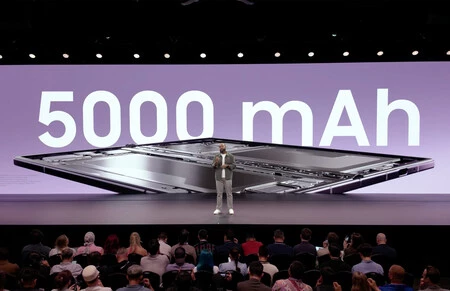
The Galaxy Z Fold8 follows a similar trajectory, offering a robust 4,800 mAh battery. While also surpassing the Z Fold7’s capacity, this model achieves its enhanced power in an even more compact form factor, measuring 4.5 mm when unfolded. This caters to users who prioritize a slightly more portable device without sacrificing significant battery endurance. Both Fold models demonstrate Samsung’s ability to pack more power into ultra-thin designs, a critical factor for the ergonomic appeal of foldable phones.
The Galaxy Z Flip8, on the other hand, illustrates the second strategic application of silicon-carbon technology. This device retains the same 4,300 mAh capacity as its predecessor, the Galaxy Z Flip7. However, Samsung has leveraged the higher energy density to achieve a notable reduction in thickness, with the new Flip8 measuring just 6.1 mm when unfolded, a perceptible improvement over the Z Flip7’s 6.5 mm. This choice underscores Samsung’s understanding of the Flip series’ target audience, who often prioritize sleek aesthetics and pocketability. By maintaining battery life while making the device even more elegant, Samsung enhances the Flip’s core appeal.
The Competitive Landscape: A Race for Battery Superiority
The integration of silicon-carbon batteries positions Samsung more competitively against its rivals, particularly those in the burgeoning Chinese market. Companies like Huawei, with its Mate X series, and Xiaomi, with its Mix Fold devices, have been early adopters of advanced battery technologies, including silicon-oxide and silicon-carbon composites. These manufacturers have often highlighted superior battery life and faster charging speeds as key differentiators. Samsung’s move levels the playing field, ensuring that its premium foldables are not just innovative in form factor but also competitive in fundamental performance metrics like power autonomy.
This technological convergence suggests a broader industry trend. As the foundational components of smartphones—processors, displays, and cameras—reach maturity, battery technology emerges as a crucial battleground for differentiation. Companies that can offer superior power solutions without compromising design or safety will gain a significant advantage in attracting and retaining users.
User Demand and Broader Industry Implications
The shift to silicon-carbon batteries is a direct response to overwhelming user demand. Surveys and anecdotal evidence consistently point to battery life as one of the most critical factors for smartphone users, often surpassing desires for incremental camera improvements or processing power. The freedom from constant charging anxiety is a tangible benefit that resonates deeply with consumers.
For the foldable market specifically, this advancement is even more impactful. Early generations of foldables, while innovative, often faced criticism regarding their battery performance, partly due to the power demands of two displays and the physical constraints on battery size. By extending battery life, Samsung makes foldables more practical, more reliable, and ultimately, more appealing to a broader mainstream audience. This could accelerate the adoption of foldable devices, moving them from niche luxury items to viable alternatives to traditional slab phones.
Beyond foldables, Samsung’s embrace of silicon-carbon could set a new benchmark for the entire smartphone industry. It signals that this technology is now ready for prime time, paving the way for its eventual integration into Samsung’s conventional Galaxy S and Note (now S Ultra) series, and potentially influencing other manufacturers to follow suit. This could lead to a new era of smartphones with significantly improved battery performance across the board, reducing the reliance on quick charging and potentially contributing to a reduction in electronic waste if longer-lasting batteries extend the usable life of devices.
Analyst Perspectives and Future Outlook
Industry analysts are likely to view this move as a strategic win for Samsung. It demonstrates innovation where it matters most to consumers and strengthens Samsung’s position in the premium segment. While the initial costs of silicon-carbon batteries might be slightly higher, the enhanced user experience and competitive advantage are expected to justify the investment. Furthermore, this move could open doors for further battery innovations, such as solid-state batteries, which promise even greater energy density and safety, though they are still several years away from widespread commercialization. Samsung’s commitment to advancing battery technology ensures it remains at the forefront of the industry’s evolution.
In conclusion, Samsung’s integration of silicon-carbon battery technology into its new Galaxy Z Fold8, Z Fold8 Ultra, and Z Flip8 is far more than a mere specification bump. It represents a long-awaited and strategically significant leap forward in addressing one of the most persistent challenges in modern smartphone design. By delivering substantial improvements in battery autonomy and enabling even sleeker designs, Samsung is not only enhancing the user experience for its cutting-edge foldable devices but also setting a new standard for the entire smartphone industry, promising a future where users are less tethered to their chargers and more empowered by their devices. The true test will come as these devices reach consumers, but the initial promise is undeniably compelling.
