
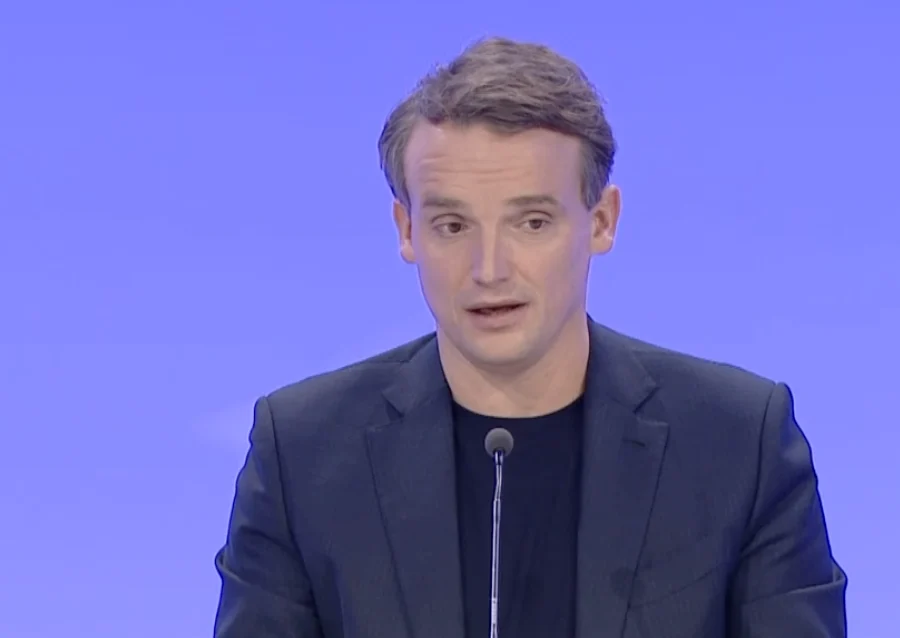

German enterprise software giant SAP SE has delivered a record-breaking third-quarter financial performance, propelled by surging demand for its cloud solutions and enterprise-grade artificial intelligence capabilities. Total revenue for the quarter rose 13% year-on-year to reach €10.27 billion ($11.54 billion), underpinned by robust net income of €2.27 billion. Speaking on the stellar financial results, SAP Chief Executive Officer Christian Klein declared that the period marked the historic moment when the concept of the "Autonomous Enterprise" transitioned from theoretical vision to operational reality.
The financial milestones achieved in the third quarter reflect a broader corporate momentum that has been building steadily over recent fiscal periods. SAP’s strategic pivot toward cloud-based enterprise resource planning and embedded artificial intelligence has resonated deeply with its global customer base. According to executive leadership, the aggressive integration of AI has fundamentally altered the value proposition of SAP’s software suites, making digital transformation initiatives increasingly compelling for corporations navigating complex macroeconomic landscapes.
Main Facts and Financial Highlights
The third-quarter financial results underscore a period of exceptional health for the multinational technology corporation. With total revenues crossing the €10 billion threshold, SAP demonstrated sustained top-line growth alongside healthy profitability margins. The net income figure of €2.27 billion highlights the operational efficiency gains realized as the company scales its cloud infrastructure.
Market analysts have closely monitored SAP’s transition from traditional on-premise software maintenance models to subscription-based cloud revenue streams. The success of the company’s flagship migration programs, specifically RISE with SAP and GROW with SAP, served as the primary catalysts for the recent financial outperformance. These programs are designed to help enterprises migrate their mission-critical business processes to the cloud while embedding advanced analytics and AI directly into their core operations.
During the earnings announcement, Klein emphasized that customer adoption is no longer theoretical. The market is actively embracing the ecosystem because businesses recognize that artificial intelligence requires a rigorous, enterprise-grade data and process foundation to function effectively. Without clean, structured data and deep business context—qualities inherent in SAP’s ERP systems—corporate AI initiatives frequently fail to deliver reliable, actionable insights.
Chronology of SAP’s AI and Cloud Transformation
The journey toward the autonomous enterprise has been years in the making, marked by a deliberate sequence of strategic acquisitions, infrastructural overhauls, and internal process re-engineering.
In the years preceding this fiscal breakthrough, SAP initiated a multi-year cloud transformation strategy aimed at moving its massive customer base away from legacy, on-premise deployments. This transition required substantial capital expenditure and a fundamental restructuring of sales, engineering, and consulting operations.
By late 2023 and early 2024, SAP began aggressively embedding generative AI capabilities across its product portfolio, highlighted by the introduction of its digital assistant, Joule. The company focused heavily on ensuring that its AI offerings were deeply contextualized within enterprise workflows rather than serving as superficial chatbots.
Throughout the first three quarters of the current fiscal year, SAP accelerated the rollout of these AI features within the RISE and GROW frameworks. This strategic sequencing culminated in the third quarter, where the convergence of mature cloud infrastructure, widespread Joule deployment, and accelerated developer output translated directly into record-breaking financial returns. Industry observers note that this trajectory positions SAP favorably ahead of major industry gatherings, such as the upcoming TechEd conference in Germany.
Internal Adoption: SAP "Eating Its Own Dogfood"
Beyond commercial success, SAP’s leadership highlighted a parallel internal transformation, colloquially referred to as "eating its own dogfood." Klein detailed how SAP has systematically reinvented its internal operations by adopting an AI-first methodology across engineering, go-to-market strategies, and corporate support functions.
In the engineering division, SAP’s workforce of approximately 40,000 developers has adopted an AI-first paradigm. Guided by strict governance principles and co-innovation initiatives with key customers, developers are focusing heavily on optimizing the data structures and ontologies required by autonomous AI agents. This internal restructuring has yielded measurable productivity enhancements, with developers completing approximately 70% more code contributions since the beginning of the year compared to previous baselines.
In the go-to-market and corporate functions, the deployment of the Joule Work Desktop to more than 110,000 employees has transformed daily operations. Centralized departments such as finance, human resources, and procurement have reported immediate productivity gains of roughly 20%. Furthermore, these efficiency gains are expanding into more sophisticated analytical and planning tasks as the underlying AI models mature.
Security, Data Privacy, and Technical Challenges
Despite the overwhelmingly positive metrics, SAP leadership maintained a pragmatic stance regarding the ongoing engineering challenges associated with enterprise AI deployment. Klein stressed the importance of maintaining strict humility and discipline as the technology continues to evolve.
A cornerstone of SAP’s enterprise appeal is its absolute commitment to data sovereignty and intellectual property protection. Klein underscored that SAP does not upload customer data or process intellectual property into public Large Language Models (LLMs). For global enterprises, the risk of proprietary operational data contaminating public training sets—and potentially leaking to competitors—remains a critical concern. By maintaining isolated, highly secure data environments, SAP provides a trusted ecosystem that appeases corporate risk and compliance officers.
Concurrently, engineering teams are actively addressing technical hurdles related to agent response times and accuracy. In daily agent reviews, product managers are continually raising the bar on test cases, pushing past initial accuracy milestones to tackle increasingly complex business scenarios. This iterative refinement involves tracing every query down to the foundational data and ontology layers, ensuring that APIs are responsive and accurate under heavy enterprise loads.
Broader Impact and Industry Implications
The market reaction to SAP’s third-quarter performance reflects a broader maturation phase within the enterprise software sector. For several years, enterprise AI was dominated by speculative enthusiasm and consumer-facing novelties. However, the current market climate demands concrete return on investment, operational reliability, and uncompromised security.
SAP’s focus on the "Autonomous Enterprise" suggests a future where routine corporate workflows—ranging from supply chain adjustments to financial forecasting—are executed autonomously by intelligent agents operating securely within established ERP boundaries. This shift reduces administrative friction and allows human capital to focus on strategic decision-making and innovation.
As enterprises globally evaluate their technology stacks, SAP’s recent financial results serve as a validation of the thesis that the most successful enterprise AI is not necessarily the loudest or most generalized, but rather the software deeply embedded within trusted operational workflows. With a strong pipeline, expanding cloud migration metrics, and continuous product refinement, SAP enters the final quarter of the fiscal year with significant momentum, setting a high benchmark for the broader enterprise technology landscape.
