
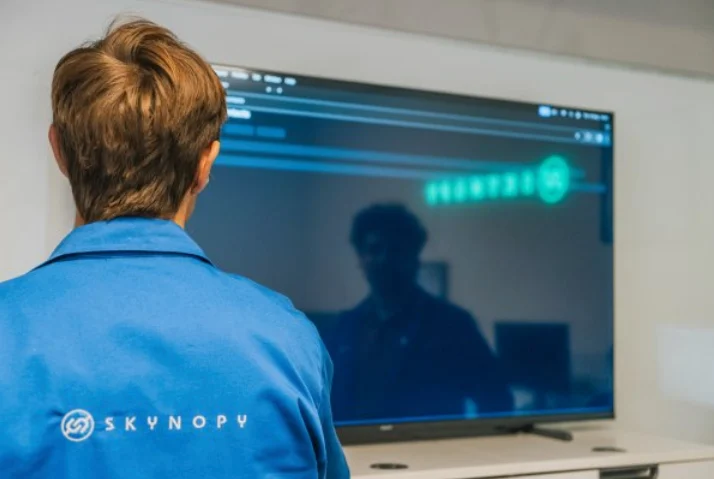

The French Space Agency (CNES) and the emerging NewSpace leader Skynopy have officially entered into a strategic partnership designed to streamline and optimize frequency allocation for satellite ground stations across France. Announced on April 29, 2024, this collaboration marks a pivotal moment in the development of France’s sovereign space infrastructure, specifically targeting the logistical and regulatory hurdles associated with the deployment of Ground Station-as-a-Service (GSaaS) solutions. Under the terms of the agreement, CNES will provide its extensive technical expertise to support Skynopy in the complex processes of frequency declaration and allocation, working in tandem with the French National Frequency Agency (ANFR). This initiative is intended to ensure that Skynopy’s expanding network of antennas can operate without interference, maximizing the efficiency of data downlinks for the burgeoning number of Low Earth Orbit (LEO) satellite constellations.
The partnership represents the latest evolution in a multi-year relationship between the national space agency and the startup. Since Skynopy’s inception in 2023, CNES has served as a foundational supporter, recognizing the critical need for a domestic alternative to global ground segment providers. The collaboration is structured to address the "downstream" bottleneck of space missions—the challenge of getting data from orbit to the ground securely and at high speeds. By facilitating smoother interactions with the ANFR, the partnership allows Skynopy to accelerate its deployment timelines, moving from the planning phase to active operations with greater regulatory certainty.
The Critical Role of Frequency Management in NewSpace
In the modern space economy, the radio frequency (RF) spectrum is a finite and increasingly crowded resource. As thousands of new satellites are launched into LEO for Earth observation, telecommunications, and climate monitoring, the demand for ground station connectivity has reached an all-time high. However, establishing a ground station is not merely a matter of hardware installation; it requires rigorous coordination to prevent signal interference with existing terrestrial and space-based services.
The ANFR is the regulatory body responsible for managing the radio frequency spectrum in France. For a private entity like Skynopy, navigating the technical requirements for frequency filing can be a daunting administrative and engineering task. CNES, with its decades of experience in managing national and international space frequencies, acts as a bridge. By providing Skynopy with high-level technical consultancy, CNES ensures that the startup’s technical files meet the highest standards of the International Telecommunication Union (ITU) and national regulations. This support is vital for Skynopy’s mission to provide seamless, high-throughput connectivity to satellite operators who require reliable data reception to monetize their orbital assets.
A Chronology of Collaboration: From Inception to Strategic Alignment
The relationship between Skynopy and CNES has developed through a series of calculated steps, reflecting the French government’s broader "France 2030" strategy to foster a robust NewSpace ecosystem.
- Early 2023: Inception and Initial Vision: Skynopy was founded with the objective of disrupting the ground segment market by offering a "plug-and-play" ground station model. From the outset, the company focused on the virtualization of ground station hardware to reduce costs and increase flexibility.
- Mid-2023: R&D and Ka-Band Development: CNES awarded Skynopy technology development contracts specifically focused on the Ka-band. While X-band and S-band have traditionally dominated satellite communications, the Ka-band offers significantly higher bandwidth, which is essential for high-resolution imaging and large-scale data sets. This R&D phase allowed Skynopy to refine its network architecture.
- Late 2023: Integration into SpaceFounders: Skynopy was selected for the SpaceFounders program, a premier European space startup accelerator. SpaceFounders is a joint venture involving CNES, the Bundeswehr University of Munich, and the Italian Space Agency (ASI). This inclusion not only provided Skynopy with mentorship but also led to CNES becoming a shareholder in the company, cementing a long-term financial and strategic interest.
- April 2024: The Frequency Optimization Agreement: The latest partnership formalizes the operational support for frequency management, transitioning the relationship from pure R&D and investment into active infrastructure deployment and regulatory facilitation.
Technical Innovation: Virtualization and High-Throughput LEO Missions
At the heart of Skynopy’s value proposition is its focus on virtualized modem operations. Traditional ground stations rely on expensive, proprietary hardware modems that are often tied to specific satellite missions. Skynopy is moving toward a software-defined approach, where the processing of satellite signals is handled by virtualized systems. This allows for rapid reconfiguration, enabling a single ground station to support multiple different satellite missions by simply updating software parameters.
The technical roadmap developed in collaboration with CNES emphasizes the requirements of high-throughput LEO missions. These missions move across the sky at high speeds, requiring ground stations to have sophisticated tracking capabilities and the ability to hand off signals between different stations in a global network. By optimizing the Ka-band interface, Skynopy can offer data rates that meet the demands of modern artificial intelligence and machine learning applications that process satellite imagery in real-time.
Market Context and the Rise of GSaaS
The global Ground Station-as-a-Service market is projected to experience a compound annual growth rate (CAGR) of over 15% through 2030. This growth is driven by the paradigm shift from large, geostationary (GEO) satellites to massive constellations of small satellites in LEO. For many satellite startups, building and maintaining a private network of ground stations is cost-prohibitive. GSaaS providers like Skynopy allow these operators to pay for "passes"—specific windows of time where a ground station tracks their satellite—thereby converting high capital expenditure (CAPEX) into manageable operating expenditure (OPEX).
Currently, the market is influenced by major American players, including AWS Ground Station and Microsoft Azure Orbital. However, the European Union has increasingly emphasized the need for "strategic autonomy" in space. The partnership between CNES and Skynopy is a direct response to this need. By building a domestic, European-controlled ground segment, France ensures that its space data remains within a sovereign regulatory framework, reducing reliance on non-European infrastructure.
Official Perspectives on Sovereignty and Excellence
Pierre Bertrand, CEO and co-founder of Skynopy, underscored the importance of the partnership in a statement following the announcement. He noted that the collaboration transcends simple administrative assistance, representing a shared vision for the future of the French space industry.
“This partnership with CNES goes far beyond a frequency management agreement: it symbolizes a deep, long-term relationship between the French space agency and a NewSpace player that shares the same ambitions for sovereignty and technological excellence,” Bertrand stated. “From our first R&D contracts to today, CNES has helped us move faster, further, and more robustly. Together, we are demonstrating that it is possible to build a credible European alternative to major GSaaS players.”
While CNES officials have maintained a factual stance, the agency’s actions speak to a broader mandate of de-risking innovative technologies for private companies. By acting as a technical consultant and a shareholder, CNES is effectively providing Skynopy with a "seal of approval" that is critical for attracting further private investment and international customers.
Broader Implications for the European Space Ecosystem
The success of the Skynopy-CNES partnership could serve as a blueprint for other European nations. As the European Space Agency (ESA) and the European Commission push for a more integrated space market, the model of a national agency actively supporting the regulatory and technical hurdles of a startup is seen as a way to level the playing field against better-funded competitors in the U.S. and China.
The implications of this deal extend into several key areas:
- Security and Data Integrity: Sovereign ground stations ensure that sensitive data, particularly for defense or environmental monitoring, is handled according to European security standards.
- Regulatory Efficiency: If the CNES-Skynopy model successfully reduces the time required for frequency allocation, it may lead to a permanent streamlining of ANFR processes for other NewSpace entities.
- Economic Growth: By lowering the barrier to entry for ground station deployment, France positions itself as a hub for satellite operators looking for a reliable gateway into the European market.
As Skynopy continues to deploy its antennas across France and eventually globally, the technical foundation laid by CNES will be critical. The transition to virtualized, high-frequency ground operations is not just a technical upgrade; it is a necessary evolution to support the next generation of orbital infrastructure. Through this partnership, France is ensuring that it remains at the forefront of this evolution, maintaining its legacy as a leader in space exploration while embracing the agile, commercial spirit of the NewSpace era.
