
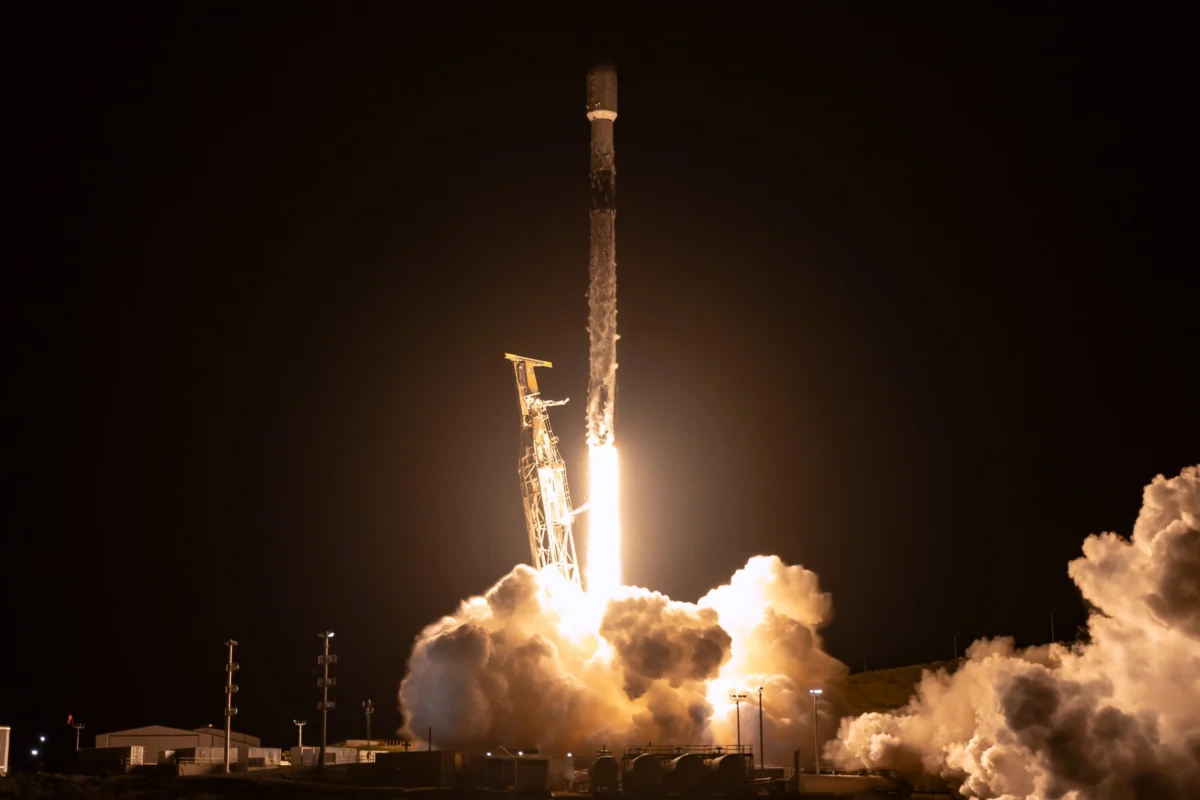

The global small satellite launch market reached a significant turning point this week as two of the industry’s most prominent rideshare integrators, Exolaunch and SEOPS, announced the purchase of dedicated Falcon 9 missions from SpaceX. These multi-launch agreements, unveiled during the Smallsat Europe conference, signal a strategic shift in how launch capacity is managed and distributed within the commercial space sector. By securing entire Falcon 9 vehicles, these aggregators are moving beyond their traditional roles as intermediaries on SpaceX-led "Transporter" missions to become primary mission architects, offering bespoke scheduling and orbital flexibility to a market currently grappling with a significant supply-demand imbalance.
The Strategic Shift Toward Dedicated Aggregator Missions
For several years, the "Transporter" program—SpaceX’s internal rideshare initiative—has served as the primary bus for smallsat operators looking for affordable access to Sun-Synchronous Orbit (SSO). However, as the number of satellite constellations in development continues to surge, the demand for specific launch windows and tailored orbital injections has outpaced the availability of the standard Transporter manifests.
The decision by Exolaunch and SEOPS to procure dedicated Falcon 9 rockets allows these companies to act as "anchor tenants" and "mission managers" for their own manifests. This model provides the industry with a necessary "relief valve," ensuring that smallsat developers are not solely dependent on SpaceX’s internal scheduling. Instead, they can turn to these integrators for more specialized mission profiles, including unique deployment sequences and enhanced integration services that a high-volume provider like SpaceX might not offer on a standard rideshare flight.
Exolaunch’s Expansion: The Exo-1 and Exo-2 Missions
Exolaunch, a Berlin-based leader in launch mission management and deployment systems, confirmed the purchase of two dedicated Falcon 9 launches. These missions, designated Exo-1 and Exo-2, are scheduled for no earlier than late 2027 and 2028, respectively. This move represents the first time Exolaunch has procured entire vehicles from SpaceX, marking a maturation of their business model.
Jeanne Allarie, Chief Investor Relations Officer at Exolaunch, emphasized that these dedicated launches are designed to provide "predictable and reliable" opportunities. In an industry where launch delays can derail a startup’s funding or a government’s mission timeline, predictability is a premium commodity. Exolaunch intends to utilize its proprietary ecosystem of flight-proven technologies, most notably the EXOtube deployment system, to maximize the efficiency of these missions.
The EXOtube is a modular deployment system designed to accommodate various satellite form factors, from CubeSats to larger Microsats, while minimizing the "parasitic mass" of the deployment hardware itself. By controlling the entire manifest of Exo-1 and Exo-2, Exolaunch can optimize the configuration of the Falcon 9’s payload fairing, potentially fitting a higher density of satellites or accommodating oddly shaped payloads that would be difficult to manifest on a standard Transporter mission.
SEOPS Introduces the Waymaker and Darkstar Programs
Simultaneously, U.S.-based SEOPS (Satellite Eulogy and Orbital Placement Services) announced its own dedicated Falcon 9 acquisition to inaugurate its "Waymaker" program. The first mission, Waymaker-1, is targeted for a 2028 launch. Unlike traditional rideshare missions that often require payloads to adhere to strict mass and volume constraints, the Waymaker program is specifically designed for non-standard and time-sensitive payloads.
Chad Brinkley, CEO of SEOPS, noted that the Waymaker missions are intended to handle the complexities that often lead to "launch friction" for smallsat operators. This includes payloads that require specialized in-orbit services or those that do not fit the standard "box" dimensions of traditional CubeSat deployers. SEOPS’s service package for Waymaker includes end-to-end mission management, integration, and potentially the use of Orbital Transfer Vehicles (OTVs) to deliver satellites to precise orbits that differ from the primary drop-off point of the Falcon 9.
In a significant show of market confidence, the French mission management firm RIDE! has already secured 1,000 kilograms of capacity on the inaugural Waymaker-1 mission. This pre-booking underscores the high demand for heavy-duty rideshare capacity among European satellite developers who may find themselves locked out of domestic European launch options due to the current "launch gap" in the region.
Furthermore, SEOPS is expanding its reach beyond Low Earth Orbit (LEO). The company detailed plans for its "Darkstar" program, which will offer dedicated rideshare opportunities to Geostationary Transfer Orbit (GTO). With the first Darkstar mission also targeted for 2028, SEOPS is positioning itself to capture the growing market for small satellites destined for higher altitudes, a segment traditionally reserved for much larger, multi-ton telecommunications satellites.
A Chronology of the Rideshare Revolution
To understand the significance of these deals, it is necessary to look at the timeline of the smallsat launch industry:
- 2017–2019: The "Smallsat Revolution" begins in earnest, with companies like Planet and Spire launching large constellations. Launch options are limited to secondary slots on large rockets or expensive dedicated small launchers.
- 2021: SpaceX launches Transporter-1, carrying 143 satellites on a single Falcon 9. This disrupts the market by drastically lowering the price per kilogram to roughly $5,000.
- 2022–2023: The market sees the collapse of Virgin Orbit and delays in the development of other small launchers like Astra and Relativity Space’s Terran 1. This leaves SpaceX as the dominant, almost solitary, provider of reliable, low-cost rideshare.
- 2024: SEOPS and Exolaunch recognize that the "Transporter" missions are becoming oversubscribed. They begin negotiations for dedicated missions to regain control over scheduling and technical specifications.
- 2027–2028: The projected launch window for Exo-1, Exo-2, and Waymaker-1, marking a new era where integrators act as de facto launch providers.
Market Analysis: Supply Constraints and Economic Implications
The procurement of these dedicated missions comes at a time when the "launch bottleneck" has become a primary concern for the space economy. While SpaceX has increased its launch cadence—aiming for over 140 launches in 2024—a significant portion of that capacity is dedicated to its own Starlink constellation.
The smallsat market is projected to see thousands of satellites launched annually through 2030. According to industry analysts, the demand for "sovereign launch" and "assured access" is driving prices up, despite the efficiencies of the Falcon 9. By buying missions years in advance, Exolaunch and SEOPS are effectively "hedging" against future price increases and capacity shortages.
From a technical standpoint, the Falcon 9 is capable of delivering over 22,000 kilograms to LEO in a fully expendable configuration, or roughly 17,500 kilograms when the first stage is recovered. For an aggregator, filling 17 tons with small satellites (which often weigh between 5kg and 500kg) is a massive logistical undertaking. The fact that two companies are confident enough to purchase three such missions suggests a robust pipeline of satellite customers waiting for berths.
Broader Implications for the Global Space Industry
The move by Exolaunch and SEOPS has several far-reaching implications for the global space ecosystem:
1. Decentralization of Launch Management:
SpaceX is increasingly focusing on the development of Starship and the maintenance of the Starlink network. By offloading the granular management of hundreds of small customers to Exolaunch and SEOPS, SpaceX can streamline its operations. The aggregators take on the burden of customer support, regulatory compliance (such as NOAA and FCC licensing), and physical integration, while SpaceX simply provides the "lift."
2. Relief for European Satellites:
With the retirement of the Ariane 5 and the delays facing the Ariane 6 and Vega-C, European satellite operators have faced a "launch crisis." While Exolaunch is a German company, it relies on American hardware (SpaceX). These dedicated missions provide a reliable pathway for European institutional and commercial payloads to reach orbit without having to wait for the European launcher manifest to clear.
3. The Rise of Orbital Transfer Vehicles (OTVs):
Dedicated aggregator missions are the perfect environment for OTVs—often called "space tugs." Because the aggregator controls the manifest, they can easily include an OTV that takes multiple satellites from the Falcon 9 drop-off point and moves them to different altitudes or inclinations. This "last-mile delivery" service is expected to become a standard feature of the Exo and Waymaker missions.
4. Competitive Pressure on Small-Lift Launchers:
Small-lift rockets (those designed to carry 200kg to 1,000kg) have long argued that their higher price point is justified by the "concierge service" and "precise scheduling" they offer. By purchasing dedicated Falcon 9s, Exolaunch and SEOPS are now offering that same concierge service and schedule certainty, but at the lower price point enabled by the Falcon 9’s scale and reusability. This puts further pressure on the business cases of emerging small-launch companies.
Conclusion: A Mature Launch Ecosystem
The announcements from Smallsat Europe highlight the maturation of the commercial space industry. The transition from buying a few slots on a rocket to buying the whole rocket is a clear indicator that the "rideshare" model is no longer a niche service but a cornerstone of the global space infrastructure.
As Exolaunch and SEOPS prepare for their 2027 and 2028 missions, the focus will shift to how quickly they can fill these manifests and whether this "aggregator-as-prime" model will become the new standard for the industry. For satellite operators, the message is clear: while the queue for space remains long, new lanes are opening up, driven by the initiative of third-party integrators and the relentless flight rate of the Falcon 9. With programs like Waymaker and the Exo series, the industry is moving toward a future where access to orbit is defined less by the availability of a rocket and more by the strategic planning of the mission managers who fly them.
