

The landscape of telecommunications in Spain has undergone a seismic shift over the past three years, with satellite-based internet transitioning from a niche solution for remote areas to a mainstream competitor for high-speed connectivity. Data indicates that the number of satellite internet subscriptions in the country has surged from 10,000 to 100,000, representing a tenfold increase that is largely attributed to the aggressive expansion of SpaceX’s Starlink service. Building on this momentum, the company has now introduced "Starlink Community," a strategic initiative designed to decentralize network access by empowering individual users to become local internet service providers.
The Evolution of Starlink’s Market Strategy
To understand the emergence of Starlink Community, one must look at the company’s broader trajectory since entering the European market. Starlink’s initial phase focused on overcoming the "digital divide," targeting rural populations where traditional fiber-optic infrastructure was either prohibitively expensive or physically impossible to deploy. By leveraging a massive constellation of low-Earth orbit (LEO) satellites, Starlink managed to offer latency and download speeds that rivaled fixed-line broadband.
However, the company’s recent shift toward aggressive affiliate marketing—paying users to recruit friends and family—signaled a transition from a pure utility provider to a more traditional consumer-facing telecom operator. The introduction of the community-based program is the logical next step in this evolution. It shifts the burden of "last-mile" distribution from the central entity to the individual, effectively leveraging the existing customer base to expand the network’s footprint into dense residential areas or underserved commercial pockets without the need for additional terrestrial infrastructure.

Mechanics of the Starlink Community Program
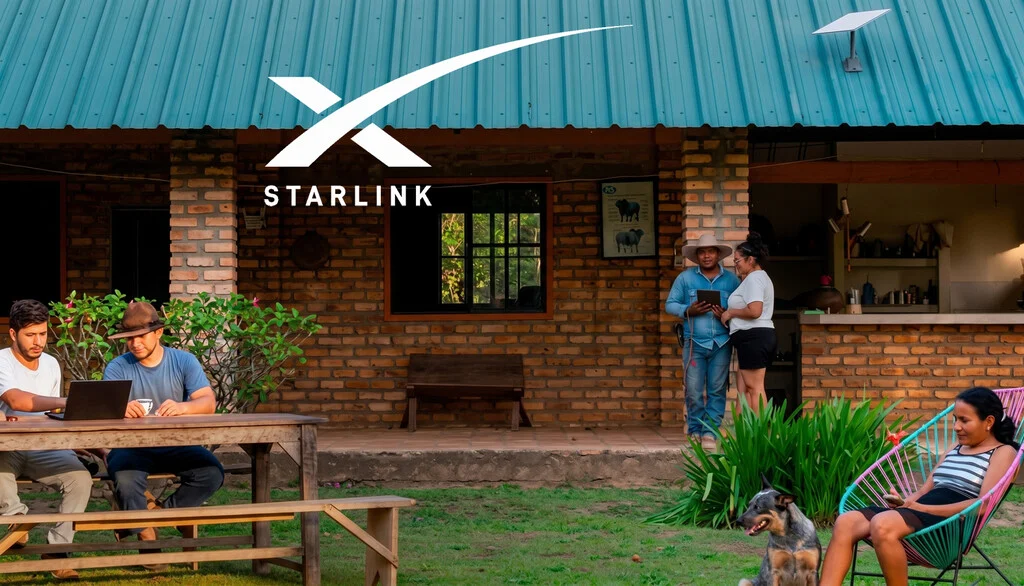
The core premise of the Starlink Community program is to transform the role of the standard subscriber. In this model, a user who installs a Starlink kit becomes a "host." This host provides a localized access point for neighbors, guests, or small businesses in their immediate vicinity. Unlike public Wi-Fi hotspots, which are often free or insecure, this model introduces a tiered payment structure.
Neighbors or local visitors can purchase access passes that function on a flexible, time-based scale. Options include:
- Hourly and Daily Passes: Designed for transient users or those needing short-term connectivity for specific tasks.
- Weekly Passes: Targeted at visitors or temporary residents.
- Monthly Passes: The most robust tier, which, unlike the others, allows for the connection of up to four simultaneous devices, making it a viable alternative for small household or office needs.
From a technical perspective, the host remains responsible for the initial hardware installation and the primary service contract. However, Starlink assumes responsibility for the administrative backend, including payment processing, user authentication, and network security management. This arrangement removes the administrative headache for the host, who is essentially compensated for acting as a physical relay for the network. While exact commission structures have not been finalized, the move suggests a revenue-sharing model where the host is rewarded for the data traffic generated through their specific terminal.
The Strategic Shift Toward Localized Infrastructure
This initiative reflects a broader trend in satellite communications: the "micro-cell" approach. By encouraging users to install multiple kits or expand coverage using supplementary hardware, Starlink is effectively creating a mesh-like network of satellite terminals. This approach is particularly effective in areas where the physical geography or local building codes prevent the installation of traditional fiber cables, yet where population density is sufficient to warrant high-speed demand.

Industry analysts note that this strategy serves two purposes. First, it increases the total number of connected devices, which helps the company reach economies of scale. Second, it optimizes the utilization of satellite bandwidth. By concentrating usage through a single, well-placed terminal in a community, the satellite network can more efficiently manage traffic loads compared to dozens of scattered, low-intensity connections.
Implications for the Telecommunications Sector
The entry of satellite providers into local community distribution creates a complex competitive landscape. For traditional telecommunications operators (telcos) that rely on fixed-line infrastructure, the "community host" model presents a challenge to their territorial dominance. While fiber remains superior in terms of raw bandwidth and stability, the ease of deploying Starlink in a rural or semi-urban environment—often within hours—threatens the slow rollout timelines of traditional infrastructure projects.
Furthermore, the European Union is currently pushing its own satellite internet initiatives, such as the IRIS² (Infrastructure for Resilience, Interconnectivity and Security by Satellite) project. The goal of this multi-billion euro investment is to ensure European sovereignty in space-based communication. However, the rapid expansion of Starlink and the entry of Chinese competitors into the LEO market have created a sense of urgency. Starlink’s new community model effectively cements its presence in the market, making it more difficult for newer, state-backed initiatives to displace it once the consumer habit of using satellite internet is firmly established.
Addressing Regulatory and Technical Hurdles
While the program is innovative, it faces significant regulatory hurdles. In many jurisdictions, operating as an internet service provider (ISP) requires specific licensing and compliance with data retention laws. By handling the backend access and authentication, Starlink is likely attempting to insulate individual hosts from these legal responsibilities. However, regulators in various countries will undoubtedly scrutinize how data privacy is managed when a neighbor’s internet traffic passes through another resident’s equipment.

Technically, the "host" must ensure that their location is optimal for satellite reception. This means avoiding physical obstructions like trees, buildings, or power lines that could interfere with the signal. The company has already provided guidance on how hosts can scale their setup using additional routers or kits if the demand exceeds the capacity of a single terminal, which hints at a modular future for the platform where hosts can scale their operations based on local demand.
Looking Ahead: The Beta Phase and Beyond
The current phase of the Starlink Community program is a beta, meaning it will likely be limited to specific regions with high user density and reliable satellite coverage. Potential hosts, including property owners, local entrepreneurs, or community leaders, are being invited to join a waitlist. The application process is straightforward, requiring interested parties to submit their location and interest via a web form.
For the prospective host, the barrier to entry is relatively low: the purchase of the hardware kit and the willingness to manage the physical site. For Starlink, the potential reward is immense. By offloading the costs of physical distribution and customer acquisition to the users themselves, the company can expand its footprint at a fraction of the cost of traditional network expansion.
As the program moves out of the beta phase, the real-world performance of these community networks will be the ultimate test. Will the latency hold up under the weight of multiple concurrent users? Can the revenue-sharing model provide a meaningful incentive for users to participate? And how will local municipalities respond to the sight of dozens of satellite dishes appearing in small neighborhoods? These questions remain unanswered, but one thing is certain: the era of the individual acting as a decentralized ISP has arrived, and it promises to fundamentally alter how we think about the "last mile" of the internet.
