
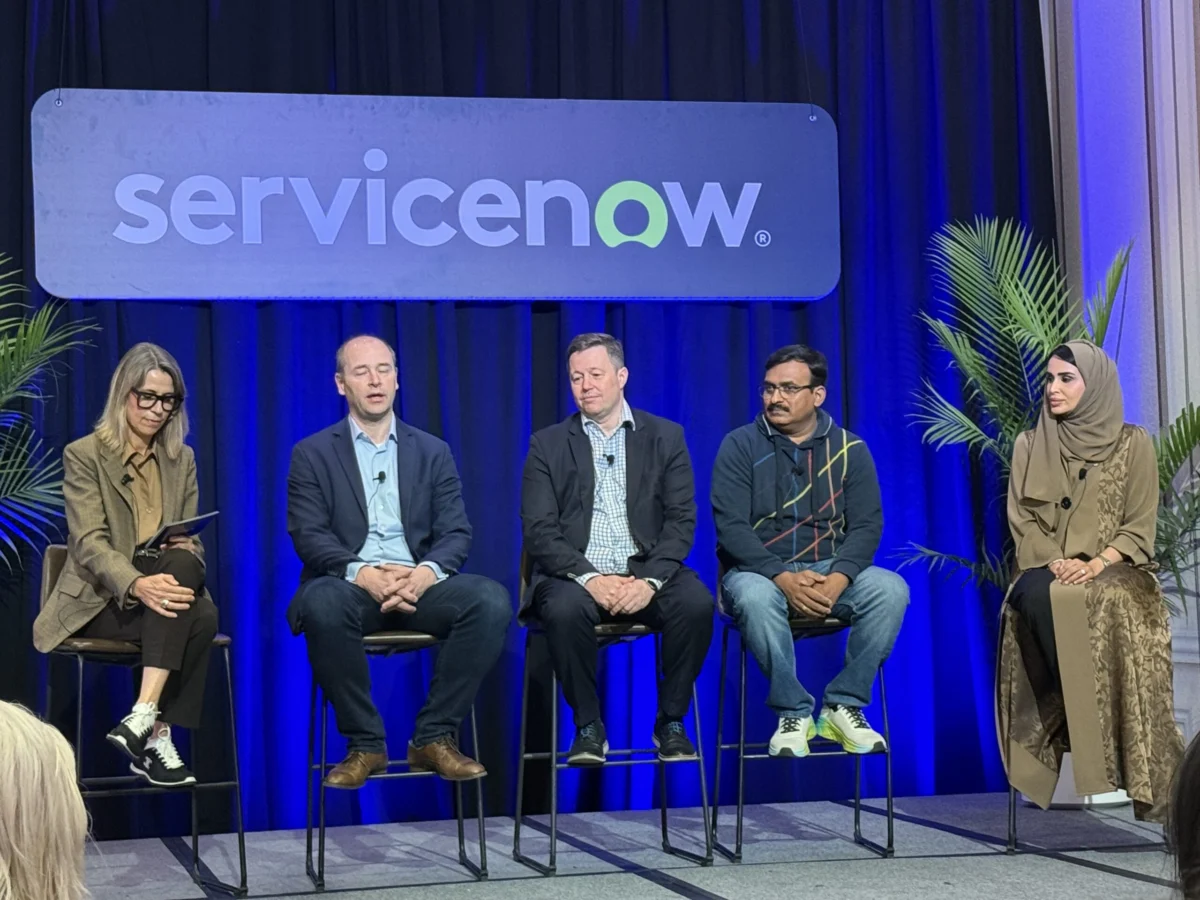

The annual ServiceNow Knowledge 2026 conference in Las Vegas has positioned itself as a pivotal moment for the enterprise software industry, marking a transition from experimental artificial intelligence to large-scale, production-ready autonomous systems. At the heart of this year’s summit is the unveiling of an expanded AI Control Tower and a strategic push to integrate the "Autonomous Workforce" into every core enterprise function. While the platform enhancements represent a significant leap in technical capability, the narrative of the event has been dominated by tangible outcomes from major global organizations. In a high-profile panel moderated by ServiceNow’s EMEA President, Cathy Mauzaize, leaders from Siemens AG, Rossmann, SLB, and the UAE’s Department of Government Enablement (DGE) provided a roadmap for how the world’s largest entities are currently leveraging AI to redefine productivity, customer satisfaction, and operational efficiency.
The event comes at a time when the global enterprise software market is under intense pressure to prove the return on investment for generative AI and automated workflows. ServiceNow, led by CEO Bill McDermott, has consistently messaged the "Platform of Platforms" concept, and Knowledge 2026 serves as the evidentiary hearing for that strategy. The customer data presented during the summit suggests that the era of "pilot projects" has concluded, replaced by industrial-scale automation that manages millions of transactions with minimal human intervention.
A Chronology of Autonomous Evolution
The path to Knowledge 2026 began several years ago as ServiceNow shifted its focus from IT Service Management (ITSM) to a broader Enterprise Service Management (ESM) framework. By 2024, the company had integrated generative AI into its Vancouver and Washington D.C. releases, setting the stage for the autonomous capabilities showcased this week.
In the lead-up to the 2026 summit, ServiceNow focused on three pillars: connectivity, intelligence, and action. The AI Control Tower, a central feature of the latest release, acts as the "brain" of the enterprise, providing visibility into how AI agents are performing across various departments. This evolution reflects a broader industry timeline where automation has moved from simple rule-based triggers to complex, decision-making agents capable of understanding context and intent.
Institutional Success Metrics: From IT to the Oil Field
The panel discussion brought forward specific, data-driven evidence of AI’s impact. Siemens AG, a global powerhouse in industrial manufacturing and technology, has reached a level of automation that was previously considered theoretical. Jayant Deulgaonkar, Head of SIAM Technology at Siemens AG IT, revealed that the company processes approximately 1.7 million IT requests annually. Of these, an unprecedented 96 percent are handled automatically.
Siemens’ "Vision 2030" strategy is built on two specific pillars: "touchless" operations and "effortless support." Deulgaonkar explained that their hierarchy of resolution begins with predictive measures—avoiding incidents before they occur. If an incident does happen, the system moves to a prescriptive phase where AI-driven self-healing mechanisms resolve the issue autonomously. Human intervention is reserved strictly as a final resort for cases that the AI cannot solve. This shift from conventional automation to AI-driven decision-making allows the platform to handle complex resolutions that were previously the sole domain of human engineers.
In the energy sector, SLB (formerly Schlumberger) has utilized ServiceNow to bridge the gap between technical expertise and customer service. Mark Gerrard Douglas, VP of Digital Services at SLB, reported that external customer satisfaction (CSAT) scores rose from 80 percent to 93 percent following the deployment of ServiceNow within its petrotechnical expert support function. By embedding the ServiceNow Engagement Messenger into every application interface, SLB utilizes "carry context"—a system where user data, location, and technical environment are automatically fed to the support agent or AI. For a geologist in a remote location, this eliminates the friction of manual data entry and ensures they are immediately connected to the correct specialist queue.
The Human Capital Debate: Efficiency vs. Displacement
One of the most discussed topics at Knowledge 2026 is the impact of the autonomous workforce on headcount. The perspectives shared by the panel highlighted a diverging but equally pragmatic approach to labor.
At Dirk Rossmann GmbH, one of Europe’s largest drugstore chains, the implementation of six AI agents led to a 50 percent reduction in headquarters headcount over just five months. Christian Metzner, Managing Director of HR & IT at Rossmann, framed this not as a simple cost-cutting measure, but as a fundamental realignment of the company’s purpose. Rossmann operates over 5,200 stores and serves millions of daily customers; Metzner argued that the headquarters’ sole function is to serve the stores. To drive this point home, he required headquarters staff to work shifts in retail outlets to understand the real-world implications of their support roles.
Conversely, SLB’s strategy focuses on talent scarcity rather than reduction. Gerrard Douglas noted that geophysicists and geologists are "rare commodities." The objective of SLB’s automation is to strip away the "mundane tasks" like ticket filing, allowing these highly trained professionals to focus on revenue-generating consulting and complex problem-solving. This mirrors a model popularized by IKEA, where helpdesk staff were transitioned into interior designers, reportedly contributing to over $1 billion in new revenue.
Public Sector Transformation and Sovereign Requirements
The UAE’s Department of Government Enablement (DGE) provided a template for public sector AI adoption. Her Excellency Nadia Ali AlThaibani, Executive Director of Common Digital Platforms, detailed a massive shift in how citizens interact with the state. By leveraging ServiceNow, the UAE moved self-service adoption from a mere 1 percent to 54 percent across more than 50 government entities. Furthermore, 93 percent of these requests are now closed within the established Service Level Agreement (SLA).
A critical component of the UAE’s strategy is the development of a sovereign cloud. AlThaibani emphasized that for government entities, the partnership with ServiceNow extends beyond pricing and functionality to include national security and data residency. The commitment to building a sovereign cloud in the region ensures that sensitive government data remains within national borders while still benefiting from global AI innovations.
Technical Implementation: The Data Readiness Paradox
A recurring debate among enterprise architects is whether an organization must "clean" its data before embarking on an AI journey. The panel offered two distinct philosophies.
Siemens took a foundational approach, spending two years standardizing its platform and cleaning its Configuration Management Database (CMDB). Deulgaonkar argued that a well-set-up CMDB is critical for AI to function accurately at scale. Without clean data, the predictive and prescriptive models risk producing "hallucinations" or incorrect resolutions.
Rossmann, however, took a more agile, risk-tolerant approach. Metzner bypassed the traditional two-year data cleaning phase, opting to go live in 20 stores after only eight months of implementation. His philosophy was to "learn by doing," identifying which data actually needed cleaning based on real-world performance rather than theoretical requirements. While this approach was facilitated by Rossmann’s status as a family-owned company without the pressure of quarterly earnings reports, the speed of their implementation has become a case study in "fast-track" AI deployment.
Change Management and the "25 Percent Rule"
Regardless of the technical approach, all panelists agreed that the most significant hurdle to an autonomous workforce is organizational culture. Metzner estimated that 20 to 25 percent of the total effort in Rossmann’s transformation was dedicated strictly to change management. This included internal communication streams, town halls, and "gamification" to encourage adoption.
The challenge lies in the "cultural distance" between the technology teams and the end-users—whether they are store clerks or oil field engineers. The technology must be "invisible" enough to solve problems without requiring the user to become a technical expert. In the case of Rossmann, this meant allowing store employees to raise tickets via photographs or voice messages, which the AI then classifies and prioritizes.
Strategic Implications and Future Outlook
The takeaways from Knowledge 2026 suggest that the "value" of technology is shifting. As Jayant Deulgaonkar noted, automation was once a major differentiator, but it has now become a baseline commodity. The new differentiator is AI-driven value—the ability of a system to not just follow a script, but to make a decision.
For ServiceNow, the success of these EMEA customers validates its move into the "Agentic AI" space. The AI Control Tower is designed to manage this new reality, where hundreds or thousands of AI agents operate simultaneously across an enterprise.
Industry analysts observing the event note several key implications:
- The End of the "Tool" Era: ServiceNow is being treated less as a software tool and more as an operating system for the modern enterprise.
- Economic Realignment: The 50 percent reduction seen at Rossmann and the revenue-generation shift at SLB suggest that AI is fundamentally changing the "unit economics" of human labor in the corporate world.
- The Sovereignty Mandate: The UAE’s focus on sovereign clouds indicates that "one-size-fits-all" global cloud models are giving way to localized, high-security environments.
As Knowledge 2026 continues, the focus remains on how these autonomous systems will scale. The consensus among the participating executives is clear: the technology is no longer the primary constraint. Success now depends on an organization’s risk appetite, its commitment to change management, and its ability to redefine the relationship between human expertise and machine intelligence. The results from Siemens, SLB, Rossmann, and the UAE government suggest that for those willing to move quickly, the "Autonomous Workforce" is already delivering on its promise.
