

The Rise of Autonomous Agents and Their Foundational Complexity
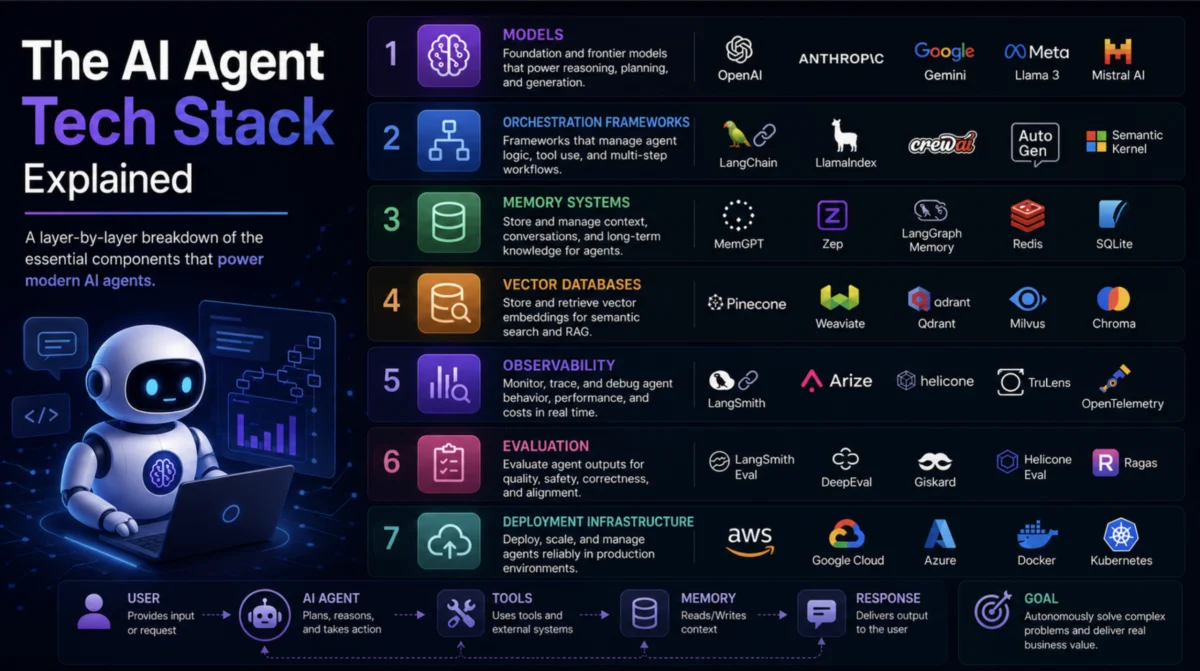
Imagine an AI agent autonomously researching market competitors, extracting real-time pricing data from their websites, synthesizing these findings into a meticulously structured report, and delivering it to a designated communication channel by a specific deadline—all initiated by a single, high-level command. This scenario, once futuristic, is now a tangible reality for businesses embracing advanced AI. However, the seamless execution of such a complex task is not a monolithic achievement but rather the synchronized effort of seven interdependent technological layers. While the powerful large language models (LLMs) at the apex garner significant attention, it is the six foundational layers beneath them that ultimately dictate an agent’s real-world efficacy and resilience.
According to a pivotal report by Gartner, a leading research and advisory company, an astounding 40% of enterprise applications are projected to integrate task-specific AI agents by the close of 2026, marking a dramatic increase from less than 5% in 2025. This near-vertical adoption curve underscores a critical demand for engineers and technical leads to possess a holistic understanding of the entire AI agent stack, extending beyond their immediate domain of expertise. The stakes are high; Gartner also estimates that over 40% of agentic AI projects face a significant risk of cancellation by 2027 due to challenges related to unclear value, escalating costs, and inadequate governance. Many of these failures will inevitably trace back not to the intrinsic quality of the chosen foundation model, but to a poorly integrated or misunderstood technological stack.
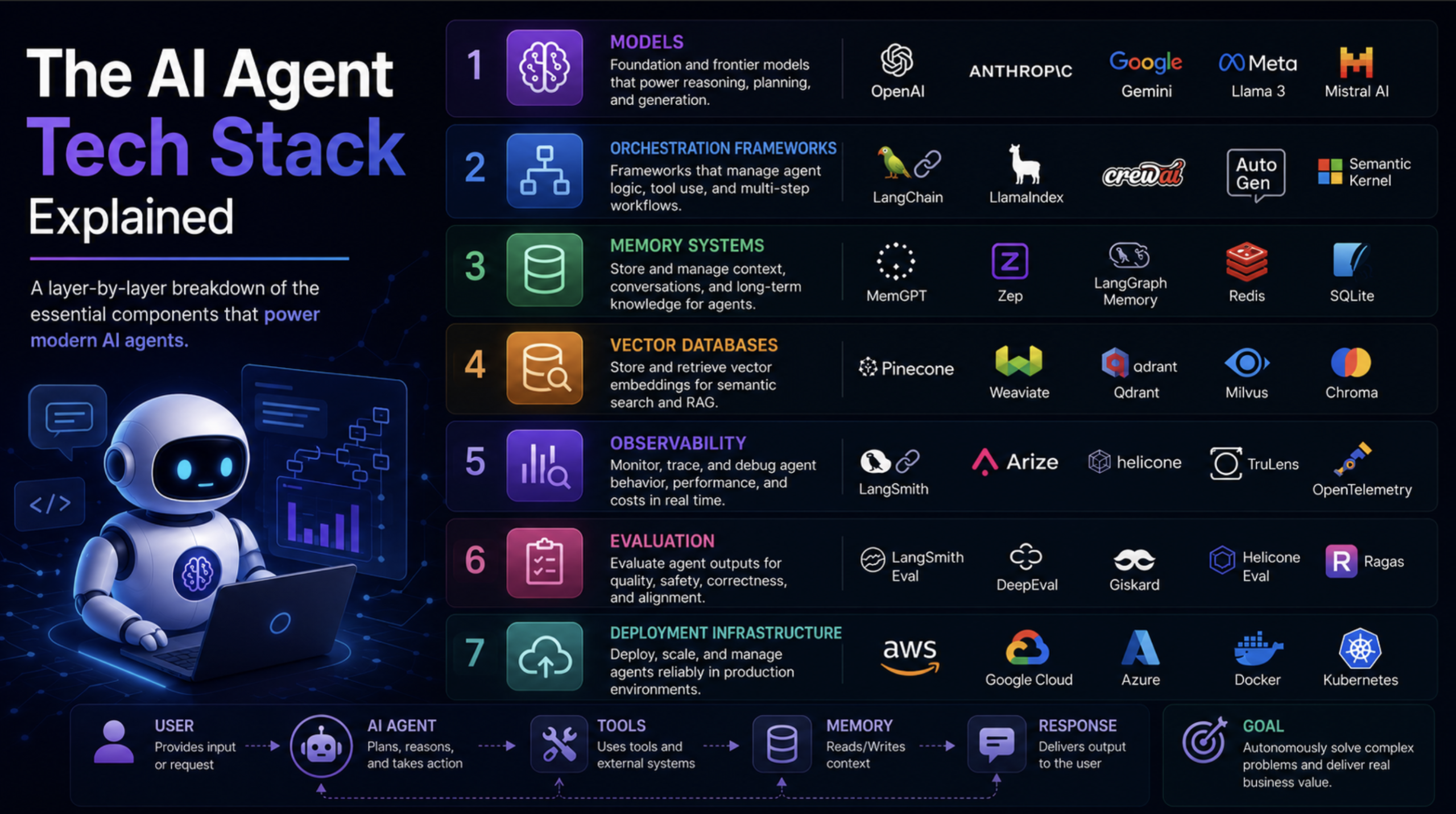
This article systematically explores each layer, beginning with the cognitive core and descending to the deployment infrastructure, elucidating their purpose, interconnections, and the optimal choices available to developers in the current landscape.
Layer 1: The Foundation Model – The Cognitive Engine
At the very heart of any AI agent lies the Foundation Model, serving as its cognitive core. This is where the sophisticated processes of reasoning, language comprehension, and decision-making about subsequent actions occur. Every other component within the stack is either designed to feed contextual information into this model or to execute actions based on its outputs.
The year 2026 presents a robust selection of leading models, each offering unique strengths and trade-offs. OpenAI’s GPT-5.5 continues to be a frontrunner, lauded for its speed in everyday interactions, reliable tool-calling capabilities, and a deeply mature ecosystem that boasts extensive integrations and a vast developer community adept at resolving edge cases. Anthropic’s Claude Sonnet 4.6 stands out for its proficiency in handling lengthy documents and complex instruction-following, often at a more economical price point than its higher-tier counterpart, Claude Opus 4.8. The latter is reserved for tasks demanding profound, long-horizon reasoning. Google’s Gemini 3.1 Pro distinguishes itself with an impressive 1 million token context window, a crucial feature for agents processing voluminous codebases or extensive knowledge repositories in a single pass. For organizations prioritizing full control over deployment and data residency, open-weight models such as Meta’s Llama 4 and Mistral Large 3 offer compelling alternatives, albeit at the expense of managing the associated infrastructure overhead.
A significant evolutionary step in 2025 saw the blurring of the traditional distinction between "standard" and "reasoning" model families. Leading providers like OpenAI, Anthropic, and Google have integrated adjustable reasoning effort levels directly into their primary models. GPT-5.5, for instance, offers customizable reasoning effort settings (from ‘none’ to ‘xhigh’), mirroring Claude’s ‘effort’ parameter and Gemini’s ‘thinking levels’. For the majority of agent workflows, default or low-effort settings strike an optimal balance between speed and cost. However, for tasks requiring meticulous planning, intricate problem-solving, or precise mathematical computations, elevating the reasoning effort demonstrably enhances correctness, justifying the increased computational cost.
Layer 2: The Orchestration Framework – The Agent’s Nervous System
If the foundation model is the brain, the Orchestration Framework functions as the nervous system, dictating the agent’s control flow. It is responsible for determining the agent’s next action, when to invoke a specific tool, how to interpret and handle the results, and ensuring the overall reasoning loop maintains coherence across multiple sequential steps.
The prevalent pattern implemented by most frameworks is ReAct (Reasoning and Acting). In this iterative loop, the agent first generates a ‘thought,’ then decides upon an ‘action,’ executes that action via a designated ‘tool,’ observes the ‘result,’ and subsequently re-engages in ‘thought.’ This cycle persists until the agent formulates a definitive final answer. While seemingly straightforward, this layer is frequently the locus of production failures, where agents might incorrectly call a tool, become ensnared in infinite loops, or fail to recognize when sufficient information has been gathered to conclude a task.
The selection of an appropriate orchestration framework is contingent upon the agent’s intended purpose. For single-agent task execution, LangGraph or LangChain are popular choices, offering robust capabilities for managing state and tool use. For scenarios demanding coordinated efforts from specialized agents, CrewAI and AutoGen provide sophisticated multi-agent management features. Enterprises often gravitate towards Semantic Kernel for its deep integration with Microsoft ecosystems, while LlamaIndex excels in document-heavy retrieval-augmented generation (RAG) workflows.
A minimal agent demonstrating tool use and state management in LangGraph would involve initializing a language model, registering tools like DuckDuckGoSearchRun, and then leveraging create_react_agent to seamlessly wire these components together. This simplifies the ReAct loop, allowing the agent to dynamically decide when to search for current data and synthesize answers from the results.
Layer 3: Memory Systems – Bridging Contextual Gaps
A fundamental characteristic of large language models is their inherent statelessness; each API call is treated as an isolated event, devoid of any prior knowledge unless explicitly provided. This poses a significant challenge for AI agents that need to maintain conversational context, recall user preferences over time, or build upon past work. The Memory Systems layer directly addresses this problem.
Research from Atlan on AI agent memory revealed a stark reality: 95% of enterprise generative AI pilots in 2025 yielded zero measurable return on investment (ROI). A significant portion of these failures was attributed not to the quality of the models themselves, but to a lack of "context readiness"—a direct consequence of inadequate memory implementation.
Production-grade AI agents typically employ four distinct types of memory, each serving a specific function:
- Working Memory (Short-term): This refers to the immediate conversation history, explicitly passed within the context window of the current LLM call. It allows the agent to maintain coherence within a single session.
- Episodic Memory (Long-term, Event-based): A record of past interactions or "episodes," stored persistently (e.g., in a database). It enables the agent to recall specific events, user preferences, or past tasks across sessions.
- Semantic Memory (Long-term, Knowledge-based): Often implemented via Retrieval-Augmented Generation (RAG), this involves storing vast amounts of external knowledge (documents, databases) as embeddings in a vector store, allowing the agent to retrieve relevant information on demand.
- Declarative Memory (Facts and Rules): A structured representation of facts, rules, or user-defined policies that the agent must adhere to, often encoded as prompts or specific data structures.
Implementing working and episodic memory together, for instance, using LangChain’s current patterns, involves maintaining an episodic_store (which would ideally be a database in production) to log conversation turns and a working_memory list to hold in-session messages. Before each LLM call, trim_messages ensures the working memory fits within the model’s context limit, compressing older messages rather than simply dropping them. Episodic history can then be injected into the system prompt, providing the model with long-term context, allowing it to remember past interactions even when the immediate conversation has moved on.
Layer 4: Vector Databases and Retrieval (RAG) – External Knowledge Access
While foundation models possess extensive general knowledge from their training data, they lack awareness of proprietary internal documents, specific customer support histories, or recent real-world events beyond their training cutoff. This is where Retrieval-Augmented Generation (RAG) becomes indispensable, facilitated by Vector Databases.
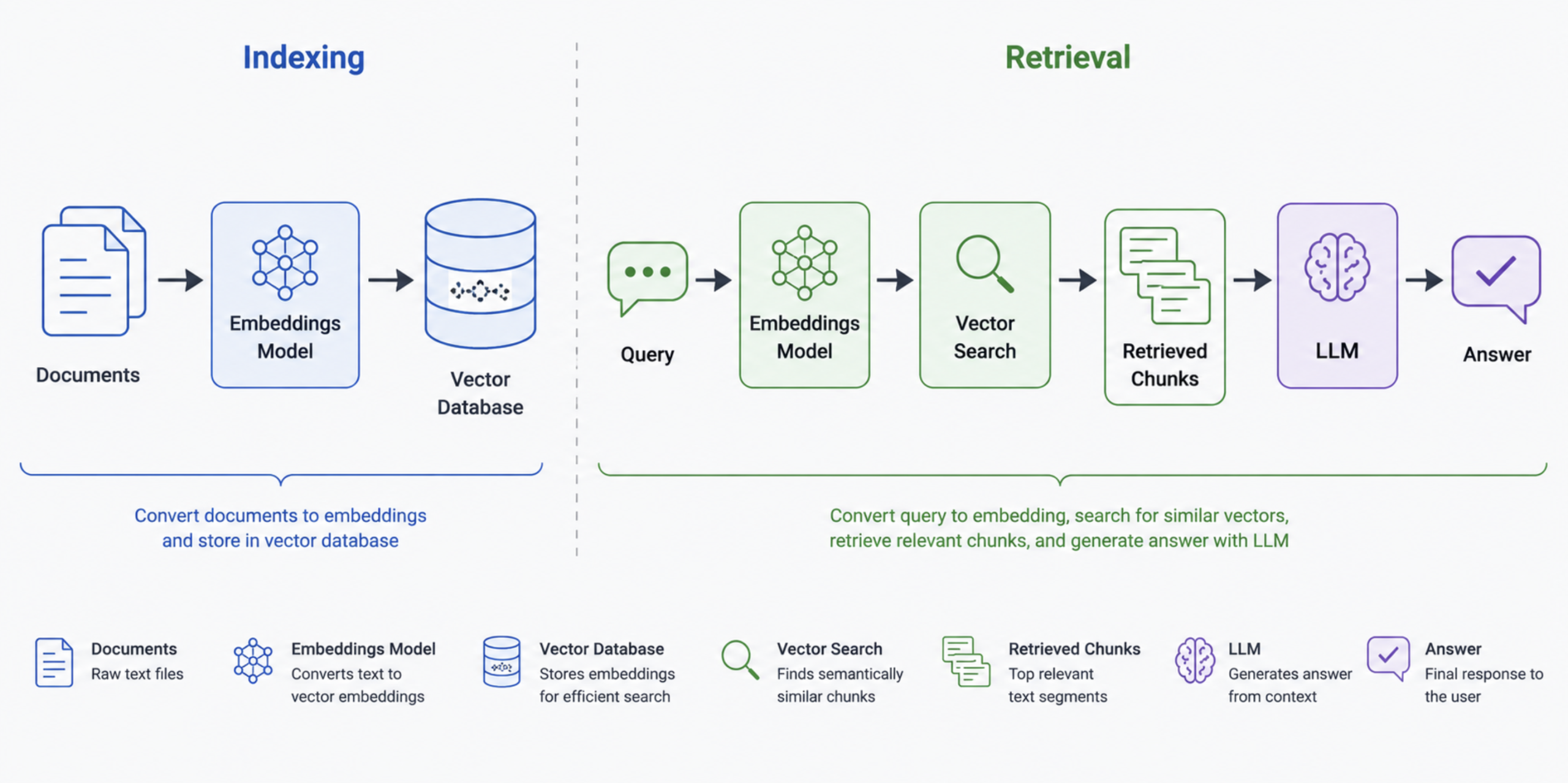
The core concept of RAG is elegant: instead of attempting to cram an entire knowledge base into an LLM’s context window, documents are transformed into numerical representations called embeddings. These embeddings are then stored in a specialized vector database. When a query is made, only the most semantically relevant "chunks" of information are retrieved from the database and supplied to the agent as context. This ensures the agent receives precisely the right information, preventing hallucinations and grounding its responses in factual, up-to-date data.
The global vector database market’s expansion, reaching an estimated $3.2 billion in 2025 and growing at a robust 24% annually, is a testament to RAG’s centrality in modern AI systems. This growth reflects the urgent need for enterprises to make their vast, internal data accessible to AI agents.
Leading vector database options cater to diverse needs:
- Chroma: A developer-friendly, local-first database, ideal for prototyping and small-to-medium production workloads. Its 2025 Rust rewrite significantly boosted performance.
- Pinecone: A fully managed vector database optimized for high-scale, low-latency similarity searches. It automates infrastructure, making it a strong choice for production RAG where operational overhead is a concern.
- Weaviate: An open-source solution offering native hybrid search (combining keyword and vector search) and deployment flexibility, supporting both self-hosting and cloud services.
- pgvector: A PostgreSQL extension that integrates vector similarity search directly into existing Postgres databases, offering scalability with HNSW indexing for teams already invested in the PostgreSQL ecosystem.
A typical RAG pipeline involves two phases. During indexing, documents are chunked, converted into high-dimensional vectors using an embedding model (e.g., OpenAI’s text-embedding-3-small), and stored in a vector database like Chroma. During retrieval, a user’s query is similarly embedded, the most relevant chunks are fetched, and the LLM is then prompted to answer only using this provided context, thereby mitigating the risk of hallucination.
Layer 5: Tools and External Integrations – Enabling Action in the Real World
An AI agent confined solely to text generation is, in essence, an extremely expensive autocomplete tool. Tools and External Integrations are what empower agents to transcend mere conversation and actively interact with and act upon the real world.
Technically, a tool is a function that the foundation model can elect to call. The tool’s functionality is described in natural language, and its input parameters are defined via a schema. The model, based on its reasoning, decides when calling this function would aid in resolving a query and with what arguments. Crucially, the model does not execute the function itself; the underlying code does. The model merely orchestrates its use.
Key categories of tools critical for production agents include:
- Web Search: For accessing real-time, current information.
- Code Execution: For complex calculations, data manipulation, or logical operations.
- File I/O: For reading from and writing to local or cloud-based document stores.
- API Calls: For connecting to a vast array of external services, from CRM systems to payment gateways.
- Browser Use: For interacting with web interfaces that lack dedicated APIs.
A notable development in this layer is the Model Context Protocol (MCP), introduced by Anthropic in late 2024. MCP provides a standardized method for models to communicate with external tools and data sources, aiming to reduce the need for bespoke integration code for every new tool. Amazon Bedrock Agents’ native MCP support since 2025 highlights its growing importance for interoperability and streamlined development.
The most critical aspect of tool design is the schema. A precise, well-typed schema with clear parameter descriptions guides the model to make accurate tool-calling decisions, while vague descriptions often lead to erroneous invocations. An agent can be equipped with various tools—a web search for current events, a weather API for local forecasts, or a calculator for mathematical evaluations—and intelligently decide which tool best addresses a user’s query. The clarity of the tool’s docstring, specifying its purpose, usage conditions, and expected input format, is paramount for reliable agent behavior.
Layer 6: Observability and Evaluation – Ensuring Reliability and Performance
A sobering truth in AI development is that Large Language Models can fail silently. As observed by the team at Kanerika, a hallucinated answer might still return an HTTP 200 status, meaning standard infrastructure monitoring tools would register a successful request, masking fundamental errors. An agent could confidently provide incorrect information for days without detection. This necessitates a specialized Observability and Evaluation layer, fundamentally different from traditional monitoring systems that treat "correctness" as a binary outcome. LLM correctness is semantic, demanding evaluation of relevance, faithfulness, and safety.
A robust LLM observability setup typically tracks three core aspects:
- Tracing: This involves following every step of the agent’s execution—individual LLM calls, tool invocations, retrieval queries, intermediate reasoning steps, and the latency of each.
- Evaluation: This scores the agent’s output against key metrics such as faithfulness (did it adhere to provided context?), relevance (did it answer the question asked?), and hallucination rate. This often involves both automated and human-in-the-loop evaluations.
- Monitoring: This tracks behavioral drift over time, assessing whether the agent’s performance on specific input classes is improving or degrading as models, prompts, or data evolve.
The leading platforms in this space offer distinct advantages. LangSmith provides deep integration with LangChain and LangGraph, offering the fastest path to working traces for users within that ecosystem. Langfuse, an open-source solution with over 19,000 GitHub stars and an MIT license, offers self-hosting capabilities and framework agnosticism, appealing to teams prioritizing data control. Arize Phoenix emphasizes ML-grade evaluation rigor, incorporating over 50 research-backed metrics for faithfulness, relevance, safety, and hallucination detection. MLflow’s analysis suggests that the optimal choice often aligns with the primary framework: LangChain users benefit most from LangSmith, while those on LlamaIndex or raw API calls might find Phoenix or Langfuse more suitable.
Adding tracing with tools like Langfuse involves minimal code changes, typically attaching a CallbackHandler to the LLM and the agent’s invocation configuration. This allows the platform to automatically capture a full trace of every interaction, including token counts, latency, and complete input/output at each step, providing essential data for debugging, performance analysis, and quality assurance.
Layer 7: Deployment Infrastructure – Scaling and Sustaining Operations
Even the most meticulously crafted AI agent in development can become a significant operational burden in production without adequate Deployment Infrastructure. This layer bridges the gap between a functional prototype and a scalable, maintainable system.
A fundamental practice for any production agent is containerization with Docker. Containers ensure consistent behavior across diverse environments, simplify dependency management, and provide a clear, portable path to any cloud deployment target. Bypassing containerization often leads to environment-specific bugs that consume disproportionate engineering effort.
For the serving layer, two primary architectural options exist:
- Synchronous API (e.g., Flask, FastAPI): Suitable for agents that complete tasks rapidly, typically within a few seconds, allowing the HTTP connection to remain open.
- Asynchronous Queue (e.g., Celery, AWS SQS, Google Pub/Sub): The preferred choice for agents involving multiple tool calls, lengthy retrieval pipelines, or document processing that might take 30 to 60 seconds. Here, the client submits a job, immediately receives a task ID, and then polls for the eventual result, preventing connection timeouts.
All major cloud providers now offer managed agent infrastructure. Amazon’s AgentCore, generally available since October 2025, provides dedicated infrastructure on AWS for memory management, tool execution, and session handling without manual server provisioning. Google Vertex AI Agent Builder is the natural choice for GCP users, offering native Gemini integration and built-in observability features. Azure OpenAI Service, often paired with Semantic Kernel, is the enterprise default for Microsoft-centric organizations, emphasizing compliance and robust service level agreements (SLAs).
Effective cost management is also paramount. Three practices significantly reduce operational expenses:
- Caching: Storing and returning previously computed responses for identical queries, avoiding redundant LLM calls.
- Request Batching: Grouping non-urgent tasks to reduce the per-call overhead of API interactions.
- Setting
max_iterations: Capping the number of steps an agent can take in its execution loop to prevent runaway processes from consuming excessive tokens.
Putting It All Together: Strategic Choices Across the Lifecycle
The optimal choices for each layer evolve with the project lifecycle, from rapid prototyping to enterprise-grade deployment.
For Prototyping, the focus is on speed and minimal infrastructure:
- Foundation Model: GPT-5.5 (reliable tool-calling, mature ecosystem).
- Orchestration: LangGraph (fast setup, good documentation).
- Memory: In-context only (no infrastructure overhead).
- Vector DB: Chroma (local, zero operations, excellent developer experience).
- Tools: DuckDuckGo + custom
@toolfunctions (zero API keys required). - Observability: Langfuse (cloud free tier for one-line setup).
- Deployment: Local / Docker (for rapid iteration).
For a Production Startup, the emphasis shifts to scalability and control:
- Foundation Model: GPT-5.5 with Claude Sonnet 4.6 as a fallback (reliability with redundancy).
- Orchestration: LangGraph or CrewAI (state management, multi-agent support).
- Memory: Episodic (Postgres or Redis) + Semantic (RAG) (full persistent context).
- Vector DB: Weaviate or Pinecone (scalable, robust hybrid search).
- Tools: Full tool suite with Model Context Protocol (MCP) (standardized integrations).
- Observability: Langfuse self-hosted or Arize Phoenix (data control, ML-grade evaluations).
- Deployment: Docker + Kubernetes + async queue (production-grade, cost-controlled).
For Enterprise-level deployments, compliance, data residency, and governance are paramount:
- Foundation Model: Azure OpenAI or AWS Bedrock (compliance, data residency, SLA).
- Orchestration: Semantic Kernel or LangGraph (enterprise language support, governance features).
- Memory: Managed memory solutions with audit trails (meeting regulatory requirements).
- Vector DB: Weaviate or pgvector (self-hostable options for compliance).
- Tools: MCP-based, internally approved and security-reviewed tools (robust access control).
- Observability: Langfuse self-hosted or Datadog LLM module (integration with existing enterprise infrastructure).
- Deployment: AWS AgentCore / Vertex AI Agent Builder (fully managed, governed, auditable platforms).
Conclusion: The Holistic View for Sustainable AI Agents
The pervasive narrative often spotlights the foundation model as the singular marvel of the AI agent stack. However, the true litmus test for whether an AI agent moves beyond a captivating demo to a reliable, value-generating asset in production lies in the seamless integration and robust engineering of the other six layers.
An agent can fail at the orchestration layer if its ReAct loop becomes unmanageable. It can falter at the memory layer if it "forgets" crucial context or user preferences. Retrieval failures, where irrelevant information is provided, can lead to plausible but entirely fabricated "hallucinations." Suboptimal tool designs, with vague schemas, can cause the model to invoke incorrect functions, leading to erroneous actions. The absence of a robust observability layer means these failures often go undetected until significant business impact occurs. Finally, a poorly designed deployment infrastructure can undermine an otherwise perfect agent with unacceptable latency or prohibitive costs under real-world traffic.
The Gartner prediction of significant project cancellations by 2027 serves as a stark warning: many agentic AI initiatives are at risk not because the underlying models are flawed, but because the stack supporting them was assembled without a holistic understanding of its interconnected components. Understanding the full AI agent stack does not necessitate building every piece from scratch, but it empowers developers and technical leaders to make informed, strategic decisions about trade-offs, ensuring that their AI agents are not just intelligent, but also resilient, cost-effective, and truly production-ready. This comprehensive perspective is the essential differentiator between an AI agent that merely works in a controlled demonstration and one that delivers consistent, measurable value in the dynamic, demanding environment of enterprise operations.
