


From its nascent stages, Android promised a revolutionary departure from the closed ecosystems dominating the mobile landscape, offering an unprecedented blend of freedom and versatility. The journey began in earnest with devices like the HTC Magic, which arrived in Spain as one of the very first Android handsets, captivating early adopters with its open-source foundation and immense potential for customization. This era, characterized by an enthusiastic community of developers and users, solidified the notion that decoupling from Google’s services was not only feasible but often desirable, leading to a vibrant scene of alternative firmware. However, over a decade later, the mobile operating system has evolved dramatically, transforming from a bastion of open experimentation into a deeply integrated Google-centric platform, rendering true independence a niche pursuit fraught with significant trade-offs.
Google masterfully leveraged Android’s open-source nature, turning it into what many analysts describe as its quintessential "Trojan horse" in the mobile sector. By providing a robust, free-to-license operating system base, Google significantly reduced development costs for hardware manufacturers, paving the way for Android’s rapid and ubiquitous adoption across billions of devices worldwide. This strategic move ensured that alongside every Android smartphone purchased, a suite of Google Mobile Services (GMS) — including indispensable applications like Maps, Gmail, YouTube, Google Drive, and the central Google Play Store (which superseded the original Android Market) — found its way into users’ pockets. These services, while undeniably convenient and feature-rich, became not only essential tools for daily life but also gargantuan profit centers for Google’s parent company, Alphabet. The deep embedding of these services and their monetization through data collection and advertising has fundamentally reshaped the Android experience, making any attempt to operate outside Google’s pervasive influence considerably more complex and challenging than in its formative years.
The Golden Age of Custom ROMs: A Quest for Unfettered Android
In the early 2010s, the Android landscape was a fertile ground for experimentation, largely defined by the proliferation of custom ROMs. This period was a playground for tech enthusiasts who spent countless hours "flashing" their devices with modified firmware, a process that involved replacing the stock operating system with a community-developed alternative. This culture of tinkering often extended to customizing the kernel – the core component of the OS – and adjusting parameters like the CPU governor to optimize performance or battery life. Crucially, in these early days, it was common practice to install Android without the bundled Google Apps (GApps), which were often added later as a separate, optional package. This separation underscored the initial ethos of Android: a robust, open platform where Google’s proprietary services were an add-on, not an intrinsic component.

A pivotal moment that highlighted Google’s increasing control over its mobile ecosystem occurred around 2009. Google made it clear that its proprietary applications and services were non-negotiable for manufacturers wishing to ship devices with official Android certification. This stance directly impacted prominent custom ROM projects, most notably CyanogenMod, which was a titan in the custom firmware community. Following this shift, if users wanted a full Android experience with access to the Play Store and other core Google services on a custom ROM, GApps had to be installed as a distinct package after the custom ROM itself, a practice that continued for years. This effectively drew a line in the sand, distinguishing the open-source Android Open Source Project (AOSP) from the Google-licensed GMS.
CyanogenMod stood out as one of the most popular custom ROMs, renowned for delivering a clean, fast, and often Google-minimal Android experience, building upon the AOSP framework. It offered users greater control, fewer pre-installed manufacturer bloatware, and frequently, access to newer Android versions than their device manufacturers provided. However, as the decade progressed, CyanogenMod’s momentum waned. The commercial entity behind it, Cyanogen Inc., faced internal struggles and eventually ceased operations in 2016. From its ashes, the community-driven project re-emerged as LineageOS, which continues the legacy of providing open-source custom Android builds. Despite LineageOS’s continued efforts, the overall trend of flashing custom ROMs has significantly declined. Data from sources like Statista indicate a decreasing percentage of smartphone users engaging in rooting or flashing custom ROMs, dropping from a peak of around 10-15% in the early 2010s to less than 5% in recent years, reflecting a broader shift in user priorities and the evolving nature of Android itself.
The Modern Landscape: Convenience Over Customization
The landscape of the 2010s offered compelling software alternatives without the pervasive influence of Google. While LineageOS remains a beacon for the custom ROM community, a new wave of privacy-focused Android distributions has emerged in recent years. These include projects like GrapheneOS, /e/OS, and CalyxOS, each aiming to provide a more secure, privacy-respecting Android experience with reduced reliance on Google’s services. GrapheneOS, for instance, emphasizes hardening the Android security model, while /e/OS (now rebranded as Murena) aims for a completely de-Googled experience, even replacing core Google services with open-source alternatives. CalyxOS focuses on privacy and security with an emphasis on ease of use.
These modern alternatives are meticulously maintained and offer stable performance, yet they face two primary challenges that severely limit their mainstream appeal:
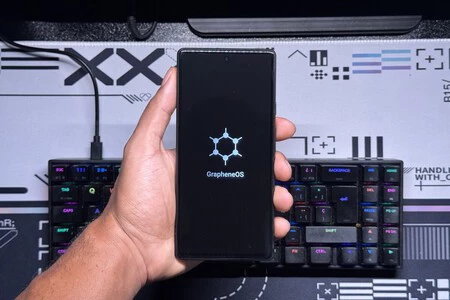
- Limited Device Compatibility: Unlike the broad device support of early custom ROMs, these privacy-focused operating systems are typically compatible with only a handful of specific smartphone models, often Google Pixel devices due to their open bootloader policies and well-documented hardware. This significantly restricts the user base that can easily adopt them.
- Ecosystem Friction and Application Incompatibility: Running a de-Googled Android means sacrificing access to many applications that rely heavily on Google Play Services for push notifications, location services, or even basic functionality. Banking apps, for example, frequently refuse to launch on devices detected as "rooted" or running non-certified Android versions due to security checks, leaving users without access to essential financial tools. Furthermore, Google has implemented stricter security measures, such as SafetyNet (now Play Integrity API), which verify the integrity of the device and its software environment, effectively blocking uncertified devices from accessing many popular apps and services. This creates a significant "experience gap" for users venturing outside the Google ecosystem.
This evolution leads to a stark conclusion: whereas a decade ago, a "better" Android experience could often be found outside Google’s direct purview, the opposite is now largely true. Android has matured into an intricate system where Google and its services form an almost indivisible binary. While it is technically still possible to deviate from the Google-centric path, it requires specific hardware and entails a notable degradation of the contemporary smartphone experience for most users.
The struggles of Huawei serve as a compelling real-world case study. Following U.S. sanctions in 2019, Huawei was barred from using Google Mobile Services on its new Android devices. Despite developing its own robust HarmonyOS and an alternative app store (AppGallery), the absence of GMS proved to be a critical blow to its market share in Western markets. Huawei’s efforts often included providing workarounds for users to sideload Google Apps, tacitly acknowledging that the path to market success in regions reliant on Google’s ecosystem necessitates its presence. This illustrates the immense difficulty, even for a global tech giant, in competing without Google’s fundamental software infrastructure.
The Price of Convenience: Data, Friction, and the Walled Garden
Google has engineered an Android experience so seamless and convenient that opting out of its ecosystem has transitioned from a practical choice to an eccentricity. This convenience, however, comes at a significant price. Users who remain within the Google fold implicitly agree to a vast data exchange, where their usage patterns, location data, search queries, and app interactions contribute to Google’s comprehensive user profiles, which are then monetized through targeted advertising. A 2022 report by Surfshark revealed that Google collects more personal data from its users than any other major tech company, underscoring the extent of this data-for-convenience exchange.
Conversely, those who choose to exit the Google ecosystem pay a different kind of price, characterized by financial outlays and considerable friction. This includes the challenge of finding one of the few compatible mobile devices, the frustration of banking applications refusing to function, and the increasing hurdles associated with sideloading applications (APKs). Recent Android versions have introduced more stringent security prompts and, in some cases, imposed waiting periods (e.g., 24 hours) for installing apps from unverified developers, a process that once took mere seconds. This deliberate friction effectively discourages users from venturing beyond the Google Play Store, reinforcing the "walled garden" effect.

The decline of custom ROMs was not solely a consequence of Google closing doors or tightening its grip; it was also, paradoxically, because the "official" Android experience became exceptionally good. Stock Android, coupled with often well-optimized OEM skins, delivered a level of performance, security, and feature integration that largely obviated the need for users to seek alternatives. Regular security updates, improved battery management, and sophisticated AI features, all deeply intertwined with Google’s cloud services, presented a compelling package that most users found difficult to refuse.
The HTC Magic, with its promise of freedom and an open system, once symbolized Android’s core philosophy. Yet, in its journey to global dominance, Android has, to a significant extent, sacrificed that initial ethos of unfettered liberty. The convenience offered by Google’s tightly integrated ecosystem has become the paramount feature, and as history consistently demonstrates, such pervasive convenience rarely comes without a cost, be it data privacy, user autonomy, or the erosion of genuine choice. The future for "outsiders" of the Google ecosystem appears increasingly challenging, marked by a constant negotiation between technological freedom and the overwhelming gravitational pull of a meticulously crafted, convenient, and deeply ingrained digital world.
