
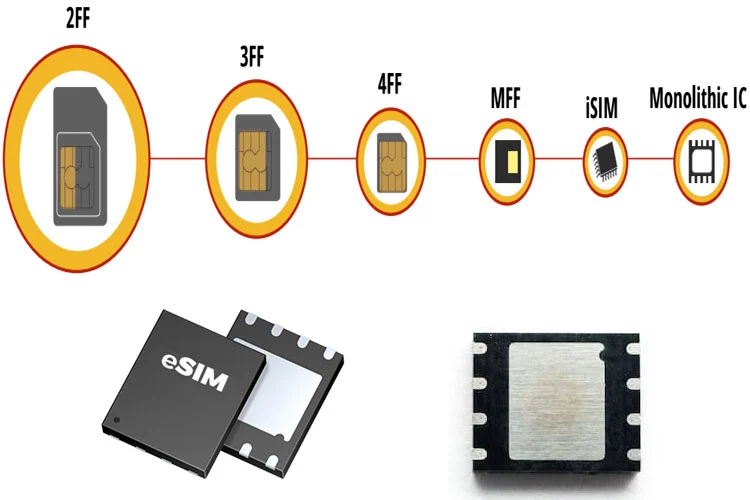

The telecommunications industry is currently undergoing one of its most significant structural transformations since the transition from analog to digital cellular networks. At the heart of this shift is the eSIM, or embedded Subscriber Identity Module, a technology that replaces the traditional, removable plastic SIM card with a permanent, programmable chip soldered directly onto a device’s motherboard. While physical SIM cards have been the standard for over three decades, the rapid proliferation of Internet of Things (IoT) devices, the demand for sleeker smartphone designs, and the necessity for more flexible consumer roaming options have accelerated the global transition toward embedded solutions. This evolution represents more than just a change in form factor; it signifies a fundamental shift in how mobile connectivity is provisioned, managed, and secured across the global digital ecosystem.
Technical Architecture and Functional Mechanism
An eSIM is technically referred to as a Universal Integrated Circuit Card (eUICC). Unlike the traditional SIM card, which requires physical handling and insertion into a dedicated tray, the eSIM is a vacuum-sealed chip—usually the MFF2 form factor—measuring approximately 6mm by 5mm. This chip is non-removable and is designed to store multiple "profiles" or sets of carrier credentials.
The functional mechanism of an eSIM relies on Remote SIM Provisioning (RSP) specifications developed by the GSMA (Global System for Mobile Communications Association). When a user wishes to activate a mobile plan, the device communicates with a Subscription Manager Data Preparation (SM-DP+) server. This server securely encrypts the carrier’s profile and transmits it over-the-air (OTA) to the device. Once the profile is downloaded and installed on the eUICC, the device can authenticate with the cellular network just as it would with a physical SIM. This digital-first approach allows users to switch between different mobile network operators (MNOs) or mobile virtual network operators (MVNOs) via software interfaces, eliminating the logistical hurdles of obtaining and inserting physical hardware.
A Chronological Timeline of eSIM Development
The trajectory of eSIM technology has moved from niche industrial applications to the primary standard for consumer electronics. Understanding this timeline provides context for the current market state:
- 2010: The GSMA begins exploring the possibility of a software-based SIM to facilitate easier connectivity for industrial M2M (Machine-to-Machine) devices.
- 2016: The Samsung Gear S2 Classic 3G becomes the first mass-market consumer device to incorporate eSIM technology, primarily to save space in the small chassis of a wearable.
- 2017: Google introduces eSIM support in the Pixel 2, though it is largely restricted to its own Project Fi (now Google Fi) network. Simultaneously, Apple launches the Apple Watch Series 3 with eSIM, enabling LTE connectivity without a tethered iPhone.
- 2018: A major turning point occurs when Apple integrates Dual SIM functionality (one physical SIM and one eSIM) into the iPhone XS, XS Max, and XR. This move forces global carriers to begin upgrading their backend systems to support digital provisioning.
- 2022: Apple takes the unprecedented step of removing the physical SIM tray entirely from all iPhone 14 models sold in the United States, signaling the beginning of the "eSIM-only" era for flagship smartphones.
- 2023-2024: Major Android manufacturers, including Samsung and Google, standardize eSIM across their entire flagship and mid-range portfolios, while international roaming providers (travel eSIMs) see a 400% increase in adoption.
Comparative Analysis: eSIM vs. Traditional Physical SIM
The transition to eSIM is driven by several distinct advantages that physical cards cannot match. However, the legacy system still maintains certain characteristics that some users find preferable.
1. Design and Hardware Efficiency
The removal of the physical SIM tray allows manufacturers to reclaim valuable internal space. In modern smartphone engineering, every millimeter counts; the space saved can be utilized for larger batteries, improved haptic engines, or additional camera sensors. Furthermore, the absence of a SIM slot enhances the structural integrity and water resistance of the device by removing a potential entry point for liquid and dust.
2. Security and Loss Prevention
From a security perspective, the eSIM offers a significant advantage. If a smartphone is stolen, a thief can easily remove a physical SIM card to prevent the device from being tracked via cellular networks. An eSIM, however, cannot be removed. As long as the device has power, it remains connected to the network, allowing owners and law enforcement to utilize "Find My" services more effectively. Additionally, the digital nature of the profile makes it much harder for criminals to perform "SIM swapping" identity theft at the physical retail level.
3. Consumer Flexibility and Global Roaming
For frequent international travelers, eSIM technology is revolutionary. Instead of searching for a local kiosk upon arrival in a new country to purchase a physical SIM, travelers can download a local or regional data profile before they even depart. Many devices allow for the storage of five to ten different eSIM profiles, though usually only one or two can be active simultaneously. This allows a user to maintain their home number for calls and texts while using a localized eSIM for affordable high-speed data.
4. Portability and Legacy Use
The primary advantage of the physical SIM remains its "plug-and-play" portability. If a user’s phone battery dies or the screen breaks, they can simply pop the SIM card out and insert it into a backup device to regain immediate connectivity. With an eSIM, moving a plan between devices typically requires a functioning screen and an internet connection to deactivate the profile on one device and reactivate it on another.
Global Market Data and Industry Adoption Statistics
The adoption of eSIM technology is no longer a theoretical trend but a statistical reality. According to data from Counterpoint Research, over 1.5 billion eSIM-capable devices were shipped in 2023, with projections suggesting that by 2030, over 70% of all cellular-connected devices will utilize eSIM technology.
Juniper Research reports that the value of the global eSIM market is expected to rise from $4.7 billion in 2023 to over $16.3 billion by 2027. This growth is fueled not only by smartphones but by the expansion of the "Connected Car" sector and smart city infrastructure. In the automotive industry, eSIMs allow manufacturers to provide over-the-air software updates and emergency "eCall" services regardless of where the vehicle is sold globally.
Device Compatibility and Ecosystem Support
Currently, the ecosystem of eSIM-compatible hardware is extensive and continues to grow.
- Smartphones: Apple (iPhone 11 and newer), Samsung (Galaxy S20 and newer, Z Fold/Flip series), Google (Pixel 3 and newer), and various flagship models from Motorola, Xiaomi, and Sony.
- Wearables: Apple Watch (GPS + Cellular models), Samsung Galaxy Watch series, and various Garmin and Huawei smartwatches.
- Tablets and Laptops: iPad Pro, iPad Air (3rd Gen+), iPad Mini (5th Gen+), and a growing list of "Always Connected PCs" from Microsoft (Surface Pro), HP, and Dell that utilize Windows 10/11 eSIM management.
Despite the hardware availability, carrier support remains a variable. While major Tier-1 carriers in North America, Europe, and East Asia fully support eSIM, some regional carriers in developing markets have been slower to adopt the technology due to the cost of upgrading legacy billing and provisioning systems.
Activation Procedures: A Technical Overview
Activating an eSIM is a streamlined process, though it differs slightly between operating systems.
For Apple iOS Devices:
- Navigate to Settings > Cellular.
- Select Add eSIM.
- The device will offer the option to "Transfer from Nearby iPhone" or "Use QR Code."
- Scanning the QR code provided by the carrier initiates the download of the eUICC profile.
- Once the "Cellular Plan Detected" notification appears, the user taps "Continue" and assigns a label (e.g., "Primary" or "Travel") to the new line.
For Android Devices:
- Navigate to Settings > Network & Internet > SIMs.
- Select Add more or the + icon.
- Choose Download a SIM instead?
- After the system checks for carrier info, the user scans the provided QR code.
- Following the download, the user must toggle the "Use SIM" switch to activate the network connection.
Industry Implications and the Future of Connectivity
The shift to eSIM has profound implications for the competitive landscape of the telecommunications industry. For decades, carriers used physical SIM cards as a tool for "customer lock-in." The friction involved in switching carriers—visiting a store, waiting for a new card to arrive by mail—discouraged consumers from seeking better rates. With eSIM, the "frictionless switching" model empowers consumers, forcing carriers to compete more aggressively on price and service quality.
Furthermore, the industry is already looking toward the next iteration: the iSIM (Integrated SIM). While the eSIM is a separate chip on the motherboard, the iSIM integrates the SIM functionality directly into the device’s main processor (System on a Chip or SoC). This further reduces space requirements and power consumption, paving the way for even smaller IoT sensors and ultra-thin devices.
In conclusion, eSIM technology is the foundation of a more connected and flexible digital future. By removing the physical constraints of the traditional SIM card, the industry is enabling a new era of global mobility and hardware innovation. While the transition period involves a learning curve for consumers and technical upgrades for smaller carriers, the long-term benefits of enhanced security, design efficiency, and user autonomy make the widespread adoption of eSIM an inevitable milestone in the history of mobile communication.
