
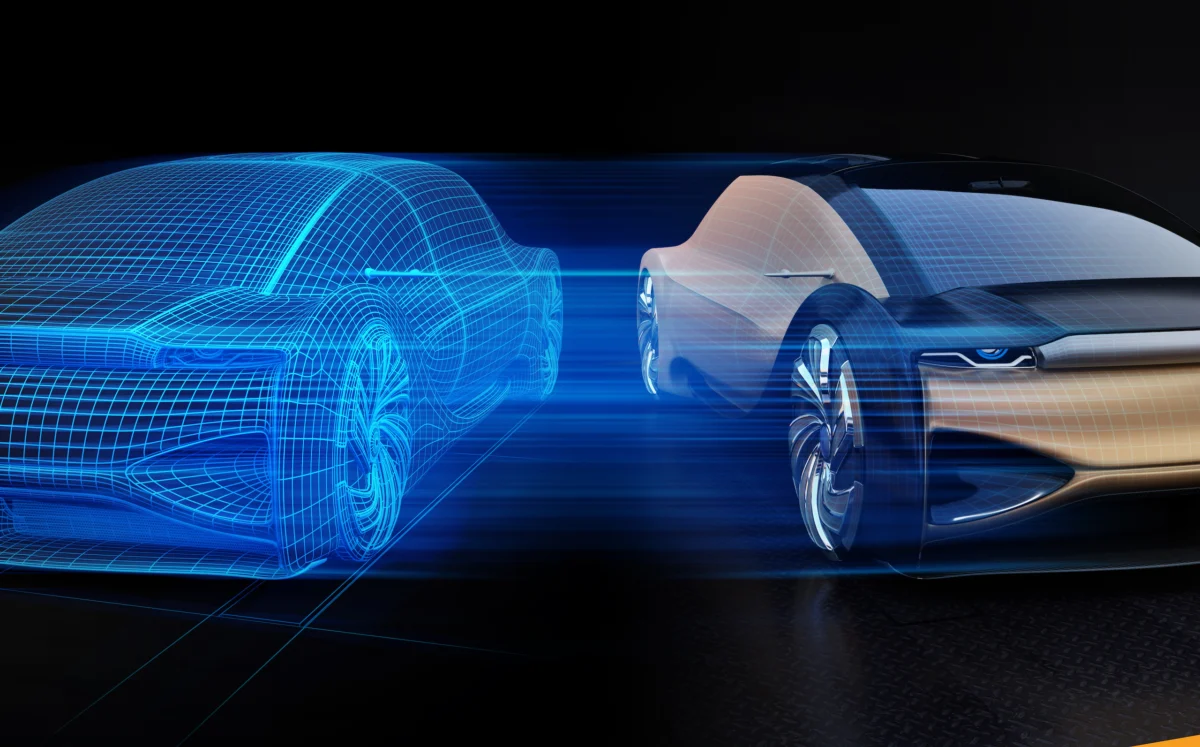

The global automotive and manufacturing sectors are currently undergoing a fundamental transformation as the traditional reliance on mechanical engineering gives way to a software-centric paradigm. For decades, digital twins served as virtual representations of physical products, primarily focusing on mechanical systems, factory layouts, and structural integrity to optimize performance and reduce maintenance costs. However, the rise of software-defined vehicles (SDVs) and the integration of physical AI have rendered these traditional models insufficient. To address the burgeoning complexity of modern hardware-software interactions, a new generation of technology known as electronics digital twins (eDTs) has emerged. These sophisticated virtual environments model not just the physical shell of a product, but the entire electronic architecture, including semiconductors, embedded software, and real-time communication protocols that define the behavior of modern intelligent systems.
The Historical Shift from Mechanical to Electronics Digital Twins
The concept of the digital twin is not new, tracing its origins back to NASA’s Apollo program, where mirrored systems were used to simulate conditions in space. By the early 2000s, the term was formalized in the context of Product Lifecycle Management (PLM), focusing on the physical characteristics of manufactured goods. Throughout the 2010s, the focus remained largely on the Industrial Internet of Things (IIoT), using sensors to monitor the health of jet engines and wind turbines.
The timeline shifted dramatically around 2020, as the automotive industry accelerated its transition toward SDVs. In these vehicles, the value proposition moved from horsepower and torque to connectivity, autonomous capabilities, and user interface. This shift necessitated a move from "Physical Digital Twins," which simulate stress and strain, to "Electronics Digital Twins," which simulate logic and code execution. Industry analysts note that while a traditional car might have contained a few dozen Electronic Control Units (ECUs) with limited code, a modern SDV can feature over 100 ECUs and upwards of 100 million lines of code. This trajectory is expected to reach 300 million lines of code by 2030, making virtual validation an absolute necessity rather than a luxury.
Defining the Role of eDTs in the SDV Ecosystem
For a software-defined vehicle, the electronics digital twin serves as the "single source of truth" for the vehicle’s electronic nervous system. Unlike its predecessors, an eDT provides a high-fidelity virtual representation of the entire electronics stack. This includes the silicon-level architecture of System-on-Chips (SoCs), the middleware that manages data flow, and the application layer that executes driver-assistance commands.
The utility of eDTs extends across the entire lifecycle of the vehicle. During the early design phase, engineers use eDTs to conduct "what-if" analyses regarding chip selection and wiring harness configurations. In the development phase, eDTs enable "shift-left" testing, where software is integrated and validated against virtual hardware months before a physical prototype is even manufactured. Post-deployment, eDTs allow manufacturers to test over-the-air (OTA) updates in a safe virtual environment before pushing them to thousands of vehicles on the road, thereby mitigating the risk of "bricking" a fleet or introducing safety vulnerabilities.
Supporting Data: The Economic and Technical Drivers
The transition to eDT technologies is backed by significant economic pressures. According to recent industry reports, the global digital twin market is projected to grow at a compound annual growth rate (CAGR) of over 30% through 2030, with the electronics and automotive segments leading the charge.
The financial implications of traditional testing methods are becoming unsustainable. Research suggests that identifying a software bug during the physical prototyping stage can be up to 100 times more expensive than identifying it during the initial design phase. Furthermore, the automotive industry has seen a sharp increase in software-related recalls. In 2023 alone, software defects accounted for a significant percentage of total vehicle recalls in North America. By utilizing eDTs for comprehensive virtual validation, OEMs (Original Equipment Manufacturers) can potentially reduce development cycles by 20% to 30%, saving billions of dollars in R&D and warranty costs.
Technical data also underscores the need for eDTs. As semiconductor process nodes shrink to 5nm and below, the complexity of verifying these chips within a vehicle’s environment grows exponentially. eDTs provide the necessary compute power and simulation accuracy to ensure these advanced chips perform reliably under the extreme thermal and electromagnetic conditions of a moving vehicle.
Enabling Physical AI Through Virtual Validation
The convergence of artificial intelligence and physical systems—often referred to as Physical AI—is perhaps the most compelling driver for eDT adoption. Physical AI involves the integration of sensing, computation, and actuation, allowing machines to interact autonomously with the real world. This is most visible in autonomous driving and robotics.
Training an AI model for a self-driving car requires billions of miles of driving data. It is physically impossible and inherently dangerous to collect all this data on public roads, especially for "edge cases" or rare, hazardous scenarios. eDTs provide a safe, scalable environment to train and validate AI algorithms. By modeling the vehicle’s sensors (LiDAR, radar, cameras) and the electronics that process their data, developers can simulate how an AI will react to a sudden pedestrian crossing or a sensor failure. This virtual validation ensures that when the AI is finally deployed into a physical product, it has already "experienced" millions of simulated miles, significantly improving safety and reliability.
Broad Industry Adoption and Cross-Sector Impact
While the automotive sector is the primary catalyst for eDT development, the technology is rapidly diffusing into other high-stakes industries:
- Aerospace and Defense: Modern aircraft are increasingly software-defined. eDTs are used to simulate flight control systems and the integration of complex avionics, reducing the need for costly and carbon-intensive test flights.
- Medical Technology: From robotic surgery systems to wearable health monitors, eDTs allow developers to simulate the interaction between sophisticated electronics and biological data, ensuring compliance with stringent healthcare regulations.
- Industrial Automation: Smart factories utilize eDTs to coordinate the actions of hundreds of autonomous mobile robots (AMRs), optimizing throughput and preventing collisions in dynamic environments.
- Networking and Telecommunications: With the rollout of 5G and 6G, eDTs help in designing the complex base stations and routers that must handle massive data loads with minimal latency.
In each of these sectors, the business driver is the same: the need to manage the explosion of electronic complexity while accelerating time-to-market.
A Platform-Centric Approach: The Synopsys Initiative
The industry is moving away from fragmented, siloed tools toward integrated platforms. A true eDT requires a collaborative ecosystem that includes high-performance modeling engines, cloud-based compute resources, and AI-driven analytics.
Synopsys, a leader in electronic design automation (EDA) and semiconductor IP, has positioned itself at the forefront of this movement. The company recently announced its Electronics Digital Twin Platform, designed as an open, cloud-ready infrastructure. A key feature of this platform is the concept of "eDT Labs." These are tailored virtual environments where companies can combine their proprietary models with third-party tools and massive compute power.
This platform-centric approach addresses the critical challenge of interoperability. In the automotive world, a single vehicle includes components from dozens of different Tier 1 and Tier 2 suppliers. For an eDT to be effective, it must be able to integrate models from all these different sources into a cohesive system-level simulation. By providing an open framework, Synopsys and its partners are enabling a level of cross-organizational collaboration that was previously impossible.
Official Responses and Strategic Implications
Industry leaders and analysts have reacted positively to the formalization of the eDT category. "The shift to software-defined everything requires a fundamental rethink of how we build and test systems," noted one senior analyst in the semiconductor space. "We are moving from a world where software was written for hardware, to a world where hardware is designed to run specific software. eDTs are the essential bridge in that transition."
Strategically, the adoption of eDTs signals a shift in organizational structure. Companies are breaking down the traditional walls between "hardware teams" and "software teams." In an eDT-driven workflow, these teams work in parallel, using the same virtual model to iterate on their respective components. This cultural shift is as important as the technological one, requiring new methodologies and a commitment to digital transformation at the highest levels of leadership.
Conclusion: The Future of the Electronics Digital Twin
The rise of electronics digital twins represents a maturing of the digital transformation journey. As products become more intelligent and interconnected, the ability to model their "brains" and "nervous systems" becomes more important than modeling their "bones."
Looking ahead, the integration of generative AI into the eDT workflow is expected to further accelerate development. AI could eventually be used to automatically generate test cases for eDTs or even suggest optimizations in the electronic architecture to improve energy efficiency or performance.
For organizations, the message is clear: the path to competitiveness in the era of SDVs and Physical AI lies through the virtual world. By investing in electronics digital twins, companies can reduce risk, unlock new revenue streams through software services, and ultimately deliver safer, more advanced products to consumers. The transition from physical-only models to comprehensive electronics digital twins is not merely a trend; it is the new standard for engineering excellence in the 21st century.
