
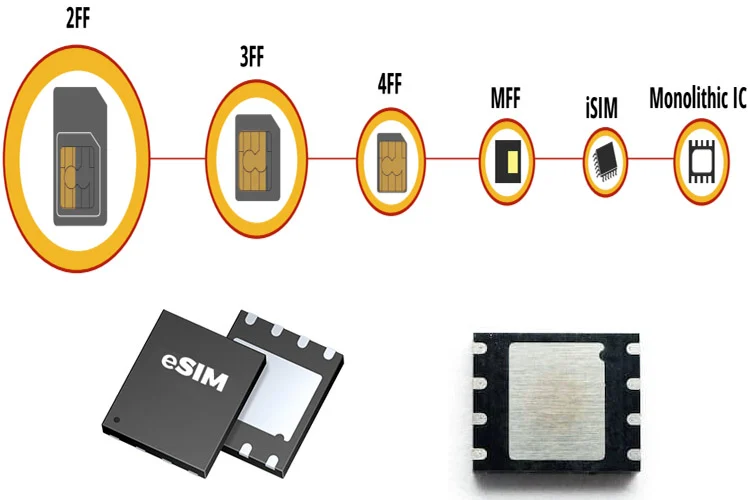

The telecommunications landscape is currently undergoing its most significant structural transformation since the transition from analog to digital cellular networks, driven by the rapid adoption of the embedded SIM, or eSIM. This technology, which replaces the traditional removable plastic Subscriber Identity Module (SIM) card with a permanent, programmable chip soldered directly onto a device’s motherboard, is fundamentally altering how consumers and enterprises interact with mobile networks. By eliminating the need for physical handling of hardware to change service providers, the eSIM—technically known as the eUICC (Embedded Universal Integrated Circuit Card)—is streamlining global connectivity, enhancing device design flexibility, and paving the way for a more robust Internet of Things (IoT) ecosystem.
The Technical Foundation of Embedded SIM Technology
At its core, an eSIM is a small, non-removable chip that performs the same functions as a traditional SIM card: it securely stores the international mobile subscriber identity (IMSI) number and its related key, which are used to identify and authenticate subscribers on mobile telephony devices. However, the "embedded" nature of the hardware allows for Remote SIM Provisioning (RSP). This process, governed by standards established by the GSMA (the global organization representing the mobile ecosystem), enables users to download a carrier’s profile over-the-air (OTA) rather than waiting for a physical card to arrive in the mail or visiting a retail outlet.
The internal architecture of an eSIM allows it to hold multiple profiles simultaneously. While typically only one profile can be active at a time on older devices, newer Dual SIM Dual Standby (DSDS) technology allows users to maintain two active connections—one via a physical SIM and one via eSIM, or two via eSIM—on a single device. This capability is managed through a digital interface within the device’s operating system, providing a software-defined approach to network management that was previously impossible with static hardware.
A Chronological Evolution of SIM Hardware
To understand the impact of the eSIM, it is necessary to examine the timeline of SIM technology, which has consistently moved toward miniaturization and integration:
- 1991: The Full-Size SIM. The first SIM cards were the size of a credit card, primarily used in early "brick" phones.
- 1996: The Mini-SIM. As mobile phones shrank, the SIM evolved into the standard "large" SIM most users recognize from the late 90s and early 2000s.
- 2003: The Micro-SIM. Introduced to save further space, it gained mainstream prominence with the iPhone 4 in 2010.
- 2012: The Nano-SIM. Currently the most common physical format, the nano-SIM removed almost all plastic borders, leaving only the chip and a thin margin.
- 2016: The Arrival of eSIM. The GSMA released the first eSIM specifications for smartwatches and tablets (notably the Samsung Gear S2 Classic 3G).
- 2018–Present: Mass Market Adoption. Apple integrated eSIM technology into the iPhone XS and XR series, followed by Google with the Pixel 3. The most significant milestone occurred in 2022, when Apple removed the physical SIM tray entirely from iPhone 14 models sold in the United States, signaling an industry-wide push toward an eSIM-only future.
Market Data and Adoption Trends
The shift toward eSIM is supported by aggressive growth projections. According to data from Juniper Research, the number of eSIMs installed in connected devices is expected to rise from approximately 1.2 billion in 2021 to over 3.4 billion by 2025. This represents a growth rate of 180% within a four-year window. This surge is largely attributed to the consumer electronics sector, but the industrial sector is also a major driver.
Furthermore, a 2023 report by the GSMA Intelligence unit indicated that over 260 mobile network operators (MNOs) in 88 countries have launched commercial eSIM services for smartphones. This global infrastructure ensures that the technology is no longer a niche feature for luxury devices but a standard requirement for international roaming and digital-first telecommunications.
Strategic Advantages for Consumers and Industry
The transition to eSIM offers a suite of benefits that transcend simple convenience. For the consumer, the primary advantage is the "zero-friction" switching of carriers. Travelers, for instance, can purchase a local data plan before even landing in a foreign country, activating it via a QR code or an app, thereby avoiding exorbitant roaming fees.
From a device manufacturing perspective, the removal of the physical SIM slot—a relatively large mechanical component—frees up valuable internal space. This space can be repurposed for larger batteries, improved cooling systems, or additional sensors. Moreover, the elimination of the SIM tray hole enhances the structural integrity of the device and makes it easier to achieve high IP (Ingress Protection) ratings for water and dust resistance.
Security is another critical factor. Physical SIM cards are susceptible to theft; a thief can remove a SIM card from a stolen phone and place it in another device to bypass two-factor authentication (2FA) or access sensitive accounts. An eSIM, however, cannot be physically removed. If a device is stolen, the eSIM remains tied to the hardware, making it easier for carriers to track the device and harder for unauthorized parties to hijack the subscriber’s identity.
Device Compatibility and Ecosystem Expansion
While the technology is burgeoning, it is currently concentrated in mid-to-high-tier devices. The following categories currently lead the market in eSIM support:
- Smartphones: Apple (iPhone 11 and newer), Samsung (Galaxy S20 series and newer, including Z Fold/Flip series), Google (Pixel 3 and newer), and various flagship models from Motorola, Sony, and Huawei.
- Wearables: The Apple Watch (Cellular models), Samsung Galaxy Watch, and various Garmin and Huawei smartwatches utilize eSIMs to maintain connectivity without being tethered to a smartphone.
- Tablets and Laptops: The iPad Pro, iPad Air, and iPad mini (Cellular models) have long supported eSIM. Additionally, a growing number of Windows 10 and 11 "Always Connected PCs" from manufacturers like Microsoft (Surface), HP, and Dell include eSIM modules.
The Activation Process: A Step-by-Step Overview
Activating an eSIM is a digital-first process, though the specific steps differ slightly between operating systems.
For iOS Devices:
- Navigate to Settings > Cellular.
- Select Add eSIM or Set Up Cellular.
- The device will offer the option to "Transfer from Nearby iPhone" or "Use QR Code."
- Scanning the QR code provided by the carrier initiates a background download of the carrier profile.
- Once downloaded, the user labels the plan (e.g., "Personal" or "Travel") and selects it as the default line for data or voice.
For Android Devices:
- Open Settings > Network & Internet > SIMs.
- Tap the "+" icon or "Add more".
- Select "Download a SIM instead?" or a similar prompt.
- Scan the carrier-provided QR code.
- Follow the on-screen instructions to confirm the plan activation.
Industry Perspectives and Responses
The response from mobile network operators has been a mix of strategic adaptation and initial hesitation. Traditionally, physical SIM cards were a tool for "customer stickiness," as the hassle of obtaining a new SIM card often deterred users from switching carriers. With eSIM, the barriers to churn are significantly lowered.
However, many carriers have embraced the technology as a way to reduce operational costs. Distributing physical SIM cards involves manufacturing, logistics, and retail overhead. eSIMs eliminate these costs entirely. "The eSIM represents a shift from hardware-centric to software-centric business models," says an industry analyst at Counterpoint Research. "It allows operators to engage with customers through digital apps, offering personalized plans in real-time."
Furthermore, the rise of "eSIM aggregators"—companies like Airalo, Holafly, and Nomad—has created a new market for international data. These companies do not own network infrastructure but partner with global carriers to sell digital data profiles directly to consumers, bypassing traditional roaming agreements.
Comparative Analysis: eSIM vs. Traditional SIM
| Feature | Physical SIM Card | eSIM (Embedded SIM) |
|---|---|---|
| Form Factor | Removable plastic card (Nano, Micro, Mini). | Integrated chip soldered to the board. |
| Switching Carriers | Requires physical card swap. | Managed via software/QR code. |
| Multiple Profiles | Limited to the number of physical slots. | Can store multiple profiles (5-10+). |
| Space Efficiency | Requires a slot and tray mechanism. | Minimal footprint; no external opening. |
| Security | Can be removed and used in other phones. | Cannot be removed; tied to the device. |
| Environmental Impact | High plastic waste and packaging. | Digital delivery; zero physical waste. |
Future Implications and the IoT Revolution
Beyond personal mobile devices, the eSIM is the "missing link" for the massive expansion of the Internet of Things (IoT). In industrial settings, devices such as smart meters, cargo trackers, and environmental sensors are often deployed in remote or inaccessible locations. Manually changing SIM cards in 10,000 smart meters across a city would be logistically impossible. eSIM technology allows utility companies to manage entire fleets of devices remotely, switching network providers to optimize for cost or signal strength without physical intervention.
In the automotive industry, eSIMs are becoming standard for "connected car" features, including real-time navigation, emergency response (e-Call), and over-the-air software updates for vehicle systems. As 5G networks continue to roll out globally, the synergy between 5G’s high speed/low latency and eSIM’s flexible provisioning is expected to catalyze the development of smart cities and autonomous transport.
Conclusion
The transition from physical SIM cards to eSIM technology is more than a simple hardware upgrade; it is a fundamental shift toward a more agile, secure, and digitally integrated world. While some challenges remain—such as ensuring universal carrier support and simplifying the transfer of eSIMs between devices during a hardware upgrade—the trajectory is clear. As manufacturers continue to phase out physical trays and carriers move toward digital-only onboarding, the eSIM will become the definitive standard for global connectivity, offering unprecedented freedom for consumers and scalable solutions for the future of technology.
