
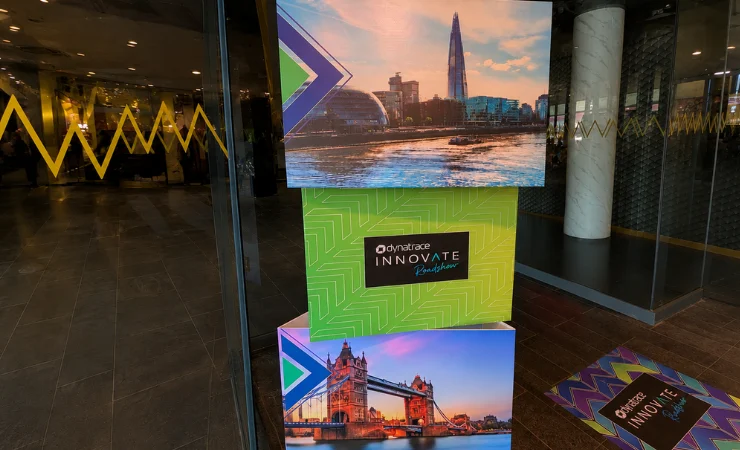

The global observability market, currently valued at over $2.4 billion and projected to grow at a compound annual growth rate (CAGR) of 11.7% through 2030, is facing a paradoxical crisis: while spending on sophisticated monitoring tools continues to escalate, the actual operational outcomes often remain stagnant. At the Innovate 2026 conference in London, senior executives from Dynatrace—a leader in the observability and security space—identified that the primary bottleneck to digital transformation is no longer the technology itself, but rather a deeply ingrained organizational reflex known as "mean time to innocence." This phenomenon, described by industry veterans as the drive to prove an incident is "not my problem" before investigating the root cause, highlights a significant cultural barrier that modern enterprises must overcome to leverage the full potential of Artificial Intelligence (AI) and autonomous remediation.
The Strategic Pivot Toward Openness and Automation
The landscape of Application Performance Management (APM) has undergone three distinct generational shifts. The early iterations focused on basic monitoring, while the second generation, where Dynatrace established its market dominance, was characterized by robust but closed proprietary platforms. However, the current era demands a transition toward open standards and interoperability. Steve McMahon, Chief Customer Officer at Dynatrace, acknowledged that the company’s historical second-generation platform was closed by design, creating a level of vendor lock-in that is increasingly untenable in modern multi-cloud environments.
To address this, Dynatrace has initiated a strategic overhaul centered on two primary pillars: the Wayfinder tool and the acquisition of Bindplane. Wayfinder represents a significant departure from traditional software implementation models. Historically, deploying complex observability suites required weeks or months of professional services, with tribal knowledge locked within the vendor’s specialized teams. Wayfinder aims to automate this process by reading a customer’s telemetry and providing an immediate roadmap for maturity. By hiring game developers to design the interface and user experience, Dynatrace intends to reduce the time-to-value from months to minutes.
This shift carries significant financial implications. McMahon noted that streamlining the implementation process will likely result in a decrease in professional services revenue—a move most legacy vendors would resist. However, the company’s strategy posits that higher customer satisfaction and faster adoption will lead to increased long-term renewal rates and platform expansion, offsetting the initial loss in service fees.
Chronology of the Bindplane Acquisition and Integration
The integration of Bindplane serves as a critical milestone in Dynatrace’s journey toward becoming an open platform. The acquisition, which officially closed on April 15, 2024, provided Dynatrace with a sophisticated telemetry pipeline capable of routing data to multiple destinations, including competitors like Microsoft Sentinel.
Unlike traditional acquisitions where sales might be paused during the integration phase, Dynatrace maintained its sales momentum for Bindplane as a standalone product. Bob Wambach, Vice President for Portfolio and Strategy, emphasized that the tool provides immediate value at the "pre-processing stage" of data management. By allowing enterprises to process data in flight and direct it to the most appropriate security or observability destination, Bindplane acts as a low-friction entry point into complex IT environments. This "pipeline-first" strategy allows Dynatrace to establish a presence within organizations still struggling with a "Frankenstein stack" of disconnected legacy monitoring tools before attempting a full platform conversion.
The "Mean Time to Not Me" and the Cultural Barrier
The technical capabilities of AI-driven observability—such as predictive incident management and autonomous remediation—frequently outpace the cultural readiness of the organizations using them. Wambach’s concept of "mean time to not me" describes a siloed engineering culture where teams prioritize self-exoneration over collective problem-solving.
Evidence from the field suggests that successful observability adoption requires high-level executive support to break down these silos. A case study involving Storio, a prominent European photo-gifting group, illustrates the importance of an "engineer-led" change model. Rather than a top-down mandate, Storio utilized a small working group of engineers to perform self-assessments against a maturity model. This approach successfully converted internal skeptics into advocates for AI agents. The lesson for the broader industry is clear: engineering culture must be capable of absorbing the autonomy that modern platforms provide; otherwise, the technology remains a costly underutilized asset.
Public Sector Challenges: Fatigue and Systematic Disengagement
The challenges of observability are perhaps most acute in the public sector, particularly within the UK’s National Health Service (NHS). Paula Lender-Swain, Regional Director for Public Sector UK at Dynatrace, has highlighted a systemic "fatigue" that hinders technological progress. Through Freedom of Information (FOI) requests submitted to NHS trusts, Dynatrace discovered a significant lack of consistency in how IT outages and their impacts on patient care are recorded.
The data revealed that many trusts could not accurately quantify the number of disrupted appointments or procedures caused by IT failures because there is no standardized reporting mechanism. This suggests that "mean time to innocence" has evolved into a structural disengagement at the institutional level. In an environment characterized by chronic underfunding and constant crisis management, IT leadership often feels powerless to address the scale of the problem.
Lender-Swain argues that the traditional "big infrastructure change programs" of the past decade—such as the massive federated data lake initiatives—have often led to "analysis paralysis" and debilitation. Instead, she advocates for a "small-pilot" approach. By implementing observability in specific use cases, such as the digital funnel for blood donor conversion or AI-driven triage, organizations can prove ROI within a single quarter. For example, a £50,000 investment in a localized pilot in a city like Sheffield or Manchester can provide the empirical evidence needed to justify a wider rollout, bypassing the bureaucratic hurdles of multi-million-pound national programs.
Data-Driven Insights and Market Implications
The shift toward observability is increasingly driven by the sheer volume of data generated by cloud-native architectures. According to industry data, the average enterprise now manages over 1,000 different applications, and the volume of log data is growing at an estimated 35% annually. This "data explosion" makes manual monitoring impossible, necessitating the transition to AIOps (Artificial Intelligence for IT Operations).
The financial impact of downtime remains a primary driver for this investment. Research from various industry analysts suggests that the average cost of IT downtime for large enterprises can exceed $9,000 per minute. In the context of the public sector, the cost is measured not just in currency but in the erosion of public trust and the compromise of essential services.
Dynatrace’s strategy to remove "excuses" for non-adoption—such as vendor lock-in and high implementation costs—is a direct response to these market pressures. However, the final barrier remains the "public mindset" regarding trust and data privacy. As Lender-Swain noted, the success of AI-driven decision-making in the public sector depends on whether citizens, students, and patients trust the systems managing their data. There is a generational divide in this trust: older populations may remain wary of digital-first systems, while younger "digital natives" expect seamless, automated interactions and find manual data entry redundant.
Conclusion: The Future of the Observability Platform
The evolution of observability from a tool-centric discipline to a culture-centric project marks a turning point for the industry. In 2026 and beyond, the value of an observability platform will be judged not by its dashboard features, but by its ability to facilitate organizational change.
The consensus among Dynatrace leadership is that the vendor’s role must expand to include "change management" support. By providing tools that pay for themselves within a quarter and platforms that are open by design, vendors are clearing the path for digital transformation. Nevertheless, the responsibility for the final leap—moving from "mean time to innocence" to a culture of shared responsibility and AI-assisted operations—lies with the customer.
Enterprises and public sector bodies must be honest about their internal readiness. If the engineering culture, executive cover, and public trust components are not aligned, the most sophisticated observability platform in the world will remain a "capacity they can’t yet use." The most successful organizations will be those that start small, prove outcomes through localized AI applications, and use those successes to build the cultural momentum necessary for platform-scale transformation. In this new paradigm, the hardest part for both vendor and customer is the continuous commitment to "always be better," as the transparency of open platforms leaves no room for mediocrity or technical obfuscation.
