
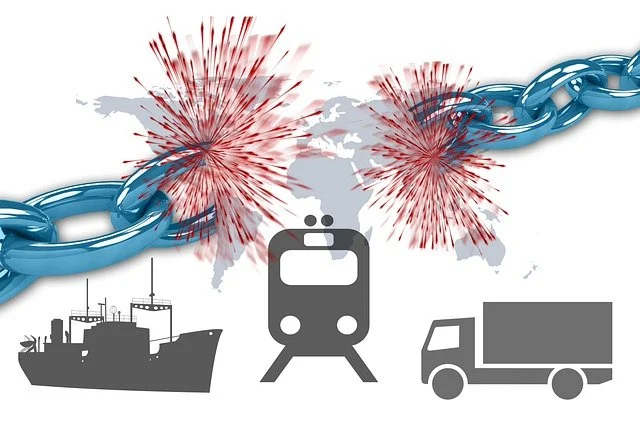

The modern global economy is currently grappling with a fundamental shift in how industrial supply chains are modeled and managed, moving away from decades of hyper-optimization toward a new paradigm of resilience and optionality. For years, the prevailing strategy for multinational corporations focused on a relentless drive for efficiency, characterized by consolidated supplier bases, massive centralized manufacturing hubs, and lean "just-in-time" inventory systems. However, as global volatility becomes the new status quo, industry experts warn that the very models used to simplify these complex networks have created a "blast radius" of risk. When the underlying assumptions of global stability and integrated trade begin to unravel, the resulting disruptions are often catastrophic because the models were never designed to account for a fractured world.
According to Andrew Bell, Chief Product Officer at Kinaxis, a leading supply chain management software provider, the industry is reaching a turning point. The traditional approach to modeling, which relied on stable geopolitical conditions to enable faster decision-making, is no longer sufficient. This phenomenon, often referred to as a "modeling law," suggests an inverse relationship between the simplification of a model and the amount of risk loaded onto its assumptions. As companies seek to navigate a landscape defined by trade wars, pandemics, and regional conflicts, the challenge has shifted from local optimization to global orchestration.
A Chronology of Disruption: From Stability to Volatility
To understand the current crisis in supply chain modeling, it is necessary to examine the timeline of events that dismantled the era of predictable globalization. For much of the late 20th and early 21st centuries, the world operated under the assumption of increasing integration.
- The Era of Consolidation (1990s–2010s): Companies focused on reducing costs by offshoring production to low-cost labor markets, primarily in Asia. Supply chains were winnowed down to a few critical suppliers to maximize economies of scale.
- The First Warning Shots (2018–2019): The escalation of trade tensions between the United States and China, marked by the introduction of significant tariffs on industrial goods, began to expose the fragility of single-source dependencies.
- The Global Catalyst (2020–2022): The COVID-19 pandemic represented a systemic failure of lean supply chains. Lockdowns, labor shortages, and the 2021 Suez Canal obstruction demonstrated that optimized routes were highly susceptible to total blockage.
- The Geopolitical Shift (2023–Present): Conflict in the Red Sea and ongoing tensions in Eastern Europe have forced a permanent reassessment of shipping lanes. In 2024 and 2025, new rounds of tariff memos and industrial policy shifts have further complicated the "master data" snapshots that companies use for planning.
This timeline highlights a transition from occasional "shocks" to a continuous state of disruption. Consequently, the strategic objective for many firms has shifted from "efficiency" to "optionality"—the ability to rapidly reconfigure networks, nearshore production, and switch transportation lanes in real-time.
The Risks of Oversimplification: Understanding the Blast Radius
The core problem facing modern supply chain managers is the inherent limitation of human-centric modeling. In a professional journalistic context, this can be analyzed through the lens of "Thomas’s Law," which posits that the more reality a model ignores to enable speed, the larger the potential for failure when reality reasserts itself.
In the pursuit of speed, many organizations use models that treat the supply chain as a series of isolated silos: procurement, forecasting, manufacturing, and logistics. When these functions are optimized independently, they often create conflicting outcomes. For example, a procurement team might consolidate orders to one supplier to save on costs, unaware that the logistics team is struggling with a port strike in that specific region. This lack of visibility creates a "blast radius" where a single local decision causes a cascade of failures across the entire network.
Industry data supports the severity of this issue. According to reports from the World Economic Forum, a significant percentage of global supply chains remain "dangerously opaque." While many companies have a clear view of their Tier 1 (direct) suppliers, visibility into Tier 2 and Tier 3 suppliers—the sub-component manufacturers and raw material providers—is often non-existent. When a disruption hits these lower tiers, the model fails because it was built on the assumption that those tiers were stable and irrelevant to the primary decision-making process.
The Technical Shift: From Data Models to Domain Models
In response to these challenges, the technological framework for supply chain management is undergoing a significant evolution. Andrew Bell notes that simply aggregating data into a central repository is no longer enough. The new requirement is a "domain model" that understands the functional relationships and flows between different entities.
A standard data model might show that a factory is at 90% capacity. A deep domain model, however, understands that if a specific transportation lane is blocked, that factory’s output cannot reach its destination, and it can simulate the impact on customer delivery dates instantly. This shift allows companies to move from "what-if" planning—often done as a separate, occasional exercise—to "do-now" execution.
Bell argues that the mission-critical nature of these simulations has increased over the last decade. Previously, Kinaxis and similar platforms were viewed as decision-support tools for long-term planning. Today, they are operational infrastructure. The integration of "outside-in" data—real-time signals regarding weather, geopolitical unrest, and port congestion—allows the model to adjust its assumptions before a disruption occurs.
Supporting Data and Industry Reactions
The push for more complex, reality-based modeling is reflected in recent industrial trends and capital expenditures.
- Nearshoring Trends: According to a 2023 survey of manufacturing executives, over 60% of US-based firms are in the process of nearshoring or "friend-shoring" their production to Mexico or Canada to reduce the complexity of trans-Pacific shipping.
- The Cost of Opacity: A McKinsey study found that supply chain disruptions can cost the average corporation 45% of one year’s profits over the course of a decade. This financial reality is driving the demand for more sophisticated modeling tools.
- The AI Integration: The adoption of artificial intelligence in supply chain management is expected to grow by 40% annually through 2030. AI is being utilized to manage the "combinatorial possibilities" that Bell describes—the millions of different ways a supply chain could be configured—which are too complex for human planners to manage manually.
Official reactions from industry bodies suggest a consensus on the need for transparency. The World Economic Forum’s 2026 briefings emphasized that supply chains must become "investible," meaning they must be transparent enough for stakeholders to understand the risks associated with every tier of production.
Broader Impact and Implications for Management
The transition to high-fidelity supply chain modeling has profound implications for corporate management. The traditional role of the supply chain manager as an "integration layer"—the person who manually connects the dots between different spreadsheets—is becoming obsolete. The volume of variables is simply too high for manual intervention.
Instead, management is shifting toward policy-directed optimization. In this framework, human leaders set the high-level priorities—such as prioritizing on-time delivery over cost during a product launch—and the model identifies the best path through the complex network of optionality. However, this relies on the model being a faithful facsimile of reality. If the model is not fed accurate data regarding Tier 2 and Tier 3 suppliers, it will continue to provide "optimized" solutions that are fundamentally wrong.
Furthermore, there is a "democratization" of data occurring within organizations. As models become more accessible and productive, the ability to run simulations is being pushed down from specialized planning departments to front-line operational managers. This increases the speed of response but also requires a higher level of "data literacy" across the workforce.
Conclusion: The Persistence of Uncertainty
Despite the advancements in mathematical optimization and real-time data integration, the fundamental truth of modeling remains: all models are approximations. The goal for companies like Kinaxis is not to create a perfect representation of the world, but to create a model that is "less wrong" than the simplified spreadsheets of the past.
The real offer in the modern market is the ability to turn optionality into continuous adaptation. As global networks become more fragmented and complex, the companies that succeed will be those that can internalize that complexity within their models rather than ignoring it. However, as industry analysts point out, the model is only as good as the visibility it provides. If signals from the deeper layers of the supply chain never arrive, the most sophisticated model in the world will still be vulnerable to the "last laugh" of reality. In the final analysis, while technology can absorb the burden of complexity, the responsibility for the final decision—and the consequences of its "blast radius"—remains a human one.
