
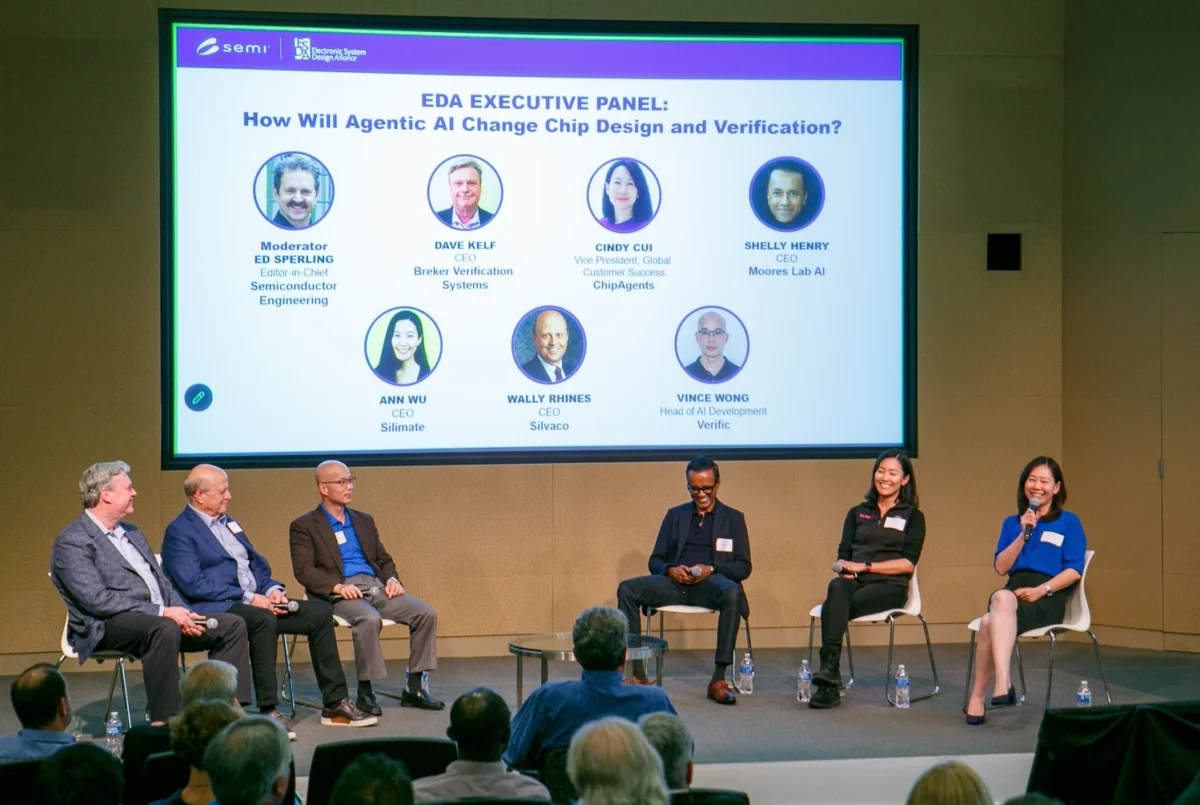

The integration of agentic artificial intelligence into the semiconductor design cycle represents one of the most significant architectural shifts in the history of electronic design automation (EDA). During the 2026 ESD Alliance Executive Outlook meeting, a panel of industry leaders convened to discuss the transition from traditional, human-centric design flows to autonomous, agent-driven systems. The discussion, featuring executives from ChipAgents, Silvaco, Moores Lab AI, Breker Verification Systems, Verific, and Silimate, highlighted a sector at a crossroads, balancing the promise of "push-button" chip design against the critical need for human accountability, transparency, and the preservation of engineering expertise.
The Shift Toward Agentic Autonomy and the Accountability Gap
As semiconductor complexity continues to scale according to the demands of hyperscale data centers and edge AI, the industry is increasingly looking toward "agentic AI"—AI systems capable of making autonomous decisions and executing multi-step workflows—to manage the design process. However, this transition introduces a fundamental challenge: the loss of the "human in the loop" and the potential for unaccountable errors.
Cindy Cui, Vice President of Global Customer Success at ChipAgents, emphasized that while the industry is moving toward higher levels of automation, it has not yet reached the milestone of a "one-button-click tape-out." A tape-out, the final stage of the design cycle before a chip is sent for manufacturing, involves billions of dollars in potential risk. Cui noted that if AI is granted full control over the design of an entire system without human oversight, the question of accountability becomes a liability. Without a human engineer to make nuanced judgment calls on trade-offs between power, performance, and area (PPA), the risk of catastrophic silicon failure increases.
Shelly Henry, CEO of Moores Lab AI, pointed out that current Large Language Models (LLMs) and agentic frameworks, such as those developed by OpenAI or Anthropic, are general-purpose tools not specifically tailored for the intricate physics and logic of semiconductor manufacturing. This "missing piece" of domain-specific knowledge necessitates continued human supervision. While the industry anticipates a future where AI agents may possess the expertise to verify their own work, the current consensus is that the "expert in the loop" remains a prerequisite for reliable silicon.
Historical Context: From High-Level Synthesis to AI-Driven Exploration
The debate over AI automation mirrors previous transitions in the EDA industry, most notably the emergence of High-Level Synthesis (HLS). Wally Rhines, CEO of Silvaco, drew parallels between the current AI boom and the decades-long adoption of HLS tools. Initially, engineers were skeptical of HLS because it transformed high-level SystemC models into logic gates through what appeared to be a "black box" process.
Rhines argued that the primary value of HLS—and now AI—is the ability to explore a vast solution space. By automating the repetitive aspects of synthesis, AI allows architects to evaluate thousands of potential design permutations in the time it would previously have taken to evaluate one. This rapid exploration is essential in an era where "general-purpose" silicon is being replaced by highly specialized architectures.
However, Dave Kelf, CEO of Breker Verification Systems, cautioned that the "black box" nature of these tools can hinder adoption. For engineers to trust a tool, they must understand the underlying logic of how a result was achieved. Kelf noted that it took decades for HLS to gain mainstream traction because of this transparency gap. For agentic AI to succeed, the process must be observable, allowing engineers to verify the internal steps the AI took to arrive at a specific design configuration.
The Jevons Paradox and the Democratization of Custom Silicon
A central theme of the 2026 Executive Outlook was the "Jevons Paradox," a concept introduced by Ann Wu, CEO of Silimate. The paradox suggests that as technological progress increases the efficiency with which a resource is used, the total consumption of that resource actually rises rather than falls. In the context of chip design, as AI makes it cheaper and faster to design a chip, the industry will not necessarily see a reduction in the number of engineers; instead, it will see an explosion in the number of unique, custom chip designs.
This shift is already visible among "hyperscalers" like Amazon, Meta, and Google, who are increasingly designing their own vertical silicon stacks to optimize for specific AI workloads. Rhines noted that the era of the "standard" processor—such as the IBM 360 or the Intel 8086—is giving way to a proliferation of unique architectures. Companies like Nvidia and Groq are leading a trend where every algorithm requires a bespoke hardware accelerator to achieve maximum performance and minimum power consumption.
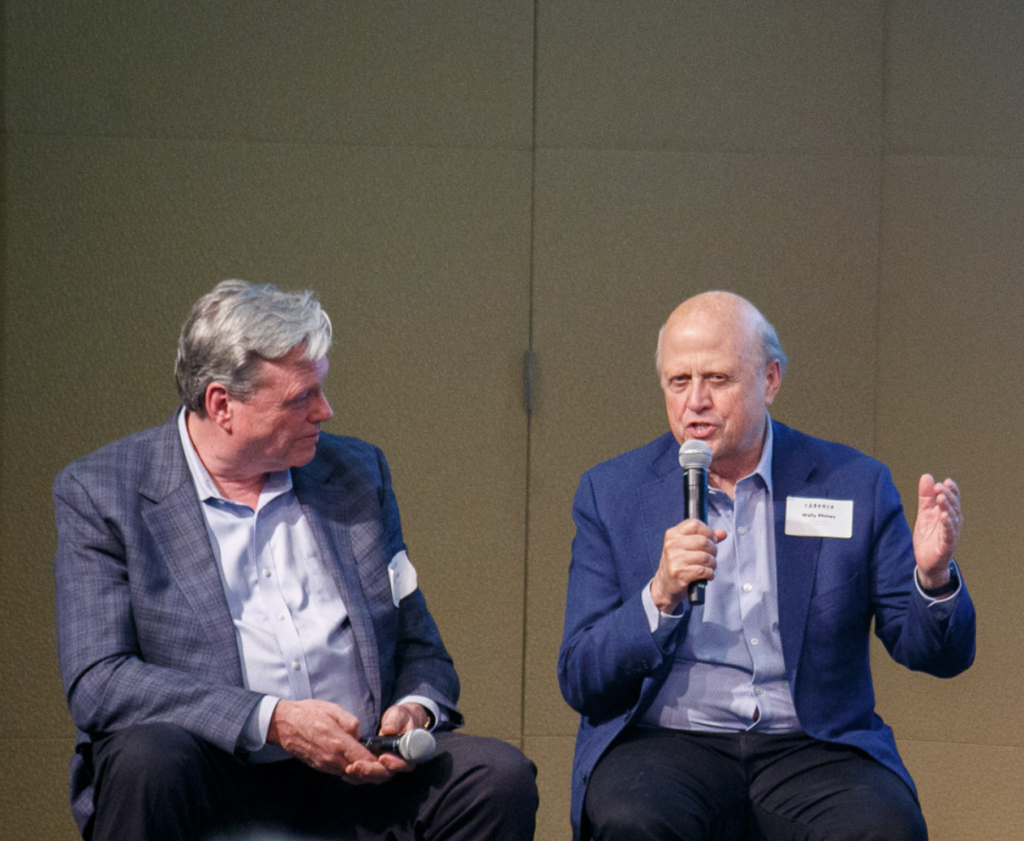
This democratization of custom silicon is expected to generate significant revenue for the EDA industry. As the cost of design drops, smaller players who were previously priced out of the custom silicon market may begin to develop their own specialized hardware, further fueling the demand for AI-driven design tools.
The Hierarchy of Agents: Verification and Consensus Building
One of the most pressing technical hurdles for agentic AI is the issue of "hallucinations"—instances where the AI generates plausible-looking but functionally incorrect data. To combat this, the panel proposed a new architecture for design flows: a hierarchy of agents.
Vince Wong, Head of AI Development at Verific, suggested that AI should not be embedded statically inside a tool but should instead "control" the tool from the outside. This allows the design environment to remain flexible; as LLMs improve, engineers can simply "plug in" a newer, more capable model without rewriting the entire EDA software stack.
To ensure reliability, Rhines and Kelf discussed the implementation of "stochastic multi-agent consensus-building." In this model, multiple independent AI agents are tasked with the same design or verification problem. If the agents reach a consensus, the result is deemed reliable. If they diverge, a human engineer or a "super-agent" is called in to arbitrate. This multi-flow self-checking mechanism mimics the traditional design-verification split but operates at the speed and scale of AI.
The Evolution of the Engineering Workforce
The integration of AI has sparked a vigorous debate regarding the future of engineering talent. There is a palpable concern that by automating "grunt work"—such as documentation, basic coding, and test program generation—the industry may be inadvertently destroying the training ground for entry-level engineers.
Kelf expressed concern that if AI handles all the tasks typically assigned to recent graduates, the industry may struggle to develop the next generation of senior architects who possess the "intuition" and "mileage" required to oversee complex projects. "We all start out as entry-level grads," Kelf remarked, highlighting a potential talent gap in the coming decade.
However, Rhines offered a more optimistic perspective, comparing the current situation to the transition from schematic capture to Verilog and VHDL in the 1990s. At that time, veteran engineers feared that younger programmers who "didn’t understand how a transistor works" would ruin the industry. Instead, those younger engineers embraced the new abstractions and drove the industry to new heights. Rhines argued that AI will not obsolete the new graduate; rather, it will obsolete the engineer—of any age—who refuses to adapt to new methodologies.
Broader Implications and Industry Outlook
The consensus from the 2026 ESD Alliance panel is that the semiconductor industry is entering a "specialization era." The traditional model of developing one tool for many designs is being challenged by AI startups that can release software updates on a weekly basis, offering highly customized solutions for specific hardware problems.
As AI continues to penetrate every stage of the silicon lifecycle—from initial architecture to post-silicon software patching—the role of the engineer is shifting from "doer" to "discerner." The most valuable skill for a future engineer will be the ability to look at AI-generated output, identify useful insights, and filter out the "noise" or hallucinations.
The broader impact of this shift extends beyond the engineering lab. With the ability to vertically optimize silicon for specific applications, the industry is poised to see a new wave of innovation in fields ranging from autonomous vehicles to personalized medicine. While the "black box" risks of AI remain a concern, the potential for AI to resolve the industry’s most pressing productivity and complexity challenges suggests that the agentic revolution is not just inevitable, but necessary for the continued advancement of Moore’s Law in the 21st century.
