
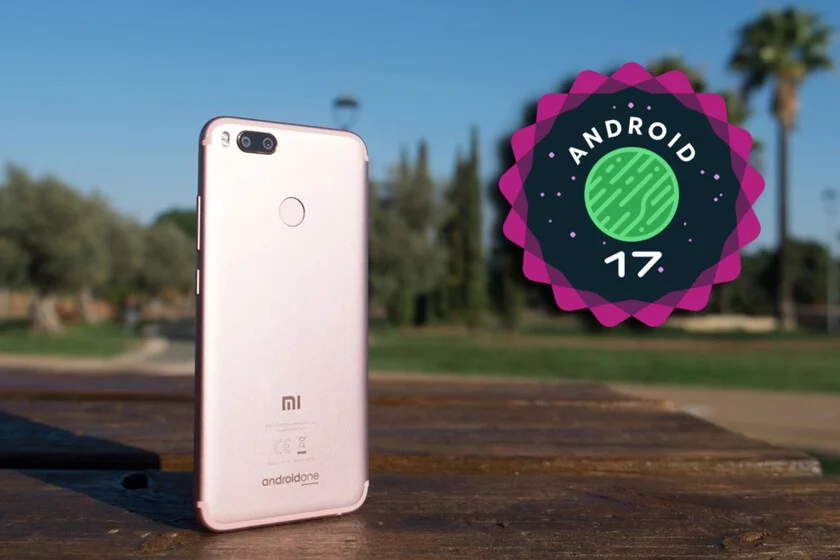

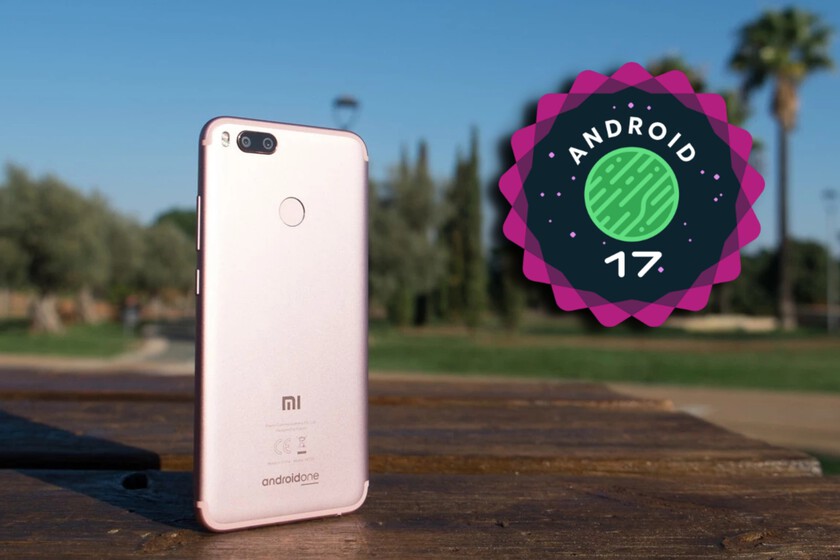
The history of consumer electronics is often defined by a stark reality: planned obsolescence. Manufacturers design hardware with a finite lifecycle, after which software updates cease, security patches vanish, and devices are consigned to the graveyard of technological history. However, a small, dedicated segment of the open-source community continues to challenge this narrative. The latest achievement in this enduring struggle involves the Xiaomi Mi A1, a device that has been resurrected from official abandonment to run the latest iteration of Google’s mobile operating system, Android 17.
The Legacy of the Xiaomi Mi A1
Released in September 2017, the Xiaomi Mi A1 occupied a unique space in the mobile market. As part of the Android One program, it promised a clean, bloatware-free experience and the allure of timely software updates directly from Google. Powered by the Qualcomm Snapdragon 625 chipset and featuring 4 GB of RAM, the device was a mid-range workhorse that captured the hearts of developers and budget-conscious enthusiasts alike.
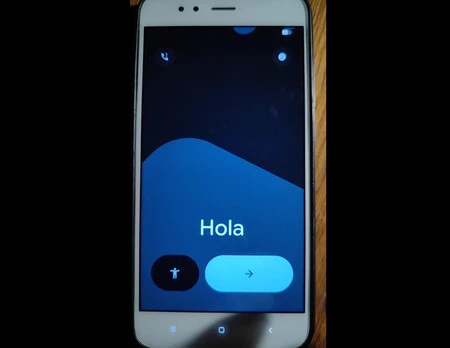
Its official support lifecycle ended following its transition to Android 9 Pie. By modern standards, the hardware is profoundly outdated, yet for the enthusiast community, the Mi A1 represents a blank canvas. This project, which has seen the device successfully boot and run Android 17 via a custom ROM, marks a significant milestone: closing a nine-year loop since the device first hit store shelves.
The Engineering Challenge: Bridging a Decade of Evolution
The technical hurdles involved in porting a 2026-era operating system to 2017-era hardware are immense. Modern versions of Android are built for sophisticated neural processing units, vastly faster storage, and multi-gigabyte RAM configurations that far exceed the physical capabilities of the Snapdragon 625.
The primary obstacle was storage architecture. The original partition table of the Mi A1 was designed for the leaner requirements of Android 7 and 8. Android 17, conversely, requires a significantly larger system partition to accommodate its complex framework. To circumvent this, developers employed custom scripts to reallocate sectors of the device’s cache, essentially carving out space from secondary memory to host the essential system files.
Beyond storage, the kernel posed a critical bottleneck. The Mi A1 relies on the Linux kernel versions 3.18 and 4.9, whereas Android 17 is optimized for much newer kernels. Developers had to architect complex compatibility bridges—essentially software translators—that allow modern Android interfaces to communicate with legacy hardware drivers for cameras, sensors, and mobile network connectivity. To prevent the system from crashing due to the device’s limited 4 GB of RAM, the developers implemented ZRAM compression, a technique that compresses data in memory to provide the illusion of a larger, more responsive system.
A Chronology of Obsolescence and Resurrection
To understand the significance of this feat, one must look at the timeline of the Mi A1:
- September 2017: Xiaomi launches the Mi A1 as part of the Android One initiative.
- 2019: Official software support concludes after the device receives its final update to Android 9 Pie.
- 2020-2024: The device transitions into the "enthusiast stage," where developers keep the phone relevant through community-maintained builds of Android 10, 11, and 12.
- Late 2026: A dedicated group of developers pushes the limits of the hardware, successfully booting Android 17, proving that the device’s silicon can still process modern code.
This trajectory mirrors that of other iconic devices like the HTC HD2, which gained a cult following for its ability to boot everything from Windows Phone to various iterations of Android and Ubuntu long after HTC stopped providing updates.
The Shift in Industry Standards
The Mi A1’s story arrives at a time when the broader industry is finally beginning to address the issue of device longevity. For years, the standard for mid-range smartphones was two years of software support. Today, the landscape has shifted dramatically.
Leading manufacturers have recognized that consumers are keeping their phones longer. Samsung, for instance, has committed to up to seven years of security and OS updates for its flagship lines. Similarly, Google’s Pixel series and various offerings from Oppo and Xiaomi have extended their support windows significantly. The benchmark for longevity was famously set by the Nvidia Shield TV, which provided a decade of consistent updates, proving that hardware can remain viable if the manufacturer chooses to maintain it.
However, the Mi A1 project serves as a reminder that official policy is only one path to longevity. When the manufacturer exits the scene, the open-source community remains the final arbiter of a device’s lifespan.
Implications for the Future of Mobile Hardware
While the performance of Android 17 on the Mi A1 is far from "daily driver" quality—users report noticeable latency when navigating the settings menu and reduced stability compared to modern handsets—the project is a proof of concept with profound implications.
- Electronic Waste Reduction: By extending the life of hardware, the community reduces the rate at which functional devices end up in landfills. Although not a replacement for modern hardware, the ability to run updated security protocols on older devices is a net positive for digital sustainability.
- Software Decoupling: The project demonstrates the potential for "Project Treble" and subsequent modular Android architectures to succeed. By separating the OS framework from the hardware implementation, it becomes theoretically easier to keep older hardware running, provided the community has the resources to bridge the gaps.
- The Limits of Silicon: The experiment highlights the hard physical limits of hardware. Even with optimized software, the underlying Snapdragon 625 cannot compensate for the raw processing power requirements of modern web rendering and background services. There is a point where the "cost" of making a device run a new OS outweighs the benefit of its use.
Conclusion: The Community vs. The Manufacturer
The resurrection of the Xiaomi Mi A1 is not about functionality in the traditional sense; it is a statement about ownership. In an era where many devices are "bricked" by design the moment they lose official server support, the Mi A1 represents the defiance of the power user.
It reinforces the principle that the limitations of a smartphone should be defined by the user’s needs and the developer’s ingenuity, not by an arbitrary "end-of-life" date printed on a corporate datasheet. While the average user will naturally upgrade to newer, more efficient hardware, the existence of a custom-built Android 17 ROM for a 2017 device serves as a testament to the enduring relationship between hardware and its community. It confirms that as long as there is an interest in the code and a willingness to solve complex engineering puzzles, a device never truly has to die.
