
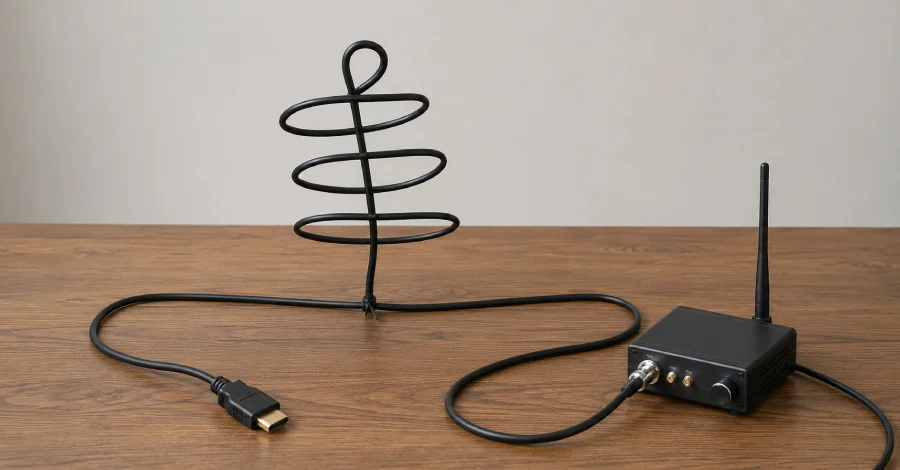

Researchers at Shandong University have unveiled a groundbreaking method, dubbed TrojPix, that allows for the high-speed exfiltration of data from computers physically isolated from all networks, commonly known as air-gapped systems. This innovative technique manipulates on-screen pixels in ways imperceptible to the human eye, causing the connected video cable to radiate a faint but detectable radio signal. A nearby receiver can then decode this signal, effectively creating a covert communication channel that bypasses traditional network security measures. The findings, presented by Guoming Zhang and his team, mark a significant advancement in the capabilities of air-gap data breaches, pushing the boundaries of what was previously thought possible in covert data transfer.
The core of TrojPix lies in what the researchers term "imperceptible pixel modulation." This method involves subtly altering the brightness or color of pixels on a display at frequencies that are beyond human visual perception. These rapid, minute changes, while invisible, generate electromagnetic fluctuations that propagate through the video cable connecting the computer to its monitor. These cables, particularly unshielded copper ones like VGA or HDMI, then act as unintended antennas, broadcasting these modulated signals as faint radio waves. A specialized receiver, positioned within a certain range, can capture these emissions and reconstruct the encoded data. This ingenious approach requires no specialized hardware modifications to the target machine itself, relying solely on software control over the display output, which can be achieved by user-level malware once a system has been compromised.
One of the most striking aspects of TrojPix is its unprecedented speed. In laboratory tests, the technique achieved a peak throughput of 8.1 Megabits per second (Mbps). To put this into perspective, most previously documented air-gap covert channels operate at speeds ranging from a few bits per second to several kilobits per second. At 8.1 Mbps, which translates to roughly a megabyte per second, TrojPix could exfiltrate a 100-megabyte file in under two minutes. This dramatic increase in data transfer rate fundamentally alters the threat landscape for air-gapped systems. What was once considered a risk primarily for leaking small pieces of information, like passwords or cryptographic keys, now becomes a viable avenue for the rapid exfiltration of entire documents, intellectual property, or classified datasets. The researchers also demonstrated an impressive operational range, with successful data reception from as far as 208 meters, though this range was measured separately from the peak throughput in different experimental conditions. The ability to maintain such a high data rate over a significant distance underscores the potency of this new exfiltration vector.

The ingenuity of TrojPix is further highlighted by its operational flexibility. The researchers describe two primary modes of data transmission. In one scenario, the malware can fake a powered-off display, keeping the screen dark while it actively transmits data. This makes the exfiltration process highly stealthy, as the target monitor appears to be inactive, raising no immediate suspicion. The second, arguably more insidious, method involves burying the covert signal within whatever content is already displayed on the screen. This means ordinary-looking text, images, or video could secretly carry a malicious payload, making detection incredibly difficult for human observers. The research team has demonstrated the technique’s broad compatibility, successfully implementing it across nine different monitor brands and fifteen types of video cables, indicating that the threat is not confined to a specific hardware configuration but is a pervasive vulnerability in standard display setups.
The concept of extracting information from electromagnetic emanations, known as "compromising emanations," is not new. It traces its origins back to the decades-old field of TEMPEST, a codename for a U.S. National Security Agency specification and a NATO certification relating to spying on information systems through leaking emanations, including unintentional radio or electrical signals, sounds, and vibrations. Developed during the Cold War, TEMPEST research focused on understanding and mitigating these unintended signals, particularly from sensitive electronic equipment. Governments and military organizations have long understood the risks, developing stringent shielding requirements for facilities and equipment handling classified information. However, recent academic research has revitalized this field, exploring new and more accessible ways to exploit these physical phenomena.
TrojPix stands as the latest in a series of advanced side-channel attacks leveraging electromagnetic emanations from standard computer components. For instance, the TEMPEST-LoRa research, presented at CCS 2025, demonstrated a method to extract data from video cables and transmit it over a LoRa (Long Range) wireless standard, reaching distances of up to 87.5 meters at a peak rate of 21.6 kilobits per second. While impressive, TrojPix’s peak throughput is hundreds of times higher, showcasing a significant leap in efficiency, although direct comparisons are challenging due to differing experimental setups and receiver technologies. Another notable screen-based channel, PIXHELL, covered by The Hacker News in 2024, exploited the display itself to emit sound waves, which could then be captured by a nearby microphone to leak data from an air-gapped PC. Furthermore, researchers have explored methods to exfiltrate data via acoustic channels (using speakers/microphones), thermal channels (manipulating CPU temperature), optical channels (using LED indicators or scanners), and even power consumption side-channels. While these methods demonstrate the breadth of possibilities, many have been limited by either low data rates or short ranges, making TrojPix’s combination of speed and distance particularly concerning.
Air-gapped systems are considered the ultimate bastion of cybersecurity, employed in environments where data confidentiality and integrity are paramount. These include critical national infrastructure (power grids, water treatment facilities), military command and control systems, intelligence agencies, nuclear facilities, and research and development labs handling highly sensitive intellectual property. The fundamental premise of an air gap is that by physically isolating a network from external connections, it becomes impervious to cyberattacks originating from the internet. However, the history of cybersecurity is replete with examples of determined adversaries finding ways to bridge these gaps. Early and prominent examples, like Stuxnet and Agent.BTZ, relied on physical vectors such as infected USB drives to introduce malware into air-gapped networks. While these physical intrusions remain a primary concern, the emergence of techniques like TrojPix highlights a new frontier in air-gap circumvention, moving beyond physical media to the exploitation of subtle physical phenomena.

The implications of TrojPix for national security and corporate espionage are profound. State-sponsored actors, industrial spies, and sophisticated criminal organizations often target air-gapped systems to acquire classified government documents, military secrets, advanced technological blueprints, or proprietary business strategies. The ability to exfiltrate large volumes of data rapidly and stealthily, without triggering network intrusion detection systems or requiring physical interaction beyond the initial malware infection, provides a powerful new tool for such adversaries. Imagine a scenario where a nation-state actor gains a foothold in a defense contractor’s air-gapped R&D network. With TrojPix, gigabytes of sensitive design specifications for next-generation weaponry could be siphoned off in a matter of hours, all while the monitors appear to be off or displaying innocuous content. This capability could severely compromise national defense, economic competitiveness, and technological superiority.
Cybersecurity experts are likely to view TrojPix as a significant escalation in the ongoing cat-and-mouse game between attackers and defenders. "This research underscores the critical importance of a multi-layered security approach, even for air-gapped environments," stated a hypothetical cybersecurity analyst, Dr. Evelyn Reed, from the Global Cyber Resilience Institute. "While the initial compromise to plant the malware remains the primary hurdle, once an adversary is inside, methods like TrojPix turn what was once a trickle of data into a potential flood. This isn’t just about ‘zero-day’ exploits anymore; it’s about weaponizing fundamental physics to bypass traditional safeguards." Another inferred reaction from a government cybersecurity spokesperson, perhaps from a national intelligence agency, might emphasize the need for immediate review of existing physical security protocols in critical infrastructure and classified facilities, urging the adoption of more robust TEMPEST-compliant measures.
Given that the emission itself cannot be "patched" away through software updates, the countermeasures against TrojPix and similar electromagnetic side-channel attacks are primarily physical and preventive. The most effective defense is to prevent malware from gaining a foothold on the air-gapped machine in the first place. This involves rigorous endpoint security measures, including strict application whitelisting, robust antivirus and Endpoint Detection and Response (EDR) solutions, regular security audits, comprehensive user training against social engineering, and maintaining a principle of least privilege. However, even with the most stringent software security, the physical vulnerabilities remain.
To mitigate the risk of electromagnetic leakage, organizations with highly sensitive air-gapped systems should consider several physical safeguards. Running video over fiber-optic links instead of traditional copper cables is a crucial step. Fiber optics transmit data using light pulses, which do not generate electromagnetic signals susceptible to radio interception, thereby eliminating the attack vector exploited by TrojPix. Furthermore, physical shielding of cables and entire rooms where sensitive data is processed is essential. TEMPEST-rated facilities are designed with specific shielding requirements, often involving Faraday cages and specialized building materials, to contain electromagnetic emanations and prevent their interception. These facilities undergo rigorous testing to ensure compliance with strict government and military standards for electromagnetic security. Implementing these measures, while costly and complex, becomes increasingly vital as techniques like TrojPix mature from lab experiments into potential real-world threats.

While TrojPix and its predecessors like TEMPEST-LoRa remain largely confined to laboratory demonstrations, they represent a chilling preview of what is possible. Historically, real-world air-gap attacks, such as Stuxnet, relied on physical media like USB drives for infiltration. However, the continuous innovation in covert channels, driven by academic research and likely mirrored by advanced persistent threat (APT) groups, signals a future where the air gap itself may no longer be a sufficient guarantee of security. The ongoing arms race in cybersecurity demands that defenders stay ahead of these evolving threats, anticipating novel attack vectors and implementing comprehensive, multi-layered defenses that encompass not only software and network security but also the often-overlooked realm of physical emanations. The discovery of TrojPix serves as a stark reminder that in the world of cyber espionage, the most formidable threats can sometimes emerge from the most unexpected and seemingly innocuous components of our digital infrastructure.
