

When Jeff Barr published a modest blog post introducing the Amazon Elastic Compute Cloud (EC2) Beta on August 25, 2006, the technology landscape was fundamentally different. Businesses and developers relied heavily on physical data centers, procuring hardware weeks or months in advance just to test a new application or scale a web service. That single announcement—offering resizable Linux virtual servers billed by the hour, restricted to a single instance type (m1.small) within a solitary Region in US East—did not merely introduce a new product; it birthed the modern cloud computing industry.
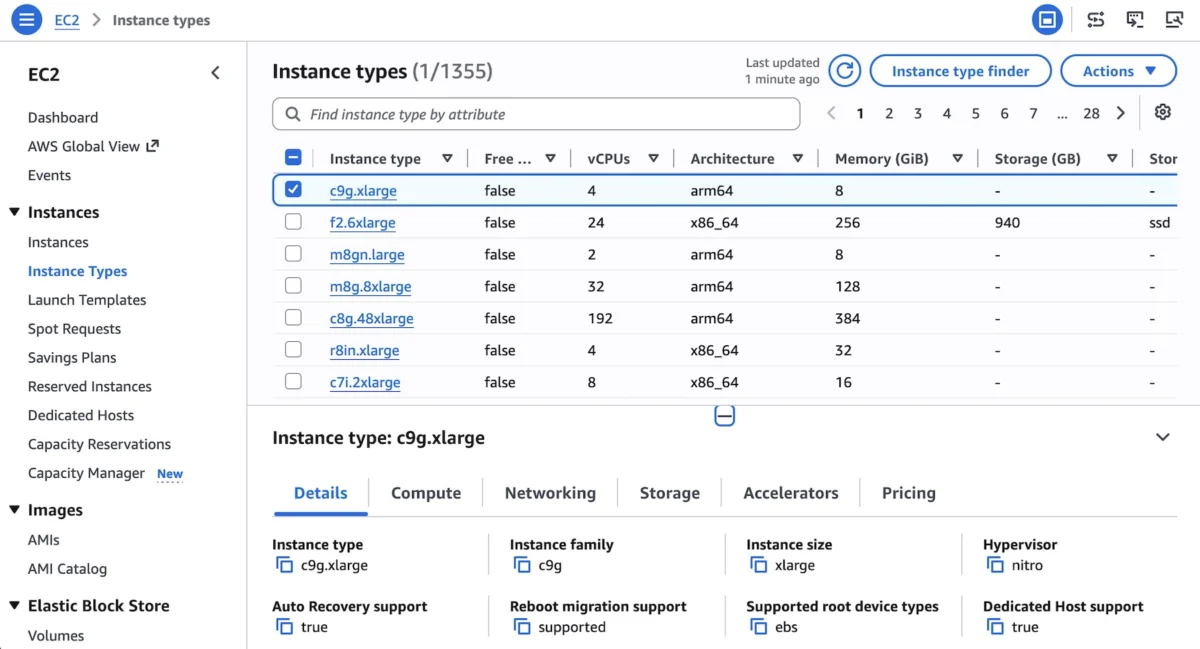
Today, as Amazon Web Services (AWS) marks the 20th anniversary of that pioneering launch, Amazon EC2 stands as the undisputed backbone of the global digital economy. Over the past two decades, what began as a minimal-yet-useful utility for elastic computing has expanded into a sprawling, highly sophisticated ecosystem comprising more than 1,200 distinct instance types spanning 39 geographic Regions worldwide. From supporting basic corporate websites to powering massive, trillion-parameter artificial intelligence model training clusters, EC2 has systematically rewritten the economics and mechanics of information technology infrastructure.
The Evolution of a Cloud Pioneer: A 20-Year Chronology
The trajectory of Amazon EC2 cannot be viewed in isolation; its growth mirrors the maturation of cloud computing itself. In its formative years, AWS focused heavily on establishing core architectural primitives that would allow enterprises to safely migrate mission-critical workloads out of traditional data centers.
The chronological expansion of EC2 and its supporting infrastructure highlights a relentless pace of engineering innovation:
- 2006: The launch of the Amazon EC2 Beta, introducing hourly-billed, on-demand virtualized servers in the cloud.
- 2008: The introduction of Amazon Elastic Block Store (EBS), providing persistent, low-latency block storage volumes designed specifically for EC2 instances.
- 2009: A banner year for enterprise readiness, marked by the rollout of Elastic Load Balancing (ELB), Auto Scaling, and Amazon CloudWatch to guarantee high availability and automated performance monitoring. Simultaneously, Amazon Virtual Private Cloud (VPC) debuted, giving customers logically isolated, secure networks within the AWS cloud.
- 2017: The deployment of the AWS Nitro System, a groundbreaking combination of dedicated hardware and lightweight hypervisor software that offloaded virtualization functions, drastically improving performance, enhanced security, and faster feature innovation.
- 2018: The introduction of AWS Graviton processors, AWS’s custom-built, ARM-based silicon designed to optimize price-performance for scale-out cloud workloads. This same year also saw the unveiling of AWS Outposts, extending native EC2 infrastructure directly into on-premises data centers.
- 2019: AWS pushed the boundaries of edge computing and telecommunications by launching AWS Local Zones—placing compute resources closer to large population centers—and AWS Wavelength, embedding EC2 inside 5G carrier networks for ultra-low-latency applications.
This continuous diversification transformed EC2 from a generalized virtual machine rental service into a specialized portfolio. Today, instance families cover general-purpose, compute-optimized, memory-optimized, storage-optimized, accelerated computing (featuring advanced GPUs), and high-performance computing (HPC) workloads.
The Architectural Foundation of Modern Cloud Services

While consumer-facing cloud services often steal the spotlight, industry analysts frequently emphasize that Amazon EC2 remains the foundational compute layer upon which virtually the entire AWS portfolio is constructed. Higher-level services—including Amazon ECS, Amazon EKS, AWS Lambda, AWS Fargate, AWS Batch, Amazon EMR, Amazon SageMaker AI, and Amazon Bedrock—ultimately rely on underlying EC2 capacity to execute workloads.
Every architectural paradigm engineered over the past twenty years rests on the simple, powerful act of launching an instance. The core value proposition articulated by AWS executives in 2006—secure, resizable compute capacity available in minutes, a pay-as-you-go consumption model, and freedom from long-term capital expenditure commitments—remains remarkably intact. However, that core flexibility has now scaled to meet the immense demands of modern generative artificial intelligence and machine learning pipelines, a scale that was entirely unimaginable at the service’s inception.
Industry Implications and the Next Frontier
The twenty-year milestone of Amazon EC2 arrives at a pivotal juncture for the enterprise technology sector. As organizations worldwide grapple with digital transformation, cost optimization, and the integration of artificial intelligence, the role of foundational infrastructure has never been more critical.

Industry experts note that EC2’s success strategy—characterized by launching minimal-yet-useful products and iterating rapidly based on rigorous customer feedback—has become a textbook playbook for cloud-native product development. By investing heavily in custom silicon (such as Graviton and specialized AI accelerator chips) and tightly integrating software with hardware via the Nitro System, AWS has managed to decouple its hardware innovation cycle from traditional semiconductor timelines.
Looking forward, the next twenty years of cloud computing will undoubtedly demand infrastructure capabilities that are currently beyond the horizon of modern imagination. Yet, as AWS leadership affirms, Amazon EC2 is engineered to remain the persistent, adaptable bedrock where the world’s most demanding workloads execute, continuing a legacy that fundamentally changed how humanity builds, deploys, and scales technology.
