
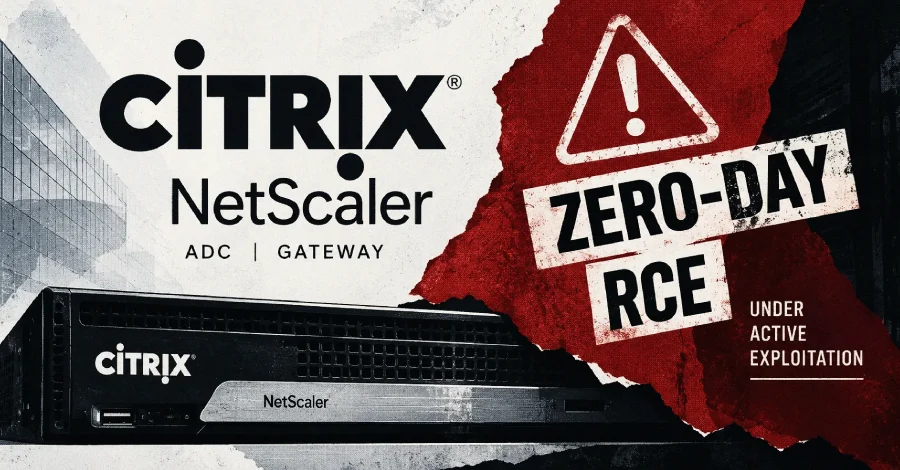

The cybersecurity landscape faces a significant escalation as security researchers at watchTowr have identified two previously unknown and unpatched zero-day vulnerabilities affecting Citrix NetScaler Application Delivery Controller (ADC) and NetScaler Gateway appliances. These vulnerabilities, which allow for remote code execution (RCE), are reportedly being leveraged by malicious actors in active, real-world exploitation campaigns. As of late September 2026, the vendor, Cloud Software Group, has yet to issue a formal advisory or a security patch to mitigate the threat, prompting many enterprise administrators to proactively disconnect their critical infrastructure from the internet to prevent potential compromise.
These appliances serve as the primary gateway for enterprise operations, managing essential functions such as VPN connectivity, remote access, load balancing, and user authentication. Because they are positioned at the network edge, any successful exploit grants attackers a high-privilege foothold into internal corporate environments, making them prime targets for threat actors ranging from state-sponsored espionage groups to ransomware syndicates.
A Chronology of the Discovery and Escalation
The emergence of these zero-day threats began to surface in the security community on September 26, 2026. The firm watchTowr, known for its deep-dive analysis of enterprise software vulnerabilities, initiated the disclosure through a series of communications on social media platform X. Initially citing credible but scarce information regarding multiple unpatched RCE vulnerabilities, the firm followed up later that evening with a more detailed account.
According to watchTowr, the two vulnerabilities were discovered during forensic investigations of victim environments, suggesting that the flaws had been in the crosshairs of sophisticated attackers well before the public became aware of their existence. The firm indicated that they expected official communication and remediation efforts from Citrix to commence early in the week of September 28, 2026.
This development has sent ripples through IT departments worldwide. By the end of the day on September 26, anecdotal reports on platforms like Reddit indicated that some IT managed service providers (MSPs) had proactively contacted their clients, advising them to shut down or isolate their NetScaler instances immediately. This "offline-first" approach underscores the severity of the threat, as administrators prioritize data security over the continuous availability of services.

Distinguishing Current Threats from Historical Precedents
It is critical for security teams to distinguish these new zero-days from previously disclosed flaws, particularly CVE-2026-19490. The latter was an authentication bypass vulnerability that Citrix addressed on August 19, 2026, and which was subsequently added to the Cybersecurity and Infrastructure Security Agency (CISA) Known Exploited Vulnerabilities (KEV) catalog on September 9, 2026.
The current vulnerabilities discovered by watchTowr appear to be entirely separate from the August incident. While the August 19 patches for versions 14.1-73.32 and 13.1-63.21 resolved the authentication bypass, they do not offer protection against the current RCE threats. At this stage, it remains unclear whether these new vulnerabilities impact the latest builds or if they are legacy issues that have only recently been weaponized. The lack of clarity has created a "security vacuum," leaving organizations to wonder if even their updated systems remain exposed.
The Challenge of Post-Compromise Detection
One of the most alarming aspects of this situation is the nature of zero-day exploitation. When a vulnerability is exploited before a patch exists, the act of patching the system later is often insufficient. As seen in previous cyberattacks, attackers frequently establish persistence mechanisms—such as backdoors, web shells, or compromised credentials—immediately upon gaining initial entry.
History provides a cautionary tale: in 2025, when a NetScaler vulnerability was exploited in the wild, the Dutch National Cyber Security Center (NCSC) warned that simply applying a patch did not restore the integrity of the system. The NCSC specifically advised organizations to run forensic check scripts to identify indicators of compromise (IoC) because an attacker who gained access via a zero-day could easily maintain that access through alternative channels even after the primary vulnerability was closed.
For the current 2026 incident, the lack of official IoCs or forensic guidelines from the vendor complicates the response. Administrators are left to rely on legacy tools, such as the NCSC-NL check scripts developed for 2025-era exploits, which may not be fully compatible or effective against the specific tactics, techniques, and procedures (TTPs) used by the threat actors in this current campaign.
Lifecycle and Support Complications
The timing of this discovery coincides with a critical juncture in the NetScaler product lifecycle. According to Citrix’s established firmware release schedule, NetScaler 13.1 officially reached its End of Maintenance (EOM) milestone on September 15, 2026. This creates a precarious situation for organizations still running older, yet highly stable, versions of the software.

It is a common pattern in the cybersecurity industry that products approaching or reaching EOM are often scrutinized more heavily by attackers, who gamble on the fact that vendors may be slower to provide security updates for legacy versions. Whether Cloud Software Group will issue an out-of-cycle patch for these EOM versions remains an open question that has significant implications for thousands of legacy enterprise deployments.
Broader Implications for Enterprise Security
The recurring nature of high-severity vulnerabilities in edge appliances like Citrix NetScaler highlights a systemic risk in modern network architecture. Because these devices are designed to handle traffic from the public internet and pass it into the internal network, they possess an inherently high attack surface.
The strategy of "shutting down" appliances in response to rumors of a zero-day is a stark illustration of the trade-off between business continuity and risk management. For large-scale enterprises, taking a load balancer or VPN gateway offline can result in significant operational disruption, impacting thousands of remote workers and global traffic flows. However, the alternative—leaving a vulnerable, internet-facing device online—could lead to a catastrophic data breach or ransomware event that would prove far more costly in the long term.
Recommendations for Network Administrators
As the industry awaits an official response from Cloud Software Group, organizations are encouraged to adopt a "zero-trust" posture regarding their current NetScaler infrastructure:
- Heightened Monitoring: Implement rigorous traffic analysis on all NetScaler appliances. While specific IoCs are currently unavailable, unusual egress traffic, unexpected administrative logins, or changes in configuration files should be treated as potential indicators of a compromise.
- Segmentation: Where possible, restrict administrative access to the management interface of the appliance to a highly controlled, internal-only management network, ensuring it is not reachable from the public internet.
- Forensic Preparedness: Maintain full system backups and logs, including core dumps and configuration files, to facilitate potential forensic analysis should a compromise be suspected.
- Vendor Vigilance: Monitor the official Citrix security support portal hourly for the release of security bulletins. When a patch is released, prioritize testing in a sandbox environment before rapid deployment, while simultaneously running a thorough audit for signs of prior intrusion.
Conclusion
The disclosure of these two zero-day vulnerabilities serves as a potent reminder of the fragility of the digital supply chain. When an essential gateway product is compromised, the entire organization is effectively exposed. As the cybersecurity community and enterprise IT teams wait for official remediation from the vendor, the incident underscores the necessity of having robust incident response plans that can operate in the absence of vendor guidance. Until a fix is deployed, the most effective defense remains a combination of aggressive monitoring, proactive network isolation, and a readiness to assume that the perimeter may have already been breached.
