
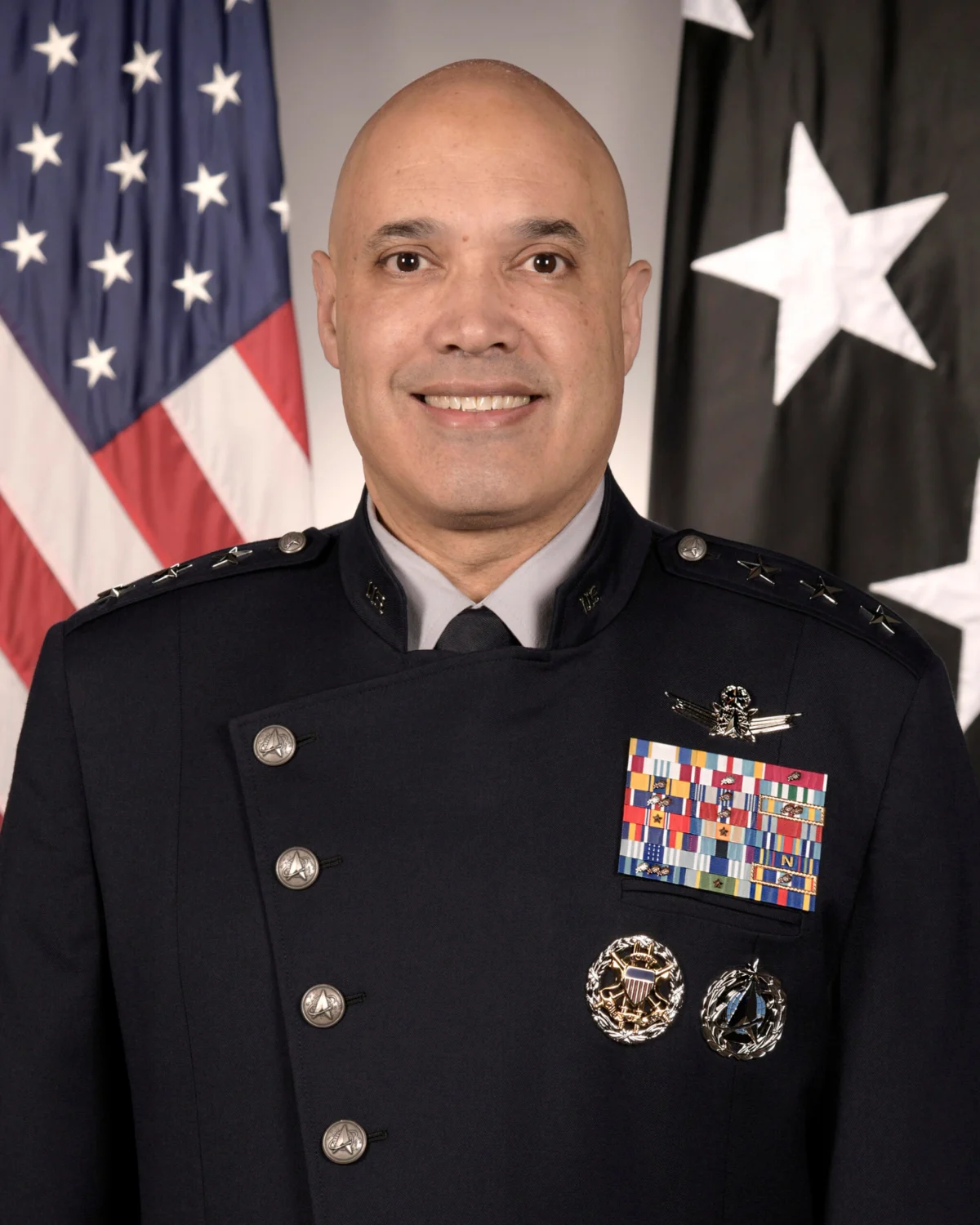

The White House has officially nominated U.S. Space Force Lieutenant General David Miller for promotion to the rank of general, positioning him to take the helm of U.S. Space Command (SPACECOM). If confirmed by the United States Senate, Gen. Miller will assume command from the outgoing leader, General Stephen Whiting, marking a pivotal transition in leadership for America’s unified combatant command responsible for military operations in outer space.
The nomination arrives at a critical juncture for the U.S. military’s space enterprise. As geopolitical tensions in Earth’s orbit continue to escalate among major global powers, SPACECOM faces mounting responsibilities regarding space domain awareness, missile warning systems, and integrated combat readiness. Gen. Miller’s extensive background in space operations, strategic planning, and capability development makes him a primary choice for defense leadership as the nation adapts to an increasingly contested orbital environment.
Leadership Transition and Current Roles
Gen. Miller has spent the past several months serving as the deputy chief of space operations for strategy, plans, programs, and requirements—a role he assumed in November of the previous year. In this capacity, he has been instrumental in shaping the long-term force design, budgeting priorities, and operational requirements of the youngest branch of the U.S. Armed Forces.
Prior to his current assignment, Gen. Miller served as the final commander of Space Operations Command (SpOC). Under his tenure, the command underwent a significant structural and organizational evolution. In November of last year, the Space Force officially redesignated SpOC as Combat Forces Command (CFC). This rebranding was not merely cosmetic; it served as a deliberate strategic signal of the service’s broader pivot toward enhanced combat readiness, tactical agility, and integrated space defense. The lineage of CFC traces directly back to the legacy Air Force Space Command, which initially transitioned into SpOC in October 2020 following the formal establishment of the U.S. Space Force in December 2019.
Operational Vision and Technological Advancements
Gen. Miller’s operational philosophy has consistently emphasized the necessity of moving beyond passive space support toward proactive space control and tactical warfighting capabilities. Speaking publicly in September of last year, Miller highlighted the activation of the Space Force’s first space electromagnetic warfare tactical operations center. He detailed forthcoming advancements across several critical domains, including electromagnetic spectrum operations, orbital warfare, and the sophisticated surveillance, tracking, and targeting of potential adversary air and space systems.
These priorities directly foreshadow recent high-level disclosures regarding America’s military posture in orbit. Earlier this month, during the Air & Space Forces Association’s annual conference, Air Force Secretary Troy Meink publicly acknowledged the existence of U.S. orbital space weapons. The convergence of Miller’s operational roadmap and the formal disclosure of offensive and defensive orbital systems underscores a profound shift in military doctrine: outer space is no longer treated merely as a sanctuary for communication and reconnaissance, but as an active operational warfighting domain.
Oversight of the Controversial Relocations and Infrastructure Challenges
Should the Senate confirm his nomination, Gen. Miller will immediately inherit one of the most administratively complex and politically contentious projects within the Department of Defense: the relocation of SPACECOM headquarters.
The command is scheduled to move its permanent headquarters from Peterson Space Force Base in Colorado Springs, Colorado, to Redstone Arsenal in Huntsville, Alabama. This relocation has been the subject of a bitter, multi-year partisan battle on Capitol Hill, drawing intense scrutiny from lawmakers, governors, and military families alike. Supporters of the move point to Huntsville’s established defense infrastructure, aerospace industry presence, and cost-effectiveness. Conversely, critics have raised concerns regarding operational disruption, the timeline of achieving full operational capability, and the political motivations that allegedly influenced previous evaluation processes.
As SPACECOM commander, Gen. Miller will be tasked with navigating these lingering political headwinds while ensuring that the command maintains uninterrupted operational readiness and intelligence-sharing capabilities during the physical and administrative transition.
Broader Implications for National Security and the Space Enterprise
The appointment of a new SPACECOM commander carries profound implications for international security architecture. As adversaries such as the People’s Republic of China and the Russian Federation continue to field counter-space capabilities—including direct-ascent anti-satellite missiles, co-orbital inspection craft, and sophisticated cyber-jamming platforms—the United States must accelerate the resiliency of its satellite architectures.
Defense analysts note that Miller’s operational background uniquely equips him to address the challenges of multi-domain integration. By bridging the gap between strategic acquisition and tactical execution, Miller will be expected to fast-track the integration of commercial space capabilities into military architectures, enhance coalition interoperability with key allies such as the United Kingdom, Australia, and Canada, and maintain strategic deterrence in orbit.
The Senate Armed Services Committee is expected to schedule confirmation hearings for Gen. Miller in the coming weeks. While defense committees generally support experienced leadership appointments within the unified combatant commands, the contentious politics surrounding the Huntsville headquarters relocation may prompt rigorous questioning during the confirmation process. If confirmed without significant delay, Gen. Miller is expected to take command of SPACECOM before the end of the year, steering the organization through its next phase of strategic growth and operational capability.
