
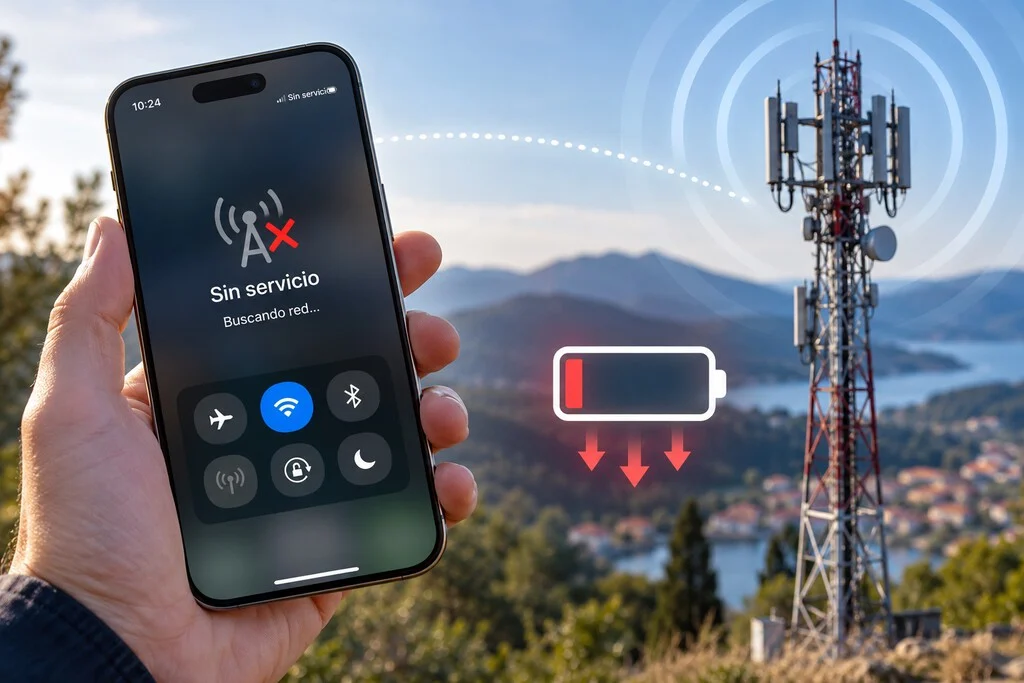

The modern smartphone is a marvel of constant connectivity, yet beneath its polished interface lies a relentless background process that often goes unnoticed until the battery indicator begins its precipitous descent. When a device is placed on a table, it is not merely idling; it is engaged in a sophisticated, continuous dialogue with the cellular infrastructure. The onboard modem remains in a state of perpetual vigilance, maintaining registration with the network, monitoring signal strength, and constantly evaluating whether a handover to a different cell tower or a different radio access technology—such as shifting from 5G to 4G LTE—is necessary to maintain service. While this background maintenance is highly optimized for power efficiency under normal conditions, the energy profile of the device shifts dramatically when the cellular signal weakens or disappears entirely.
The mechanics of cellular exhaustion
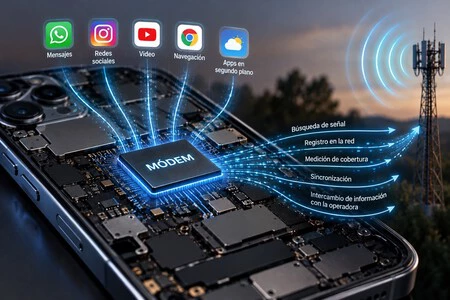
To understand why a smartphone loses power faster in remote or obstructed areas, one must examine the fundamental role of the modem. Unlike the application processor, which handles the user interface and software, the modem operates as the gateway to the outside world. It identifies available frequency bands, selects the optimal cell tower, and preserves a communication link for incoming calls and messages. In an environment with strong, stable coverage, the modem spends the majority of its time in low-power sleep states, waking only briefly to perform handshakes with the network.
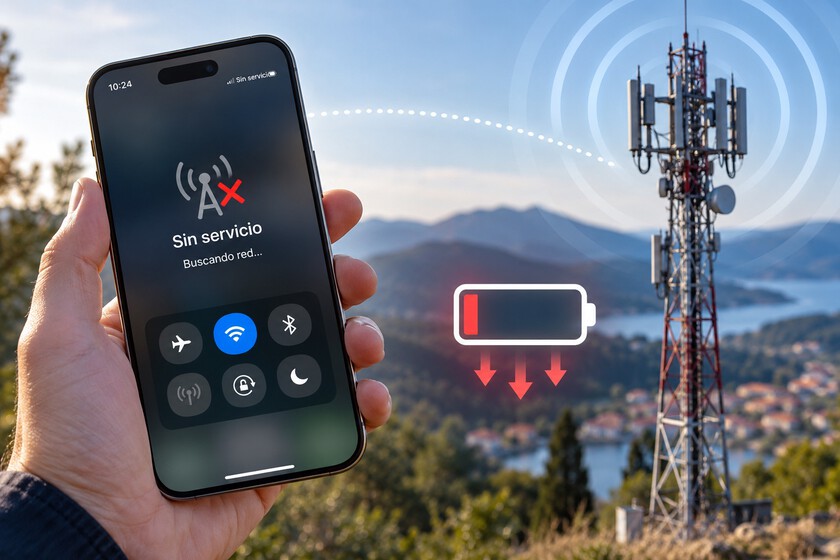
However, the logic of the modem changes when it perceives a degradation in signal quality. When a signal is lost, the device enters a "searching" phase, which is significantly more taxing on the battery than maintaining a steady connection. The phone increases the power output of its internal antenna in a desperate attempt to re-establish a handshake with the nearest base station. According to technical documentation from semiconductor leaders like MediaTek, the transmission of data is substantially more energy-intensive than the reception of data. When the connection is tenuous, the device must transmit at higher power levels to overcome the signal-to-noise ratio hurdles, leading to a measurable increase in thermal dissipation and power consumption.
Chronology of signal-induced battery drain
The phenomenon of "No Mobile Coverage and Low Signal" is a well-documented technical state in both iOS and Android ecosystems. Apple, through its support guidelines, explicitly identifies this activity as a significant contributor to battery health degradation. Historically, the evolution of mobile networks has only increased the complexity of this task. In the era of 2G, a phone had one network to listen to. Today, a modern 5G smartphone must manage multiple bands across 5G, 4G, and sometimes 3G or 2G, depending on the operator’s infrastructure.
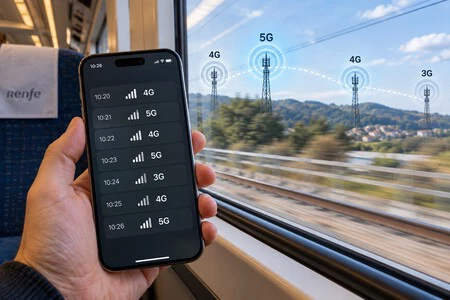
Throughout the last decade, as network densities have increased, the "handover" process—the seamless transition of a phone from one cell tower to another while a user is in motion—has become a routine but demanding task. For instance, during a high-speed train journey, a mobile device may perform hundreds of cell reselection processes in a single hour. Each reselection requires the modem to synchronize with a new tower, verify encryption keys, and update its location with the provider. When this is compounded by the signal attenuation caused by metallic train windows or the shielding effect of tunnels, the battery drain becomes a predictable consequence of the physics involved in high-speed mobile telecommunications.
Supporting data and technical constraints
Industry data confirms that signal-related battery drain is not merely a user perception but a hardware reality. Testing environments frequently show that in an area with a -110 dBm signal strength (considered "weak"), a smartphone can consume up to 20% more power during standby compared to an environment with a -80 dBm signal (considered "excellent").
Samsung’s own battery optimization guides corroborate these findings, warning users that power consumption spikes in areas with overlapping signals or "ping-pong" effects, where a phone is forced to rapidly switch between two towers of equal strength. This behavior is inherent to the system; because the modem is a foundational component of the radio resource management (RRM) system, it operates independently of user-facing applications. Even if all third-party apps are closed, the modem continues its autonomous effort to maintain the network registration, ensuring that the device remains "reachable" by the carrier.
Official responses and industry standards
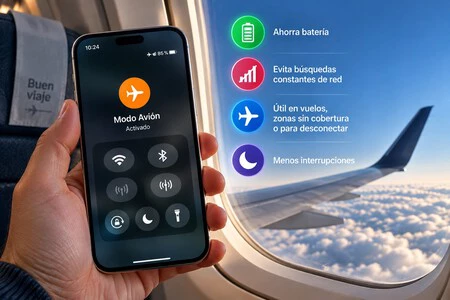
Major technology manufacturers and telecommunications bodies have long addressed this issue by providing tools for power management. Both Google and Apple suggest that the Airplane Mode toggle is the most effective manual intervention for users who find themselves in areas of persistent poor coverage, such as rural mountain passes, deep underground parking structures, or remote basements.
From a regulatory standpoint, the design of these devices prioritizes availability over pure energy efficiency. For example, the requirement to maintain a connection to the nearest cell tower is a necessity for the "Always On" nature of cellular standards. Manufacturers have refined power-saving algorithms to prioritize network stability, but they are limited by the physical distance between the transmitter and the receiver. As noted in technical white papers on uplink enhancement, the modem is essentially "talking" to the network; if the network cannot "hear" the phone clearly, the phone must "shout" (increase transmission power), which inevitably exhausts the chemical energy stored in the lithium-ion battery.
Broader impacts: The trade-off between connectivity and longevity
The implications of this technical reality are twofold: they affect individual device longevity and public safety. For the individual, constant exposure to poor-coverage environments accelerates the cycle of battery depletion and recharging, which can lead to faster chemical aging of the battery. For society, the trade-off is the necessity of being reachable.
The move toward Wi-Fi Calling (VoWiFi) has provided a meaningful mitigation strategy. By offloading the voice and text traffic to a local internet connection, the device can effectively "silence" the modem’s search for a cellular signal. However, this is not a universal panacea. VoWiFi requires both the handset and the carrier to support the protocol, and implementation varies significantly across international markets. Furthermore, reliance on VoWiFi for emergency services remains a point of contention. While emergency calls (such as 112 in Europe or 911 in the U.S.) are prioritized, they are fundamentally designed to operate over the cellular air interface whenever possible.
Practical implications for the modern user
As users navigate increasingly connected environments, understanding the behavior of the modem is essential. Activating Airplane Mode in a known "dead zone" is not merely a tip for power saving; it is a way to reduce the unnecessary radio frequency (RF) pollution and heat generated by a device struggling to perform an impossible task.
However, users must weigh this against the need for safety. In an emergency, a phone with 5% battery that is actively searching for a signal is still more likely to connect to an emergency tower than one in Airplane Mode. The decision to disconnect from the network should be reserved for scenarios where the user knows with certainty that they will be in an area without coverage for an extended duration, such as a long flight or an underground commute.
In summary, the battery drain observed in low-coverage zones is a byproduct of the device’s commitment to maintaining a persistent communication link. It is a fundamental design feature of the cellular network architecture. As network technology continues to advance, from 5G to the forthcoming 6G standards, the focus remains on improving signal efficiency. Until that evolution is complete, the physical limitations of radio wave propagation—and the power required to bridge those gaps—will remain an immutable law of mobile technology. Users seeking to extend their battery life would do well to prioritize Wi-Fi connectivity in areas with structural interference and reserve the power-intensive cellular search for environments where it can be effectively utilized.
