
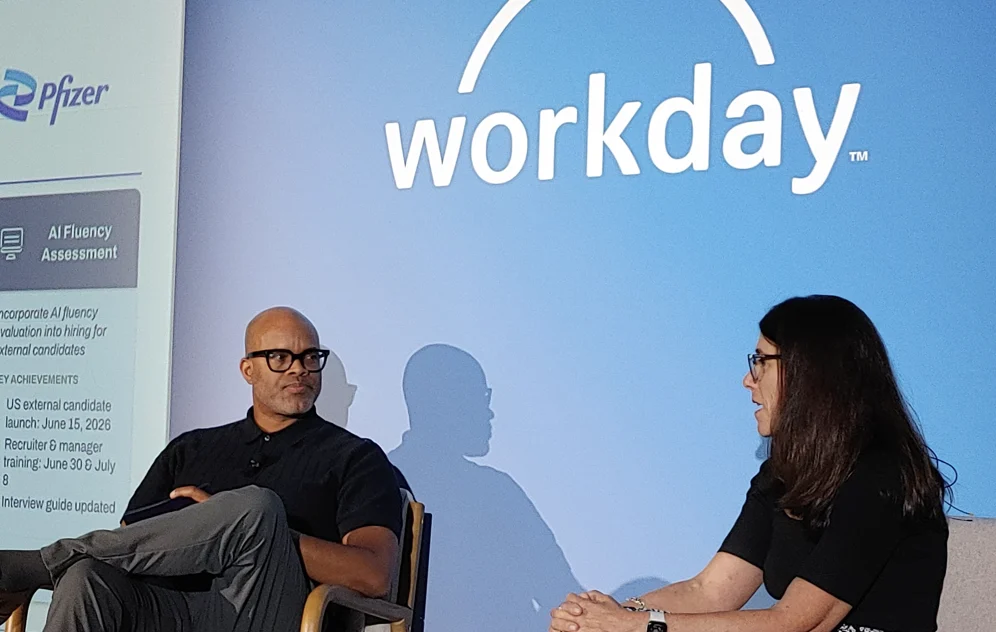

The annual Workday Elevate conference in New York City served as a pivotal forum for discussing the maturation of artificial intelligence within the enterprise landscape, shifting the conversation from speculative pilot programs to the implementation of "agentic" AI grounded in real-time organizational data. As global corporations grapple with the complexities of AI cost-efficiency and the technical debt of legacy systems, the event highlighted a transition toward what industry leaders call "lawful" AI—systems that operate within established business frameworks and security protocols. Central to this evolution is the concept of the "world model of work," a data-driven foundation that Workday asserts is necessary to move beyond simple generative responses toward autonomous, reliable agents capable of executing complex business processes.
The Strategic Shift Toward Agentic AI and Organizational Truth
The enterprise technology sector has reached a critical juncture where the initial excitement surrounding large language models (LLMs) is being tempered by the practicalities of deployment and the necessity for contextual accuracy. During the keynote sessions at Workday Elevate, the discussion centered on the limitation of context alone. Industry analysts and Workday executives argued that for AI to be truly transformative, it must be anchored in "organizational truth"—a state where AI agents have access to real-time, verified data across human resources, finance, and operations.
Workday CEO Aneel Bhusri introduced a framework for evaluating these emerging technologies by distinguishing between "lawful" and "lawless" agents. According to Bhusri, lawless agents are those that operate directly against raw data without regard for business process frameworks, potentially bypassing security measures or producing results that violate corporate policy. In contrast, lawful agents are integrated into the platform’s core architecture, ensuring that every action taken by an AI agent adheres to the same permissions and governance structures as a human user.
Bhusri emphasized the scale of the data informing this model, noting that Workday currently manages over 80 million users under contract and processes approximately 1.4 trillion transactions annually. This massive dataset allows the company to build what it describes as a "world model of work," providing the specific context required for AI to function effectively in high-stakes corporate environments.
Quantifiable Gains: AI Adoption and Productivity Metrics
The transition from theory to practice is increasingly reflected in the performance metrics reported by early adopters. Workday shared updated figures during the New York event, indicating a significant uptick in the utilization of its embedded AI features. Currently, more than 400 customers are utilizing Workday’s self-service AI agents in general availability.
The preliminary results from these deployments suggest a substantial impact on operational efficiency:
- HR Workload Reduction: Organizations using self-service AI agents have reported a 25 percent decrease in HR call volumes, as employees use automated systems to resolve routine inquiries regarding benefits, payroll, and company policy.
- Productivity Enhancements: There has been a reported 20 percent increase in overall productivity for both employees and managers, driven by the automation of administrative tasks such as report generation and schedule management.
- Widespread Integration: More than 3,000 customers have opted into Workday’s AI features, signaling a broad market acceptance of AI as a standard component of enterprise resource planning (ERP) and human capital management (HCM) systems.
Case Study: Pfizer’s Cody Agent and the Transformation of Internal Mobility
One of the most compelling examples of agentic AI in action was presented by Pfizer. Wendy Mayer, Vice President of Candidate Experience at Pfizer, detailed how the pharmaceutical giant is utilizing "skills intelligence" to reshape its workforce strategy. Pfizer’s approach began with a focus on internal mobility—the ability for current employees to find new opportunities within the company.
To facilitate this, Pfizer developed an AI-driven agent named "Cody" (Career Opportunities Delivered to You). Cody operates within Microsoft Teams, proactively reaching out to employees with job recommendations based on their existing skills and career trajectories. The impact of this initiative has been measurable:
- Hiring Shift: Pfizer has successfully shifted its hiring ratio from 70 percent external/30 percent internal to a balanced 50/50 split. This shift reduces recruitment costs and improves employee retention by providing clear paths for internal advancement.
- Cross-Departmental Visibility: Approximately 40 percent of the job opportunities Cody suggests are outside the employee’s current department or line of business. This "opening of the aperture" allows Pfizer to utilize talent more flexibly across the organization, breaking down traditional silos.
- Strategic Resource Allocation: By automating the labor-intensive aspects of internal sourcing and report generation, Pfizer’s HR leadership has been able to shift focus from data entry to strategic decision-making. Mayer noted that AI-assisted reporting allowed her to spend less time on Excel spreadsheets and more time on high-level recommendations.
Navigating the Challenges of AI Literacy and Governance
Despite the successes reported by Pfizer and other attendees, the path to AI integration is fraught with cultural and technical challenges. Leaders from Visa and Cushman & Wakefield highlighted that the primary obstacle to AI adoption is often human, not technological.
Adi Shetty, Senior Vice President and Global Head of People at Visa, argued that "AI education" is the cornerstone of successful implementation. Shetty noted that when employees understand how AI works and how it can act as a catalyst for their own work, they move from viewing it as a threat to viewing it as an enabling tool. Shetty outlined three "non-negotiable" pillars for AI in the HR space:
- Explainability: The ability to understand exactly how an AI arrived at a specific conclusion or recommendation.
- Auditability: The maintenance of clear data trails to comply with emerging state and international regulations regarding automated decision-making.
- Human Accountability: The principle that AI should augment, not replace, human decision-making, ensuring that individuals remain responsible for the final outcomes of automated processes.
Sal Companieh, Chief Digital and Technology Officer at Cushman & Wakefield, echoed these sentiments, stressing the importance of "co-creation." By involving AI skeptics in the development of tools, the company turned potential detractors into advocates. Companieh identified data health, genuine leadership curiosity, and a baseline of AI literacy as the three prerequisites for mission-critical AI deployment.
The Human Element: Psychological Safety and Ethics
As AI becomes more pervasive, the issue of "AI dissonance"—the gap between the hype of automated efficiency and the reality of employee anxiety—remains a significant concern. The conference addressed the psychological impact of AI on the workforce, particularly for recruiters and administrative staff who fear displacement.
Wendy Mayer of Pfizer emphasized the importance of psychological safety, stating that if employees are scared of being replaced, they will not engage with the transformation process. Pfizer has addressed this by being transparent about the "unknowns" of the future while investing heavily in employee education. Furthermore, Pfizer has instituted a "Candidate AI Use Policy" to manage the use of AI by external applicants. This policy sets clear boundaries on how candidates can use AI during the application process, ensuring that while the company embraces the technology, it maintains the integrity of the hiring process through mandatory in-person interviews before any job offers are made.
Analysis of Implications for the Future of Enterprise Work
The insights shared at Workday Elevate NYC suggest that the next phase of enterprise AI will be defined by integration rather than isolation. The move toward "agentic" systems indicates that AI is no longer being viewed as a chatbot or a simple productivity tool, but as a sophisticated layer of the organizational architecture.
For the broader market, the implications are clear:
- The End of AI-in-a-Vacuum: Standalone AI tools that lack deep integration into an organization’s core data are likely to face diminishing returns. The value is increasingly found in the "world model"—the intersection of data, process, and security.
- Governance as a Competitive Advantage: Companies that can prove their AI is "lawful," auditable, and explainable will be better positioned to navigate the tightening regulatory environment in the United States and Europe.
- The Skills-Based Economy: The focus on "skills intelligence" by companies like Pfizer suggests a move away from traditional job titles toward a more fluid, skills-based approach to talent management. This allows for greater organizational agility and more personalized career development.
In conclusion, the Workday Elevate event demonstrated that while the "AI first" mantra remains popular, the most successful organizations are those adopting a "human-centric" approach. By focusing on education, governance, and organizational truth, enterprises are beginning to see the tangible ROI of AI, transforming it from a source of disruption into a foundational element of modern business strategy. The journey from "lawless" experimentation to "lawful" agentic execution is well underway, setting a new standard for how global corporations manage their most valuable assets: their data and their people.
