
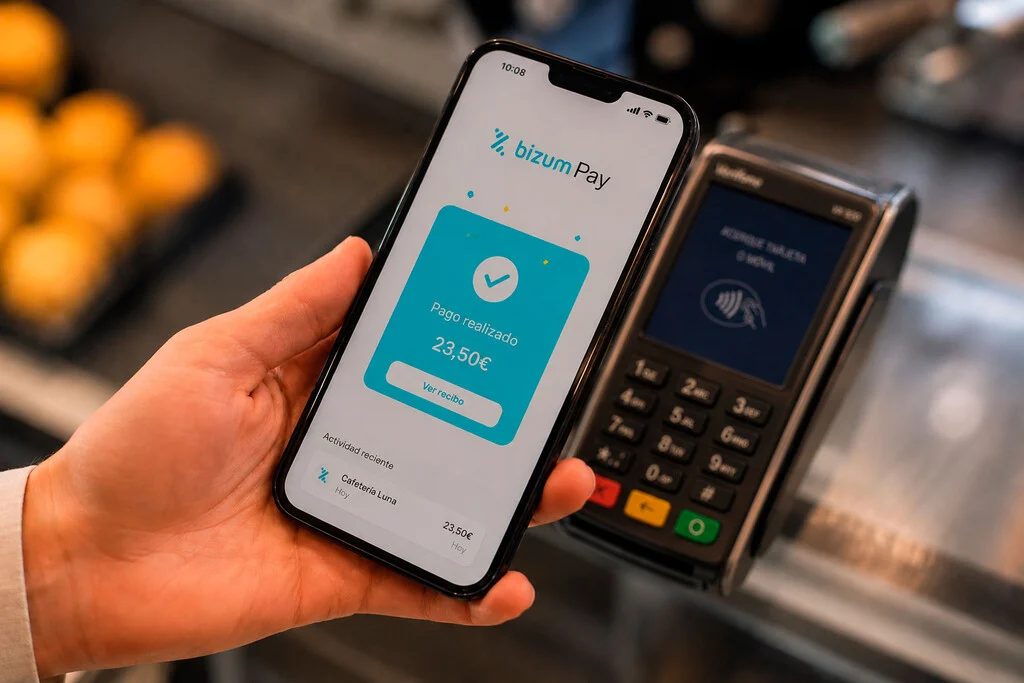

The seemingly mundane act of retrieving a smartphone, selecting a bank card from a digital wallet, and tapping it against a point-of-sale (POS) terminal has become an ubiquitous and unremarkable part of daily commerce. Yet, the true disruption envisioned by payment innovators lies in eliminating the traditional bank card—whether physical or virtual—from this equation entirely. This is precisely the ambitious goal of Bizum Pay, a new service aiming to facilitate mobile payments directly through a user’s bank account, bypassing conventional debit and credit card networks and their associated fees. The concept, promising a seamless transaction experience without the intermediaries, sounds compelling enough to warrant immediate adoption. However, despite a much-anticipated launch, the reality on the ground for early adopters has been one of pervasive disappointment and unfulfilled expectations.
The journey of Bizum Pay, from its initial promise to its current state of limbo, reflects the significant challenges inherent in disrupting established financial ecosystems. What was heralded as a major step forward in digital payments on May 18th, intended to free Spanish consumers and merchants from the long-standing dominance of Visa and Mastercard, has instead manifested as a "descafeinado" or diluted launch. This term, originally used to describe a weak coffee, aptly captures the underwhelming rollout of a service designed to be revolutionary. The core appeal was clear: leverage Bizum’s existing, highly successful peer-to-peer (P2P) payment infrastructure to enable direct transfers from a customer’s bank account to a merchant’s, thereby cutting out the card networks and their associated interchange fees.
The Evolving Digital Payment Landscape in Spain
To understand the significance of Bizum Pay, one must first appreciate the rapid evolution of the digital payment landscape in Spain. Over the past decade, Spain has emerged as a frontrunner in adopting cashless transactions. Contactless payments, powered by Near Field Communication (NFC) technology, are now standard, with an estimated 90% of POS terminals in the country supporting this method. Mobile wallets like Google Pay, Apple Pay, and Samsung Pay have also gained considerable traction, allowing users to digitize their existing credit and debit cards for convenient smartphone-based transactions. According to data from the Bank of Spain, the number of digital payment operations has consistently grown year-on-year, underscoring a strong consumer appetite for convenient, technology-driven financial solutions.
At the heart of this digital transformation is Bizum, which launched in 2016 as a collaborative initiative by most Spanish banks. Initially conceived as a P2P payment service, Bizum quickly became a household name, boasting over 25 million users and processing billions of euros annually. Its success lies in its simplicity: users can send and receive money instantly using just a phone number, directly linked to their bank accounts. This widespread adoption of Bizum for P2P transfers created a natural platform for its expansion into business-to-consumer (B2C) payments, making the idea of Bizum Pay a logical and eagerly anticipated next step.
The economic incentive for Bizum Pay is substantial, primarily for merchants and, by extension, banks. Traditional card payments involve multiple intermediaries: the acquiring bank (which processes the transaction for the merchant), the card network (Visa, Mastercard), and the issuing bank (which issued the card to the customer). Each of these entities charges fees, with interchange fees—paid by the acquiring bank to the issuing bank—being a significant component. These fees, typically ranging from 0.2% to 0.3% for debit cards and slightly higher for credit cards in the EU, accumulate and represent a considerable cost for businesses, especially those with high transaction volumes. By establishing a direct bank-to-bank payment rail, Bizum Pay promises to drastically reduce or even eliminate these costs, a compelling proposition for any business owner.
Bizum’s Forays into Retail Payments: A Chronology of Innovation
Bizum’s ambition to extend beyond P2P payments is not new. The platform first attempted to enter the retail space with QR code-based payments. While QR codes offered a card-free alternative, they ultimately failed to gain significant traction in Spain. Several factors contributed to this: a lack of standardized QR code readers across different merchants, the additional step of opening a specific app to scan the code, and a consumer base already accustomed to the simple "tap and pay" convenience of NFC cards. The learning curve and the absence of a universally adopted infrastructure meant that QR codes remained a niche payment method.
Recognizing Spain’s "colonization by datáfonos" – the ubiquitous presence of NFC-enabled POS terminals – Bizum strategically pivoted its approach. The logical next step was to integrate with this existing infrastructure, allowing users to pay by simply tapping their mobile phones against a terminal, mimicking the familiar gesture of card payments but without the underlying card network. This evolution led to the development and announcement of Bizum Pay, promising a seamless, cardless experience.
The build-up to the May 18th launch was accompanied by significant media buzz and high expectations. Bizum, through its communications, indicated a readiness to deploy, suggesting that the underlying technology was robust and the system prepared for operation. The promise was not just about convenience but also about financial empowerment, offering an alternative that could potentially reshape transaction costs for businesses nationwide.
The "Descafeinado" Launch: Reality Versus Expectation
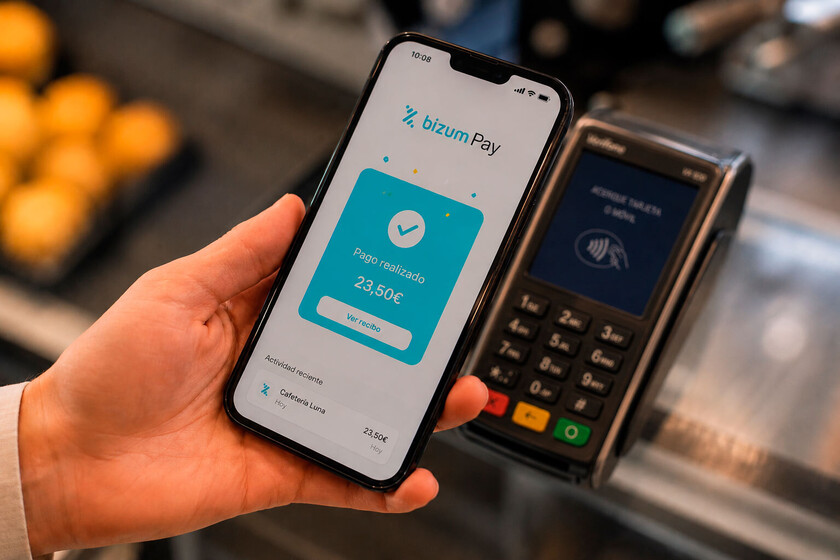
Despite the fanfare, the May 18th launch proved to be a stark contrast to the anticipated widespread availability. For the average consumer and even tech-savvy early adopters, the experience was one of frustration. Attempts to use Bizum Pay at various merchants across Spain were largely unsuccessful. The fundamental issue appeared to be a significant gap between Bizum’s readiness and the actual integration and deployment by participating banks and merchants.
The original article highlights a crucial point: "No hay un listado oficial de bancos." This absence of a clear, comprehensive list of supporting financial institutions created immediate confusion. While Caja Rural publicly positioned itself as an early adopter and CaixaBank was reportedly in testing phases, the vast majority of Spanish banks seemed unprepared or unwilling to immediately roll out the service. The author’s personal experience of being unable to enable Bizum Pay through his own banks further underscores this lack of widespread integration.
Moreover, the problem extended to the merchant side. Conversations with various retailers revealed a similar story: their banking providers had not yet offered them the option to accept Bizum Pay through their existing datáfonos. This indicates a systemic delay in the rollout chain, where the core payment infrastructure (Bizum Pay) might be ready, but the critical last-mile integration with bank systems and merchant POS terminals is lagging severely. A payment system, no matter how innovative, is only as good as its acceptance network. Without merchants capable of processing the payments and banks enabling their customers to make them, Bizum Pay remains a theoretical convenience.
Bizum’s initial communication stated that the deployment would be "progressive." While a phased rollout is a common and often necessary strategy for complex technological implementations, the level of unavailability suggests that the "progress" was far slower and more limited than consumers were led to believe. This discrepancy between expectation and reality can severely impact user adoption, as initial negative experiences can create lasting impressions and deter future engagement.
The Shifting Narrative: Website Changes and Official Clarifications
Further compounding the confusion was the curious case of the Bizum Pay website. Prior to the official launch date, the website was a comprehensive resource, featuring detailed information on how to use Bizum Pay, an extensive FAQ section, and even placeholder icons for mobile app stores, suggesting an imminent application release. This level of detail reinforced the perception that the service was ready for public consumption.
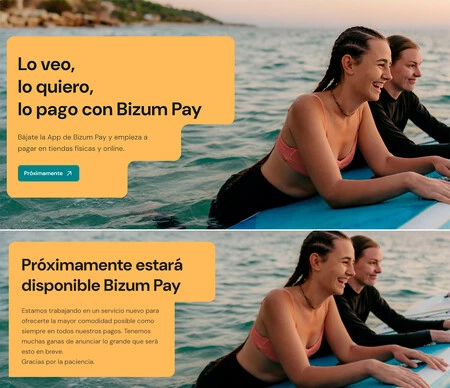
However, shortly after the May 18th date, the website underwent a dramatic transformation. All the detailed information, FAQs, and app store links were removed, replaced by a single, stark message: "Próximamente" (Coming Soon). This sudden retraction of information sent a clear signal of an unexpected setback or a significant re-evaluation of the launch strategy. For many, it implied that Bizum Pay had been forced to "recular" or backtrack on its initial deployment.
In response to inquiries regarding these changes and the general unavailability, Bizum provided a nuanced, though still somewhat ambiguous, explanation. They stated: "El pago presencial con Bizum es ya posible a través de las aplicaciones de algunos bancos. Bizum Pay está ya preparado para lanzarse (además, está siendo utilizado por algunos grupos controlados de usuarios) y la fecha de subida a las stores se decidirá en función del avance el despliegue del pago presencial por parte de las entidades."
This statement offers several key insights:
- Partial Availability: It confirms that "presential payment with Bizum" is indeed possible, but only "through the applications of some banks." This suggests that the primary rollout mechanism is not a standalone Bizum Pay app, but rather an integration within the existing mobile banking applications of select financial institutions. This explains why a user might not find a dedicated Bizum Pay app and why availability is fragmented.
- Internal Readiness: Bizum Pay itself is "ready to launch" and is "being used by controlled user groups." This indicates that the core technology and infrastructure are functional, undergoing internal testing and refinement.
- Bank-Dependent Rollout: Crucially, the release date for a potential standalone Bizum Pay app in app stores is contingent upon "the progress of the deployment of presential payment by the entities." This places the onus squarely on the individual banks to integrate and roll out the service to their customers and merchant networks.
The implication is that Bizum has built the rail, but the trains (banks) are taking their time to get on board and start running the service for their passengers (customers and merchants). This decentralized approach to deployment, while potentially allowing banks more flexibility, has resulted in a fragmented and confusing user experience at launch.
Challenges and Implications: Why the Delay Matters
The rocky start of Bizum Pay carries significant implications for its future success and the broader digital payment ecosystem:
-
User Adoption and Trust: First impressions are critical. The initial frustration experienced by users attempting to use a service that was widely advertised but largely unavailable can erode trust and hinder long-term adoption. Consumers accustomed to the reliability of existing payment methods may be reluctant to try Bizum Pay again if their initial attempts were unsuccessful. A smooth, predictable user experience is paramount for any new payment technology.
-
Merchant Onboarding: The lack of awareness and readiness among merchants is a major hurdle. Even if banks eventually enable Bizum Pay for their business clients, it requires education, updates to POS systems, and staff training. Without a coordinated effort, merchants may be slow to adopt, further limiting the network effect essential for a payment system’s success. The promise of reduced fees is a strong motivator, but only if the implementation is straightforward and reliable.
-
Complexity of Bank Integration: Integrating a new payment rail across a multitude of diverse banking systems is an inherently complex and time-consuming process. Each bank has its own legacy systems, IT infrastructure, and regulatory compliance requirements. This explains why the rollout is progressive and bank-dependent, but it also highlights the challenge of achieving uniform adoption quickly.
-
Competitive Landscape: Bizum Pay enters a crowded and competitive market. While it aims to challenge Visa and Mastercard, it also competes with established mobile wallets like Google Pay and Apple Pay, which are deeply integrated into smartphone ecosystems and widely accepted. To succeed, Bizum Pay needs to offer a compelling value proposition beyond just eliminating card fees, which primarily benefits merchants and banks. For consumers, the difference in user experience must be negligible or superior, and perhaps offer additional benefits like loyalty programs or enhanced security features.
-
Regulatory Environment: The European Union’s PSD2 directive has been instrumental in fostering open banking and innovation in payment services. Bizum Pay aligns with the spirit of PSD2 by promoting direct bank-to-bank payments. However, navigating the regulatory nuances and ensuring compliance across all participating banks adds another layer of complexity to the deployment.
The Future of Bizum Pay: An Outlook
The central question posed by the original article remains pertinent: "La pregunta no es cuándo, sino para qué." It’s no longer just about when Bizum Pay will be fully operational, but what compelling reasons it will offer for users to switch from their current, perfectly functional payment methods.
Several scenarios could unfold:
- Gradual Success: With persistent effort from Bizum and a more proactive approach from participating banks, Bizum Pay could still achieve widespread adoption. As more banks integrate the service into their apps and more merchants enable it, the network effect will kick in, making it increasingly convenient and viable. The strong existing user base of Bizum P2P is a powerful asset that could eventually translate into B2C adoption.
- Niche Player: If the rollout remains fragmented and the value proposition for consumers isn’t sufficiently strong, Bizum Pay might become a niche payment option, primarily used by early adopters or at specific merchant types. This would be a missed opportunity given Bizum’s potential.
- Catalyst for Change: Even if Bizum Pay doesn’t become the dominant payment method, its presence could act as a significant catalyst. By offering a viable alternative to card networks, it could pressure Visa and Mastercard to innovate, reduce their fees, or offer more competitive services to retain their market share. This competition ultimately benefits merchants and consumers.
The underlying technology and the concept of direct, cardless mobile payments are undoubtedly sound. The gesture of tapping a phone to pay is already ingrained in consumer behavior. The challenge for Bizum Pay lies in seamless execution and clear communication. The transition from a P2P giant to a B2C disruptor requires not just technical readiness but also a highly coordinated market strategy involving all stakeholders: Bizum, banks, and merchants.
In conclusion, Bizum Pay represents an exciting and potentially transformative leap in digital payments in Spain. Its promise of simplifying transactions and reducing costs for businesses is compelling. However, its initial launch has been marred by a lack of widespread availability and confusing communication, leading to user frustration. The coming months will be critical for Bizum Pay to iron out these issues, accelerate bank and merchant integration, and articulate a clear, compelling value proposition that goes beyond merely replicating existing payment gestures. Until then, many users, like the author, will continue to carry their virtual cards in their mobile wallets, awaiting the day when Bizum Pay truly delivers on its ambitious promise.
