
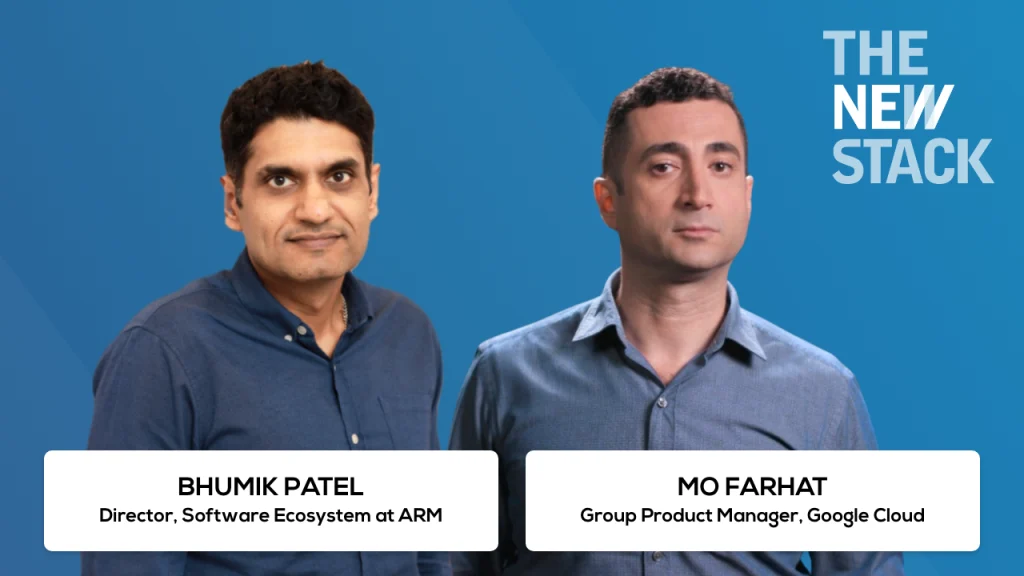

The landscape of artificial intelligence infrastructure has long been dominated by the discourse surrounding Graphics Processing Units (GPUs) and Tensor Processing Units (TPUs). These specialized accelerators are undeniably the workhorses for the heavy lifting of training and deploying large language models (LLMs). However, a recent discussion hosted by The New Stack, featuring insights from Bhumik Patel of Arm and Mo Farhat of Google, illuminated a compelling narrative shift: the resurgence of the Central Processing Unit (CPU) as a critical, albeit often overlooked, component in the evolving AI ecosystem. As AI transitions from mere conversational chatbots to sophisticated autonomous agents, the CPU is not just maintaining its relevance; it is actively becoming more indispensable.
The foundational shift driving this CPU renaissance lies in the evolving capabilities of AI systems. Early chatbots were primarily designed to process input and generate textual responses. Their function was largely reactive, focused on retrieving and formulating information. In contrast, the current generation of AI agents is characterized by their proactive and performative nature. These agents are engineered not just to answer, but to act. This means they can execute tasks by invoking external tools, interact with APIs, and even provision and manage execution environments for the code they generate. As Mo Farhat, who leads product management for Axion and Arm-based virtual machines at Google Compute Engine, articulated, "The role, more or less, is of a CPU as an air traffic controller." This analogy aptly captures the CPU’s orchestrating function, managing the complex flow of operations that define agentic behavior.
The Workload Migration: From Answering to Action
The distinction between a chatbot and an agent is not merely semantic; it represents a fundamental change in computational demands. While LLMs, the core of many AI models, continue to rely on GPUs and TPUs for their massive parallel processing needs, the surrounding ecosystem of agent functionality is increasingly becoming a CPU-centric domain. "All of these are CPU workloads," Farhat emphasized, referring to the actions agents undertake, such as calling tools, interacting with APIs, and dynamically creating execution environments. These operations, by their very nature, involve sequential processing, intricate logic, and resource management—tasks that have historically been the forte of CPUs.
Bhumik Patel, who spearheads Arm’s software ecosystem efforts for cloud and AI, elaborated on the specific CPU-intensive tasks involved. "The components of an agent’s tasks are traditionally what CPUs are good at: orchestrating, talking to APIs, and doing some memory management," he explained. This aligns perfectly with the architectural strengths of modern CPUs, designed for concurrent and distributed workloads, efficient context switching, and sophisticated control flow. Even within the realm of model execution, CPUs are carving out a niche. While they are not suited for the gargantuan models demanding massive acceleration, they are demonstrating strong performance for smaller, specialized models. Farhat noted that CPUs are already delivering impressive results for models in the 8-billion-parameter range, powering functions like summarization, classification, and targeted evaluation. He expressed confidence that the range of models CPUs can effectively handle will continue to expand as chip architectures evolve and software optimizations mature.
The Imperative of Secure Execution: Sandboxing for Autonomous Agents
A critical aspect of enabling AI agents to execute code on behalf of users is the necessity of a secure and isolated environment. This "sandbox" is paramount to prevent potentially untrusted or malformed code from compromising production systems or sensitive data. As Patel pointed out, "These agents are executing code on your behalf, and not all code might be secure, so you need this isolation layer." The concept of sandboxing has become a cornerstone of agentic AI deployments, ensuring that even if an agent’s code behaves unexpectedly, the impact is contained.
Google’s commitment to this challenge is exemplified by its promotion of gVisor, an open-source container sandbox. gVisor acts as an intermediary between an application and the host operating system, providing a robust isolation layer. This technology is a key enabler of Google’s GKE Agent Sandbox, a managed environment designed for deploying and scaling AI agents. "You don’t really have to trust the agents, you can just sandbox them," Patel stated, highlighting the security benefits of this approach.
The scalability of agent deployments is another significant consideration. The nature of agentic workflows, which often involve an agent calling sub-agents and then waiting for responses, can lead to spiky and intermittent resource demands. Farhat revealed that Google’s GKE Agent Sandbox is engineered to handle this dynamic at scale, capable of initiating as many as 300 sandboxes per second per cluster, with a boot time of less than a second to the first instruction. To manage the cost associated with these fluctuating workloads, the platform leverages techniques such as pod snapshots and warm pools. This allows idle agents to be maintained in a readily available state without incurring the full cost of continuously running pods, thereby optimizing resource utilization and reducing operational expenses.
The Efficiency Advantage: Arm-Based Processors in the AI Equation
The conversation about the CPU’s growing importance in AI is inextricably linked to the advancements in processor architecture and the pursuit of greater efficiency. At the recent Google Cloud Next event, Google highlighted a significant competitive advantage for customers utilizing its Arm-based Axion processors within GKE Agent Sandbox. Farhat reported that these configurations can deliver "30 percent better price performance than the next leading cloud provider." This substantial improvement is attributed to the inherent efficiency of Arm’s latest core designs, which are integrated into Google’s Axion processors.
Google offers two distinct SKUs of its Axion machines tailored for different agentic workload requirements. The Axion N4A machines are optimized for cost-effectiveness and energy efficiency, making them particularly well-suited for the overhead of running numerous sandboxes. Conversely, the C4A machines are tuned for high single-threaded performance. This is crucial for agentic workflows that involve complex stateful orchestration and intricate control-flow logic, where the speed of individual CPU cores plays a decisive role.
The accessibility and familiarity of these technologies to the broader developer community are also key factors in their adoption. "The good news is for a lot of the cloud-native developers and broad set of cloud users, these tools are very familiar, and it kind of extends to this agentic approach," Patel observed. This familiarity lowers the barrier to entry for adopting agent-based AI architectures, enabling developers to leverage their existing skill sets and tools within a new paradigm.
Broader Implications and Future Trajectories
The shift in focus from accelerators to CPUs in the context of agentic AI carries significant implications for the future of AI infrastructure and development. It suggests a more distributed and heterogeneous computing model, where specialized accelerators handle the most computationally intensive tasks, while versatile CPUs manage the orchestration, logic, and interaction layers. This balanced approach could lead to more cost-effective and energy-efficient AI deployments.
The emphasis on efficiency, particularly with the adoption of Arm-based processors like Google’s Axion, also signals a broader trend towards sustainable computing in the AI era. As AI systems become more pervasive, the energy footprint of their underlying infrastructure will become an increasingly critical concern. Processors that offer higher performance per watt are likely to gain favor.
Furthermore, the rise of agentic AI, powered by CPUs, opens up new possibilities for AI applications. Agents that can autonomously perform tasks, interact with the real world through APIs, and learn from their actions could revolutionize industries ranging from customer service and software development to scientific research and personal assistance. The ability of CPUs to manage complex, concurrent operations and securely execute code is fundamental to realizing this vision.
The evolution from chatbots to agents represents a maturation of AI capabilities, moving beyond passive information retrieval to active task execution. As this transition unfolds, the CPU, once relegated to a supporting role in the AI discourse, is stepping back into the spotlight. Its fundamental strengths in orchestration, control flow, and efficient management of diverse workloads are proving essential for the next wave of artificial intelligence, demonstrating that even in the age of specialized accelerators, the humble CPU remains a vital engine of innovation. The ongoing advancements in CPU architecture, coupled with the increasing sophistication of agentic AI, suggest that the CPU’s role will only continue to grow in significance.
