
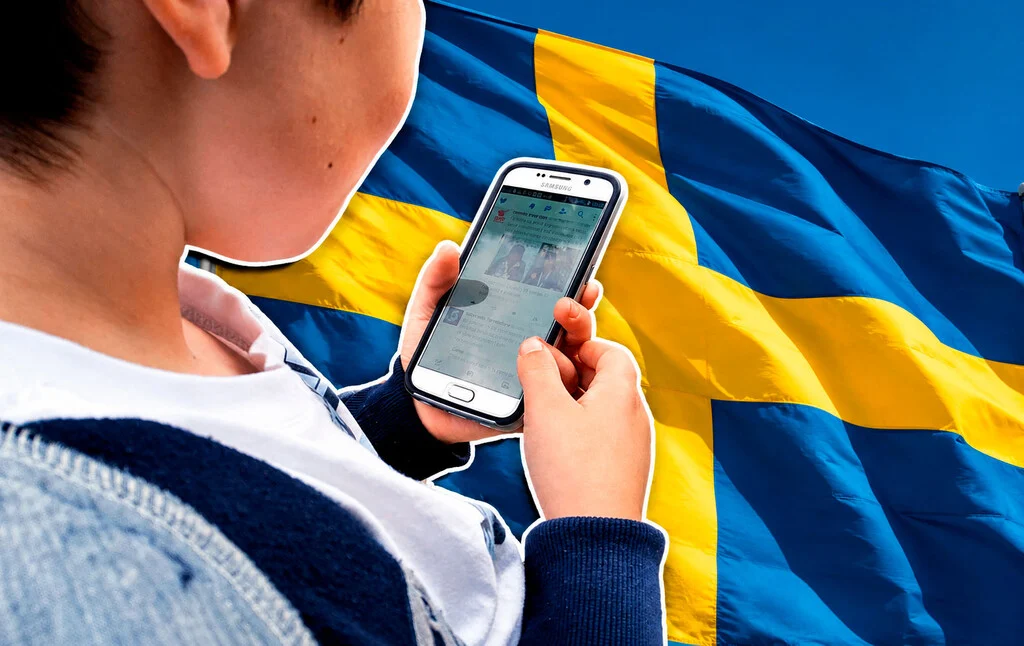

The pervasive presence of mobile devices in modern life presents a multifaceted challenge, particularly concerning children. On one hand, the allure of screens for young minds is undeniable, creating an almost magnetic attraction. On the other, there is a burgeoning societal imperative to mitigate this pull, driven by growing concerns over developmental impacts. While numerous regulatory bodies globally have advocated for outright prohibitions on social media and smartphone use for minors, often preceded by various usage limitations, Sweden has distinguished itself by adopting a uniquely proactive and nuanced approach: shifting the focus of responsibility and guidance directly onto adults, particularly parents.
This strategic pivot by the Swedish Public Health Agency (Folkhälsomyndigheten) marks a significant evolution in the global discourse surrounding children and digital technology. Instead of solely imposing restrictions on minors, which can often be met with societal resistance, especially in matters of education and personal liberty, Sweden has opted for a public health campaign centered on parental behavior. The core philosophy is rooted in the understanding that the primary environment for a child’s development is the home, and therefore, the digital habits modeled by parents are paramount. These new recommendations, unveiled recently, are not legislative mandates but rather a comprehensive set of guidelines designed to foster greater awareness and encourage responsible screen use among the very individuals tasked with nurturing the next generation. This initiative represents another tile in a meticulously laid path that Sweden began paving in late 2024, emphasizing a balanced approach to screen usage within families.
The Global Digital Dilemma and Legislative Landscape
The issue of children’s engagement with digital devices and social media platforms has escalated into a global public health concern. Governments and international organizations worldwide are grappling with the complex interplay of technological advancement, child development, and mental health. The European Union, for instance, has been actively exploring mechanisms to protect minors online, with discussions ranging from age verification protocols to outright bans on social media access for younger children. Similarly, in countries like the United Kingdom and the United States, debates are ongoing about the legal age for social media accounts and the responsibilities of tech companies in safeguarding young users.
These legislative proposals often emerge from a landscape of alarming statistics. Reports from organizations such as UNICEF consistently highlight the increasing penetration of social media among primary school children. For example, a recent UNICEF alarm noted that as much as 80% of primary school children in regions like Galicia (Spain) are already active on social media platforms, underscoring a public health crisis that demands urgent attention. Such data points fuel the argument for stricter controls, as experts warn of potential adverse effects on mental health, academic performance, and social development. The impact of social media, in particular, is not uniform; studies indicate that age, gender, and pre-existing mental health conditions can significantly influence how children are affected, making a blanket approach challenging yet necessary for broad protection. However, the efficacy and societal acceptance of outright bans remain contentious, with many arguing that education, critical thinking, and parental guidance offer more sustainable long-term solutions than mere prohibition.
Sweden’s Proactive Stance: A Chronology of Concern
Sweden’s decision to specifically target parental screen habits is not an arbitrary choice but rather the culmination of a decade-long national reflection on educational standards and digital integration. The country experienced a significant wake-up call with the results of the 2022 Programme for International Student Assessment (PISA) report. This international benchmark, which assesses 15-year-olds’ performance in reading, mathematics, and science, revealed a stark decline in Swedish students’ scores, bringing them back to levels not seen since 2012—the worst performance in the nation’s history. This educational setback was compounded by the equally concerning findings of the Progress in International Reading Literacy Study (PIRLS) from 2021, which indicated a decline in reading comprehension among primary school children.
These alarming reports ignited a nationwide debate about the Swedish education system, prompting a critical re-evaluation of pedagogical methods and, crucially, the role of digital screens in both classrooms and homes. The consensus that emerged pointed towards an over-reliance on digital tools potentially hindering foundational learning skills. Consequently, Sweden initiated a series of measures, including, notably, a move to ban tablets in schools and a renewed emphasis on traditional textbooks and teaching methods. This marked a significant policy reversal, moving away from the previously embraced digital-first approach in education.
Building on this foundational shift, Sweden continued its proactive stance in 2024 by introducing a set of concrete tips and advice for balanced screen use, aimed at the general population. This earlier initiative laid the groundwork for the current, more targeted recommendations focusing on parents. By consistently monitoring educational outcomes and public health metrics, Sweden has positioned itself as a global leader in thoughtfully navigating the complexities of the digital age. The current emphasis on parental digital hygiene is therefore not a sudden whim but a logical progression in a comprehensive national strategy committed to safeguarding the education and holistic well-being of its children.
Shifting the Focus: Why Parents are Key
The psychological underpinnings of Sweden’s new recommendations are robust and widely accepted in developmental psychology: children are keen observers and powerful imitators. From infancy through adolescence, parents serve as the primary role models, the "mirror" in which children see themselves and learn how to interact with the world. This observational learning extends profoundly to digital habits. If children consistently witness their parents engrossed in smartphones, tablets, or other screens, particularly during family time, meals, or other interactive moments, they are highly likely to internalize this behavior as normal and desirable. The inevitable attraction children feel towards screens can be significantly delayed or moderated if they do not perceive an omnipresent digital model to emulate within their immediate home environment.
The absence of explicit prohibitions in these recommendations is deliberate. While bans can be effective in certain contexts, they often fail to address the root cause of behavior and can sometimes foster rebellion or circumvention. Instead, the Swedish Public Health Agency’s approach leverages the power of example and conscious decision-making. By encouraging parents to critically assess and modify their own screen habits, the recommendations aim to cultivate an environment where balanced digital engagement is the norm. This involves practical steps such as designated "screen-free" times and zones within the home, active engagement with children during playtime, and being fully present during conversations, rather than passively scrolling. The underlying message is clear: self-regulation in adults is a prerequisite for fostering healthy digital habits in children.
The Nuances of Parental Digital Habits: Beyond Mere Usage
The scope of parental digital habits extends far beyond simple screen time; it encompasses various behaviors that subtly, yet profoundly, influence children. One particularly salient issue highlighted by child development experts and addressed implicitly by Sweden’s recommendations is "sharenting."
"Sharenting" as a Case Study: The Risks of Digital Overexposure
"Sharenting" is a portmanteau of "sharing" and "parenting," referring to the increasingly common practice of parents regularly posting photos, videos, and personal stories about their children on social media platforms. This phenomenon, while often stemming from a place of pride and a desire to connect with family and friends, carries significant, often underestimated, risks for minors. UNICEF, among other child protection organizations, has sounded a clear alarm about the immense dangers associated with sharenting.
The motivations behind sharenting are understandable: parents are often eager to document and celebrate their children’s milestones, share their joy with a wider network, and seek validation or advice from online communities. However, the consequences can be far-reaching and detrimental. Risks include:
- Privacy and Security: Every image or piece of information shared online contributes to a child’s "digital footprint" from birth, over which they have no control. This data can be exploited by predators, used for identity theft, or simply stored indefinitely in ways that might embarrass or compromise the child in the future.
- Lack of Consent: Children, especially young ones, cannot consent to having their images or personal stories published online. As they grow older, they may resent the lack of agency over their digital identity, potentially leading to conflicts and emotional distress.
- Digital Kidnapping and Exploitation: High-quality images of children can be stolen and repurposed by malicious actors, a phenomenon known as "digital kidnapping," where a child’s image is used without permission to create fake profiles or narratives. In more severe cases, images can be manipulated or used in child exploitation.
- Identity and Autonomy: The continuous public curation of a child’s life online can infringe upon their developing sense of self and autonomy. Children deserve the right to shape their own public image and decide what aspects of their lives they wish to share, and with whom.
The original article’s author’s personal stance on not sharing his child’s photos publicly, despite family criticism, serves as a powerful illustration of responsible digital parenting. This decision prioritizes the child’s future autonomy and privacy over immediate social gratification, embodying the spirit of the Swedish recommendations. It underscores the importance of conscious choices regarding what information about children enters the public digital sphere.
Passive vs. Active Screen Use
Beyond sharenting, the recommendations implicitly address the distinction between different types of parental screen use. While it is often unavoidable for parents to use smartphones for work, essential communication, or managing household tasks, the concern primarily lies with recreational and unconscious screen habits performed in front of children. Mindlessly scrolling through social media, constantly checking notifications, or watching videos during family time sends a message that the digital world is more engaging or important than the immediate physical environment and the people within it. This passive, recreational screen use is what the Swedish Public Health Agency aims to curb through increased parental awareness, encouraging parents to be more present and engaged with their children.
Expert Perspectives and Public Health Rationale

The Swedish Public Health Agency’s guidelines are deeply rooted in public health principles and developmental psychology. Experts in child development, pediatrics, and public health consistently emphasize the critical importance of the early years for brain development, social-emotional learning, and cognitive growth. Excessive screen time for young children, or even exposure to parents who are constantly on screens, can detract from crucial opportunities for face-to-face interaction, imaginative play, and exploration of the physical world—all vital for healthy development.
Dr. Sara Carlsson, a leading child psychologist specializing in digital wellness, stated in a recent symposium that "Children learn through interaction and observation. If a parent’s attention is constantly divided by a screen, the child misses out on vital cues, conversations, and the feeling of being truly seen and heard. This can impact language development, emotional regulation, and attachment." While these are generalized expert opinions, they reflect the core rationale behind the Swedish initiative.
The Agency’s mandate is to promote public health through evidence-based recommendations. By focusing on parental habits, they are targeting a modifiable factor that has a profound ripple effect throughout the family unit. The emphasis that these are recommendations, not laws, is crucial. It signals a belief in the capacity of individuals to make informed choices when provided with clear, science-backed guidance. This approach aims to foster a cultural shift towards more mindful digital living, rather than enforcing compliance through punitive measures.
Broader Societal Implications
The widespread adoption of Sweden’s recommendations could catalyze a significant cultural shift in family dynamics and digital etiquette. Imagine a future where family meals are consistently screen-free zones, where playtime involves undivided parental attention, and where children’s early years are less documented online and more experienced in the present moment. Such a shift could lead to:
- Improved Family Cohesion: Increased face-to-face interaction can strengthen familial bonds, improve communication, and foster a greater sense of connection.
- Enhanced Child Development: Reduced exposure to screens and increased parental engagement could positively impact children’s language acquisition, emotional intelligence, attention spans, and creative play.
- Reduced Parental Stress: While counter-intuitive, setting boundaries around screen use can sometimes reduce parental stress by creating clearer divisions between digital demands and family time.
- A New Standard for Digital Citizenship: By modeling responsible digital behavior, parents can equip their children with the critical thinking skills and self-regulation necessary to navigate the digital world safely and healthily as they grow older.
However, implementing these recommendations is not without its challenges. Parents today often face immense pressure, juggling work, household responsibilities, and the pervasive demands of the digital world. Social media, for many, is a crucial tool for connection, information, and even professional networking. Balancing these demands with the imperative to set a good example requires conscious effort, self-discipline, and societal support. The recommendations implicitly call for a broader societal conversation about the role of technology in our lives and how we can collectively create environments that prioritize human connection and child well-being.
The Road Ahead: A Global Model?
Sweden’s innovative approach to addressing the digital dilemma in childhood by focusing on parental behavior offers a compelling model for other nations. While legislative prohibitions might offer immediate, albeit sometimes superficial, solutions, the Swedish strategy delves deeper, targeting the very source of learned behavior within the family unit. It acknowledges the complexity of the issue and champions education and awareness over punitive measures.
The success of this model will depend on several factors, including the continued dissemination of clear, evidence-based guidance, the availability of support systems for parents struggling to adapt their habits, and a sustained public discourse that reinforces the importance of mindful digital living. The cultural context of each country will also play a role in how readily such recommendations are embraced. However, by taking a proactive, holistic, and psychologically informed approach, Sweden is not just addressing a national challenge but is potentially charting a course for global digital well-being, particularly for the most vulnerable members of society: our children. The ongoing debate around screens, children, and parents is far from over, but Sweden’s latest move undoubtedly adds a thoughtful and impactful chapter to this critical discussion.
