
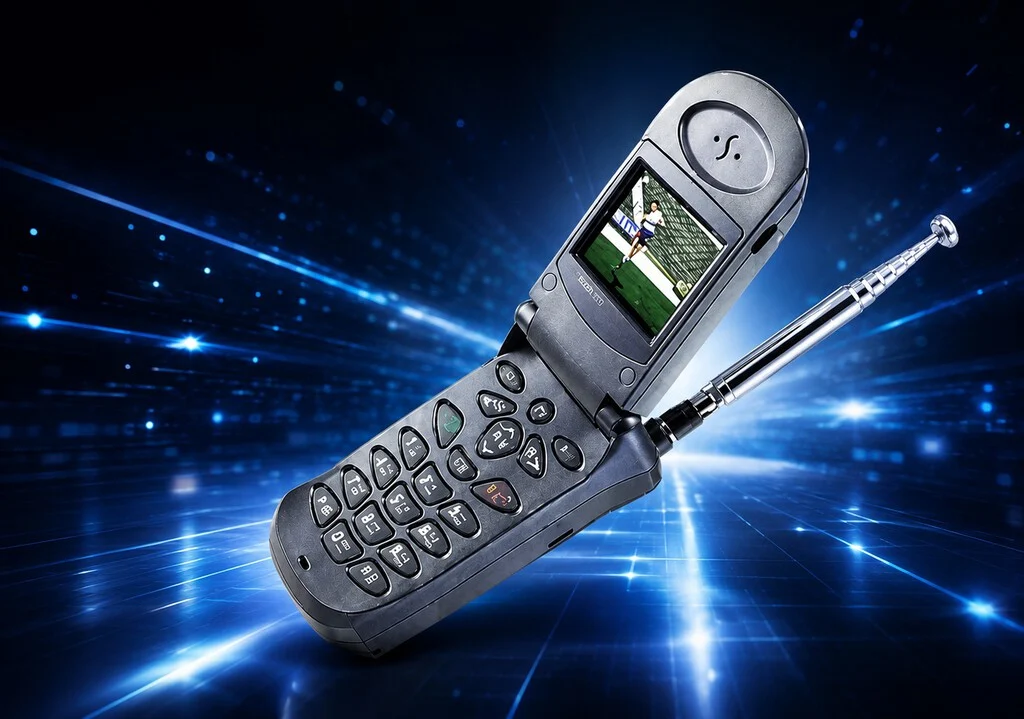

While many corporations primarily react to market demands, a select few actively shape and provoke new trends. Samsung unequivocally belongs to the latter category, a characteristic evident in its pioneering ventures during the late 1990s and early 2000s. At a time when the nascent mobile phone industry largely focused on incremental improvements like smaller form factors or enhanced network coverage, Samsung’s engineers in Suwon were posing radically different questions: "What if we integrated a television into a phone? Or a camera? Or an MP3 player?" This forward-thinking, often counter-intuitive approach, where the company launched products the market hadn’t yet explicitly requested, stands as a foundational pillar connecting decades of Samsung’s illustrious history. These early forays, dubbed "proto-first devices," were not always immediate commercial successes, nor were their executions uniformly perfect, but their consistent emergence offers profound insights into how Samsung meticulously constructed its formidable position in the global technology landscape.
The Genesis of Innovation: A Vision Beyond the Incremental
The late 1990s represented a pivotal era for mobile communication. Feature phones, characterized by their primary functions of making calls and sending text messages, were rapidly gaining traction. Manufacturers were locked in a competitive race to produce smaller, lighter devices with longer battery life and improved signal reception. Screens were predominantly monochrome, and connectivity was limited to 2G networks, primarily GSM or CDMA, offering sluggish data speeds. The very concept of a "smartphone" was still largely confined to science fiction, with early attempts like the IBM Simon or Nokia Communicator being niche, bulky, and expensive.
Amidst this landscape of pragmatic evolution, Samsung adopted a divergent strategy. Instead of merely refining existing paradigms, the company committed significant resources to exploring radically new functionalities for mobile devices. This audacious vision was rooted in a belief that the mobile phone, rather than a mere communication tool, had the potential to become a central hub for various aspects of daily life, encompassing entertainment, information, and personal computing. This philosophy necessitated substantial investment in research and development, a willingness to tolerate early commercial setbacks, and an unwavering commitment to iterating on groundbreaking ideas. The company’s internal culture, as famously demonstrated by the symbolic destruction of 150,000 faulty devices in 1995 to underscore a commitment to quality, extended to a relentless pursuit of innovation, even if it meant venturing into uncharted and risky territories.
Pioneering the Mobile Television Experience: The SCH-M220 (1999)
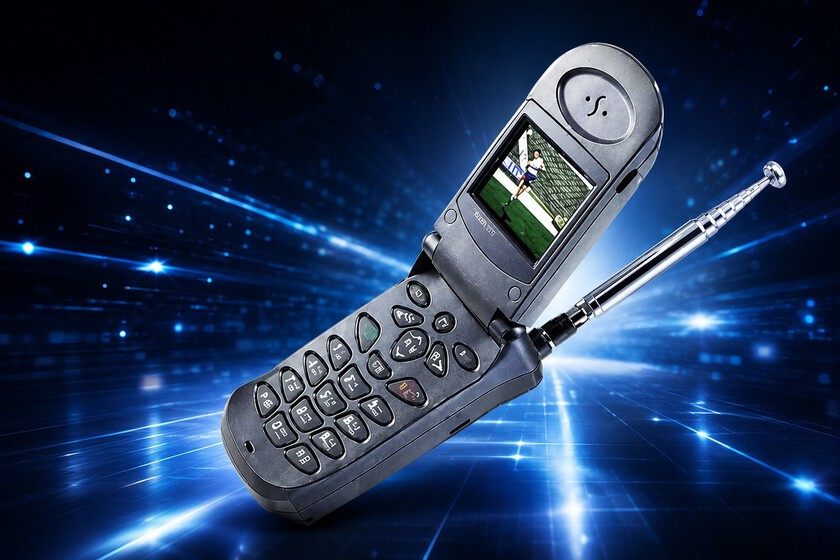
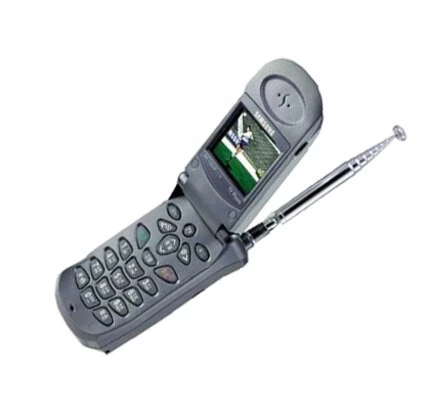
In 1999, Samsung unveiled the SCH-M220, a device that fundamentally challenged contemporary notions of mobile phone utility. Heralded as the world’s first mobile phone capable of playing television broadcasts, the SCH-M220 was a technological marvel, particularly when viewed through the lens of its era. At a time when most mobile phones featured basic monochrome displays and struggled to process even simple SMS messages with fluidity, integrating a live television signal was not merely a technological curiosity; it was a bold declaration of Samsung’s intent to push the boundaries of mobile convergence.
The technical challenges inherent in the SCH-M220 were immense. Mobile network infrastructure was not designed for video streaming, and the device had to incorporate a miniature TV tuner. The screens, though color, were small and low-resolution by today’s standards, making for a less-than-ideal viewing experience. Battery life, already a constraint for basic phones, would have been severely impacted by continuous video playback. Furthermore, content availability was limited, and regional broadcast standards varied significantly. Consequently, the SCH-M220 did not achieve widespread commercial success, nor did it instantaneously transform the market. It was an expensive, niche product, primarily available in South Korea. However, its significance lay not in sales figures but in its pioneering status. It demonstrated the feasibility of mobile video consumption, laying conceptual groundwork for future advancements in mobile multimedia, streaming services, and the eventual ubiquity of high-definition video playback on smartphones. It was a tangible proof-of-concept for a future where personal entertainment would be truly portable.
Forecasting Wearable Technology: The SPH-WP10 (1999)
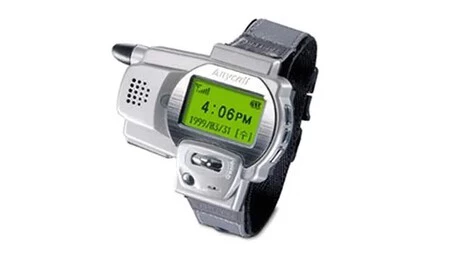
The same year, 1999, also saw Samsung introduce another remarkably prescient device: the SPH-WP10. This wrist-mounted phone arrived more than a decade before the term "smartwatch" became a household concept. The SPH-WP10 was, by modern standards, a bulky and somewhat unwieldy device, yet it embodied the audacious idea of integrating telecommunication directly onto the wrist. Its primary function was making calls, offering approximately 90 minutes of talk time – a significant feat for a miniature device in its time, though severely limiting its practical utility.
The SPH-WP10 faced a myriad of practical challenges. Miniaturization technology was still nascent, making the device inherently thick and uncomfortable. Battery technology was insufficient to power a fully functional, always-on wrist computer, and the user interface was rudimentary, relying on small buttons and a monochrome screen. Consumer readiness for such a device was virtually non-existent; the market had not yet conceptualized the need for a "wearable computer." Despite these limitations and its limited commercial appeal, the SPH-WP10 represented a groundbreaking conceptual leap. It articulated the vision of a connected, wrist-worn device years before competitors like Apple or Huawei entered the smartwatch arena.
This early venture provides crucial context for Samsung’s later re-entry into the wearable market. When Samsung launched the Galaxy Gear in 2013, it was among the very first major manufacturers to introduce a modern smartwatch, preceding Apple’s Watch by two years. While the Galaxy Gear, much like its distant ancestor, faced criticism for its high price, dependency on a companion smartphone, and limited functionality, Samsung’s prior experience with the SPH-WP10 likely provided invaluable lessons. The company demonstrated a remarkable capacity to absorb the impact of an initial, commercially challenging launch and persist through iterative development. This resilience and commitment to long-term vision are precisely why Samsung’s current Galaxy Watch series stands as a leading reference in the highly competitive smartwatch category, a testament to enduring a "failed" first attempt to perfect a pioneering idea.
Integrating Photography: The SCH-V200 (2000) and Beyond
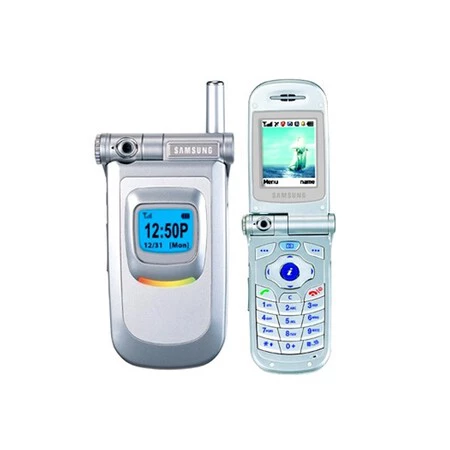
The year 2000 marked another significant milestone in Samsung’s innovative timeline with the launch of the SCH-V200. This device is widely recognized as the first Samsung phone with an integrated camera, capable of capturing up to 20 photographs at a resolution of 0.35 megapixels. While historical debate persists over whether Sharp’s J-SH04, launched slightly later the same year, was the absolute first camera phone globally, the direction Samsung set for mobile photography was unequivocally clear and impactful.
The integration of a camera into a mobile phone was a radical departure from the norm. Dedicated digital cameras were still relatively expensive and niche, and the idea of a phone serving as a photographic instrument was met with skepticism. Technical hurdles were numerous: the limited resolution of early sensors produced grainy images, internal storage for photos was minimal, and the process of sharing these images (often via nascent MMS, which was expensive and slow) was cumbersome. Yet, the SCH-V200 ignited a fundamental shift in mobile device functionality.
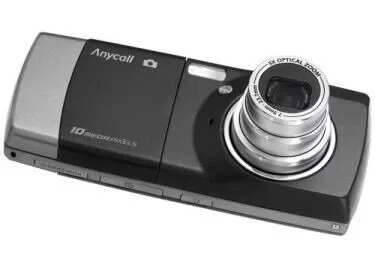
Samsung did not rest on its laurels. The company aggressively pursued advancements in mobile camera technology, initiating a "megapixel race" that would define the industry for years. In October 2004, Samsung introduced the world’s first 5-megapixel camera phone. By July 2005, it had unveiled a 7-megapixel model, and in 2006, the SCH-B600 debuted as the first mobile phone with a staggering 10-megapixel sensor. Each of these steps, at the time, was considered premature by many industry observers. The SCH-B600, for instance, retailed in Korea for approximately $900, a price point that clearly signaled it was not aimed at the average consumer. Instead, these devices served as powerful technological demonstrators, showcasing what was possible and setting new benchmarks for the industry. This relentless drive positioned Samsung as a perennial leader in mobile photography, influencing the trajectory of an entire industry and making the camera an indispensable feature of every modern smartphone.

The Dawn of Mobile Music: The SPH-M2500 (1999)
Rounding out Samsung’s extraordinary year of innovation in 1999 was the introduction of the SPH-M2500, the world’s first mobile phone with an integrated MP3 player. This device predated Apple’s revolutionary iPod by two years, a product that would, upon its 2001 release, irrevocably alter the landscape of digital music consumption.
Before the SPH-M2500, listening to digital music on the go typically required a dedicated MP3 player, such as the Diamond Rio PMP300, or a portable CD player. Integrating this functionality into a phone was, once again, seen as an extravagant and perhaps unnecessary addition. The SPH-M2500 faced its own set of challenges, including limited internal storage for music files, complex file transfer processes (often requiring a PC connection and specialized software), and battery consumption issues. The sound quality, while decent for its time, couldn’t match dedicated audio devices.
Despite these limitations and the fact that the market was not yet fully prepared to embrace the mobile phone as its primary music player, Samsung’s pioneering effort was significant. It demonstrated the phone’s potential to transcend its core communication role and become a versatile entertainment device. While Apple’s iPod eventually popularized portable digital music, Samsung had already conceptualized and executed the integration of music playback into a mobile phone, highlighting its commitment to convergence and anticipating future consumer needs for an all-in-one device.
The Unifying Thread: Prototyping the Future
What connects these disparate devices—the television phone, the watch phone, the camera phone, and the MP3 phone—goes far beyond their model numbers or launch dates. In each instance, Samsung committed to a groundbreaking function at a time when the necessary supporting infrastructure, consumer readiness, and technological refinements were still largely nascent or entirely absent. Mobile television arrived before widespread high-speed mobile networks capable of supporting streaming video. Digital photography was integrated when sharing images from a phone was an arduous process. Communication from the wrist was attempted when battery technology barely allowed for ninety minutes of talk time.
This pattern reveals a consistent and deliberate strategy: to anticipate future technological trends and proactively develop products that embody these visions, even if the immediate commercial payoff is uncertain. These were not mere random experiments; they were strategic probes into potential future markets, designed to gather experience, identify challenges, and establish an early foothold. Some of these early inventions, like the pure TV phone, ultimately proved too far ahead of their time or were superseded by alternative solutions. Others, like the camera phone and the MP3 phone, became standard features, evolving into indispensable components of every modern smartphone. The watch phone concept, after a long period of dormancy, eventually blossomed into the thriving smartwatch market.
Strategic Vision and Market Leadership
Samsung’s enduring habit of arriving early, with all the inherent risks and consequences, has been a defining constant for the brand. This proactive, boundary-pushing approach has profoundly shaped what Samsung is today: a global leader in consumer electronics, renowned for its innovation in smartphones, televisions, home appliances, and semiconductors. This strategy cemented Samsung’s reputation not just as a manufacturer, but as an innovator capable of foreseeing and shaping the future of technology.
The company’s willingness to invest heavily in research and development, combined with its capacity to learn from early attempts and iterate on designs, has been critical. This iterative process is perfectly exemplified by the journey from the SPH-WP10 to the sophisticated Galaxy Watch series. By consistently pushing technological boundaries, even with products that initially faced commercial skepticism, Samsung not only secured a competitive advantage but also spurred innovation across the entire technology industry, challenging rivals to accelerate their own R&D efforts. This consistent pursuit of "what if" scenarios, coupled with the courage to bring those ideas to market, even prematurely, has been the bedrock of Samsung’s sustained technological leadership and market influence. Their history is a testament to the idea that true innovation often requires not just responding to demand, but actively creating it.
