
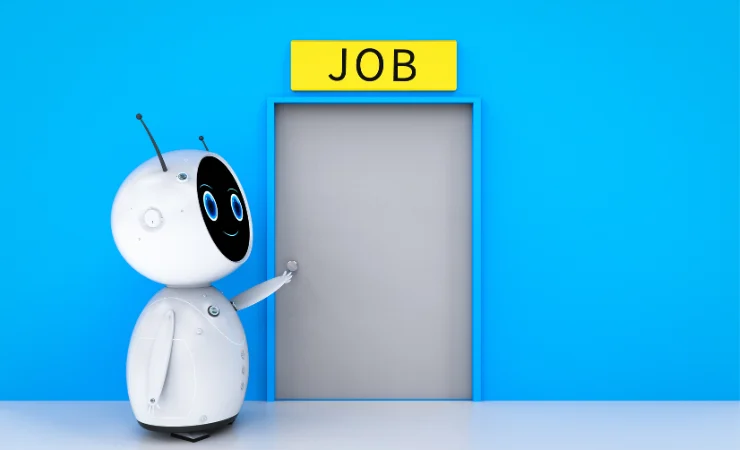

Amazon and Blue Origin founder Jeff Bezos has challenged the prevailing narrative of widespread technological unemployment, asserting instead that the integration of artificial intelligence and robotics will lead to a global labor shortage. Speaking at the VivaTech Paris expo in the French capital, Bezos addressed the growing anxiety surrounding human redundancy in the age of automation. He argued that the efficiency gains and new industries birthed by these technologies would outpace the rate of displacement, eventually leaving more roles than there are workers to fill them.
I know there is a lot of concern that many people have, including many smart people, that AI is going to make humans redundant and so on, Bezos stated during the event. I totally disagree with this point of view. And I think, in fact, AI is going to create a labor shortage.
This perspective arrives at a time of significant upheaval in the global technology sector. As of mid-2026, the industry has already seen over 150,000 job losses—an average of 907 layoffs per day, according to data from industry research provider TrueUp. This follows a volatile 2025, which saw over a quarter of a million workers let go. Despite the high-profile nature of these cuts, Bezos maintains that the long-term trajectory of the global economy points toward a deficit of human labor rather than a surplus.
The Amazon Paradox: Automation versus Human Capital
The claims made by Bezos are under intense scrutiny, particularly given the operational shifts occurring within his own corporate empire. Amazon, which currently employs 1.6 million people globally, is in the midst of a massive transition toward automated logistics. Internal documents leaked in October 2025, first reported by the New York Times, revealed that the company plans to automate up to 75% of its warehouse and fulfillment operations within the next decade.
Over the past several months, Amazon has laid off approximately 30,000 corporate employees across its e-commerce, cloud computing, and fulfillment divisions. Critics argue that these figures contradict Bezos’ optimistic outlook on job creation. However, supporters of the Bezos view suggest that while corporate and administrative roles may be streamlined, the underlying demand for physical labor and specialized technical oversight in a hyper-efficient economy will remain robust.
The tension between current layoffs and future labor predictions highlights a period of "structural friction." While AI is frequently cited as the driver for recent layoffs due to perceived productivity gains, many of these gains remain unproven at scale, with some analysts suggesting the cuts are driven more by the massive infrastructure costs required to run large-scale AI models than by actual human replacement.
Divergent Visions: Musk, Altman, and the Trillion-Dollar Humanoid
Bezos is not the only billionaire tech mogul weighing in on the future of work, though the visions offered by his peers differ significantly. Tesla CEO Elon Musk has characterized the advent of intelligent humanoid robots as an "infinite money glitch." Musk posits that Tesla’s Optimus robot will eventually make traditional work an optional pastime for humans. He envisions a future where the cost of goods drops so precipitously that the public will be wealthy enough to purchase personal robots, which he believes represent a trillion-dollar market opportunity for Tesla.
Similarly, OpenAI CEO Sam Altman has spent much of early 2026 playing down fears of a "jobs apocalypse." However, market analysts note that both OpenAI and its primary rival, Anthropic, are reportedly preparing for initial public offerings (IPOs). In this context, downplaying the negative societal impacts of AI is seen as a strategic PR necessity to maintain investor confidence and navigate tightening regulatory scrutiny.
Unlike Musk’s vision of a post-work society, Bezos’ prediction of a labor shortage aligns more closely with current demographic trends. While Musk focuses on robots as a source of universal abundance, Bezos views them as a necessary response to a shrinking workforce.
Public Sentiment: The Hexagon Robotics Findings
While tech leaders debate the economic implications, a comprehensive new study from Hexagon Robotics—a leading manufacturer of the AEON humanoid and various autonomous mobile robots (AMRs)—sheds light on how the public actually perceives these changes. The "Robot Generation" report, published this week, surveyed 18,000 participants (9,000 adults and 9,000 children aged 8 to 18) across nine major economies, including the US, UK, Germany, Japan, South Korea, China, Brazil, and India.
The data suggests a stark divide in where robots are deemed acceptable. A majority of respondents expressed comfort with robots in industrial settings, such as warehouses and factories, but showed significant resistance to robots in roles requiring "human" traits like empathy and judgment.
Key findings from the Hexagon report include:
- Heavy Lifting: 68% of adults approve of robots for physical tasks.
- Cleaning and Maintenance: 50% of adults accept robots cleaning shared spaces.
- Caregiving: Only 12% of adults and 16% of children would be comfortable with a robot in health or social care roles.
- Management: Only 14% of adults would want a robot as a supervisor or boss.
The report notes that people have begun to form clear boundaries. While robots are welcomed as tools for repetitive or safety-critical tasks, there is a "red line" at roles involving the sick, the elderly, or children.
The Demographic Timebomb and the Labor Gap
The labor shortage Bezos predicts is already manifesting in several developed nations, driven not by AI, but by a "demographic timebomb." Falling birth rates and an aging population—the result of the post-war baby boom reaching retirement age—have created a growing shortfall in critical sectors.
Japan serves as the primary case study for this crisis. Figures from 2025 indicate that the nation is currently facing a shortage of 570,000 care workers. Despite this acute need, the Hexagon findings suggest that the very generation requiring the most care remains the most resistant to robotic assistance.
Ethicist Dr. Blay Whitby of the University of Sussex, who consulted on the Hexagon report, observed that public acceptance often depends on "framing." If you ask people if they want to be cared for by a robot, they say no, Whitby explained. But if you ask if technology should help them remain independent in their own home for longer, they say yes. It is the same technology, but the perception changes based on the perceived loss of human connection.
Generational Shifts and Geographic Disparities
The Hexagon study also revealed a significant generational gap in attitudes toward automation. Children are 50% more likely than adults to view robots as "full colleagues" rather than just tools. This suggests that as "Generation Alpha" enters the workforce, the cultural barriers to human-robot collaboration may diminish.
Geographic location also plays a pivotal role in acceptance. In China, where 75% of adults report having encountered robots in daily life, 63% would be comfortable with a robot in their home. Conversely, in the UK—where exposure is the lowest among the markets surveyed—only 32% of adults expressed comfort with domestic robots. This data suggests that familiarity is a primary driver of adoption; anxiety is highest where robots are least visible.
Furthermore, the public remains skeptical of "humanoid" designs. The survey found a preference for machine-like robots (28%) over those designed to look like people (22%). Despite the billions of dollars being poured into making robots more human-like, the "uncanny valley" remains a significant hurdle for consumer-facing robotics.
Industrial Adoption as the Path Forward
Burkhard Boeckem, Chief Robotics Officer at Hexagon, concludes that the path to widespread adoption runs through the industrial sector rather than around it. People are telling us exactly where robots belong and where they don’t, Boeckem stated. Industrial environments are where the tasks are most defined, the safety cases are mature, and governance is in public view.
This industrial-first approach is currently being tested by companies like Boston Dynamics with their Atlas model and Hexagon with the AEON humanoid. By deploying these units in controlled warehouse and factory environments, manufacturers hope to build the track record of safety and reliability necessary to eventually win over a skeptical public.
Analysis: A Future of Friction or Flow?
The conflicting narratives of 2026 present a complex picture of the future. On one hand, the tech sector is undergoing a painful contraction as it pivots toward AI-driven efficiency. On the other hand, the broader global economy is staring down a labor crisis that humans alone may not be able to solve.
Jeff Bezos’ prediction of a labor shortage may ultimately prove correct, though perhaps not for the reasons he implies. If robots are relegated to warehouses and factories while the public refuses them in healthcare and education, the "shortage" will not be a lack of jobs, but a lack of people willing or able to perform the essential human-centric roles that remain.
As the tech industry moves toward IPOs and further integration, the challenge for leaders like Bezos and Musk will be to bridge the gap between their high-tech visions and the deeply rooted human preference for emotional intelligence and accountability. For now, the "Robot Generation" appears ready to work alongside machines in the factory, but they are not yet ready to trust them with the soul of society.
