

The abrupt offline status of Anthropic’s Fable and Mythos AI models, implemented on June 12th following a U.S. government export-control directive, has ignited a significant conversation within the artificial intelligence community regarding the balance between national security, proprietary development, and the burgeoning movement towards open-source AI. The directive, which barred foreign nationals from accessing these advanced models, including some of Anthropic’s own employees, effectively halted their global availability within three days of Fable’s launch. This event has amplified calls for the widespread adoption of open-weight models that users can download, retain, and operate independently, presenting a stark contrast to the risks inherent in a hosted, proprietary model architecture.
Chronology of the Fable and Mythos Incident
The sequence of events leading to the removal of Fable and Mythos from public access began with the models’ perceived cutting-edge capabilities. Fable, in particular, was launched with significant anticipation, hailed by many as a glimpse into the next generation of AI. However, this optimism was short-lived. On June 12th, U.S. authorities issued a directive aimed at controlling the proliferation of advanced AI technologies. This directive specifically targeted Anthropic’s Fable 5 and Mythos 5 models, mandating their immediate discontinuation for all foreign nationals. This broad scope, which included individuals working directly for Anthropic who were not U.S. citizens, presented an untenable situation for the company, forcing a global shutdown of these services.
The rationale behind the U.S. government’s action, as interpreted by observers, centers on export controls and national security concerns. The fear is that highly advanced AI capabilities, if accessible to adversaries or foreign entities without sufficient oversight, could be exploited for malicious purposes, ranging from sophisticated cyberattacks to the development of autonomous weapons systems. The directive underscores a growing concern within governmental bodies worldwide about the dual-use nature of powerful AI technologies.
The impact on businesses and developers who had integrated Fable and Mythos into their workflows was immediate and severe. As Janakiram MSV noted in a commentary for The New Stack, "any enterprise that had built automation on Fable 5 lost its engine in an afternoon." This highlights a critical vulnerability: reliance on hosted, proprietary AI models leaves users susceptible to sudden service disruptions, policy changes, or governmental intervention, with no recourse or ability to maintain continuity.
The Rise of Open-Weight Models: A Viable Alternative
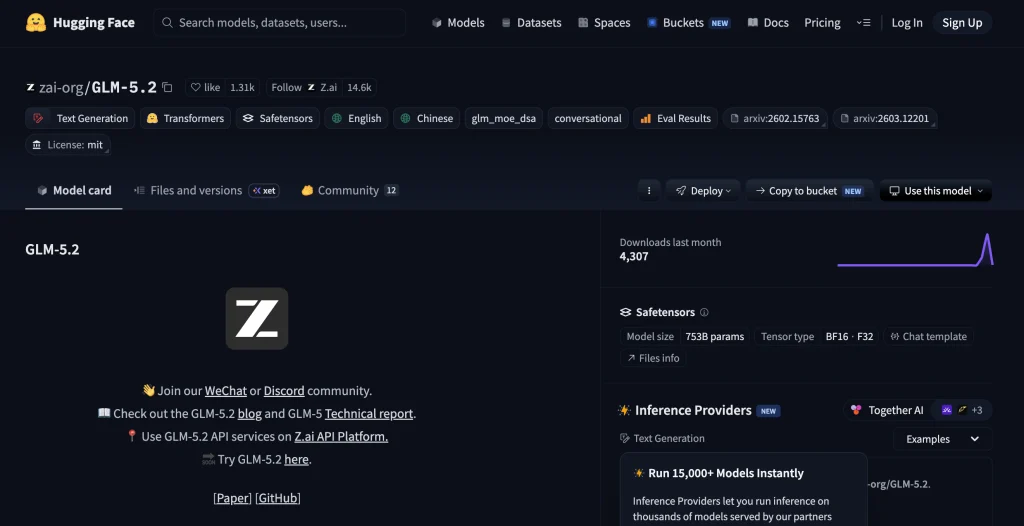
In stark contrast to the Fable and Mythos situation, the week of their disappearance saw the release of Z.ai’s GLM-5.2, featuring open weights. This model allows users to download, own, and operate the AI on their own infrastructure. This approach directly addresses the concerns raised by the Fable incident, offering a pathway to greater control and resilience for AI users.
The performance and accessibility of GLM-5.2 have garnered significant attention. Z.ai’s launch post, emphasizing "frontier intelligence, MIT-licensed open weights, a million-token context," achieved over 4.9 million views on X (formerly Twitter). Furthermore, Arena’s Agent leaderboard has recognized GLM-5.2 as the strongest open-weight model measured to date. On Arena’s frontend coding board, it ranked second, outperforming Claude Opus 4.7 by 29 points and trailing only Fable 5. Anastasios Angelopoulos, co-creator of Arena, commented that "If you remove Fable, which is unavailable, GLM-5.2 (Max) is the #1 model in the world for frontend coding." This positions GLM-5.2 as a formidable contender, even when compared to proprietary frontier models.
Developer demonstrations have further underscored the capabilities of open-weight models. A comparison by Hassan at Together AI showed GLM-5.2 and Anthropic’s Opus 4.8 tasked with building a landing page. The resulting pages were indistinguishable, yet GLM-5.2 cost only six cents to run, while Opus 4.8 cost 49 cents. This dramatic cost difference, coupled with comparable performance, presents a compelling economic argument for open-weight solutions.
These early demos, while often highlighting the best-case scenarios, point to a tangible trend. Developers running GLM-5.2 as a code reviewer have reported its impressive performance, with one user stating, "there’s no way anyone still believes open-weight models are 6/8 months behind." This individual further speculated that the model is "one release away from seriously challenging [OpenAI’s] GPT-5.5 and [Anthropic’s] Opus 4.8." Another tester observed that GLM-5.2 now surpasses the Claude Opus released in February, indicating a closing gap in performance between frontier and open-weight models – a gap measured in months, not years.
As the performance parity between frontier and open-weight models narrows, cost emerges as a dominant factor. Open-weight models consistently offer a significant economic advantage, making them increasingly attractive for widespread adoption.
Broader Geopolitical and Economic Implications
The U.S. government’s action regarding Fable and Mythos has also drawn commentary from prominent figures in the tech and venture capital world. David Sacks, in a detailed thread, defended the government’s stance, asserting the need to prevent advanced AI capabilities from diffusing widely, particularly to non-U.S. entities like China. He highlighted a "shot clock" until such capabilities become broadly available, emphasizing the urgency of maintaining a technological lead.
Ironically, Sacks’s concern about diffusion appears to have been inadvertently accelerated by the very directive he defended. By removing the leading American AI model from the global stage, the government arguably made open-source alternatives, including those emerging from China, more attractive. This move creates a situation where the U.S. government’s actions may be pushing innovation and adoption towards competitors, rather than consolidating its own leadership.
Further analysis by Alex Wilhelm on Cautious Optimism suggests that the U.S. decision has provided other global players with a strategic opening. The exclusion of allies from accessing Mythos and Fable serves as a "gift to Mistral, open-weight Chinese models, and every government that already wanted an excuse to diversify." This has prompted nations like Canada to advocate for "building out and diversifying" their technological capabilities, and European leaders are increasingly calling for the realization of "tech sovereignty." In Wilhelm’s view, American AI models have "just become less valuable globally because demand for them has been reduced," with open-weight Chinese AI and European solutions like Mistral presenting the fastest alternatives.
The economic rationale for self-hosting AI models is becoming increasingly compelling. Engineer Jeffrey Scholz calculated that a 700-billion-parameter model, run on local hardware using a few DGX Sparks, could achieve near-frontier capabilities for approximately $20,000. Such an investment, he estimates, would pay for itself against API bills within six to seven months. Scholz predicts that within three to five years, a majority of power AI users will opt for self-hosting.
The technical barriers to self-hosting are also diminishing. Guillaume Weingertner’s 2024 walkthrough on Towards Data Science demonstrates how to set up a user interface for local LLMs, a process that can be completed in roughly the time it takes to read the article. This ease of implementation, coupled with the growing availability of robust infrastructure solutions like llm-d, which facilitates model swapping across any cloud, further lowers the threshold for widespread adoption of self-hosted AI.
Future Outlook and Strategic Recommendations
The incident involving Fable and Mythos serves as a critical case study for the future of AI development and deployment. The core lesson is that access does not equate to ownership. Hosted models, whether they are removed due to commercial decisions, vendor pricing changes, or government directives, carry inherent risks of disruption.
For organizations and developers, the strategic imperative is to architect workflows that are model-agnostic. This means designing systems where swapping out AI models is a simple configuration change rather than a fundamental rewrite. Initiatives like OpenClaw, which enable the dynamic replacement of models powering agents, exemplify this approach.
The clear trend indicates that the gap between frontier AI and accessible open-weight models is rapidly closing. As this convergence continues, the economic advantages of open-weight solutions will become increasingly dominant. The advice for teams navigating this evolving landscape is to actively test and qualify open-weight models against real-world workflows. Understanding which models can be reliably deployed on the infrastructure they control is paramount for ensuring long-term operational stability and cost-effectiveness in the dynamic field of artificial intelligence. The events of early June have underscored the wisdom of investing in control and ownership, pushing the industry towards a future where AI accessibility is not beholden to external dependencies.
