

The smart home landscape is at a pivotal juncture, marked by significant executive shifts at Amazon, the upcoming tenth anniversary of its pioneering Alexa and Echo devices, and a series of developments highlighting both the promise and peril of connected living. David Limp, Amazon’s head of devices, is slated to retire, joining a broader exodus of executives from the tech giant over the past year. This transition, coupled with the approaching milestone for Alexa and Echo, prompts a critical examination of their enduring influence on the smart home and the areas where progress has faltered.
The challenges facing the smart home ecosystem are starkly illustrated by recent product launches and industry news. The Mill composting system, developed by Nest co-founder Matt Rodgers, represents an ambitious attempt to integrate complex kitchen waste management into a connected appliance. However, its reception and the broader market’s response to such specialized, high-cost devices underscore a persistent question about consumer adoption and perceived value. Similarly, Masonite’s introduction of its premium smart door at Home Depot, carrying a significant price tag, raises concerns about accessibility and the practical benefits offered by cutting-edge smart home technology for the average consumer. These developments arrive as the Federal Communications Commission (FCC) proposes a new cybersecurity labeling program for Internet of Things (IoT) devices, a move that could significantly impact consumer confidence and industry standards. Furthermore, Microsoft has identified a new suite of vulnerabilities that could potentially affect critical infrastructure, including power plants, highlighting the ever-present security risks associated with interconnected systems. Amidst these concerns, a glimmer of hope for the Z-Wave protocol emerges with a new company poised to become a secondary chip provider, potentially alleviating supply chain dependencies. Kevin’s review of the Homey Pro smart home hub, an expensive but locally controlled device, also offers a perspective on alternative approaches to smart home management. The segment concludes with a practical consumer query: the optimal light bulb choice for a woodworker constructing a lamp, a testament to the diverse needs and applications within the smart home sphere.
The Evolution of Alexa and the Smart Home: A Decade of Innovation and Stagnation
Next year will mark a decade since Amazon introduced Alexa and the Echo smart speaker, a revolutionary product that fundamentally altered the trajectory of home automation. The device’s ability to respond to voice commands and control other connected devices ushered in an era where voice became a primary interface for interacting with technology. Initially, the vision was one of seamless integration and effortless control, where a simple spoken word could adjust lighting, play music, set reminders, or provide information. The Echo’s success spurred a wave of innovation across the industry, with competitors like Google and Apple quickly developing their own voice assistants and smart speakers.
However, as the smart home market matures, a critical question arises: has the initial promise been fully realized? While voice control has become commonplace, the broader vision of a truly interconnected and intuitive smart home has faced significant hurdles. The proliferation of proprietary ecosystems, the complexity of device compatibility, and ongoing security concerns have prevented the smart home from achieving the seamless, plug-and-play experience many envisioned. The departure of David Limp, the executive at the helm of Amazon’s devices division, including Alexa, signals a potential shift in strategy or priorities for the tech giant. Limp’s tenure oversaw the rapid expansion of the Alexa ecosystem, but also the persistent challenges in monetizing Alexa beyond hardware sales and the ongoing debate about its long-term viability as a standalone platform.
Emerging Challenges and High-End Innovations in the Connected Home
The smart home market is currently experiencing a bifurcation, with innovative but often expensive devices pushing the boundaries of what’s possible, while foundational issues of security and interoperability continue to challenge mainstream adoption.
The Mill Composting System: A Glimpse into the Future of Kitchen Tech
The Mill composting system, born from the ingenuity of Nest co-founder Matt Rodgers, exemplifies the trend of highly specialized smart appliances. This device aims to tackle the persistent problem of kitchen waste by automating the composting process, making it more convenient and less odorous for urban dwellers. While the concept is compelling and addresses a genuine consumer pain point, the product’s market positioning and initial reviews suggest that such sophisticated, niche appliances may struggle to achieve widespread appeal. The cost of entry and the specific utility of the device can be barriers for a significant segment of the consumer market, raising questions about the scalability of such high-end, single-purpose smart devices.
Masonite’s Smart Door: Premium Technology Meets Retail Accessibility
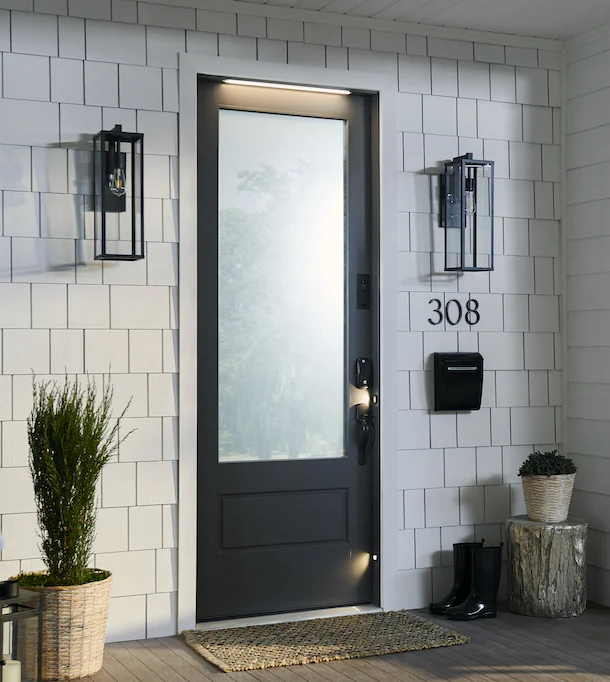
Masonite’s foray into the smart home market with its advanced smart door, now available at Home Depot, represents another facet of the evolving landscape. This product integrates features like built-in video surveillance, smart locks, and connectivity directly into the home’s primary entry point. While this offers enhanced security and convenience for homeowners willing to invest, the substantial price point places it firmly in the luxury segment of the smart home market. The decision to offer such a premium product through a mass-market retailer like Home Depot signals an attempt to broaden its reach, but the affordability remains a significant consideration for most consumers. This strategy highlights a common challenge in the smart home industry: balancing cutting-edge technology with accessible pricing.
Regulatory Developments: The FCC’s Cybersecurity Labeling Program
In response to growing concerns about the security vulnerabilities inherent in connected devices, the Federal Communications Commission (FCC) has taken a significant step towards establishing clearer security standards for the Internet of Things (IoT). The FCC has released a Notice of Proposed Rulemaking for an IoT cybersecurity labeling program. This initiative aims to provide consumers with easily understandable information about the security features of smart devices, empowering them to make more informed purchasing decisions.
The proposed label would likely indicate whether a device meets certain cybersecurity benchmarks, such as having up-to-date security patches, offering encrypted data transmission, and adhering to established security best practices. The public comment period, which is open for 30 days, is a crucial opportunity for industry stakeholders, consumer advocacy groups, and the general public to provide input and shape the final regulations. The success of this program will depend on its comprehensiveness, the clarity of its criteria, and the willingness of manufacturers to comply. Proponents argue that such a label could drive market demand for more secure devices and incentivize manufacturers to prioritize cybersecurity from the design phase.

Emerging Threats and Strengthening the Z-Wave Ecosystem
The interconnected nature of smart home devices, while offering convenience, also presents potential vulnerabilities. Microsoft’s recent discovery of a new set of vulnerabilities affecting industrial control systems serves as a stark reminder of the broader cybersecurity risks associated with networked technologies. While these specific vulnerabilities may not directly impact consumer smart home devices, they underscore the importance of robust security protocols across all connected systems. The potential for such vulnerabilities to be exploited to disrupt critical infrastructure, such as power plants, highlights the need for continuous vigilance and proactive security measures.
In the realm of smart home connectivity, the Z-Wave protocol has long been a stalwart, known for its reliability and mesh networking capabilities. However, the ecosystem has faced challenges, particularly concerning chip supply. The emergence of Trident IoT, founded by Mariusz Malkowski, offers a potential solution. Trident IoT aims to become a secondary source for Z-Wave chips, potentially alleviating supply chain constraints and fostering greater competition within the Z-Wave chip manufacturing sector.
Interview with Mariusz Malkowski: The Future of Z-Wave and Interoperability
Mariusz Malkowski, founder and CTO of Trident IoT, recently shared insights into his company’s mission and its implications for the Z-Wave community and the broader smart home ecosystem. Trident IoT’s inception stems from a recognized need for more robust support and innovation within the Z-Wave standard. Malkowski explained that the company’s primary objective is to ensure a consistent and reliable supply of Z-Wave chips, a critical component for manufacturers of Z-Wave-enabled devices.
A significant focus for Trident IoT is the development of solutions that bridge the gap between different smart home protocols, particularly Z-Wave and the emerging Matter standard. Malkowski emphasized the importance of interoperability, stating that the future of the smart home hinges on seamless communication between devices regardless of their underlying technology. He elaborated on how Matter, designed to unify smart home devices, can effectively work alongside Z-Wave through intelligent bridging mechanisms. This approach ensures that existing Z-Wave devices can be integrated into Matter-enabled ecosystems, preserving consumer investments and extending the lifespan of current smart home installations.
Trident IoT is not solely focused on Z-Wave chips. The company also plans to integrate or build support for other popular smart home radio protocols, positioning itself as a comprehensive solution provider for device manufacturers. Furthermore, Trident IoT will serve as a Z-Wave certification house, a role crucial for maintaining the integrity and interoperability of Z-Wave devices in the market. This dual approach of chip provision and certification aims to foster a more dynamic and secure Z-Wave ecosystem.
Malkowski also discussed the future roadmap for Z-Wave, including advancements in Z-Wave Long Range (LR) technology, which promises extended range and improved efficiency for certain applications, and planned security upgrades designed to address evolving threat landscapes. The company’s commitment to these areas signals a proactive approach to ensuring Z-Wave remains a competitive and secure option in the smart home market.
The Homey Pro: A Deep Dive into Local Control
In an era dominated by cloud-dependent smart home systems, the Homey Pro smart home hub, reviewed by Kevin, presents an intriguing alternative. This device is designed to offer robust local control, meaning that many of its functions operate directly on the hub without constant reliance on an internet connection or external servers. This approach offers several key advantages, including enhanced privacy, increased reliability in the event of internet outages, and potentially faster response times for device commands.
The Homey Pro supports a wide array of communication protocols, allowing it to integrate with a diverse range of smart home devices from various manufacturers. However, its high price point positions it as a premium solution, catering to enthusiasts and users who prioritize local control and extensive device compatibility above all else. The review highlights that while the Homey Pro offers significant potential for creating sophisticated automation routines and managing complex smart home setups, users must carefully verify device support to ensure compatibility with their existing or planned smart home devices. This underscores the ongoing challenge of fragmentation within the smart home market, where even advanced hubs require diligent research to ensure a cohesive user experience.
Addressing Consumer Needs: The Woodworker’s Lamp Dilemma
Beyond the complex technological discussions, the smart home conversation also touches upon practical consumer needs. A listener question regarding the appropriate light bulb for a woodworker building a lamp highlights the everyday applications and considerations of smart home technology. While the specifics of the woodworker’s needs would dictate the ideal bulb (e.g., brightness, color temperature, energy efficiency, or smart features like dimming or color changing), this query serves as a reminder that the smart home is not just about advanced automation but also about enhancing traditional activities with modern solutions. For a woodworker, a bulb that offers accurate color rendering might be crucial for matching finishes, while energy efficiency could be a factor for long working hours. The integration of smart lighting into such practical projects demonstrates the pervasive reach of connected technology into various aspects of daily life.
