
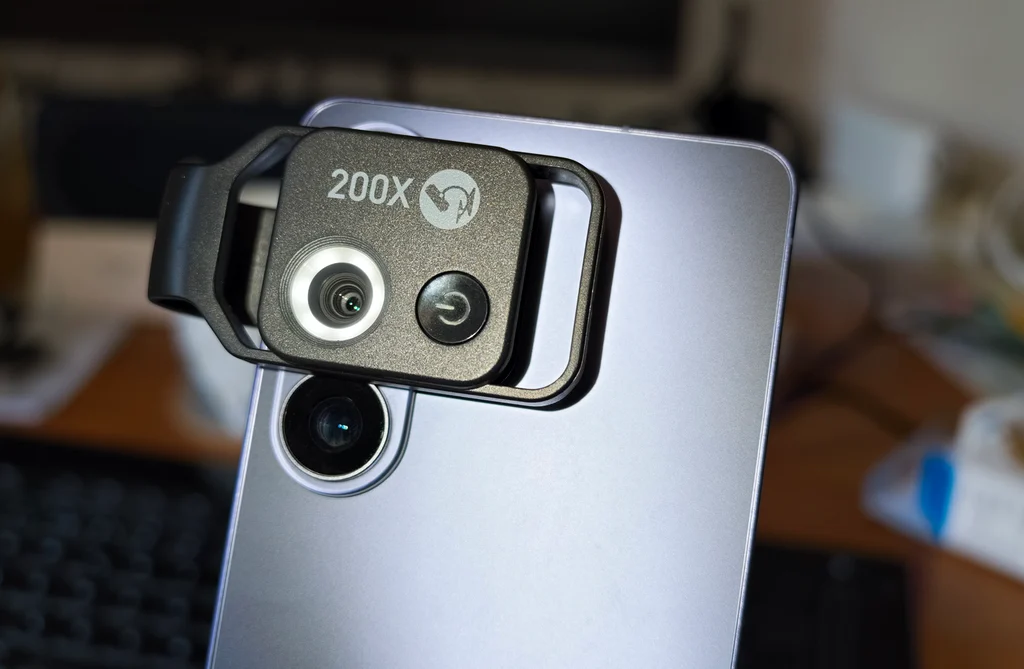

A recent exploration of online marketplaces yielded an intriguing find for mobile technology enthusiasts: a clip-on microscope lens designed for smartphones, promising 200x magnification for a modest price of 16 euros on AliExpress. This accessory, marketed to transform virtually any mobile device into a high-magnification viewing tool, immediately captured the attention of a reviewer known for assessing novel tech gadgets. The acquisition was driven by a curiosity to ascertain its practical utility, particularly in detailed analysis scenarios, echoing past experiences where seemingly niche accessories defied low expectations to become indispensable tools.
The journey into evaluating this budget-friendly optical attachment commenced with a pragmatic approach, informed by previous encounters with unconventional mobile accessories. One notable example cited by the reviewer was a smartphone-attachable mosquito bite reliever, initially purchased with minimal expectations, which subsequently proved to be an invaluable summer essential. This precedent set the stage for the microscope lens, arriving within a week of purchase and immediately sparking a degree of surprise regarding its performance.
Delving into the Capabilities: More Macro Than Micro
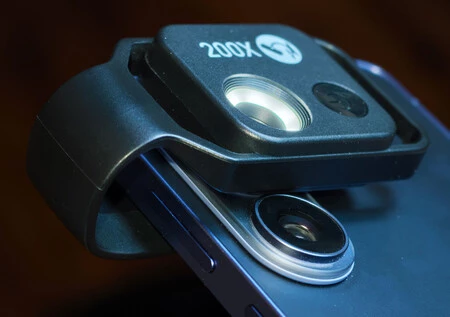
Upon initial assessment, the immediate question posed was whether the device truly delivers on its promise of microscopic observation. The consensus drawn from practical testing indicates that while it offers significant magnification, it does not fully replicate the capabilities of a professional-grade microscope. The product’s design centers around a clip mechanism, featuring a lens intended for precise alignment over one of the smartphone’s camera objectives. The ease of this alignment is heavily contingent on the specific smartphone model, particularly the thickness and architectural design of its camera module.
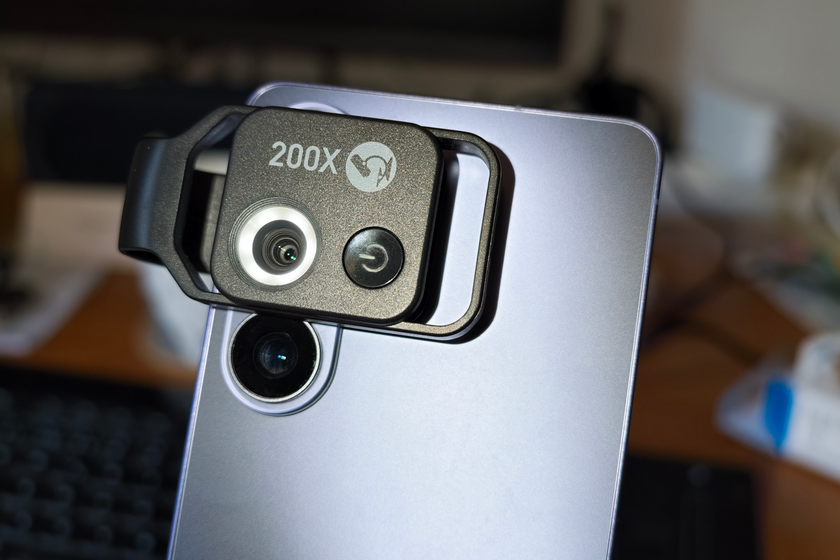
The reviewer’s tests were conducted using flagship devices, specifically a Samsung Galaxy S26 Ultra and a Vivo X300 Ultra. Despite these phones featuring substantial camera module protrusions, the clip-on lens could be attached, albeit with a degree of force. The primary challenge identified was not the attachment itself, but rather the meticulous process of aligning the external lens with the smartphone’s internal optics to achieve optimal clarity and magnification. This crucial alignment demands careful attention, as misalignment can severely degrade image quality and magnify distortions.
The alignment process necessitates activating the smartphone’s camera application and systematically identifying the most suitable primary camera lens. A common method involves briefly obstructing each lens until the live preview ceases, thereby pinpointing the main sensor – a technique requiring caution to avoid smudging the camera glass. Once the clip is secured, fine adjustments are required, involving subtle movements of the lens to achieve a sharp, focused image on the screen. This iterative trial-and-error approach is a fundamental part of the user experience. Optimal results were consistently achieved with the smartphone’s main camera, with wide-angle and telephoto lenses yielding less distinct magnification effects, suggesting a specialized optical design focused on a single point of entry.
Technical Specifications and Optical Limitations
The claim of "200x magnification" is a significant marketing point for this type of accessory. In a journalistic context, it is crucial to differentiate between true optical magnification, which increases the apparent size of an object, and digital zoom, which merely crops and enlarges a portion of an image, often at the expense of resolution. While the lens undoubtedly provides a notable optical enlargement, the practical resolution and depth of field achieved are distinct from those of dedicated scientific microscopes, which employ complex multi-element optical systems and precise focusing mechanisms.
The inherent limitations of a universal clip-on design, especially one priced at 16 euros, are rooted in the physics of optics. Achieving high magnification with minimal distortion across a wide field of view, while maintaining adequate working distance and depth of field, is optically challenging. Such a compact and inexpensive lens often grapples with issues like chromatic aberration (color fringing), spherical aberration (blurring at the edges), and vignetting (darkening at the corners). The review noted an appreciable magnification and "good quality" but clarified it was "not at the level of a microscope," indicating that while details are enlarged, the clarity, contrast, and resolution expected from scientific instruments are not matched.
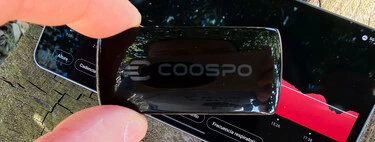
A notable feature compensating for these optical challenges is the accessory’s integrated LED light. Crucial for high-magnification photography, sufficient illumination is often a limiting factor when working at close distances. The lens allows the smartphone to rest directly on the object being examined, leveraging the built-in, minimally adjustable LED to ensure adequate lighting. This design choice is practical, addressing a fundamental requirement for macro and micro photography where ambient light is often insufficient or casts undesirable shadows.
Performance Evaluation and Niche Utility
The core question regarding the accessory’s efficacy received a qualified affirmative: "sí, pero sin tirar cohetes" (yes, but without setting off fireworks). This colloquialism effectively conveys that while the device performs its advertised function of magnification, it does so within the constraints of its design and price point. The observed image amplification was substantial, and the quality was deemed acceptable for its category, though falling short of true microscopic resolution.
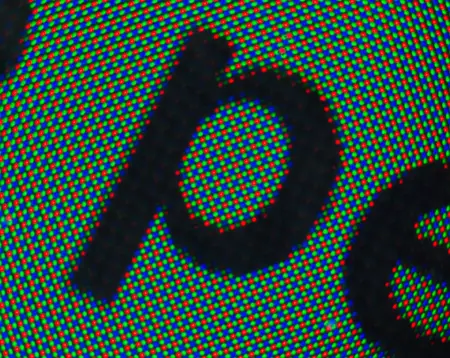
The most compelling aspect of the lens’s performance, as highlighted by the reviewer, lies in its specific utility for a niche application: capturing the pixel patterns of various screens. This particular task, previously challenging to achieve with conventional smartphone cameras, is now accomplished with "good quality" and "without complications." For tech reviewers and display analysts, this capability alone justified the purchase, transforming a difficult photographic endeavor into a straightforward process. The ability to clearly photograph the sub-pixel arrangement of displays, revealing underlying technologies and screen quality, represents a significant practical benefit for this professional segment.
Beyond this specialized application, the lens holds potential for various amateur and educational uses. Hobbyists interested in examining stamps, coins, textiles, or botanical specimens (like the stamens of a flower, as depicted in the review) could find it a fascinating tool. In educational settings, it could serve as an accessible entry-level device for students to explore the microscopic world, fostering curiosity without the prohibitive cost of traditional laboratory equipment. However, the consistent challenge of precise focusing, as noted with the flower stamens, underscores the user-dependent nature of achieving optimal results.
The Broader Context of Smartphone Photography Accessories
The emergence of such a niche product on platforms like AliExpress is indicative of broader trends in both consumer electronics and global e-commerce. Smartphone photography has undergone a revolution, transforming from a simple point-and-shoot function to a sophisticated art form capable of rivaling dedicated cameras in certain aspects. This evolution has fostered a burgeoning market for accessories designed to further extend the capabilities of mobile cameras.
Historically, the market for camera accessories for smartphones has seen a wide array of products, ranging from clip-on wide-angle and fisheye lenses to more advanced teleconverters and anamorphic attachments. These accessories cater to different photographic styles and needs, expanding the creative toolkit available to smartphone users. The microscope lens fits into this ecosystem as a specialized macro-photography tool, albeit one that pushes the boundaries of typical consumer expectations for magnification.
The affordability and accessibility offered by e-commerce giants like AliExpress play a pivotal role in democratizing access to such specialized gadgets. These platforms connect manufacturers directly with a global consumer base, facilitating the rapid dissemination of innovative, often low-cost, products. This ecosystem allows for rapid prototyping and market testing, enabling niche accessories to find their audience without significant retail overheads. The 16-euro price point for the microscope lens exemplifies this trend, making what was once a prohibitively expensive or complex capability accessible to a mass market.
However, this accessibility also comes with challenges, particularly regarding consumer expectations versus actual performance. Marketing claims of "200x microscope" can sometimes create an impression of scientific-grade capability, which, as the review highlights, is not fully met by a low-cost, universal attachment. This gap between marketing and reality is a common characteristic in the budget tech accessory market, where the emphasis is often on novelty and affordability rather than uncompromised performance.

Design and Usability Considerations
The universal clip-on design, while maximizing compatibility, presents inherent usability challenges. Modern smartphones feature increasingly complex and diverse camera module designs. The transition from single, flush-mounted cameras to multi-lens arrays with significant protrusions (known as camera bumps) means that a "one-size-fits-all" clip often requires adaptation. The reviewer’s experience with the Samsung Galaxy S26 Ultra and Vivo X300 Ultra, both known for their prominent camera modules, illustrates this point. The "forced" fit of the clip underscores the trade-offs involved in universal design, where optimal fit and stability might be compromised for broad compatibility.
Furthermore, the need for precise alignment with the primary lens is a critical aspect of user interaction. Unlike general-purpose clip-on lenses (e.g., wide-angle) that are more forgiving of slight misalignments, a high-magnification lens requires near-perfect optical coupling. Even a millimeter of misalignment can introduce severe blurring, distortion, or vignetting, significantly impacting the image quality. This necessity for meticulous manual adjustment contributes to the "trial and error" process described in the review, making the user experience somewhat less seamless than with integrated camera systems.
The integrated LED lighting, while beneficial, also adds a layer of design complexity. It requires a power source (typically a small button battery), and its adjustability, if present, is usually rudimentary. The ability to minimally regulate the light output is a thoughtful addition, as excessive illumination can lead to glare and reflections, particularly on reflective surfaces like smartphone screens. This detail suggests a degree of practical consideration in the product’s engineering, acknowledging the specific lighting needs of micro-photography.
Implications and Future Outlook
The experience with the 200x smartphone microscope lens offers several broader implications for mobile technology and consumer behavior. Firstly, it highlights the ongoing trend of democratizing specialized tools. By making high-magnification imaging accessible for a minimal investment, such accessories empower a wider audience to explore phenomena previously reserved for scientific laboratories or dedicated enthusiasts. This aligns with the broader movement towards accessible technology, where complex functionalities are distilled into user-friendly, affordable packages.
Secondly, it prompts a discussion about the future of smartphone camera technology. As these external attachments demonstrate the consumer appetite for advanced imaging capabilities, it could subtly influence smartphone manufacturers to integrate more sophisticated macro modes or even dedicated micro-lenses into future devices. Some manufacturers, like Oppo with its "microscope" lens on certain models, have already ventured into this territory, suggesting that the demand for extreme close-up photography is being recognized.
Finally, the success of such "curiosity tech" products on platforms like AliExpress reinforces the dynamic nature of the gadget economy. It showcases a continuous cycle of innovation, rapid market entry, and consumer feedback that drives the development of new and often unconventional accessories. While not all such products achieve widespread adoption, their existence enriches the mobile ecosystem, offering users diverse ways to personalize and expand their smartphone’s functionalities. The reviewer’s conclusion, that the lens "has ended up surprising me" despite initial low expectations, encapsulates the essence of this segment: often imperfect, sometimes challenging, but frequently capable of delivering unexpected utility in specific contexts. For the niche of analyzing pixel patterns, this 16-euro gadget has indeed proven its worth, demonstrating that even a modest accessory can carve out an indispensable role in a tech reviewer’s toolkit.
