
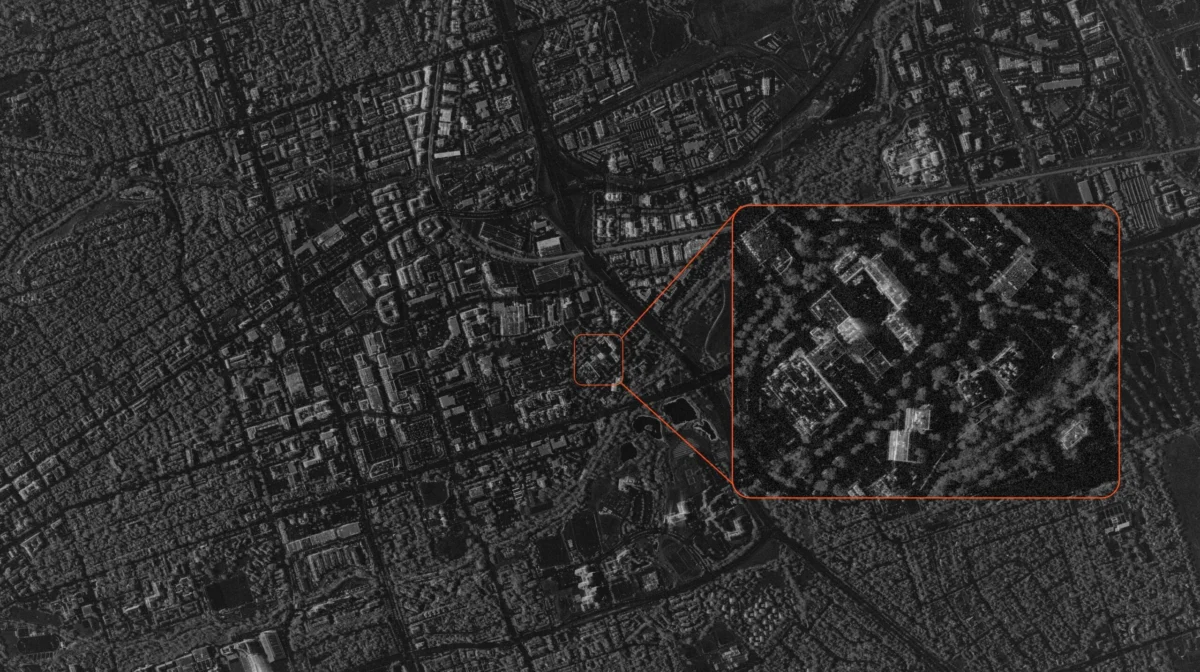

Capella Space, a leader in high-resolution Synthetic Aperture Radar (SAR) Earth observation, has successfully validated a Mynaric optical communications terminal (OCT) on its latest satellite, the Acadia-10. This milestone marks the first time Capella Space has successfully deployed and operated an optical terminal in orbit, signaling a transformative shift in how Earth observation data is transmitted from space to ground. Following the satellite’s launch in March 2026, the company has released the first SAR images captured by the Acadia-10, including a high-fidelity view of Boulder, Colorado. The successful integration and testing of the Mynaric terminal demonstrate a data transfer capability of 2.5 gigabits per second (Gbps) during onboard tests, a significant leap forward for the commercial SAR industry.
The validation of this technology addresses one of the most persistent bottlenecks in satellite operations: the latency between data acquisition and delivery. Historically, satellites have relied on Radio Frequency (RF) downlinks, which require the spacecraft to be within the line of sight of a specific ground station. This often results in a "store-and-forward" delay, where critical imagery must wait hours for a downlink window. By utilizing optical communications—essentially laser-based data transfer—Capella Space is paving the way for near-real-time data delivery. This capability is expected to compress the "task-to-delivery" timeline from hours down to mere minutes, fundamentally changing the operational utility of SAR data for defense, disaster response, and environmental monitoring.
Technical Evolution of the Acadia Satellite Platform
The Acadia-10 is part of Capella’s third-generation satellite constellation, designed to provide higher resolution, increased power, and faster imaging capabilities than its predecessors. SAR technology is uniquely valuable because it uses microwave pulses to "see" through clouds, smoke, and darkness, providing reliable imagery regardless of weather conditions or time of day. However, the high-resolution nature of SAR imagery generates massive datasets that are difficult to transmit via traditional X-band or S-band radio frequencies.
Integrating an optical communications terminal onto a SAR satellite presented a formidable engineering challenge. Capella’s SAR satellites are relatively large for the commercial sector, weighing between 175 and 195 kg and equipped with 700-watt solar arrays. Despite this size, the interior environment of the satellite is highly constrained. According to technical briefs from the company, the engineering team had to manage demanding thermal and mechanical loads. SAR payloads generate significant heat and vibration, which can interfere with the ultra-precise pointing requirements of a laser terminal.
Unlike RF antennas, which have a relatively wide beam, optical terminals require sub-microradian pointing accuracy to maintain a link with another terminal or a ground station. Capella reported that its pointing and scheduling logic had to be entirely rebuilt to accommodate a payload that operates on fundamentally different principles than a standard X-band downlink. The successful 2.5 Gbps test confirms that these mechanical and software hurdles have been cleared, allowing the Acadia-10 to serve as a high-speed data node in low-Earth orbit (LEO).
A Chronology of Strategic Partnerships
The path to the Acadia-10’s success began several years ago. In 2021, Capella Space first announced its intention to integrate Mynaric’s CONDOR optical communications terminals into its future satellite generations. At the time, the move was seen as an ambitious bet on the "Lasercom" revolution. Simultaneously, Capella began deep collaboration with the U.S. Space Development Agency (SDA), an organization focused on building a "proliferated LEO" (pLEO) architecture for national security.
In April 2026, shortly after the launch of Acadia-10, the SDA awarded Capella Space a contract under the HALO Europa Track 1 program. This agreement tasks Capella with designing two satellites to demonstrate advanced tactical waveforms, adaptive beamforming, and secure tactical communications. The Mynaric terminal on Acadia-10 is specifically designed to be compatible with SDA optical standards, ensuring that Capella’s commercial fleet can seamlessly interface with the U.S. government’s burgeoning space-based mesh network.
However, the corporate landscape surrounding these technologies has shifted recently. Following a series of strategic acquisitions by the quantum computing firm IonQ, both Capella Space and the optical terminal manufacturer Skyloom are now under the same corporate umbrella. This consolidation has led to a shift in Capella’s long-term hardware roadmap. While the Acadia-10 features a Mynaric terminal, a company spokesperson confirmed that future Acadia satellites, starting in 2027, will be equipped with Skyloom OCTs. This move is intended to create a vertically integrated ecosystem that aligns with IonQ’s broader vision for quantum networking in space.
The SDA Standard and the Proliferated LEO Architecture
The significance of the Mynaric terminal’s compatibility with the SDA standard cannot be overstated. The SDA is currently deploying its "Transport Layer," a mesh network of hundreds of satellites that will serve as the backbone for military communications and data relay. For a commercial provider like Capella Space, the ability to "plug into" this network allows their SAR data to be routed through government satellites and delivered directly to tactical users on the ground without ever touching a commercial ground station.
This interoperability is a core component of the Department of Defense’s Joint All-Domain Command and Control (JADC2) initiative. By proving that a commercial SAR satellite can maintain an optical link compatible with SDA requirements, Capella has positioned itself as a critical infrastructure provider for the modern battlespace. The upcoming tests under the HALO agreement are expected to further explore how these optical links can support "tactical waveforms"—low-latency, jam-resistant signals that provide real-time situational awareness to soldiers, pilots, and naval commanders.
IonQ and the Future of Quantum Space Networking
The acquisition of Capella Space and Skyloom by IonQ represents one of the most intriguing developments in the aerospace sector. IonQ’s leadership, including CEO Peter Chapman, has articulated a vision where quantum computers are not just ground-based assets but are networked across the globe via satellite.
Quantum networking requires the transmission of entangled photons, a process that is currently impossible over long-distance fiber optic cables due to signal degradation. Vacuum-based space environments, however, are ideal for maintaining quantum states over thousands of kilometers. By owning both the sensing platform (Capella) and the transmission platform (Skyloom), IonQ aims to build a "quantum backbone" in orbit.
The validation of lasercom on Acadia-10 is a prerequisite for this future. Before a satellite can transmit quantum information, it must first master the classical precision required for standard laser communications. The 2.5 Gbps downlink demonstrated this week is the "classical" foundation upon which future "quantum" overlays will be built. Starting in 2027, the integration of Skyloom terminals will likely focus on even higher bandwidths and the potential for secure quantum key distribution (QKD), which would offer unhackable encryption for sensitive SAR data.
Implications for the Earth Observation Market
The successful validation of the Acadia-10’s optical terminal has immediate implications for the competitive Earth observation market. Capella Space competes with other SAR providers such as ICEYE and Umbra, as well as optical imagery giants like Maxar and Planet. In a market where "revisit time" (how often a satellite passes over a target) and "latency" (how long it takes to get the image) are the primary differentiators, Capella’s move toward lasercom provides a distinct edge.
For commercial clients in insurance, maritime logistics, and energy, the ability to receive SAR imagery within minutes of an event—such as an oil spill, a ship collision, or a natural disaster—is invaluable. In the insurance sector, for instance, rapid SAR imagery can allow for "parametric" payouts, where claims are settled automatically based on verified satellite data showing the extent of flood damage, potentially saving weeks of manual inspection.
Furthermore, the "spectrum crunch" in traditional radio frequencies is becoming a major hurdle for the industry. As more satellites launch, the available RF bands become crowded and prone to interference. Optical communications operate in the unregulated light spectrum, offering virtually unlimited bandwidth without the regulatory hurdles of securing frequency licenses from the International Telecommunication Union (ITU).
Conclusion and Outlook
The validation of the Mynaric optical terminal on the Acadia-10 satellite is more than just a successful hardware test; it is a proof-of-concept for the next generation of space architecture. By bridging the gap between high-resolution SAR sensing and high-speed laser transmission, Capella Space has addressed the most significant bottleneck in the remote sensing value chain.
As the company transitions to Skyloom hardware under the IonQ banner, the industry will be watching closely to see how the integration of quantum networking principles further enhances the security and speed of space-based data. For now, the Acadia-10 stands as a pioneer, proving that even the most power-hungry and mechanically complex satellites can participate in the lasercom revolution. With the first images of Boulder already delivered and the 2.5 Gbps threshold met, the era of hours-long waits for satellite data appears to be coming to a definitive end. The impact of this shift will be felt across defense, intelligence, and commercial sectors, as the world moves closer to a state of persistent, real-time planetary awareness.
