
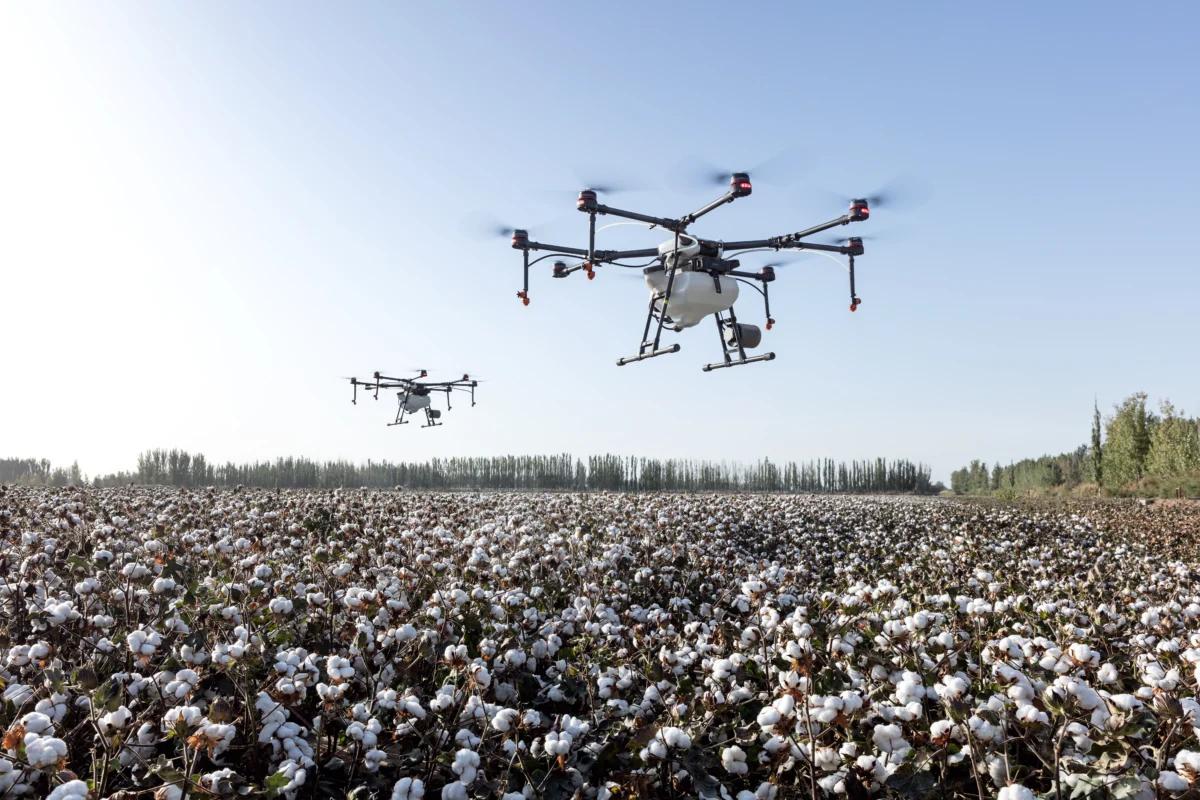

The rapid transition from human-piloted drones to fully autonomous uncrewed aerial systems (UAS) is precipitating a fundamental shift in the global insurance landscape, challenging decades of established aviation risk protocols. While the technological milestones of uncrewed aviation often capture public imagination, the underlying financial and legal frameworks—specifically drone insurance—are emerging as the true arbiters of the industry’s commercial viability. As decision-making authority migrates from human operators to complex software architectures, the insurance sector is being forced to grapple with a profound question: who bears the liability when an autonomous system fails?
The complexity of this transition is underscored by the evolving nature of risk. Traditionally, aviation insurance has been a relatively straightforward calculation centered on the "pilot in command." However, in the realm of autonomous systems, risk is no longer localized within a single human actor. Instead, it is distributed across a vast web of software logic, data inputs, and operational constraints. This shift represents an existential challenge for insurers, who must now price risk for systems that learn, update, and operate within varying degrees of independence.
The Evolutionary Shift in Risk Allocation
Simon Ritterband, Managing Director of Moonrock Insurance, a specialist in the field, suggests that the industry is currently witnessing a real-time reallocation of responsibility. According to Ritterband, autonomy is no longer a distant concept but a present-day operational reality that strains the assumptions underpinning aviation risk for nearly a century. He notes that insurance sits at the critical intersection of technology, law, and operations. When these three pillars drift out of alignment, insurance becomes unavailable or prohibitively expensive, effectively grounding the industry before it can scale.
Historically, aviation products were structured around the "asset, operator, and activity" triad. An insurer would cover a specific aircraft, flown by a specific pilot, for a defined mission. In the autonomous era, the aircraft is merely one node in a larger system. Risk now emerges from the interactions between hardware, proprietary software, real-time data feeds, and supervisory design. Consequently, insurers are moving away from insuring individual assets in isolation and are instead focusing on "system behavior" and "operational contexts."
This evolution means that two identical drones may carry vastly different insurance premiums. The discrepancy rarely lies in the hardware itself but in the "spectrum of authorized behaviors" granted to the system. Insurers are increasingly prioritizing "behavioral clarity" over marketing labels. If a system’s capabilities and fall-back modes are clearly defined, the risk can be priced. Without that clarity, uncertainty drives premiums to levels that can stifle commercial innovation.
A Chronology of Uncrewed Aviation and Insurance Integration
To understand the current tension, it is necessary to examine the timeline of how drone insurance has evolved alongside the technology:
- 2010–2015: The Hobbyist Era. Early drone insurance was largely an extension of general liability or specialized hobbyist policies. Risk was low, as most drones were small, operated within the line of sight, and used for recreational purposes.
- 2016–2019: Commercial Emergence and Part 107. With the introduction of the FAA’s Part 107 in the United States and similar frameworks in Europe, commercial drone use exploded. Insurers began offering "pay-per-flight" models and annual commercial policies. Liability remained firmly attached to the human remote pilot.
- 2020–2023: The Push for BVLOS. As companies like Zipline and Wing began testing Beyond Visual Line of Sight (BVLOS) operations, the "human-in-the-loop" started to become a "human-on-the-loop." Insurers began requesting more data on software reliability and failsafe mechanisms.
- 2024 and Beyond: The Autonomy Pivot. The current era is defined by the integration of AI and machine learning. Insurance is now shifting toward "system-centric" coverage, where the software developer and the system architect share the liability burden with the operator.
Data and Market Dynamics
The financial stakes of this shift are considerable. According to market research, the global commercial drone market is projected to reach over $50 billion by 2030. However, insurance premiums can account for a significant portion of an operator’s overhead—sometimes as much as 10% to 15% of total operational costs in high-risk environments.
Furthermore, data from industry analysts suggests that as drones move into urban environments, the density of "third-party risk" (damage to people and property on the ground) increases exponentially. In a traditional setting, a mechanical failure over a rural field results in the loss of the hull. In an urban "last-mile delivery" scenario, that same failure could result in catastrophic liability claims. This reality creates a financial incentive for operators to seek "low-risk" flight paths, which may have unintended social consequences.
The Urban Logistics Dilemma and Social Implications
One of the most complex challenges facing autonomous aviation is the intersection of insurance costs and urban planning. In a future where thousands of drones deliver packages across cities, insurance providers will naturally charge higher premiums for flights over critical infrastructure, such as schools, hospitals, and busy transport hubs.
To maintain the low-cost promise of drone delivery, operators will be incentivized to route their fleets over "cheaper" airspace—typically green spaces, quiet residential neighborhoods, and suburban gardens. This creates a paradox: the drive for safety and lower insurance costs could lead to a significant degradation of the quality of life for residents in quieter areas, who may find their skies filled with the noise and visual pollution of constant drone traffic.
This "path of least resistance" logic suggests that insurance is not just a financial tool but a silent architect of our future urban skies. If the regulatory and insurance frameworks do not account for these social externalities, the commercial success of drone delivery could come at the cost of public goodwill and environmental tranquility.
Technical Hurdles: Interoperability and Software Integrity
As the industry scales, the question of interoperability becomes paramount. In a crowded sky, drones from competing companies—each running different autonomous software—must be able to "see and avoid" one another. From an insurance perspective, this raises a nightmare scenario: if two autonomous drones from different manufacturers collide in mid-air, who is at fault?
If there is no standardized, globally adopted system for identity and collision avoidance, determining liability becomes a multi-year legal battle between software developers, sensor manufacturers, and fleet operators. Insurers are now pushing for "conspicuousness" and standardized communication protocols. They are also moving beyond hardware inspections to "software assurance." In the autonomous age, a software update can change the risk profile of a fleet overnight. Ritterband emphasizes that insurance can no longer be a "static artifact" renewed once a year. It must be as dynamic as the software it covers.
The Myth of Responsibility Removal
A persistent misconception in the industry is that autonomy removes human responsibility. In reality, autonomy merely redistributes it. Traditional negligence and "pilot error" are being replaced by "systemic negligence" and "architectural error."
In a traditional accident, investigators look at the pilot’s actions in the seconds leading up to the crash. In an autonomous accident, the most consequential "decisions" may have been made months earlier by a coder or a data scientist during the training of a machine learning model. This redistribution of responsibility across more actors—developers, data providers, and system integrators—makes claims harder to defend and premiums harder to justify if the legal framework does not keep pace.
Broader Impact and the Path Forward
The "fragility" of insurability occurs when there is a misalignment between decision-making authority and financial exposure. If a drone operator has no control over the software logic that caused a crash, but is held financially liable for the damage, the business model becomes unsustainable.
To ensure the long-term success of uncrewed aviation, the industry must move toward a model of "meaningful control." This involves:
- Alignment of Authority: Ensuring that the entity with the legal responsibility for the flight also has the practical authority to intervene or set the constraints of the system.
- Standardized Safety Data: Creating a transparent pool of "anonymized" failure data that insurers can use to price risk more accurately across the industry.
- Regulatory Harmony: Bridging the gap between aviation regulators (who focus on safety) and insurance underwriters (who focus on financial liability).
As autonomous systems mature and take on more complex roles in society, from organ transport to passenger-carrying air taxis, the insurance industry will remain the ultimate gatekeeper. The transition from insuring "what a drone looks like" to "how a system is authorized to behave" is not just a technical change—it is the foundation upon which the future of aviation will be built. For organizations operating in this space, the internal question of "who is responsible" is no longer just a legal formality; it is the most critical factor in their ability to remain insured and, by extension, operational.
