
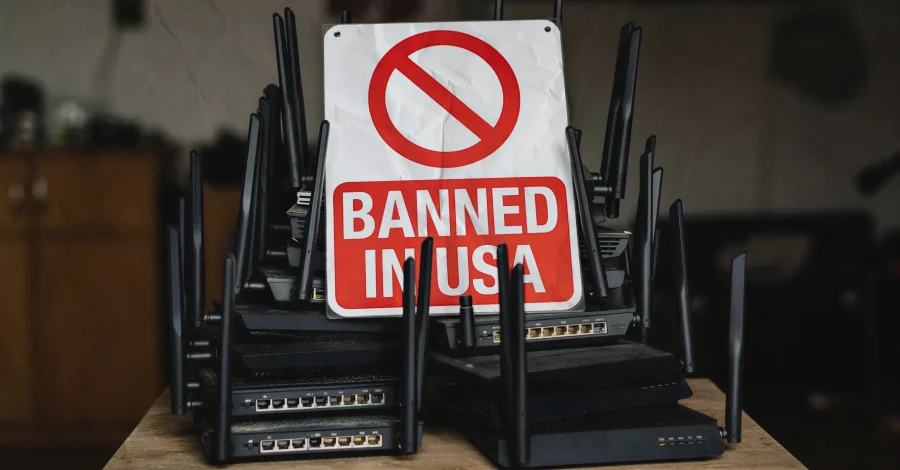

The U.S. Federal Communications Commission (FCC) announced on Monday, March 25, 2026, a groundbreaking prohibition on the import of new, foreign-manufactured consumer routers, citing "unacceptable" risks to both national security and the nation’s cybersecurity infrastructure. This decisive regulatory action marks a significant escalation in the United States’ efforts to safeguard its digital ecosystem against state-sponsored espionage, cyber warfare, and economic sabotage.
The sweeping ban, articulated by FCC Chairman Brendan Carr in a post on X, is designed to fortify the security posture of American households and the foundational communications networks that underpin the country’s critical functions. Under the new directive, any new models of consumer-grade routers produced outside the United States will be rendered ineligible for marketing or sale within U.S. borders. This pivotal policy shift follows a stringent national security determination provided by various Executive Branch Agencies, underscoring the gravity of the perceived threats.
The Genesis of the Ban: Fortifying the Digital Frontier
This unprecedented move did not emerge in a vacuum but rather as the culmination of escalating concerns over supply chain integrity and the persistent exploitation of networking hardware by sophisticated threat actors. For years, cybersecurity experts and intelligence agencies have warned about the inherent vulnerabilities embedded within the global technology supply chain, particularly regarding components manufactured in nations deemed strategic adversaries. The FCC’s decision represents a definitive step to mitigate these identified risks at the consumer level, where millions of devices form the periphery of the national network.
The core mechanism for implementing this ban is the expansion of the existing "Covered List," a critical regulatory instrument managed by the FCC. All consumer-grade routers manufactured in foreign countries have now been added to this list. The only potential avenue for exemption lies in a "Conditional Approval" granted by the Department of War (DoW) or the Department of Homeland Security (DHS), following a rigorous assessment to ensure that the devices pose no discernible risks to U.S. interests. This conditional approval process highlights a strategic pivot: from a reactive stance against known compromises to a proactive, preventative approach to supply chain security.
As of the announcement, the publicly available approved list for conditional approvals remains highly restricted, primarily featuring drone systems and software-defined radios (SDRs) from a select group of companies, including SiFly Aviation, Mobilicom, ScoutDI, and Verge Aero. This limited scope indicates the extreme caution with which these approvals are being granted, emphasizing the high bar for foreign-made technology to gain entry into the U.S. market under the new regime. Manufacturers of consumer-grade routers are now tasked with navigating this stringent application process if they wish to re-enter or maintain a presence in the lucrative American market. Notably, domestic production receives a clear advantage, as evidenced by the exemption granted to Starlink Wi-Fi routers, which are manufactured in Texas, USA, according to reports from BBC News.
Executive Branch Determination: Unpacking the "Unacceptable Risks"

The Executive Branch determination, which served as the bedrock for the FCC’s action, outlined two primary categories of risk posed by foreign-produced routers. Firstly, these devices introduce "a supply chain vulnerability that could disrupt the U.S. economy, critical infrastructure, and national defense." This refers to the potential for malicious hardware or software components to be secretly integrated into routers during the manufacturing process or during firmware updates, allowing for remote manipulation, data exfiltration, or even network disruption on a massive scale. Such a vulnerability could be exploited to cripple essential services, ranging from financial transactions to transportation systems, posing an existential threat to national stability.
Secondly, the determination highlighted that foreign-made routers pose "a severe cybersecurity risk that could be leveraged to immediately and severely disrupt U.S. critical infrastructure and directly harm U.S. persons." This concern extends beyond passive vulnerabilities to active exploitation. Intelligence assessments have repeatedly indicated that state-sponsored and sophisticated non-state threat actors have routinely exploited inherent security shortcomings in small and home office (SOHO) routers. These devices, often deployed with default configurations or outdated firmware, serve as readily available entry points into American households and, by extension, into corporate and governmental networks.
A Litany of Exploitations: From Espionage to Infrastructure Sabotage
The FCC and Executive Branch reports provide ample evidence of how these vulnerabilities have been leveraged. Compromised routers have been instrumental in facilitating cyber espionage, enabling intellectual property theft, and disrupting critical networks. Furthermore, these devices can be covertly conscripted into vast botnets, transforming them into a distributed network of unwitting participants in large-scale cyberattacks. Such botnets are routinely used for activities like password spraying, unauthorized network access, and acting as proxies to obscure the origins of malicious traffic, thereby complicating attribution and defense efforts.
Specific advanced persistent threat (APT) groups, often linked to state-sponsored operations, have been explicitly named in the context of these threats. China-nexus adversaries, including the notorious Volt Typhoon, Flax Typhoon, and Salt Typhoon, have been observed orchestrating sophisticated cyber campaigns leveraging botnets composed predominantly of foreign-made routers. These groups have systematically targeted critical American infrastructure across various sectors, including communications, energy, transportation, and water utilities.
- Volt Typhoon, known for its stealthy operations, has focused on maintaining persistent access to critical infrastructure, laying groundwork for potential disruptive attacks. Their methodology often involves living off the land techniques and exploiting legitimate network tools to evade detection.
- Flax Typhoon has specialized in intelligence gathering and network reconnaissance, often using compromised SOHO routers as initial beachheads to map out target networks and identify valuable data for exfiltration.
- Salt Typhoon, as detailed in the National Security Determination (NSD), has been particularly adept at exploiting compromised, foreign-produced routers to establish embedded, long-term access to targeted networks. From these initial footholds, they pivot to other critical systems, demonstrating a sophisticated understanding of network architecture and operational security. This "jump to embed" strategy allows them to remain undetected for extended periods, executing espionage or sabotage missions at will.
Beyond these "Typhoon" groups, the U.S. government has also highlighted the activities of a botnet dubbed CovertNetwork-1658, also known as Quad7. This botnet has been instrumental in orchestrating highly evasive password spray attacks, a tactic designed to brute-force access to a multitude of accounts across various services without triggering immediate security alerts. Intelligence assessments attribute this activity to a Chinese threat actor tracked as Storm-0940, further solidifying the link between foreign-made hardware and state-sponsored cyber warfare capabilities.
Economic and Consumer Implications: A Market Reshaped
The FCC’s ban, while focused on national security, carries significant economic and consumer implications. For manufacturers of foreign-made routers, the immediate impact is a complete cessation of new product introductions into the U.S. market, unless they undergo the arduous conditional approval process. This could lead to substantial revenue losses for international brands and potentially force some to consider establishing manufacturing facilities within the U.S. to regain market access.

Conversely, domestic manufacturers, such as Starlink, stand to benefit from increased market share and reduced competition. This policy could stimulate investment in U.S.-based technology production, aligning with broader national strategies to reshore critical supply chains. However, the immediate impact on consumer choice and pricing remains a concern. With a potentially reduced pool of eligible products, consumers might face higher prices or fewer feature-rich options in the short term. The market will likely see a shift towards brands that can demonstrate compliance or those already manufacturing domestically.
It is crucial to note that the Covered List update does not retroactively affect consumers who have already purchased foreign-made routers. Existing devices can continue to be used without penalty. Similarly, retailers are permitted to sell, import, or market router models that had already received approval through the FCC’s equipment authorization process prior to this new ban. This grandfathering clause aims to prevent immediate market disruption and consumer panic, offering a transitional period for the industry to adapt. However, the message is clear: the future market for new consumer routers in the U.S. will be fundamentally different.
The Precedent and the Path Forward
The U.S. government’s concerns about router security are not entirely new. Routers have historically been a lucrative target for cyberattacks due to their position as the primary conduit for internet access in homes and businesses. Compromised routers can allow threat actors to conduct pervasive network surveillance, exfiltrate sensitive data, and even deliver malware to connected devices. A notable historical anecdote from 2014, detailed by journalist Glenn Greenwald in his book No Place to Hide, alleged how the U.S. National Security Agency (NSA) itself routinely intercepted routers before U.S. manufacturers could export them, purportedly to implant backdoors. While distinct in origin and intent, this historical context underscores the long-standing awareness within intelligence communities of the strategic importance and inherent vulnerability of networking hardware.
The current ban, however, marks a significant departure by explicitly targeting foreign-made devices based on a comprehensive national security determination, signaling a hardening of U.S. policy towards perceived threats from specific geopolitical rivals.
The FCC’s announcement is a stark warning to the technology industry and a clear directive to consumers. The National Security Determination concluded unequivocally: "Unsecure and foreign-produced routers are prime targets for attackers and have been used in multiple recent cyber attacks to enable hackers to gain access to networks and use them as launching pads to compromise critical infrastructure." It further stressed, "The vulnerabilities introduced into American networks and critical infrastructure resulting from foreign-manufactured routers are unacceptable."
This policy shift is anticipated to trigger a wave of adaptations across the global technology sector. Foreign manufacturers will face immense pressure to either relocate production, partner with U.S. entities, or rigorously prove the security bona fides of their products through the new conditional approval framework. For American consumers and businesses, the long-term goal is enhanced security, albeit potentially with short-term adjustments to product availability and pricing. The FCC’s ban on foreign-made consumer routers is more than a regulatory update; it is a declaration of intent, signaling a new era of heightened vigilance and protection for America’s digital sovereignty. The coming months will reveal the full scope of its implementation and its profound impact on the landscape of network security.
