
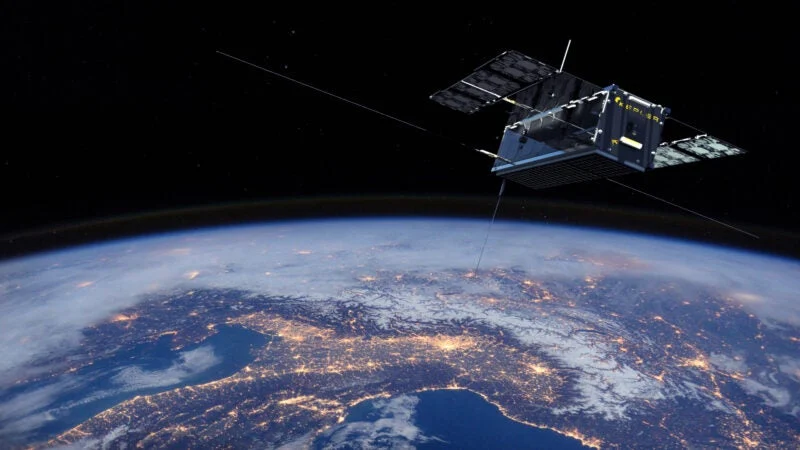

The European Space Agency (ESA) has officially designated Toronto-based Kepler Communications as the prime contractor for HydRON Element 3, marking a significant milestone in the development of Europe’s sovereign optical communications infrastructure. The announcement, made during the recent Space Symposium, underscores a deepening partnership between the Canadian aerospace firm and the intergovernmental organization as they work to establish the "High-throughput Optical Network" (HydRON). This latest contract, valued at 18.6 million euros (approximately $22 million USD), tasks Kepler with the manufacturing, launch preparation, and in-orbit operation of a host platform designed to demonstrate advanced laser communication capabilities.
The HydRON program represents a strategic pivot for the European Space Agency, aimed at creating a high-capacity "fiber in the sky" that bridges the gap between terrestrial fiber-optic networks and satellite constellations. By utilizing optical laser terminals instead of traditional radio frequency (RF) bands, the network seeks to achieve terabit-per-second data transfer speeds, providing a resilient and secure data transport layer for a variety of government, commercial, and scientific users.
The Strategic Framework of the HydRON Program
HydRON is structured as a multi-stage initiative under the ESA’s Advanced Research in Telecommunications Systems (ARTES) program. Its primary objective is to demonstrate the feasibility of a seamless, multi-orbital optical network that can relay massive amounts of data across Low-Earth Orbit (LEO), Medium-Earth Orbit (MEO), and Geostationary Orbit (GEO), as well as to ground stations.
The selection of Kepler Communications for Element 3 follows the company’s success in securing the prime contract for HydRON Element 1 in October 2024. That initial $39 million agreement focused on the development and demonstration of a ten-satellite data transport system in LEO. While Element 1 laid the groundwork for the network architecture, Element 3 is specifically designed to test interoperability and the integration of diverse hardware from multiple European vendors.
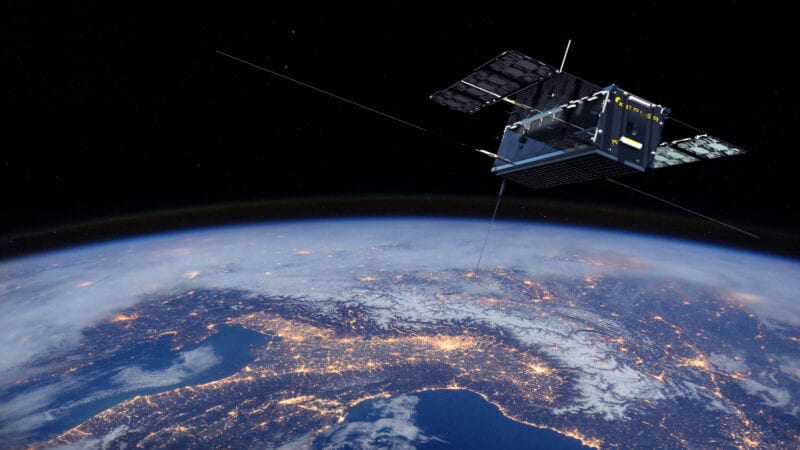
Under the terms of the Element 3 award, Kepler will develop a satellite platform that serves as a "testbed" for several high-tech payloads. This satellite will not only function as a critical node in the HydRON demonstration but will also be integrated into Kepler’s existing commercial LEO constellation. This dual-purpose approach allows the ESA to leverage commercial innovation and existing orbital infrastructure to accelerate the deployment of sovereign capabilities.
Technical Composition and Industry Partnerships
One of the most complex aspects of Element 3 is the integration of various optical communication terminals (OCTs) from different manufacturers. The Kepler-led platform will host hardware from some of the leading names in European photonics and aerospace engineering:
- Tesat (Germany): A pioneer in laser communication, Tesat provides the high-precision optical terminals required for stable, long-distance data links in the vacuum of space.
- Mbryonics (Ireland): Known for their expertise in optical systems and satellite transceivers, Mbryonics contributes specialized hardware designed to facilitate high-speed data relay.
- Astrolight (Lithuania): This firm focuses on space-to-ground and space-to-space laser communication solutions, emphasizing the "last mile" connectivity between orbital assets and terrestrial hubs.
- Vyoma (Germany): In addition to communication hardware, the satellite will carry a Space Situational Awareness (SSA) payload from Vyoma. This addition is critical for ensuring the safety and longevity of the platform by monitoring orbital debris and other potential hazards in the increasingly crowded LEO environment.
Kepler’s role as the prime contractor extends beyond hardware integration. The company is responsible for the end-to-end mission lifecycle, including the design of the host platform, coordination with launch providers, and the management of in-orbit operations once the satellite is deployed.
A Chronology of the HydRON Mission
The development of the HydRON network has followed a phased timeline designed to mitigate technical risks and ensure the interoperability of various components.
- October 2024 – Element 1 Awarded: Kepler Communications was selected to lead the first stage of the program. This stage focused on the design and demonstration of a ten-satellite LEO constellation capable of high-speed data transport, setting the standard for the network’s architectural framework.
- February 2025 – Element 2 Awarded: The ESA awarded the contract for HydRON Element 2 to Thales Alenia Space. Element 2 involves the development of a "satellite collector" intended to relay data within LEO and connect with other orbital layers. This node acts as a central hub for data aggregation before it is beamed back to Earth or across the network.
- Present (Space Symposium) – Element 3 Awarded: Kepler secures the prime role for Element 3, focusing on a multi-payload host platform. This stage is vital for proving that different optical terminals from various vendors can communicate effectively within the same network ecosystem.
This progression reflects the ESA’s commitment to building a "vendor-agnostic" network where different nations and companies can contribute components that work harmoniously under a unified protocol.
The Significance of the Canada-ESA Relationship
The selection of a Toronto-based company for a "sovereign European" project might initially seem unusual, but it is rooted in a unique geopolitical and scientific partnership. Canada is currently the only non-European cooperating state of the European Space Agency. This relationship, which dates back decades, allows Canadian aerospace firms to compete for ESA contracts on an equal footing with European member states.
For Kepler Communications, this partnership is a gateway to the European market. The Canada-ESA Program provides a mechanism for Canadian innovation to support European strategic goals while allowing the ESA to tap into the rapid development cycles and cost-efficiencies of the North American commercial space sector. This collaboration is particularly important in the field of LEO constellations, where Kepler has already established a significant presence through its own commercial data-relay services.
Official Responses and Strategic Vision
Leadership from both Kepler and the ESA have emphasized that HydRON is not merely a scientific experiment but a foundational utility for the future of global communications.
Laurent Jaffart, Kepler’s Director of Resilience, Navigation, and Connectivity, highlighted the transformative nature of the project during the contract announcement. "HydRON will serve as the world’s first multi-orbital optical communications network with a terabit per second capacity," Jaffart stated. "It offers resilient and efficient data transfer to address the challenges of bringing connectivity to multiple users securely, quickly, and reliably."
Mina Mitry, CEO and Co-Founder of Kepler Communications, echoed these sentiments, focusing on the practical applications of the technology. "HydRON is a key initiative in advancing sovereign optical communications and enabling high-capacity data transport," Mitry said. "Element 3 represents a critical step in broad interoperability testing and delivering real-time access to data for various applications, from Earth observation to secure government communications."
The ESA’s perspective, as expressed in previous program updates, centers on "Secure Connectivity." By developing its own optical layer, Europe reduces its reliance on foreign-controlled satellite networks and traditional RF spectrums, which are increasingly congested and susceptible to interference or electronic warfare.
Analysis of Implications: The Move Toward Optical Networks
The shift from radio frequency to optical communication is perhaps the most significant technological transition in the satellite industry since the advent of digital transponders. There are several reasons why the ESA and Kepler are prioritizing laser-based systems:
1. Bandwidth and Speed: Traditional RF bands (like Ka, Ku, and X-band) are limited by physics in how much data they can carry. Optical lasers operate at much higher frequencies, allowing for the terabit-per-second speeds mentioned by Jaffart. This is essential for handling the massive data sets generated by modern synthetic aperture radar (SAR) and high-resolution hyperspectral imaging satellites.
2. Security and Low Probability of Intercept: RF signals spread out in a broad cone, making them easier to jam or eavesdrop upon. Laser beams are highly directional and narrow. To intercept a laser communication, an adversary would need to physically place a sensor directly in the path of the beam, which is incredibly difficult in the vacuum of space.
3. Regulatory Freedom: The RF spectrum is heavily regulated by the International Telecommunication Union (ITU), and obtaining landing rights and frequency allocations is a lengthy and expensive process. Optical communications are currently not subject to the same level of spectral regulation, allowing for faster deployment.
4. Interoperability Challenges: The primary hurdle for HydRON is ensuring that a terminal from Tesat can "talk" to a terminal from Mbryonics. Element 3 is specifically designed to solve this. If successful, it will establish a set of standards that could influence the entire global satellite industry.
Future Outlook
As Kepler Communications moves forward with the manufacturing of the Element 3 platform, the aerospace industry will be watching closely. The success of this mission will likely determine the pace at which the full HydRON constellation is deployed. For Kepler, the contract solidifies its position as a global leader in LEO network management, moving beyond a simple service provider to a primary architect of international space infrastructure.
The broader impact on the European space sector is equally profound. By fostering a domestic supply chain involving German, Irish, and Lithuanian firms, the ESA is ensuring that Europe remains at the forefront of the "Optical Age." As the demand for real-time data continues to grow—driven by everything from climate monitoring to military intelligence—the "fiber in the sky" envisioned by the HydRON program will likely become the backbone of 21st-century orbital operations.
With the Element 2 satellite collector already under development by Thales Alenia Space and Kepler now leading the charge on Elements 1 and 3, the pieces of the HydRON puzzle are beginning to fall into place. The upcoming launches associated with these contracts will serve as a definitive test of whether laser communications can truly deliver on the promise of a connected, secure, and high-speed orbital future.
