
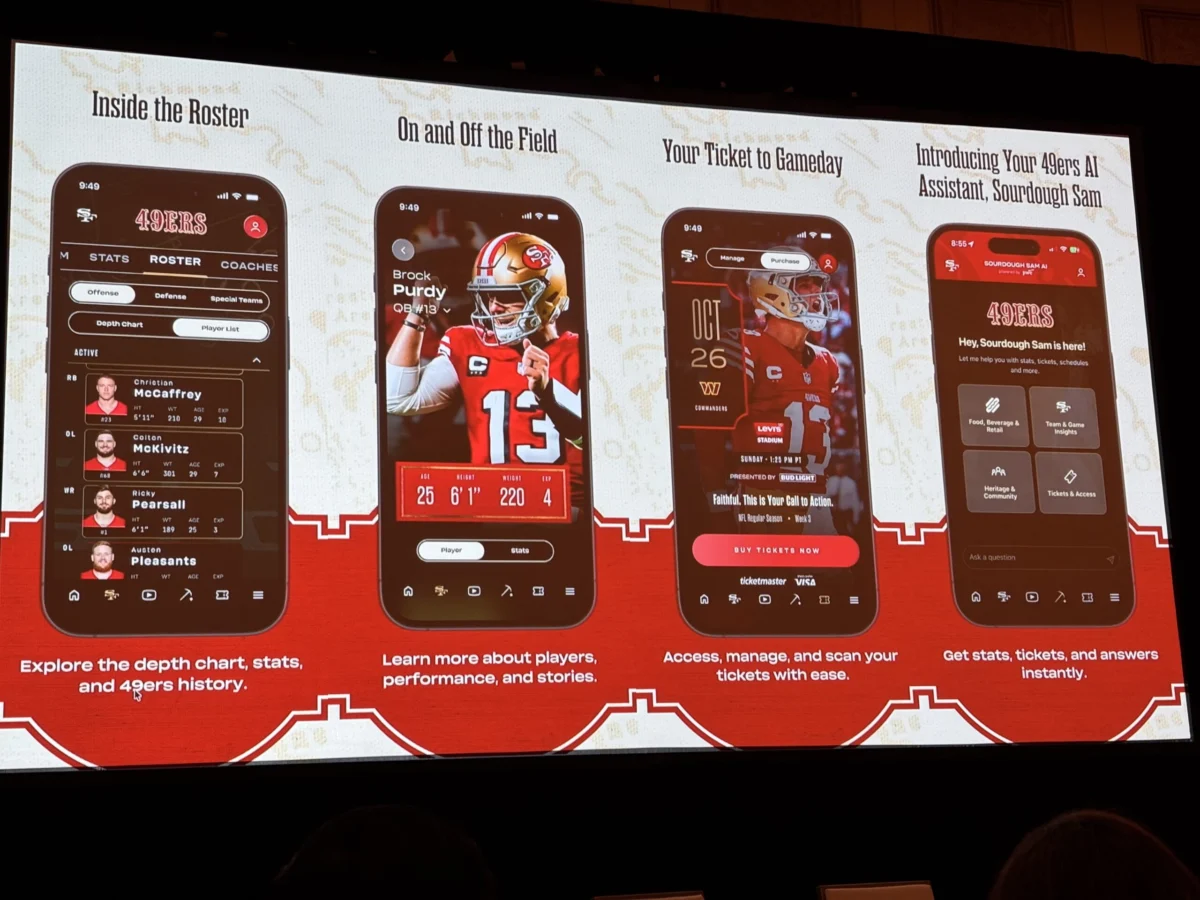

The San Francisco 49ers have launched a comprehensive digital transformation initiative aimed at redefining the relationship between a professional sports franchise and its global fan base. By partnering with professional services firm PwC, the National Football League (NFL) team has developed a sophisticated mobile application that leverages artificial intelligence (AI) and first-party data to deliver a highly personalized experience to an estimated three million fans worldwide. This strategic move addresses a perennial challenge in the sports industry: how to provide individualized engagement to millions of diverse supporters who interact with the brand across different time zones, languages, and platforms.
A Unified Digital Ecosystem for The Faithful
The core philosophy behind the new mobile application is to centralize the fan experience, moving away from a fragmented model where engagement is scattered across various social media platforms and email newsletters. Known affectionately as "The Faithful," 49ers fans now have access to a "personalized pathway" within the app. Upon onboarding, users are invited to share their specific interests, including favorite players, preferred eras of the club’s storied 80-year history, and even the ability to customize a digital jersey with their own name and number.
These initial choices are not merely cosmetic; they serve as the foundation for the app’s AI-driven recommendation engine. By analyzing these preferences, the app tailors news feeds, video content, and notifications to ensure that every interaction is relevant to the specific user. For example, a fan who expresses a deep interest in the 1980s "West Coast Offense" era will receive different historical content than a younger fan focused on current roster statistics. This level of customization is designed to transform the app into the "first stop" for fans, creating a primary digital destination that precedes even major social media platforms like X (formerly Twitter) or Instagram.
Strategic Integration with NFL ID and Data Security
A critical technical component of the new application is its alignment with the NFL ID system. By requiring users to utilize their NFL ID for onboarding, the 49ers have ensured that their digital ecosystem is fully integrated with the league’s broader fan-facing protocols. This alignment is essential for the future of the league, as it allows for a more cohesive analysis of fan activity and data across the entire NFL landscape.
Stephanie Rogers, the Chief Marketing Officer of the San Francisco 49ers, emphasized that this integration was a non-negotiable aspect of the development process. The use of NFL ID not only streamlines the user experience but also ensures that the organization adheres to the highest standards of data privacy and trust. In an era where data security is paramount, the 49ers and PwC have prioritized a framework that protects fan information while still allowing the team to gather valuable first-party insights. This "first-party" data—information given directly and voluntarily by the fans—is significantly more reliable and actionable than the "third-party" data typically harvested from social media engagement.
Sourdough Sam: Bringing Generative AI to Game Day
The most visible manifestation of AI within the app is "Sourdough Sam AI," a generative AI chatbot modeled after the team’s long-standing mascot. Unlike traditional, rule-based chatbots that offer limited, pre-programmed responses, Sourdough Sam AI is designed to be a dynamic assistant capable of transforming both the digital and physical fan experience.
During game days at Levi’s Stadium, the chatbot serves as a real-time concierge. It can assist fans in navigating the stadium, locating the nearest restrooms, or finding specific concession stands. Beyond logistics, the AI mascot provides live game stats and a real-time "gamecast" display, allowing fans who are not at the stadium to follow the action with a high degree of technical detail.
However, the implementation of generative AI required rigorous oversight to maintain brand integrity. The 49ers worked closely with legal and PR teams, as well as partners at PwC, to establish strict parameters for the chatbot. The goal was to ensure the AI does not "hallucinate" or draw information from unreliable internet sources, such as satire accounts or unverified fan blogs. By limiting the AI’s learning environment to official data and verified news, the organization ensures that the information delivered is accurate, respectful, and consistent with the 49ers’ brand values.
Solving Historical Friction Points in Ticketing
One of the most significant practical improvements introduced by the new app involves the integration with Ticketmaster. Historically, fans attending games faced a recurring friction point: the ticketing platform’s security protocols required users to re-enter their login credentials every seven days. For season ticket holders, this meant repeated logins throughout the season, often leading to delays at the stadium gates.
Through the collaboration between the 49ers and PwC, a technical solution was implemented to extend the login session for up to six months. Ahmet Ozman, a Partner at PwC US, described this as a "game changer." Once a fan logs into their Ticketmaster account during the initial app onboarding, they remain authenticated for the duration of the season. This seamless integration significantly reduces game-day stress and improves the overall efficiency of stadium entry.
Data-Driven Analysis and the Back-End Revolution
While the front-end features focus on fan enjoyment, the back-end of the app is a powerhouse of data analysis. The 49ers are utilizing AI to monitor "subliminal data points"—patterns of engagement that reveal what content resonates most with different segments of the fan base. This analysis goes beyond simple click-through rates; it explores the "why" behind fan behavior.
The development team, led by PwC, initially considered over 400 potential features for the app. Through rigorous A/B testing and data analysis, they prioritized features that provided the most value to different user segments, such as casual fans versus long-term season ticket holders. This iterative process allows the 49ers to be "intentional" with every update, ensuring that the app evolves in a way that reflects actual user needs rather than speculative trends.
Interestingly, the organization chose to ignore certain results from initial fan surveys. When surveyed, many fans claimed they were uninterested in gamification or social components. However, the 49ers leadership recognized that real-world behavior often contradicts survey responses. Pointing to the success of apps like Duolingo and Starbucks, the 49ers integrated gamification elements that have already contributed to a remarkable average "dwell time" of six minutes per session. This metric suggests that fans are not just checking scores and leaving, but are deeply engaging with the content provided.
Expanding the Global Reach of The Faithful
The San Francisco 49ers recognize that their fan base is increasingly international. With significant pockets of supporters in the United Kingdom, Germany, Mexico, and the United Arab Emirates, the app is viewed as a bridge to cross geographical boundaries. Currently available in English and Spanish, the roadmap for the next 18 months includes the addition of multiple other languages to cater to the global "Faithful."
Accessibility is also a primary focus for future iterations. Stephanie Rogers noted that the "second-screen experience" must be inclusive of fans with vision or hearing impairments. The objective is to ensure that a fan in London or Dubai can experience the same depth of fandom and connection to the team as a fan sitting in the front row at Levi’s Stadium. By removing barriers related to language and physical accessibility, the 49ers aim to cement long-term, generational relationships with their supporters worldwide.
Industry Implications: A New Standard for Sports Franchises
The launch of this AI-powered app represents a broader shift in the sports industry toward data sovereignty. As social media algorithms become more unpredictable and third-party data becomes harder to track due to privacy regulations, professional sports teams must find ways to own their audience data.
By creating a "sticky" digital environment that fans want to inhabit, the 49ers are building a robust repository of first-party data. This data not only informs content strategy but also provides immense value to sponsors and partners who seek to reach specific demographics with precision. The 49ers’ collaboration with PwC serves as a blueprint for how sports organizations can utilize enterprise-level technology to solve the complex problem of mass personalization.
As the 49ers celebrate their 80th anniversary season, the introduction of this technology ensures that the franchise remains at the forefront of innovation. The move from fragmented social engagement to a centralized, AI-driven ecosystem marks a new chapter in sports marketing—one where the "Faithful" are no longer just a crowd, but a community of individuals recognized and rewarded for their unique loyalty to the Red and Gold.
