

The landscape of artificial intelligence-powered coding is undergoing a significant transformation as sophisticated AI coding agents begin to shed their reliance on individual developer laptops. These tools, initially confined to the interactive sessions within terminals and Integrated Development Environments (IDEs), are increasingly migrating to persistent cloud environments. This strategic shift enables them to operate for extended durations, execute tasks in parallel, and continue their work even after developers have disconnected their local machines. This evolution marks a pivotal moment, signaling a move towards more autonomous and resilient AI development workflows.
The latest prominent example of this trend is Conductor, an AI coding startup that recently secured a substantial $22 million in Series A funding. The company initially garnered significant attention with its Mac application, which provided a user-friendly interface for managing multiple coding agents locally across various development workspaces. In early May, Conductor announced the launch of Conductor Cloud, a groundbreaking service that transitions these agents into fully hosted, cloud-based environments. This move directly addresses the growing demand for AI development tools that can operate with greater independence and scale.
Conductor’s strategic pivot to the cloud is not an isolated incident but rather mirrors broader seismic shifts occurring across the entire AI coding market. Industry giants and emerging players alike are recognizing the limitations of local execution and the immense potential of cloud-based solutions. Anthropic, a leading AI safety and research company, recently launched Claude Managed Agents. This service empowers businesses to run long-lived AI agents on Anthropic’s robust infrastructure. Furthermore, Anthropic has enhanced its offerings with remote-control capabilities for Claude Code sessions, accessible via web and mobile interfaces, underscoring a commitment to ubiquitous access and control.
Similarly, Mistral, another significant player in the open-source AI space, has been actively pushing its Vibe coding agent into the cloud. This initiative suggests a company-wide strategy to leverage cloud infrastructure for enhanced agent performance and accessibility. The open-source AI coding startup Roo Code also recently announced a strategic pivot, discontinuing its VS Code extension and broader IDE tooling in favor of Roomote. Roomote is a cloud-based autonomous coding agent designed to operate seamlessly across popular platforms such as Slack, GitHub, and Linear, further emphasizing the industry’s collective move towards cloud-native AI development.
Conductor’s latest foray into cloud-hosted agents is, therefore, not just a novel offering but a strongly aligned move with the prevailing industry trajectory. This transition is poised to redefine how developers interact with and leverage AI in their daily workflows, moving from direct command-and-control to a more supervisory role.
Into the Cloud: Solving the "Interface Challenge"
Founded in San Francisco in 2024 by Charlie Holtz and Jackson De Campos, Conductor quickly established a foothold with its innovative Mac app. This application empowered developers to concurrently run multiple coding agents, including prominent models like Anthropic’s Claude Code and OpenAI’s Codex. The agents could operate in parallel within isolated copies of a codebase, allowing for simultaneous experimentation, review of generated code, and streamlined merging of results. This local-first approach offered tangible benefits in terms of immediate feedback and control.

The introduction of Conductor Cloud represents a significant expansion of the company’s vision. Currently available by invitation as part of an early access program, this new offering extends agent sessions into hosted environments. This means that the AI agents can continue their work remotely, processing complex tasks and generating code without being tethered to the developer’s local machine or requiring the developer to remain actively connected. This persistent operation is crucial for tackling larger, more time-consuming development tasks.
In a recent video interview with Y Combinator partner Aaron Epstein, Conductor co-founder Charlie Holtz articulated his perspective on the evolving AI coding market. Holtz views the current generation of AI coding tools as an orchestration problem, particularly as developers begin to utilize an increasing number of agents simultaneously. He highlighted a personal limitation, stating, "In my head, I can only really manage like three to five agents at once." This observation underscores a fundamental challenge: as the power and number of AI agents grow, the ability of a single human developer to effectively manage and direct them becomes a bottleneck.
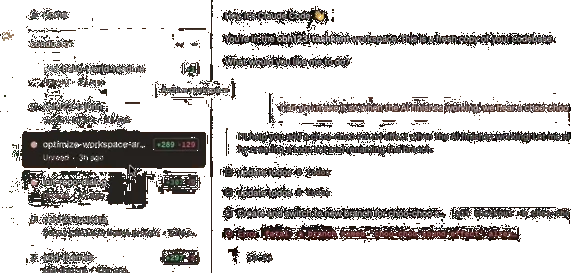
Holtz elaborated on this point: "I think we’ve proven that you can run more than one coding agent at a time, and it will still be productive. But I think to get to the next level, where you run more than three to five, it’s an interface challenge." This "interface challenge" refers to the need for more sophisticated ways to visualize, manage, and interact with a multitude of AI agents working concurrently on a project. Conductor Cloud aims to address this by enabling developers to run coding agents across separate hosted workspaces, each potentially tied to different tasks, branches, or even repositories. Developers can then seamlessly inspect the code generated by these remote agents directly within the Conductor interface, utilizing a side-panel diff view that clearly highlights the changes.
This move to hosted workspaces also has significant economic implications for companies like Conductor. A substantial portion of the AI coding boom to date has been built upon local client applications that interface with foundation model APIs. The introduction of cloud-hosted workspaces opens up new revenue streams. Companies can now potentially charge not only for the coordination software itself but also for the underlying infrastructure that powers these persistent AI agents. While Conductor has not yet detailed specific pricing for Conductor Cloud, it is anticipated that this hosted service will complement its existing local-first product. The company already offers an enterprise version of its local product, which reportedly boasts users at prominent companies such as Spotify, Square, Ramp, Linear, and Notion, indicating strong enterprise adoption.
Terminal Decline? The Future of AI Development Workflows
AI coding tools are already demonstrating a profound impact on the speed and efficiency with which software teams can build and deploy products. As these AI models continue to advance in their capabilities, they are poised to tackle increasingly complex and extensive development tasks. Projects that once required carefully scoped Minimum Viable Products (MVPs) and narrowly defined objectives can now be approached with greater ambition, as coding agents take on larger segments of the implementation work.
Charlie Holtz remains convinced that the current state of AI coding tools represents merely an early phase of this technological revolution. He confidently asserts, "One thing we feel confident about is that the models are going to get 10 or 100 times smarter. They’re going to be able to run for longer without you needing to intervene." This projection highlights the anticipated trajectory of AI development: increased autonomy and reduced need for constant human oversight.
Holtz further envisions AI agents evolving to a point where they "start feeling more like a human coworker would, although it’s like they will have an alien brain that’s very different to ours." This analogy suggests a future where AI agents act as sophisticated collaborators, capable of independent problem-solving and execution, albeit with a fundamentally different cognitive architecture.

It is precisely this vision of increasingly autonomous and long-running AI agents that fuels Holtz’s conviction about the importance of persistent cloud execution for the future of AI coding. If developers are transitioning from directly dictating every line of code to supervising fleets of agents that operate for extended periods, tying these systems to a single laptop session becomes increasingly impractical and inefficient.
"I think that’s one reason we’re really excited about [Conductor] cloud – it’s that the agents are going to be able to run for much longer," Holtz stated, emphasizing the strategic advantage of cloud-based infrastructure. This allows for continuous development and iteration without the limitations imposed by local machine availability or power.
While the trend towards cloud-hosted agents is undeniable, it’s important to note that few companies are signaling a complete abandonment of local development environments. Instead, the industry appears to be moving towards a hybrid model where local development tools serve as a crucial interface for monitoring and directing cloud-based AI operations.
Amp, an AI coding startup that emerged from Sourcegraph, has recently undertaken a significant overhaul of its Command Line Interface (CLI). The updated CLI now boasts enhanced support for remote control, plugin architectures, and the execution of longer-running agent sessions. This signifies a shift where the local environment becomes less of a primary execution engine and more of a command center for managing AI agents operating in the cloud.
Atlassian, a company synonymous with enterprise software development tools, is also adopting a similar strategy. They are expanding access to their comprehensive suite of enterprise tools through a new CLI specifically designed for AI coding agents. The underlying principle is to empower these agents to navigate Atlassian’s systems directly, enabling them to query tickets, pull requests, and project data without requiring developers to manually extract and feed this contextual information into prompts. This streamlines workflows and allows AI agents to operate with a deeper understanding of the project’s state.
The emerging picture across the AI development industry is one of coding agents evolving into persistent, distributed systems. These agents will seamlessly move between laptops, terminals, web browsers, and dedicated hosted infrastructure. Consequently, developers will likely spend less time meticulously writing individual lines of code and more time supervising, guiding, and integrating the outputs of these AI collaborators across a diverse range of environments. This paradigm shift promises to unlock unprecedented levels of productivity and innovation in software development.
