

The telecommunications landscape is currently undergoing its most significant structural shift since the introduction of the digital SIM card in the early 1990s. At the heart of this transformation is the embedded SIM, or eSIM, a technology that replaces the traditional removable plastic card with a permanent, programmable chip integrated directly into a device’s motherboard. As mobile network operators (MNOs) and original equipment manufacturers (OEMs) aggressively transition toward this digital-first architecture, understanding the technical nuances, adoption hurdles, and practical applications of eSIM technology has become essential for consumers and industry stakeholders alike.
The Technical Foundation of Embedded SIM Technology
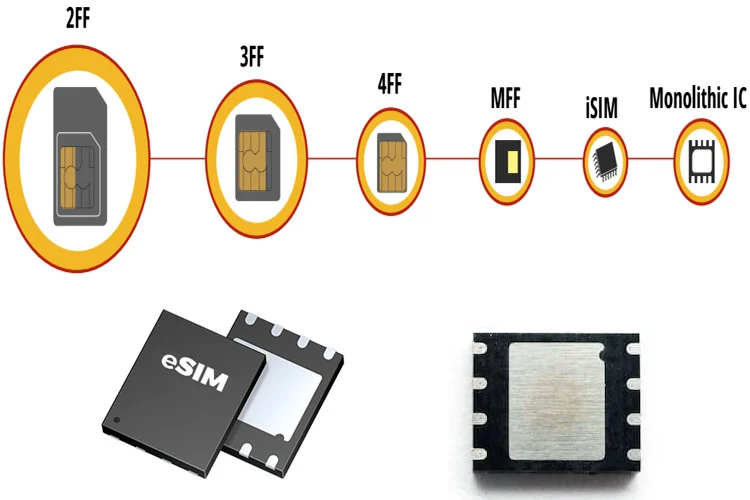
An eSIM, technically known as an eUICC (Embedded Universal Integrated Circuit Card), is a specialized hardware component soldered onto a device’s internal circuitry during the manufacturing process. Unlike the traditional SIM (Subscriber Identity Module), which requires physical handling to change networks, the eSIM is designed to be managed remotely. This capability is facilitated by Over-the-Air (OTA) provisioning, a protocol that allows users to download "profiles"—digital representations of a mobile subscription—directly to the chip.
The architecture of an eSIM is built on global standards established by the GSMA (Global System for Mobile Communications Association). These standards ensure that an eSIM-enabled device can interact securely with any participating carrier worldwide. The chip stores the same data as a physical SIM, including the International Mobile Subscriber Identity (IMSI) and the unique authentication keys used to identify a subscriber on a mobile network. However, its digital nature allows it to hold multiple profiles simultaneously, enabling a single device to maintain several active or dormant lines from different providers.
A Chronology of SIM Evolution and Adoption
The journey toward the eSIM has been marked by a relentless drive for miniaturization and efficiency. In 1991, the first SIM card was roughly the size of a credit card. By the early 2000s, the Mini-SIM became the standard, followed by the Micro-SIM in 2010 and the Nano-SIM in 2012. Each iteration aimed to reclaim valuable internal space within mobile devices for larger batteries and more sophisticated components.
The pivot toward embedded technology began in the industrial sector. In 2010, the GSMA started exploring eSIMs for Machine-to-Machine (M2M) communications, where physical SIM swaps were often logistically impossible, such as in smart meters or remote sensors. The consumer breakthrough occurred in 2016 when Samsung launched the Gear S2 Classic 3G, the first consumer device to feature a GSMA-compliant eSIM.
Apple catalyzed the market in 2018 by integrating eSIM technology alongside a physical SIM slot in the iPhone XS, XR, and XS Max, introducing the "Dual SIM" era to the mass market. The most definitive move toward a digital-only future occurred in 2022, when Apple released the iPhone 14 series in the United States without a physical SIM tray, forcing a rapid acceleration of eSIM adoption among North American carriers.
Statistical Growth and Market Projections
According to data from GSMA Intelligence, the number of eSIM-capable smartphone models has grown by over 300% since 2019. As of late 2023, more than 800 mobile service providers globally have launched commercial eSIM services for smartphones. Market analysts at Juniper Research project that the number of eSIM installations in devices will rise from 1.2 billion in 2023 to over 3.4 billion by 2025, driven largely by the expansion of the "Internet of Things" (IoT) and the standardizing of eSIM in mid-range mobile devices.
Regional data suggests that North America and Europe are currently leading in adoption, but the Asia-Pacific region is expected to see the fastest growth rate through 2030. This growth is supported by the increasing availability of "travel eSIMs," which allow international voyagers to purchase local data plans via apps, bypassing the high costs of traditional roaming.
Industry Perspectives and Strategic Implications
The shift to eSIM technology has elicited a range of responses from industry players. Device manufacturers are the primary proponents, as the removal of the physical SIM slot improves device durability by eliminating an entry point for water and dust. It also provides engineers with more "real estate" to optimize thermal management and battery capacity.
Mobile network operators, however, have historically viewed eSIMs with a degree of caution. For decades, the physical SIM card served as a tool for "customer lock-in," making it cumbersome for users to switch carriers. With eSIM, the friction of switching is virtually eliminated. "The eSIM puts the power back into the consumer’s hands," noted one industry analyst during the 2023 Mobile World Congress. "Carriers now have to compete more aggressively on service quality and pricing because their customers can switch providers with a few taps on a screen."
Despite these concerns, many carriers now embrace eSIM as a cost-saving measure. The logistics of manufacturing, storing, and shipping millions of plastic SIM cards represent a significant overhead. By transitioning to digital activation, operators can reduce their carbon footprint and streamline their supply chains.
A Comprehensive Guide to Device Compatibility
While the technology is becoming standard, it is not yet universal. Compatibility is generally found in premium and mid-to-high-range devices released after 2018.
Smartphones and Tablets
- Apple: All iPhone models from the XS and XR onwards support eSIM. Recent iPad Pro, Air, and Mini models with cellular capabilities also feature the technology.
- Google: The Pixel 2 was one of the first to adopt eSIM, and every subsequent Pixel model has maintained support.
- Samsung: The Galaxy S20 series and all subsequent S-series flagships, along with the Z Fold and Z Flip series, are eSIM compatible.
- Other Manufacturers: Brands such as Huawei, Motorola, and Xiaomi have integrated eSIM into their flagship lineups, though availability varies by region.
Wearables
Smartwatches have been a primary driver of eSIM utility. The Apple Watch (Series 3 and later), Samsung Galaxy Watch, and various Garmin models use eSIMs to allow users to leave their phones behind while maintaining cellular connectivity for calls and data.
The Activation Ecosystem: Steps and Procedures
Activating an eSIM is a departure from the traditional "plug-and-play" method. The process is predominantly software-driven and relies on a secure handshake between the device and the carrier’s server.
Activation on iOS Devices
- Navigate to Settings and select Cellular or Mobile Data.
- Tap Add eSIM or Set Up Cellular.
- Users are typically given the option to "Transfer from Nearby iPhone" or "Use QR Code."
- If using a QR code provided by a carrier, the user scans it with the camera. The device then downloads the necessary profile.
- Label the new plan (e.g., "Primary" or "Travel") and choose which line to use for data and voice.
Activation on Android Devices
- Open Settings and go to Network & Internet or Connections.
- Select SIM Card Manager or Mobile Network.
- Tap Add eSIM or Download a SIM instead.
- Scan the carrier-provided QR code.
- Confirm the download and activation of the profile.
In some advanced scenarios, carriers use "Carrier Push" technology, where the eSIM profile is automatically sent to the device based on its EID (Embedded Identity Document) number, eliminating the need for a QR code entirely.
Comparative Analysis: eSIM vs. Physical SIM
The decision between using an eSIM or a physical SIM often depends on the user’s specific use case.
| Feature | Physical SIM | eSIM |
|---|---|---|
| Swapping | Easy to move between different physical devices. | Difficult; requires carrier intervention to move to a new device. |
| Security | Can be stolen or removed to disable tracking. | Cannot be removed; makes stolen devices easier to track. |
| Capacity | One profile per card. | Multiple profiles (typically 5-10) stored on one chip. |
| Durability | Plastic and chips can degrade or be damaged. | Integrated and protected within the device chassis. |
| Activation | Requires physical delivery or store visit. | Instantaneous download via Wi-Fi. |
For international travelers, the eSIM is objectively superior, allowing for the pre-purchase of local data plans before landing. However, for "power users" who frequently switch between multiple handsets, the physical SIM remains more convenient as it does not require a re-provisioning process for every swap.
Environmental and Logistical Impact
The environmental implications of the eSIM transition are substantial. Traditional SIM cards are made of PVC, silicon, and gold, and they are often shipped in oversized plastic credit-card-style holders. The GSMA estimates that billions of SIM cards are produced annually, contributing to significant plastic waste and CO2 emissions from global logistics. By eliminating the physical card, the industry moves toward a more sustainable model, aligning with global ESG (Environmental, Social, and Governance) targets.
Broader Implications for the IoT and Future Connectivity
Beyond consumer electronics, the eSIM is the linchpin of the future "Hyper-connected" world. In the automotive industry, eSIMs allow vehicles to receive critical software updates and provide emergency services (like eCall in Europe) regardless of where the car is sold. In the realm of smart cities, embedded chips allow for the long-term deployment of sensors that can switch networks as contracts change over a 10-year lifespan, without manual intervention.
As 5G networks continue to expand, the synergy between 5G and eSIM will enable more seamless transitions between private and public networks, which is vital for industrial automation and remote healthcare. The "iSIM" (Integrated SIM), a newer evolution that places the SIM functionality directly onto the device’s main processor, is already on the horizon, promising even greater efficiency and space savings.
In conclusion, the eSIM is more than a mere hardware upgrade; it represents a fundamental change in how the world connects. While the transition presents challenges in terms of legacy support and consumer education, the benefits of flexibility, security, and environmental sustainability position the eSIM as the definitive standard for the next generation of mobile communication.
