
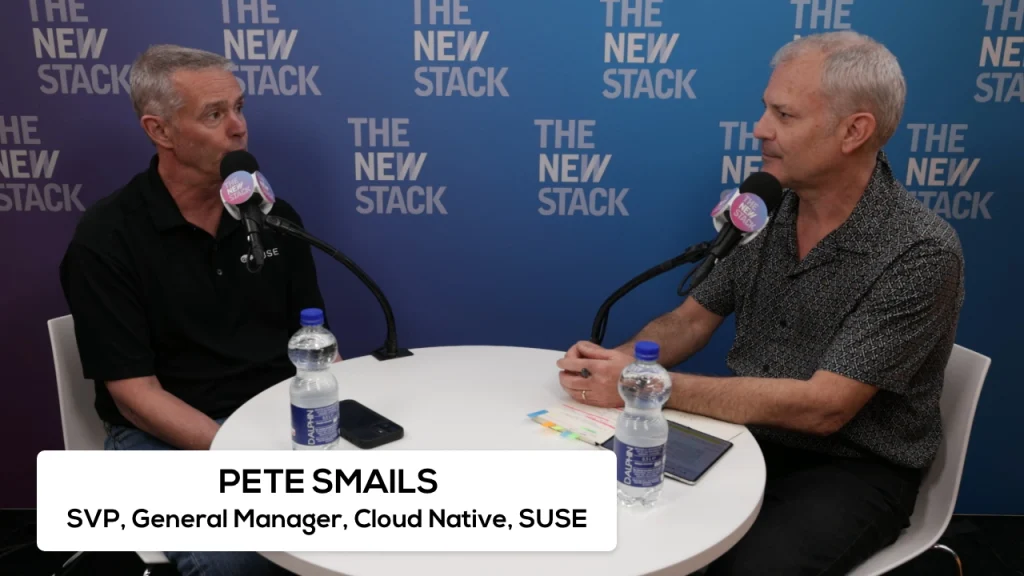

Amsterdam, Netherlands – At KubeCon + CloudNativeCon Europe 2026, SUSE, a long-standing player in the open-source operating system market, articulated its strategic vision to transform into an AI-native infrastructure platform. The company is focused on unifying artificial intelligence services, containerized applications, and traditional virtual machines (VMs) onto a singular, open, and enterprise-ready foundation. Pete Smails, SVP and General Manager for Cloud-Native at SUSE, elaborated on this ambitious roadmap, highlighting the company’s current offerings and its deep engagement with the Cloud Native Computing Foundation (CNCF).
SUSE’s evolution from its roots as an operating system provider to a comprehensive infrastructure solutions company is driven by the rapidly shifting demands of modern computing. "Ultimately, SUSE’s mission today is to be an open infrastructure platform for modern workloads," Smails stated during an interview at the bustling Amsterdam convention. "The bottom of our stack is still the operating system, but above that, we have a world-class build system that is completely secure and robust. I know that sounds like boring plumbing, but it’s actually surprisingly relevant in today’s world of continuous integration and continuous delivery." This emphasis on foundational security and robustness is seen as critical for enterprises navigating complex development and deployment pipelines.
The company’s strategic alignment with open infrastructure principles has been a key catalyst for its development of advanced orchestration capabilities. This is exemplified by SUSE Rancher Prime, its robust container management and Kubernetes orchestration layer. This platform is designed to empower organizations to build, deploy, and manage cloud-native applications seamlessly across diverse environments, from on-premises data centers to multiple public clouds.
A Technology Triumvirate: Unifying AI, Containers, and VMs
Smails articulated SUSE’s current positioning as a company dedicated to unifying three core pillars of modern infrastructure: artificial intelligence, containers, and virtual machines. This strategic convergence is a direct response to the increasingly hybrid and multi-cloud nature of enterprise IT. "The world is rapidly evolving toward using multiple data centers across multiple clouds," Smails explained. "This requires us to embrace not assimilation but unification of VMs and container management. This fusion has been undertaken to allow software teams to capitalize on the potential of AI and redefine their own operational simplicity."
This unified approach aims to provide a cohesive operational experience, reducing the complexity often associated with managing disparate infrastructure components. Recent advancements in SUSE Rancher Prime underscore this commitment, with the platform now incorporating an open ecosystem for AI agents. This integration is designed to equip enterprises with novel automated operational tools, enhancing efficiency and agility. Concurrently, SUSE Virtualization is positioned as a stable and modern alternative for managing legacy infrastructure, further bridging the gap between traditional VMs and the dynamic world of containers. This dual focus on modernizing existing environments while embracing new cloud-native paradigms is a cornerstone of SUSE’s strategy.
The KubeCon + CloudNativeCon Europe event, held annually, serves as a pivotal gathering for the cloud-native community, bringing together developers, operators, and vendors to discuss the latest trends, challenges, and innovations in containerization, microservices, and cloud-native technologies. The 2026 edition in Amsterdam was particularly significant, marked by a heightened focus on AI integration within cloud-native architectures, making SUSE’s announcements highly relevant to the prevailing industry discourse.
Introducing "Liz": The Context-Aware AI Agent
A notable highlight of SUSE’s presence at KubeCon + CloudNativeCon Europe 2026 was the introduction of "Liz," a charismatic, green lizard mascot that also represents a sophisticated AI agent integrated within the SUSE Rancher Prime environment. Beyond its engaging public persona, Liz serves as a powerful tool for software engineering teams.
"Imagine Liz as one of your software engineering team crew," Smails enthused. "Liz goes out searching across your deployment environment and might come back and say – ‘oh, you’ve got a couple CVEs, would you like me to go see if there are clean versions of these applications?’ Software engineers can interact with Liz in natural language and get the work that they done." This conversational, AI-driven approach to operational tasks aims to democratize access to complex information and accelerate problem-solving.
Unlike general-purpose AI assistants, Liz is specifically engineered to understand the live state of Kubernetes clusters, namespaces, and workloads. Available as an extension, Liz integrates directly into the platform engineering team’s workspace, offering real-time guidance precisely when and where it is needed. Whether engineers are troubleshooting a failing deployment or seeking to grasp a new Kubernetes concept, Liz leverages the Model Context Protocol (MCP) to translate raw operational data into actionable insights. This capability is particularly valuable in fast-paced development cycles where rapid remediation and informed decision-making are paramount. The introduction of such AI-powered assistants signifies a broader industry trend towards augmenting human expertise with intelligent automation.
SUSE Virtualization: A Modern Alternative
Smails also provided an update on SUSE Virtualization, characterizing it as a "modern VMware alternative." This positioning underscores SUSE’s intent to offer a robust and competitive solution for enterprises looking to modernize their virtualization strategies. The technology is designed to provide a stable foundation for existing workloads while facilitating a smoother transition towards cloud-native architectures. By integrating VM management within a unified platform that also handles containers and AI services, SUSE aims to simplify the operational landscape for its customers.
Rancher Developer Access: Empowering Developers
Further emphasizing its commitment to the developer experience, SUSE highlighted its Rancher Developer Access offering. This service is engineered to run Kubernetes alongside trusted content directly within a developer’s local environment. The stated goal is to minimize cognitive overhead, allowing developers to focus on building applications rather than grappling with complex infrastructure configurations.
"You’ve got to give developers the tools they need so that they can rapidly adopt cloud-native technologies, build new applications, and take advantage of all the great infrastructure that SUSE and the wider community are building," Smails asserted. "That’s where Rancher Developer Access comes in. We are committed to upping our game from a developer standpoint to drive more adoption, to get people using the technology of the AI age and making it as easy as possible in a secure way." This developer-centric approach is crucial for fostering broader adoption of cloud-native technologies and accelerating innovation. By lowering the barrier to entry and providing a seamless development experience, SUSE aims to empower a new generation of developers to leverage the full potential of AI and cloud-native architectures.
The broader implications of SUSE’s strategy are significant for enterprises grappling with digital transformation. The unification of AI, containers, and VMs under a single open infrastructure platform promises to streamline operations, reduce costs, and accelerate the delivery of innovative applications. As businesses increasingly rely on sophisticated AI models and dynamic containerized applications, the need for a robust and integrated infrastructure solution becomes paramount. SUSE’s approach, rooted in open-source principles and a commitment to enterprise-grade security and reliability, positions it as a key player in this evolving landscape.
Looking Ahead: The Future of Open Infrastructure
In conclusion, while SUSE may still be recognized for its foundational open-source operating system, its strategic trajectory clearly indicates a broader ambition. The company is actively expanding its portfolio of cloud-native infrastructure services, catering to the needs of both development and operations teams. This comprehensive offering is designed to provide the necessary safety nets and automation required for running containerized workloads at enterprise scale, while simultaneously embracing the transformative potential of AI. The continued emphasis on open-source collaboration and community engagement, as evidenced by their work with the CNCF, suggests a commitment to building a sustainable and innovative future for modern infrastructure. The playful inclusion of a mascot like "Liz" also signals SUSE’s intention to make complex technologies more accessible and user-friendly, a critical factor in driving widespread adoption and innovation in the AI age.
