
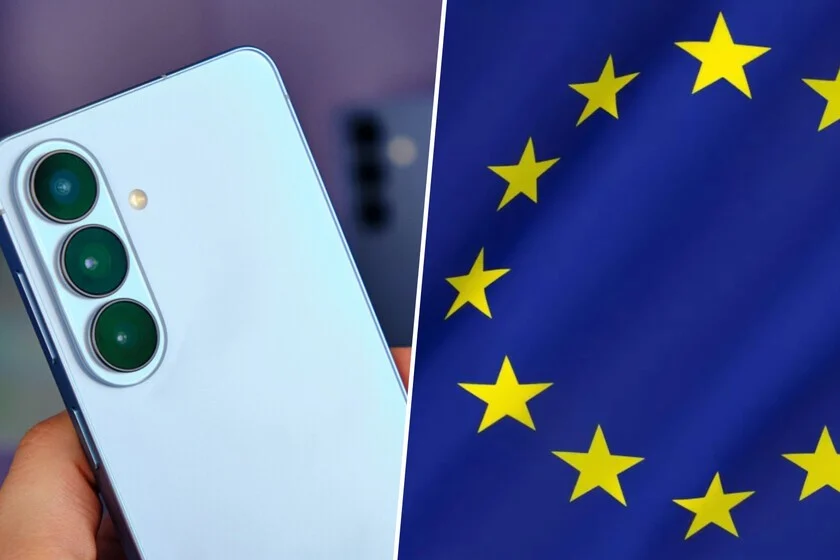

When the European Union announced its directive requiring all smartphones sold within its borders to feature a user-accessible battery by February 18, 2027, the prevailing industry expectation was that major manufacturers would seek the path of least resistance. This regulatory shift, driven by a broad European initiative to enhance product longevity, reduce electronic waste, and empower consumers, was initially met with skepticism regarding its practical implementation, especially for premium devices known for their sleek, sealed designs. Many observers anticipated that companies would leverage existing exemptions within the legislation rather than undertake a complete redesign of their flagship products. However, recent patent filings and updates from Samsung, a global leader in smartphone manufacturing, suggest a potentially groundbreaking departure from this anticipated strategy, indicating a deep commitment to developing innovative technical solutions for truly user-replaceable batteries.
Background: The EU’s Drive for Sustainability and Consumer Rights
The European Union’s directive on user-replaceable batteries is part of a larger legislative push aimed at fostering a circular economy and combating planned obsolescence in electronic devices. For years, consumer advocacy groups and environmental organizations have criticized the trend of non-removable batteries, which often necessitate professional repair or device replacement when the battery degrades, contributing significantly to electronic waste (e-waste). The EU estimates that over 1.3 billion mobile phones are in use across the Union, with a significant portion replaced annually due to battery issues. This not only burdens consumers with unnecessary costs but also exacerbates environmental concerns related to raw material extraction and disposal. The new regulation aims to extend the lifespan of electronic devices, reduce repair costs for consumers, and mitigate the environmental impact of manufacturing and disposal.
Historically, smartphones, particularly those from the early 2000s, frequently featured user-removable batteries. This design allowed users to easily swap out a depleted battery for a fresh one or replace an aging battery to extend the device’s life. However, the industry gradually shifted towards sealed designs, influenced by factors such as the pursuit of thinner profiles, enhanced water and dust resistance (IP ratings), and a desire for more premium aesthetics. While these design choices offered benefits, they simultaneously created a significant barrier to user repairability, leading to a system where battery degradation often meant replacing the entire device. The EU’s mandate represents a direct challenge to this industry paradigm, compelling manufacturers to reconsider fundamental aspects of smartphone engineering.
The EU Mandate and its Exemptions
The European Parliament and Council formally adopted the new regulation concerning batteries and waste batteries in July 2023, with the requirement for user-replaceable batteries set to take effect from February 18, 2027. Crucially, the legislation includes specific derogations that could allow manufacturers to circumvent a full redesign. Devices with an Ingress Protection (IP) rating of IP67 or higher, combined with a battery capable of retaining at least 80% of its capacity after 1,000 charge cycles, are exempt from the strict user-accessibility requirement. This clause was widely seen as a potential "loophole" for major players like Samsung, whose high-end Galaxy S series already meet or exceed these durability and cycle count specifications. The assumption was that Samsung, along with other premium manufacturers, would simply rely on this exemption, thereby avoiding complex engineering challenges and maintaining their current sealed designs.
However, a detailed examination of recently registered and updated patents by Samsung in public databases such as Espacenet paints a remarkably different picture. Instead of merely embracing the available derogation, Samsung’s research and development divisions appear to be actively pursuing genuine technical innovations designed to integrate user-replaceable batteries into future devices. This proactive stance suggests a strategic decision to not only comply with the spirit of the EU law but potentially to differentiate its products by offering a feature that consumers increasingly demand.
Samsung’s Unexpected Dive into Removable Battery Innovation
While it is crucial to reiterate that patents do not guarantee commercial products – Samsung, like many technology giants, regularly patents technologies that never reach the market – the sheer volume, consistency, and recent updates of these specific patent filings warrant significant attention. The comprehensive nature of these patents, addressing multiple facets of user-removable battery integration, indicates a concerted effort within Samsung’s engineering teams to solve the complex challenges associated with this design shift. This suggests a strategic move beyond mere compliance, potentially positioning Samsung as a leader in a more sustainable and user-centric future for mobile technology.
The End of Aluminum Pouches: Stainless Steel Casings (SUS CAN Design)
One of the most significant innovations detailed in Samsung’s patents points to a fundamental change in the battery’s physical construction. Current smartphone batteries predominantly utilize a "pouch cell" format, encapsulated in flexible aluminum bags. While these aluminum pouches are highly adaptable, allowing for efficient use of the constrained internal space of a smartphone, their inherent fragility presents a major obstacle to user handling. They are susceptible to punctures, bending, and deformation, risks that are greatly magnified when a non-specialized user frequently removes and inserts the battery.
Samsung’s patents propose a shift from these delicate aluminum pouches to more robust stainless steel casings, referred to as "SUS CAN design." This technical reasoning is compelling. If a battery is to be routinely handled, transported, and installed by the end-user, it requires a protective shell capable of withstanding repeated physical interaction without compromising its integrity. Stainless steel, known for its exceptional rigidity and durability, would provide the necessary structural resilience. While this change might entail a slight increase in the battery’s weight, it effectively addresses the critical issue of durability for repeated user access, making the battery a resilient, user-friendly component rather than a fragile internal part.
The Cartridge System: Seamless Extraction and Swelling Mitigation
Perhaps the most ingenious and indicative patent, particularly for understanding the potential design of future flagship models like the anticipated Galaxy S27, describes an articulated exoskeleton featuring a movable body. More directly translated, this concept envisions a protective cage for the battery equipped with a hinged door or a sliding mechanism that allows for effortless extraction.
This cartridge system is meticulously designed to counteract a historical problem that has plagued the concept of user-removable batteries in high-end smartphones: battery swelling. Over time and with prolonged use, lithium-ion batteries can slightly swell due to gas buildup. In traditional sealed designs, this swelling can cause internal components to press against the chassis, making battery removal incredibly difficult, even if theoretically possible. The articulated exoskeleton proposed by Samsung would act as both a guide and a protective barrier, ensuring that the battery can always be smoothly slid out without getting jammed, even if it has undergone partial deformation due to swelling. This innovation directly addresses a significant practical hurdle, transforming what was once a complex, tool-dependent procedure into a simple, straightforward action for the user.
Connectors Over Solders: Enabling True Disconnection
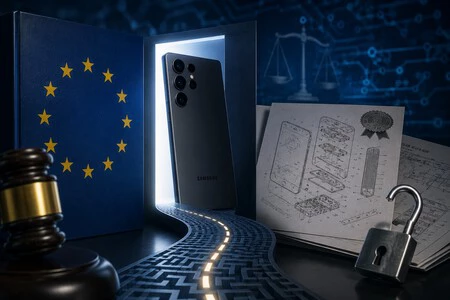
Another complex technical challenge inherent in user-replaceable batteries lies in their electrical connection to the device’s mainboard. In current smartphone designs, batteries are typically connected via cables directly soldered to the motherboard. Extracting such a battery often requires specialized tools to desolder or carefully unplug the connection, a process that is not always reversible without professional expertise and carries a risk of damage.
Samsung’s patents reveal a solution centered on replacing this soldered system with Flexible Printed Circuit (FPC) connectors. This innovative approach would allow the battery to "dock" into the device’s power rail on the motherboard as a reusable, modular component. The user experience would be akin to plugging in a USB cable: the battery could be disconnected and reconnected without the need for soldering, adhesives, or specialized tools. This shift to FPC connectors is pivotal, as it democratizes battery replacement, making it accessible to any user without technical proficiency, aligning perfectly with the EU’s objective of promoting user repairability.
The IP68 Conundrum: Dual-Sealed Hinged Solution
One of the most frequently cited arguments against the feasibility of user-replaceable batteries in premium smartphones is the challenge of maintaining water and dust resistance, specifically the coveted IP68 certification. A phone with an openable compartment for the battery appears inherently incompatible with the rigorous sealing required for immersion protection.
Samsung’s articulated casing patents offer an elegant solution: a dual-sealed system incorporating a hinge and gaskets. Under this design, the battery itself would be enclosed within its own sealed module before being inserted into the phone. This pre-sealed module then integrates into the main chassis via a hinged mechanism, which is itself equipped with rubber gaskets. The result is a multi-layered protection system. The battery’s opening would not directly compromise the device’s internal sealing because two distinct layers of protection—the sealed battery module and the gasket-reinforced hinged compartment—would separate the external environment from the sensitive internal components. This innovative approach effectively resolves the long-standing conflict between user-replaceability and high IP ratings, paving the way for premium smartphones to offer both.
Implications for Samsung and the Broader Market
Samsung’s apparent commitment to developing these advanced user-replaceable battery solutions carries significant implications. For Samsung, it could mean:
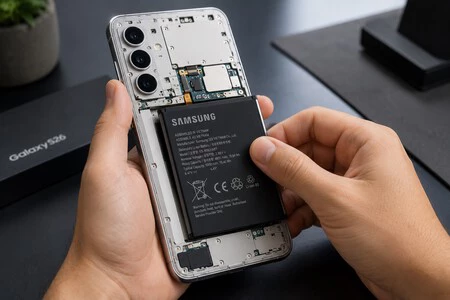
- Market Leadership: By proactively addressing the EU mandate with genuine innovation rather than relying on exemptions, Samsung could differentiate itself and potentially set a new industry standard, positioning itself as a leader in sustainable technology.
- Enhanced Brand Reputation: Demonstrating a commitment to consumer rights and environmental sustainability could significantly boost Samsung’s brand image, particularly among environmentally conscious consumers.
- Competitive Advantage: If other manufacturers merely leverage the exemption, Samsung’s approach could offer a unique selling proposition, attracting consumers who value device longevity and repairability.
- Engineering Challenges: Implementing these complex designs across a mass-produced product line will undoubtedly pose significant engineering and manufacturing challenges, potentially impacting development timelines and costs.
For the broader smartphone industry, Samsung’s direction could trigger a ripple effect. If Samsung successfully integrates these technologies into a flagship device like the Galaxy S27, it would exert considerable pressure on other manufacturers to follow suit. This could lead to a broader industry shift towards more modular and repairable designs, potentially revitalizing a market segment that has long prioritized aesthetics and sealed construction over user serviceability.
Consumer and Environmental Benefits
The successful implementation of Samsung’s patented technologies would bring substantial benefits to consumers and the environment:
- Extended Device Lifespan: Users could easily replace degraded batteries, significantly extending the usable life of their smartphones, reducing the frequency of device upgrades.
- Reduced Repair Costs: Eliminating the need for professional battery replacement would save consumers considerable money, as battery swaps could be performed at home with minimal effort and cost.
- Environmental Impact Reduction: Longer device lifespans and easier repairs directly contribute to a reduction in e-waste, lessening the demand for new raw materials and decreasing the environmental burden of manufacturing and disposal.
- Enhanced Consumer Empowerment: Users would gain greater control over their devices, fostering a sense of ownership and autonomy over product maintenance.
Future Outlook and Caveats
While the existence and recent updates of these patents are a strong indicator of Samsung’s R&D direction, it is crucial to maintain perspective. A patent is not a product announcement. Samsung may choose to implement only parts of these technical solutions, all of them, or none at all in the devices that reach the market by 2027. The deadline of February 18, 2027, aligns perfectly with the typical launch calendar for the Galaxy S series, making the Galaxy S27 a prime candidate for showcasing these innovations.
However, the comprehensive nature of these patent filings, taken as a whole, unequivocally demonstrates that Samsung is actively engaged in developing a robust technical solution for user-replaceable batteries, moving beyond merely seeking legal derogations. This signals a potentially transformative moment for smartphone design, where one of the industry’s titans is exploring how to reconcile modern smartphone aesthetics and features with the growing global demand for sustainability and consumer repairability. The coming years will reveal whether these patented innovations will materialize into tangible products, reshaping the future of mobile technology and setting a new benchmark for environmental responsibility and user-centric design.
